Showing posts with label Muharram commemorations. Show all posts

Friday, September 13, 2019

Iran, major tourism hub during Muharram ceremonies

Tehran, IRNA_ Every year thousands of foreigners flock to Iran to see with their naked eyes and record with cameras the Iranian fervor during Muharram that comes to a head on its 10th day, also known as Ashura. This all paves the way for a new sort of tourism opportunities in Iran called Muharram tourism. 
1,500 foreigners visited the central Iranian city of Yazd only this Muharram, according to local officials. 
Yazd, an ancient Iranian city, the cradle of Zoroastrianism, is now one of the unavoidable points of Islamic Iran.
Home to thousands of small and big mosques and Hosayniyas (places used for religious mourning ceremonies), Yazd has earned the title “Iran’s and world’s Hosayniya”. 
A Hosayniya is a congregation hall for Twelve Shiite Muslim commemoration ceremonies, especially those associated with the Mourning of Muharram, the month in which third Shiite Imam Hussein was martyred by the then ruler Yazid. 
“The Iranians’ love and enthusiasm for Imam Hussein is so much that you can’t record it with any device. You need to feel and experience it yourself on the ground to get a good sense of it,” said an Italian tourist who visited the Ashura ceremonies in Abarkuh, 140 kilometers in the southwest of Yazd. 
Yazd always attracts the special attention of foreigners due to its unique Muharram rituals where hundreds of men, all clad in black, congregate in Hosainiyas to beat on their chests according to the rhythm of a sung eulogy. 
The poem itself is of high importance, which nearly always includes long verses, describing the events of the 10th day of Muharram, also known as Ashura, when Imam Hussein was martyred by Yazid forces. 
“The fact that foreigners are present in Muharram rituals will help that Iran’s ceremonies and traditions spread to other countries more easily,” Vali Teimuri, Tourism Deputy at Cultural Heritage, Handicrafts and Tourism Ministry told IRNA on Tuesday. 
The Italian tourist, who spoke to IRNA, stressed that he had visited Iran during Muharram several times in the past. “I have read Imam Hussein’s uprising and now I have got to know another religious ritual during this month,” he added. 
"What has brought more tourists to Iran this year is the verbal advertisement of other tourists who took part in last year’s Muharram ceremonies,” Teimuri mentioned. 
Only in the city of Abarkuh (the grand mountain), there are 70 registered religious "heyat" (congregation of men and women to mourn Imam Hossein’s martyrdom). 
“I can’t describe the grandeur of this ceremony with words. It has impacted me very much,” said the Italian national. 
Last year, tourists from 22 countries, including France, Spain, Thailand and Taiwan, visited the city of Yazd, seeing for themselves the diverse Muharram rituals of the region. 
One of the other main features of Yazd Muharram ceremonies is “nakhl gardani”, the act of carrying the Nakhl from one place to another, resembling an Imam's funeral. Nakhl is a wooden structure used as a symbolic representation of the Imam's coffin. 
Mostafa Fatemi, a local official with the Cultural Heritage, Handicrafts and Tourism Ministry told IRNA that several packages have been prepared for tourists who want to visit Yazd Province to see various Muharram rituals across the central region. 
Muharram is only one of the Muslims ceremonies that can attract foreigners to visit Iran. The country is home to thousands of mosques, shrines and other holy worship places that can be seized to kickstart the spiritual tourism, especially during Muharrram. 

Thursday, September 27, 2018

‘Impart Islamic knowledge in a way that is relatable, enlightening and entertaining’

By: Syed Zafar Mehdi

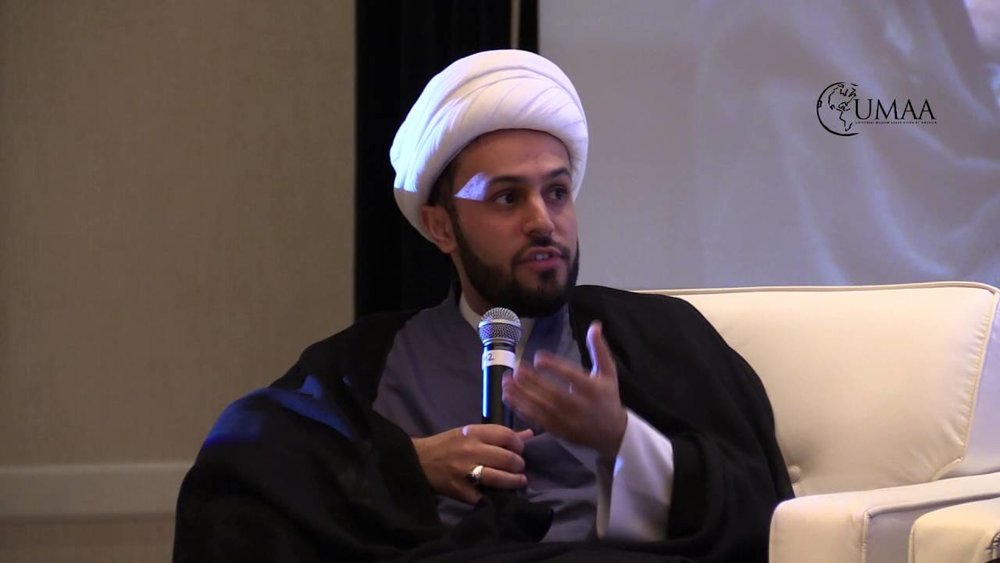
TEHRAN - Sheikh Azhar Nasser is a Canada-based, globally-renowned Islamic scholar, lecturer, orator and a social media sensation. He is the founder and head instructor of Tasneem Institute, which offers on-site, weekend crash courses on Islamic sciences to Muslim communities worldwide. He also serves as the religious director of CBE Academy, which specializes in the production of short spiritually uplifting videos.
Sheikh, who has a degree in cultural anthropology from the University of Michigan and has studied under the tutelage of Islamic luminaries like Ayatollah Sistani and Ayatollah Hakim, has been hailed as the ‘best thing to happen to Twitter’.
In an interview with Tehran Times, Sheikh talks about his foray into the virtual world, the power of social media, issues facing Muslims today, the need for unity, growing Islamophobia in the West, and the significance of annual Muharram commemorations.
Following are the excerpts:
Q. You have got massive following on social media, especially Twitter, and your posts generate lot of enthusiasm among youth. How did this journey into the virtual world begin?
A. I have always been active on social media but recently I decided to share a more satirical outlook on the challenges and struggles of the Muslim community. Life can be overwhelming and stressful at times so why not impart Islamic knowledge in a way that is relatable, enlightening and entertaining?
Q. A lot of us underestimate the power of social media. Do you think it can be a powerful tool to bring Islamic awakening and social reformation?
A. Absolutely. We live in an era where I can reach a wider audience with a single tweet than a traditional lecture. Whether it’s a theological discussion or a social justice issue, there is no doubt that a single post on any social media platform has a significantly greater impact than the more conventional methods of spreading knowledge and awareness.
Q. What according to you are the most significant issues facing Muslims today?
A. There are too many to list but perhaps the most disheartening issue facing Muslims today is our lack of unity. We promote inter-faith dialogue but I believe that we must begin with intra-faith dialogue. As an Ummah, we have yet to learn how to co-exist and respect each other’s differences.
Q. We just commemorated the martyrdom anniversary of Imam Hussain (as) and his companions in the desert plains of Karbala 1400 years ago. What, in your opinion, makes these annual commemorations significant and relevant today?
A. These annual commemorations are significant because the values and ideals that were upheld by Imam Hussain (as) on that day transcend time. The battle of Karbala was not simply a military conflict that took place in the barren deserts of Iraq 14 centuries ago, but it is a heart-wrenching saga that represents the two extremes of the human soul.  
Imam Hussain (as) and his companions attained the highest stations of spiritual enlightenment and represent what the Quran calls “the tranquil soul’. His enemies, on the other, fell prey to their lower animalistic tendencies and therefore exemplified what the Quran calls “the commanding soul”.
The question is: where is your soul on this spectrum?
Q. Some days ago, a group of Shia Muslims was attacked in London during a Muharram commemoration. There have been such incidents in other countries as well. How do you see this wave of Islamophobia and hate crimes in Europe, especially in London?
A. Any attack on innocent civilians is an abhorrent act and deserves the strongest condemnation. Unfortunately, there seems to be a concerted effort by Islamophobes to use fear, intimidation and violence to send a message to Muslims that they are not welcome here. Muslims must remain steadfast, hold onto their values and pressure public officials to condemn acts of violence, irrespective of race, religion, gender, etc.
Q. In times like these, how important has it become for Muslims to forge unity and collectively fight forces that seek to sow discord between them?
A. Unity was important when the Holy Prophet (pbuh) first began his prophetic mission in Mecca and it will continue to be the source of our strength until the Day of Judgment.  Almighty Allah says, “And hold on to the rope of God and do not be disunited.” This verse applies to Muslims of all times.
Q. There was a massive attack in Iran few days ago yet we didn't see global outrage, condemnations, or hashtags. On the contrary, the whole world erupts when where is a similar attack in any part of Europe or the U.S. How would you define these double standards?
A. There is definitely a double standard. Without a doubt, greater attention is given to victims of violence in certain parts of the world far more than others. The Holy Quran is explicit in highlighting the sanctity of all human life stating, “whoever kills a soul unless for a soul or for corruption [done] in the land – it is as if he had slain mankind entirely. And whoever saves one – it is as if he had saved mankind entirely.” (Quran 5:32)
Q. In your lectures and social media posts, you extensively talk about issues like mental health and depression. Why such issues are considered a taboo in Muslim community?
A. There is a dangerous misconception in the Muslim community that mental health and depression are indicators of weak faith. People who suffer from depression in our communities hesitate to seek help because they are afraid of being perceived as abnormal or spiritually deficient.  
As Muslims, we need to show more compassion, empathy and actively try to help those who are suffering before they reach their breaking points. The Holy Prophet (pbuh) famously said, “Have mercy upon those on earth, so the One in the heavens will have mercy on you.”
Q.  What's the connection between religion and science?
A. From an Islamic perspective, religion and science are largely complimentary. Religion invites people to explore the natural world and marvel at its beauty and complexity.  Allah says in the Quran, “Then do they not look at the camels - how they are created? And at the sky - how it is raised? And at the mountains - how they are erected? And at the earth - how it is spread out?  (Quran 17-20)