
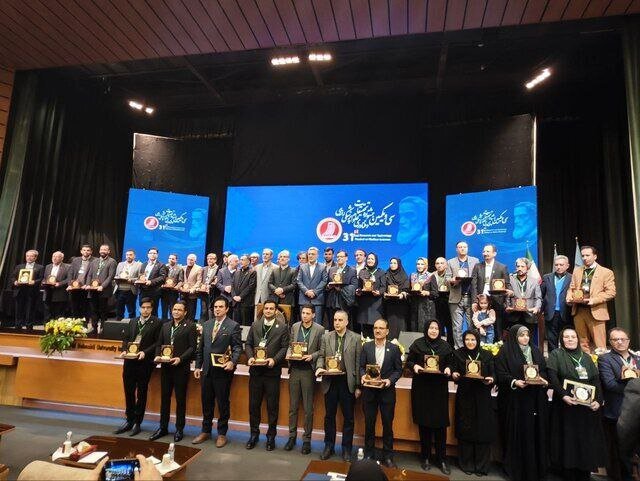
TEHRAN – The 31st Razi research festival on medical sciences honored top researchers and technology experts in the health sector, with ministers of science and health in attendance.
Shahid Beheshti University of Medical Sciences, Baqiyatallah University of Medical Sciences, Fasa University of Medical Sciences, and Sirjan University of Medical Sciences ranked first to fourth, respectively, ISNA reported.
Exemplary research centers were also announced. Endocrinology and Metabolism Research Institute, the Applied Pharmaceutical Sciences Research Center, the Environmental Research Center, the Nursing and Midwifery Care Research Center, the Pharmaceutical Analysis Research Center, the Non-Communicable Diseases Research Center, and the Stem Cell Technology Research Center were among the best research centers.
The student research and technology committees of Shahid Beheshti, Ardabil, Bushehr, and Sirjan universities of Medical Sciences were announced as the top committees.
Among the Iranian journals of medical sciences, the Journal of Dental Materials and Technique and the Journal of Research in Medical Sciences Education were the two selected journals.
Moreover, the Health Technology Incubator Center of Shahrekord University of Medical Sciences, the Health Technology Incubator Center of Urmia University of Medical Sciences, and the Health Technology Incubator Center of Yazd University of Medical Sciences ranked first to third, respectively.
Minister urges WHO to protect health against sanctions
In October, the Health Minister Mohammad-Reza Zafarqandi referred to sanctions as silent wars against public health, urging the World Health Organization (WHO) and member states to safeguard health systems from political pressures and sanctions.
Zafarqandi also called on them to strengthen regional solidarity to tackle crises and climate change, IRNA reported.
The official made the remarks while addressing the seventy-second session of the World Health Organization (WHO) Regional Committee for the Eastern Mediterranean (RC72) being held in Cairo, Egypt, from October 15 to 17.
Over the past year, Iran’s health system has undergone big challenges, including unfair sanctions and the 12-day Israeli-imposed war. The latter targeted non-military and health infrastructures, killing innocent children, women, and health staff, IRNA quoted Zafarqandi as saying.
As documented in The Lancet, sanctions, as silent wars against public health, have systematically blocked access to essential medications and caused widespread suffering and death among the most vulnerable patients, especially children, he added
These articles emphasized that sanctions can cause as many or even more casualties than wars, Zafarqandi noted.
Despite immense economic pressures and sanctions, Iran remains committed to strengthening its primary healthcare network to achieve universal health coverage, empowering communities to combat noncommunicable diseases, addressing ageism and its health consequences, and tackling social determinants of health, such as poverty and environmental factors, the health minister stressed.
Iran remains resolute in health diplomacy and believes that health is the strongest bridge to peace and sustainable development, he added.
According to WHO director for the Eastern Mediterranean Regional Office (EMRO) Iran is a leading country in expanding its healthcare system and providing access to universal health coverage.
Lauding the country’s achievements in recent years, Hanan Balkhi said expanding primary health care services, increasing access to health coverage in rural areas, maintaining high vaccination rates, and reducing maternal and newborn mortality, Iran has managed to become a successful role model in the region, the health ministry’s website reported in May.

No comments:
Post a Comment