
Regional Security Engineering and the Competition of Fronts
Seyed Hadi Seyed Afghahi, in an interview with the website of the Strategic Council on Foreign Relations, stated: The projects to disarm the Resistance groups are part of a grand security engineering designed in the region by the front of global arrogance, led by the United States and centered on the Zionist regime. This front operates, intending to realize plans such as the “Greater Middle East” and “Greater Israel.”
According to this West Asia affairs expert, “The Zionist regime, as the executive arm of Western civilization, with comprehensive U.S. military and security support, seeks to weaken Islamic and Arab countries. In contrast, the Axis of Resistance, supported by the Islamic Republic of Iran, pursues the expulsion of American occupying forces from the region as its primary goal, especially after the martyrdom of General Qasem Soleimani and Abu Mahdi al-Muhandis, which has turned this goal into a central demand.”
This analyst emphasizes: “Operations like Al-Aqsa Storm, which occurred about two years ago, have created a major obstacle to the goals of the front of global arrogance. This operation not only did not lead to the disarmament of Hamas but also thwarted the objectives of the Zionist regime, such as freeing hostages or expelling Palestinians from Gaza. He believes that “these failures have deepened the political and military rifts within the Zionist regime and made its internal fault lines more apparent.”
Impact of Recent Developments on Regional Equations
The West Asia affairs expert, referring to recent developments, including the 12-day imposed war, believes that these developments have drastically changed regional equations and placed the region at a critical juncture. According to Seyed Afghahi, “The current situation is neither full-scale war nor complete peace; rather, the region is in a ‘gray zone.’ This situation has complicated decision-making regarding subsequent actions, including a potential attack by the Zionist regime with U.S. support against Iran.” This analyst warns that “any potential military action by Netanyahu, whether with direct U.S. support or without it, will have extensive consequences for the region.”
He also addressed the issue of negotiations, believing that “negotiations under current conditions, due to the complexities and deceptions of the opposing parties, could be more sensitive than the battlefield.” In the view of this Arab world expert, “negotiations require precise goal-setting by Iran to preserve the interests of the Axis of Resistance.”
Non-Achievement of Disarmament: The Main Obstacle to Arrogant Plans
The senior West Asia affairs analyst emphasizes that “the weapons of the Axis of Resistance in Yemen, Gaza, southern Lebanon, or Iraq are the biggest obstacles to plans such as the ‘Deal of the Century’ and the ‘Abraham Accords’.” Because, from Seyed Afghahi’s perspective, “if the U.S. and the Zionist regime succeed in disarming the resistance groups, one of the main obstacles to achieving their goals in the region will be removed.” This expert, referring to maximum U.S. pressure through threat, intimidation, and cognitive and propaganda warfare, discusses efforts to dissolve the Popular Mobilization Forces in Iraq and notes that “the Popular Mobilization Forces, according to a resolution of the Iraqi parliament, are an official force within the structure of the country’s army, and its dissolution will face serious resistance.”
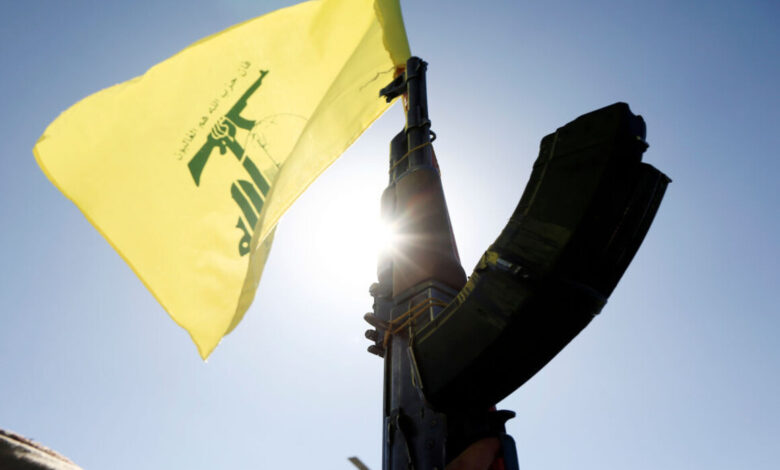
Regarding Lebanon, Seyed Afghahi pointed to similar pressures to disarm Hezbollah and stressed that “these weapons are necessary for the defense of the Lebanese people.” He believes: “Contrary to some claims, disarming Hezbollah is not in Lebanon’s interest and could lead to the weakening of its national security.” According to this expert, “some statements in Lebanon indicate deep rifts in the country’s political and social sphere, which could lead to duality and tension.”
The West Asia affairs expert considers the possibility of civil war in Iraq or Lebanon unlikely but warns that the U.S. seeks to create a “controlled calm” in the region in its favor. In his view, this calm is designed to advance plans such as normalization of relations with the Zionist regime and the implementation of the Abraham Accords. However, this analyst emphasizes that normalization of relations, especially after the recent crisis, including diplomatic tensions between the UAE and the Zionist regime, is very fragile. He believes that in war conditions, nations react in favor of their national interests.
This analyst, referring to Hezbollah’s situation, notes that “this group, despite the martyrdom of some commanders, has rebuilt its capabilities and continues to act as a powerful Resistance force against the Zionist regime.” Seyed Afghahi warns that “any effort to disarm Hezbollah will face serious resistance, and this group will fight to the last moment to defend Lebanon.” The analyst emphasized the necessity of prioritizing the reconstruction of Lebanon and creating national unity, believing that “under current circumstances, discussing the disarmament of the Resistance is not only unfeasible but could also lead to an escalation of tensions.” According to Seyed Afghahi, “The Axis of Resistance, by maintaining its weapons, continues to play a key role in preserving the independence and security of the region.”

No comments:
Post a Comment