
By Alireza Akbari
 For centuries, Gondishapur stood among the seven principal cities of ancient Khuzestan and its prestige grew not only from its strategic location but from its fusion of Persian, Greek, Indian, and Roman knowledge traditions.
- From its very establishment, Gondishapur began a quiet but extraordinary transformation into one of the most influential scientific and medical centres of its time.
- Gondishapur was also a centre of economic life. A major royal mint operated within its walls, and it was here — and in the nearby region of Sistan — that many of the coins of Yazdegerd III, the last Sasanian king, were struck.
Tucked away in the northern reaches of southwestern Iran’s Khuzestan province, 17 kilometres southeast of modern-day Dezful, lie the weathered ruins of Gondishapur — once a flourishing centre of science and wisdom.
Founded in the 3rd century CE by the Sasanian emperor Shapur I, the city was originally named Godishapur, meaning “Shapur’s Military Fortress.”
For centuries, Gondishapur stood among the seven principal cities of ancient Khuzestan. The city’s prestige grew not only from its strategic location but from its fusion of Persian, Greek, Indian, and Roman knowledge traditions.
By the medieval era, scholars spoke of Gondishapur as a leading medical and academic hub.
It was here that Persian doctors worked alongside Greek philosophers, Syriac-speaking scholars, and Indian mathematicians. Some even say it laid the intellectual groundwork for what later flourished in Baghdad’s famed House of Wisdom (Bayt al-Hikmah).
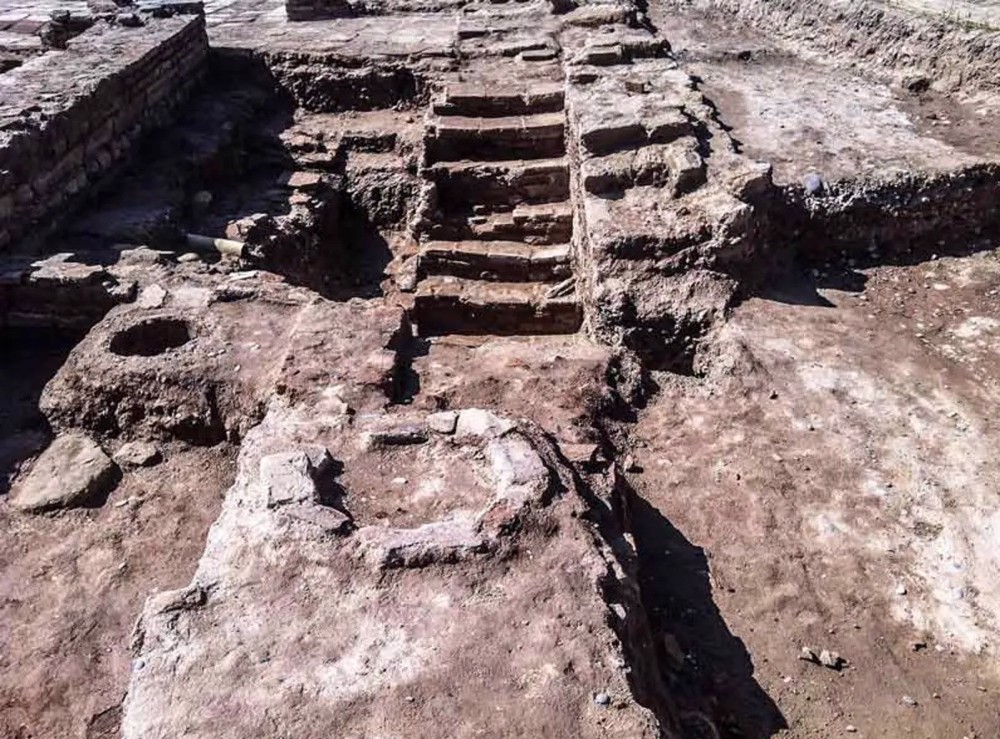
The site’s remains, registered on Iran’s National Heritage List in 1931 (under record number 46), now lie dormant near the modern village of Shahabad — a settlement established atop the ancient city’s ruins during the Safavid era by order of Fath-Ali Khan in the year 1050 AH (1640 CE).
In antiquity, the region was known as Nilab, or Nila in the old Khuzhi dialect — a fertile land situated east of Susa, southeast of Dezful, and northwest of Shushtar.
From its very establishment, Gondishapur began a quiet but extraordinary transformation into one of the most influential scientific and medical centres of its time.
According to historians, Shapur I, the city’s founder, ordered an extensive translation project, having numerous Greek medical texts rendered into Pahlavi, the scholarly language of the Sasanian court.
It was later, under the reign of Khosrow Anushirvan that Gondishapur’s prestige was further cemented. He commissioned the construction of a vast hospital and invested heavily in the city’s medical school, turning it into a sanctuary of healing and scholarship in an empire already famed for its cultural ambition.
Gondishapur was also a centre of economic life. A major royal mint operated within its walls, and it was here — and in the nearby region of Sistan — that many of the coins of Yazdegerd III, the last Sasanian king, were struck.
By the 9th and 10th centuries, as Baghdad rose in prominence, Gondishapur gradually faded from the spotlight. Its libraries, lecture halls, and gardens fell silent.
Today, all that remains are sparse traces, faint ruins near the banks of the Karun River, whispering of a grandeur long past.
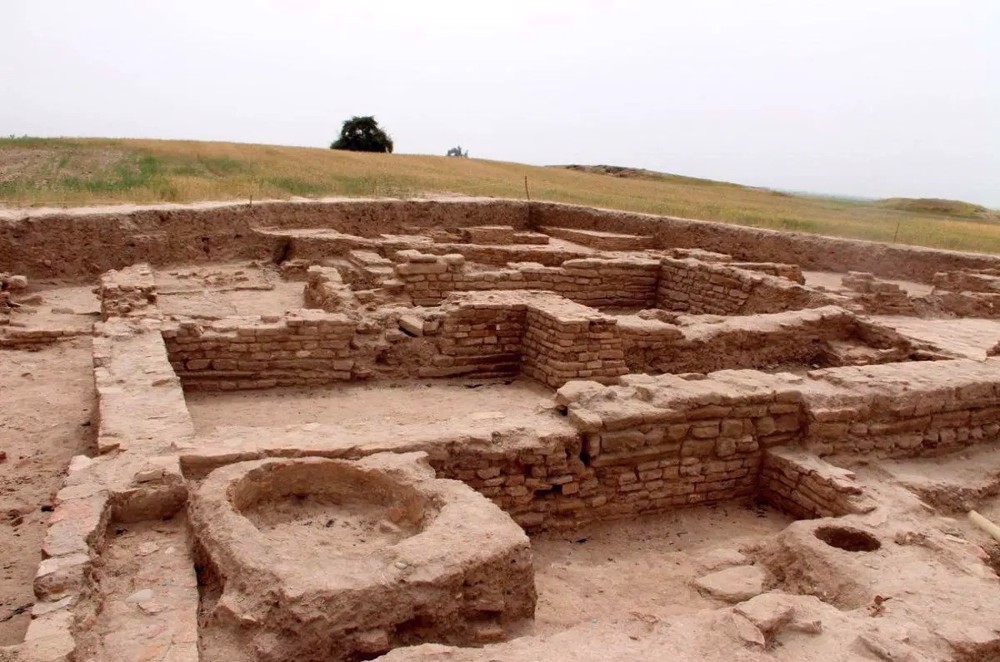
The city’s original name, Veh-Andiv-Shapur, translates as “Better-than-Antioch.” For Shapur, no city, not even the beautiful Roman city of Antioch, would outshine his own.
And so, when Valerian, the Roman emperor, and his soldiers were captured in battle, Shapur tasked them — with their expertise in Roman architecture — to build his dream: a Persian Antioch.
Drawing from the urban ideals of Greek architecture, particularly the Hippodamian grid system popularised in 5th-century BCE Greece and Rome, Gondishapur was laid out with precision: broad, straight boulevards; crosshatched intersections; parallel alleys; and buildings that typically rose one to three storeys high.
The city unfolded like a chessboard — a neat rectangle carved into the Khuzestan plain, its intersecting streets forming a living, breathing strategy of space and movement.
At first, this site served as a military stronghold for Shapur I, complete with fertile farms and flourishing gardens sustained by ample water.
With the establishment of the University of Gondishapur, the city became a sanctuary of knowledge.
Shapur ordered the translation of texts from Greek, Roman, and Indian sources into Middle Persian — also known by its endonym Pārsīk* or *Pārsīg — and established an extraordinary library at the heart of the city’s intellectual life.
Gondishapur evolved into the greatest cultural and scientific centre of its era. Students and scholars from across the ancient flocked here. Nestorian Christians were welcomed and they brought with them the Syriac translations of Greek works in medicine and philosophy.
Platonic thinkers laid the early seeds of what would eventually gain popularity as Sufi mysticism. It was, quite literally, a city of minds. At over 1,700 years old, the university of Gondishapur is widely considered the world’s oldest university.
It was here, for the first time in recorded history, that Hippocratic medicine was formally taught in a university setting. But the intellectual output wasn’t limited to healing arts.
A perfume production centre, a thriving textile industry, and even a royal manufacturing plant flourished within its walls. And with the arrival of elite physicians and scholars from far and wide, Gondishapur blossomed.
Within the stone halls of Gondishapur’s university, a medical tradition born not of one culture, but of many. Here, under one roof, the healing philosophies of India, Persia, Syria, and Greece converged, forming a unified and flourishing school of medicine.
By royal decree, Khosrow Anushirvan — the king of the Sasanian Empire — ordered the works of Plato and Aristotle translated into Pahlavi and taught at the university.
This was no ordinary act of scholarship; it was a declaration that philosophy and science were inseparable in the pursuit of truth.
Over time, Gondishapur’s library became a beacon of intellectual diversity. Among the titles preserved and studied were legendary works like Khwaday-Namag (The Book of Kings), Kalila and Demna, One Thousand Tales, The Book of Sindbad, Vis and Ramin, The Book of Rites, and The Book of the Crown.
The grandeur of Gondishapur didn’t end with the fall of the Sasanian Empire. Its legacy carried deep into the Islamic era. The Bukhtishu family — a dynasty of renowned physicians — remained the intellectual spine of the institution for generations.

No comments:
Post a Comment