Sunday, April 30, 2023

Look at scientific achievements of Mustafa Prize laureate

Look at scientific achievements of Mustafa Prize laureate

TEHRAN, (MNA) – German professor Herbert Gleiter was presenting his pioneering idea for nanocrystalline materials at a conference in 1990 when he grabbed the attention of a 25-year-old PhD student from Princeton University.

The impact of this idea on this young student of chemical engineering was so great that she also spent her postdoctoral studies under the supervision of the same professor in Germany. Now, more than two decades later, nanostructured materials remain the key focus of her research.

Only two years later, Jackie Yi-ru Ying, who had already focused on nanostructured materials, especially in the fields of biomedicine, catalysis, and energy, started her career as a young assistant professor at MIT. In 1999, MIT Technology Review called Ying one of the 100 young and innovative figures of science, technology, and art. According to this review, Jackie Ying was more interested in explaining the applications of nanoscale materials than in their chemical mysteries. 

A year later, at the age of 35, she was made a full professor at MIT in the chemical engineering department. It wasn’t long before Ying returned to Singapore, where she had spent a great deal of her childhood, to establish the Institute of Bioengineering and Nanotechnology (IBN), a division of the Agency for Science, Technology and Research (A*STAR), and serve as its executive director. This institute is committed to making a space for the coming together of bioengineering and nanotechnology where talented individuals from all over the world gather. Ying believes her biggest challenge is conducting research at the border of technology that has a grave impact on society. 

The extensive research carried out in this institute under her supervision led to the publication of hundreds of articles in the world's most prestigious journals and the registration of hundreds of patents. At the time, this young professor was chosen as one of the young global leaders at the World Economic Forum, and later in 2008, she was chosen by the American Institute of Chemical Engineers as one of the top 100 contemporary engineers.

As Ying expected, the results of her achievements were not limited to scientific circles and found a wide reflection in society. After receiving the Abdeali Tayebali Life Time Achievement Award in Singapore, an award granted to individuals who inspire others and are dedicated to serving the public, expressed her great satisfaction that her works have been seen outside scientific societies. In this regard, Ying stated, “Scientific research paves the way for technological breakthroughs that have the potential to transform healthcare and benefit society.”

Ying converted to Islam in her early 30s; her consequent successes and noble research gained her the title of one of the 500 most influential Muslim figures in the world by the Royal Islamic Strategic Studies Centre in Jordan from 2012 till now. She was also inducted into the Singapore Women's Hall of Fame in 2014 for her achievements. 

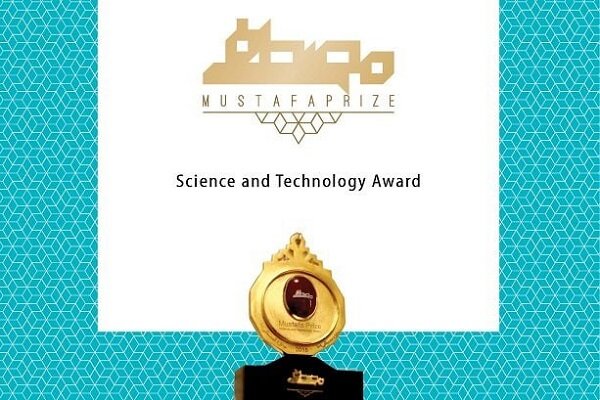
In 2015, Jackie Ying, one of the two laureates of the first round of the Mustafa (pbuh) Prize, received her award at Vahdat Hall in Tehran. She was granted this award for “the synthesis of well-designed advanced nanostructured materials and systems, nanostructured biomaterials and miniaturized bio-systems of various interesting applications including the development of ‘stimuli-responsive polymeric nanoparticles’ for diabetic patients.” According to the scientific committee of the Mustafa (pbuh) Prize, “Professor Jackie Ying's research has left a tremendous impact in the field of nanostructured materials through the creation of nanoparticles, nanocomposites and nanoporous materials.” Using the nano toolbox, Prof. Ying has created new materials and systems that tackle the major challenges in different areas. For example, her laboratory has developed polymer nanoparticles that are capable of auto-regulating the release of insulin depending on blood glucose levels. This invention bypasses the need for blood glucose monitoring by finger pricks. So far, Ying has been the only female scientist to receive Mustafa (pbuh) Prize. One year after receiving this award, Ying’s bust was unveiled in her presence in the Pardis Technology Park. 

In the same year, Ying, along with two of her colleagues at the Singapore Institute of Bioengineering and Nanotechnology, won the Brunei Crown Prince's Grand Prize. This award, which has been established since 2005, was granted to the joint project of Ying and her colleagues entitled "Green tea nanocarriers to fight cancer". The Islamic World Academy of Sciences (IAS) which is a non-profit organization of scientists and technologists was another organization honoring Ying by giving her the Ibrahim Memorial Award.

In 2018, Ying stepped down from her role as the executive director of the Institute of Bioengineering and Nanotechnology (IBN) to establish NanoBio Lab. The research carried out in this lab is birthed from the merging of Bioengineering and nanotechnology and covers topics such as biomaterials and biodevices. In 2018, Ying became the first woman to receive the Turkish Academy of Sciences (TÜBA) Academy Prize in Science and Engineering Sciences. This award recognized her pioneering work in the synthesis of advanced nanostructured materials for biomedical- catalytic- energy and advanced materials applications. During her speech at a ceremony at the Presidential Palace in Ankara- Turkey, Ying stated, “It is my hope that we can make a distinct impact through many successful clinical translation and commercialization of our research.”
Based on her excellence in conducting translational science, mentoring students and post-doctoral fellows and service to her profession, the Journal of Drug Targeting bestowed its Lifetime Achievement Award for 2020 to Ying and published a special issue in honor of her achievements. Translational science seeks to remove the gap between basic and applied sciences. Her focus on education and the discovery of emerging talents made her a two-time winner of the "Service to Education" award given by the Ministry of Education of Singapore to influential people in this field.

In the same year, Covid-19, one of the worst pandemics in recent decades, hit the world, and many scientists in the world grappled with it in various ways in order to contain this virus. From the very first days, Professor Ying and her research team focused their efforts on obtaining faster identification methods and screening tests. By making their rapid test kit, they succeeded in introducing one of the fastest methods of diagnosing the disease in the patient's body.

Amidst the pandemic crisis, the Singapore Women’s Weekly, which addresses women’s issues in different occupations, honored Ying’s determination in combating this disease and called her “one of the great women of our time.” This publication also recognized her as a woman who is “changing Singapore’s sustainability landscape with her work on agritech and energy storage.”

In 2021, she became the first person to become a member of the US National Academy of Engineering based on her research in Singapore. Membership in this academy is granted to individuals who have made outstanding achievements in the field of engineering. Ying attributed her membership in this academy to her team's interdisciplinary research at NanobioLab, Singapore Institute of Bioengineering and Nanotechnology, and MIT University. She is also a member of the oldest German Academy of Sciences, Leopoldia known as Leopoldina, which has been active in various scientific fields since 1652.

Ying's endless search for applications of nanoscale materials continues to earn her numerous awards around the world. The 2023 King Faisal Prize, one of the latest international prizes to honor this famous scientist was bestowed upon Ying for her work on “the synthesis of various advanced nanomaterials and systems, and their applications in energy conversion and biomedicine.” Like the Mustafa (P) Prize, this Prize also addressed Ying’s work on insulin.

On the verge of turning 60, Ying tirelessly pursues her activities, which are as varied as the development of new technologies and education and institutional leadership. Her outlook, which is the driving force of her life, prevents her from retreating and leads her to discover new territories. As she puts it, “There are times when things don’t go well; at these times we should step back and say: it’s not the time to nag; we should follow something else and look at the big picture.”

Iran, Pakistan explore ways to boost bilateral trade

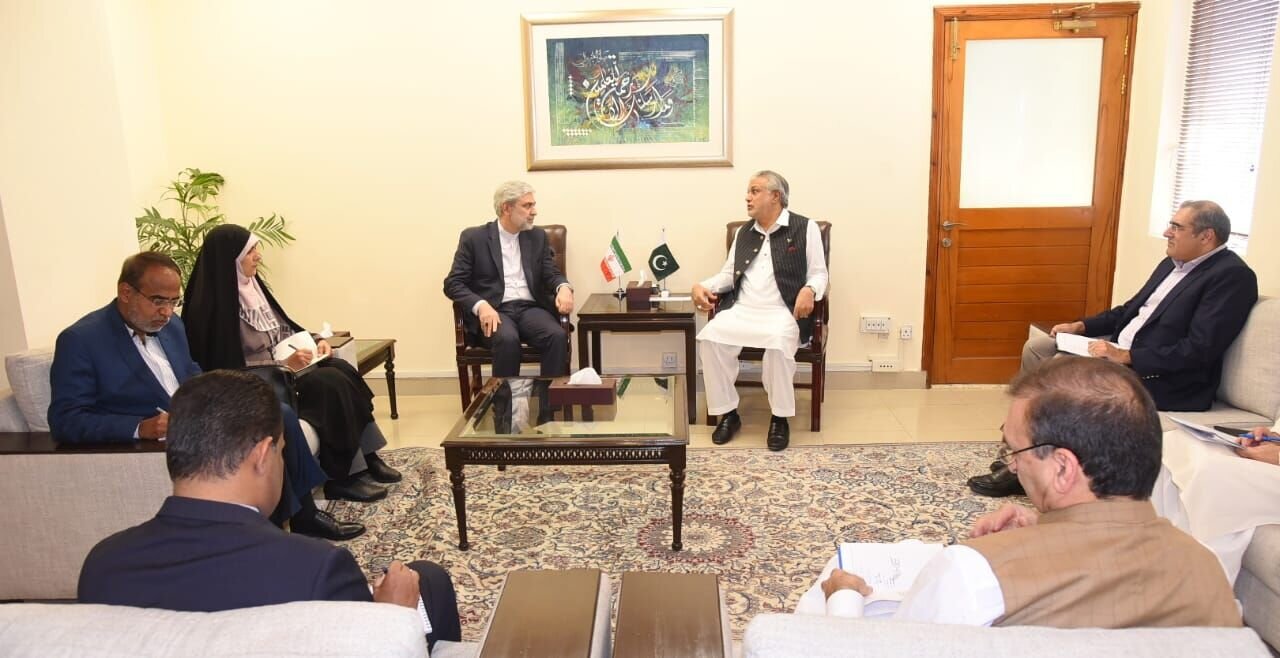
TEHRAN- Iranian Ambassador to Pakistan Mohammad-Ali Hosseini and Pakistani Finance Minister Senator Mohammad Ishaq Dar discussed the ways for increasing trade between the two countries in a meeting in Islamabad on Sunday.

Expressing their satisfaction that the trade between the two countries exceeded $2 billion, the two sides emphasized the need to take more effective steps to strengthen economic cooperation and help expand trade relations.

During the meeting, the Pakistani minister said that Pakistan attaches great importance to its relations with the friendly and brotherly country of Iran.

Appreciating the efforts of the Iranian ambassador during his diplomatic mission in Pakistan in order to strengthen the brotherly relations between the two neighboring countries, Senator Ishaq Dar praised the measures taken especially in the commercial and economic fields.

Expressing their satisfaction with the value of trade between Iran and Pakistan, which has exceeded two billion dollars, the two sides emphasized the need to identify new ways to help increase trade and develop economic cooperation.

Emphasizing the country's economic outlook, Pakistan's finance minister expressed confidence that despite economic challenges, Pakistan is on the path of progress and development.

Iranian ambassador to Pakistan for his part, appreciated the cooperation and support of the Pakistani government for the development of bilateral relations in various fields, and stated that the potential capacities of Iran and Pakistan are the main factor for the expansion of joint cooperation.

He added that bilateral trade between Iran and Pakistan has now reached $2.4 billion, but it is not compatible with the good political and people relations of the two neighbors and more efforts should be made to support the business community of the two countries.

Back in January, Iran and Pakistan signed a Memorandum of Understanding (MOU) on Monday to facilitate bilateral trade between the two countries.

The MOU was signed by Head of Iran’s Trade Promotion Organization (TPO) Alireza Peyman-Pak and Head of the Trade Development Authority of Pakistan (TDAP) Muhammad Zubair Motiwala.

Based on the MOU, which was signed on the sidelines of Iran’s Exclusive Exhibition in Karachi, the parties pledged to exchange business information, support each other’s private sectors, and provide the conditions and context for the presence of their trade delegations in the other country.

It was also agreed that both sides would take all the necessary measures to facilitate holding exhibitions in the opposite country, whenever required.

Speaking in the signing ceremony, Peyman-Pak said that signing this MOU was indicative of the two sides’ determination for removing the obstacles in the way of bilateral trade and prepare the ground for the businesspersons of both sides to bolster cooperation.

He considered the holding of exclusive exhibitions, exchanging trade delegations, and investment in joint production units as positive steps for knowing the capacities and needs of the two countries and expressed hope that such events would continue.

The TPO head further mentioned some obstacles and infrastructural problems that are hindering the two countries' mutual trade, including lack of banking relations, problems related to sea transportation and logistics, and tariff-related issues, saying that the Iranian government is willing to resolve such problems in collaboration with the Pakistani government.

Motiwala, for his part, said that the signed MOU is regarded as a major step to enhance bilateral trade to reach the target of five billion dollars annually.

Photo:  Iranian Ambassador to Pakistan Mohammad-Ali Hosseini (L) and Pakistani Finance Minister Senator Mohammad Ishaq Dar 

Activists in Spain launch campaign to prosecute Israel for crimes against Palestinians

People gather at the Freedom Square in the city of Reus, in the province of Tarragona, Spain on April 30, 2023. (Photo by Wafa news agency)
Activists have launched a campaign in the Spanish city of Reus, calling on the international community to hold the Israeli regime accountable for its crimes against the people of Palestine. 

The Palestinian Arab Community Association and the city’s municipality organized the campaign at the Freedom Square in Reus in the province of Tarragona on Sunday, Palestine’s official Wafa news agency reported.

Husni Abdel Wahed, the head of the Palestinian Authority's mission to Spain, Monsey Flores, the mayor of Reus, Spanish MPs and members of the Palestinian and Arab communities in Spain were in attendance.

Amina Shoman, head of the Palestinian Community in Reus, said the activists aim to collect as many signatures as possible to prosecute the regime for committing the crime of apartheid against Palestinians.  

Tarragona’s deputy mayor, Paula Varas, also expressed solidarity with the Palestinian cause, denouncing all the crimes committed by the occupying regime against Palestinians and calling for an immediate end to them.

This is not the first time that a mayor of a Spanish city condemns Israeli crimes against Palestinians.

Back in February, the mayor of Barcelona announced the suspension of ties with Tel Aviv over Israel's violation of the Palestinian people's rights in a "systematic" manner.

Ada Colau announced the decision in a letter to Israeli Prime Minister Benjamin Netanyahu, stressing that the city would suspend relations until Israel ended the “systematic violation of the people of Palestine’s human rights.”

According to the mayor, the decision was made after 100 groups and more than 4,000 residents had signed a request to break relations with the apartheid regime.

The Palestinian foreign ministry as well as pro-Palestinian rights groups hailed Barcelona's decision at the time.  

The Israeli regime has killed hundreds of Palestinians who oppose the occupation of their lands by the regime since the 1967 war.

The Israeli regime grants special status to illegal settlers and applies many Israeli laws to them; however, Palestinians do not have the same legal rights and protections. Human rights groups have stressed that Israel is committing the international crime of apartheid by systematically denying Palestinians equal rights.

Lula’s stakes in a Russia-Ukraine ceasefire

  • Hannan Hussain 
  • Source: Al Mayadeen English

The peaking threat of recession, limited fiscal space, and utilization of highly destructive weaponry have compelled even the most skeptical of countries to fall back on the diplomacy option and endorse peace. Why should a newly elected Lula presidency be an exception to that trend?

Under President Luiz Inácio Lula da Silva, Brazil demonstrates vocal support for a negotiated, peaceful settlement in the Ukraine-Russia war. Its approach so far puts a premium on reaching a ceasefire. The heightened risk of a protracted conflict between warring parties has put Brazil in a bit of a limbo. For instance, the country is staring at a situation where mounting international pressure to steer Brazil into a camp weighs down Lula’s aspirations for East-West energy and trade. Similarly, the unified prevention of conflict spillovers needs to materialize through an early ceasefire, which several states in Latin America agree is simply beyond the West.

It is against this backdrop that a Beijing-led proposal to back a peace initiative between both sides can score Lula’s peacemaking objectives home. Early traction in key diplomatic quarters is a welcome sign so far, and Ukraine’s intent to build on it shows a greater degree of promise than any divisive NATO proposal that has come to the fore. 

To Brazil, the 12-point peace proposal is informed by the understanding that Ukraine and Russia should be jointly recognized under one banner of common security, a priority identifying closely with the BRICS economic grouping. Reduction in hostilities can pave the way for a negotiated stop to escalation, and Lula’s urgency to put together a “peace club” with independent messaging to Kiev and Moscow strengthens the case for Brazil’s desired leverage in global peace-building.

In recent times, nations from the West to the East have weighed in on the plan, and Beijing’s time-tested rapport with Russia invites valuable leverage to build off Lula’s own rapport with Moscow. Brazil should read this opportunity in Beijing – the first since Lula’s presidential win – as a blueprint for endorsing its own position: sticking to the UN Charter, and trusting the merits of its studied neutrality on a delicate geopolitical conflict.

In line with Lula’s peace club aspirations, the advancement of the Chinese reconciliation proposal remains critical to guarding middle powers such as Brazil and China against a protracted war. Consider the fact that North Atlantic Treaty Organization (NATO) states have been identified as participants to the conflict in the absence of a ceasefire, and the specter of nuclear threats continues to raise eyebrows in an already sensitive geopolitical landscape. Brazil’s desire to be seen as a champion of multilateralism, chiefly under the umbrella of BRICS, makes alignment with Moscow on negotiations a central point of leverage. 

Continued trust deficits between Ukraine and Russia may fail to facilitate new drivers for near-term relief, as Brazil looks to get its economy in higher gear. The absence of a ceasefire can continue to add to sustained and counterproductive downward pressure on the Brazilian economy, affecting its vantage position in Latin American growth forecasts while shrinking the space for Lula’s multilateral conflict resolution aspirations. 

To support Brazil’s economic, security and energy considerations without excessive external pressures, a negotiated ceasefire is of paramount importance this year. Particularly when the arrival of US-led lethal tanks and ammunitions to the battlefield has driven up geopolitical tempers considerably, and failed to incentivize Lula’s landmark visit to the United States rather than Beijing.

Europe – a key player in facilitating energy market stability and a potential ceasefire – is not averse to Brazil’s quest for Ukraine-Russia confidence-building measures. EU foreign policy chief Josep Borrell gave a glimpse into the bloc’s non-ideological leaning towards the conflict, by indicating Europe’s willingness to assess and examine the China-led 12-point Ukraine-Russia peaceful settlement plan. To the credit of both sides, this is a plan and approach that aligns with Brazil’s expectations as well. Critical reference points in the negotiation exercise, such as a reduction in strategic risks and supply chain management, call for discontinuity in arms confrontation on-ground first, and Lula’s high-level engagement in China reflects a desire to level the playing field. 

All that is in line with Brazil’s view that the sustainability of the Ukraine conflict to this point reflects poorly on global potential to strike a pause, and cease hostilities. 

After all, the peaking threat of recession, limited fiscal space, and utilization of highly destructive weaponry have compelled even the most skeptical of countries to fall back on the diplomacy option and endorse peace. Why should a newly elected Lula presidency be an exception to that trend? For months, the mistaken logic of ‘defense spending for peace’ has only aggravated security risks and made it difficult for financial institutions, including the International Monetary Fund (IMF), to sanction funds to needful nations without working their last nerve. Brazil, which is keen to reorient its foreign policy choices with a focus on prioritizing domestic stability, finds a favorable ally in China to score peace-building merits home.

Taken together, Lula’s visible agenda shift on Ukraine means his country cannot afford to sit back for long as a spectator. A protracted war has pushed energy prices up and contributed to rising instability in the high-growth Latin American region. The 12-point peace proposal making rounds in the world presents an opening to advance ceasefire momentum for Brazil. 

How key parties to the conflict follow up on it will be a key consideration to watch in the near future, with implications for Brazil’s stakes in an East-West rapprochement.

Fateful "line"; Necessity of drawing line with enemy

 By Mohammad Sarfi

TEHRAN- A review of Ayatollah Khamenei's speeches over the past few decades shows that he has repeatedly emphasized the necessity of drawing a line with the enemy.

For example, in the “Second Phase of the Revolution”, he emphasized:

“The Islamic Republic is not reactionary and it does not lack perception and understanding in face of new phenomena and situations; however, it strongly adheres to its principles and it is highly sensitive to its frontiers in relation to its rivals and enemies. It never imprecisely regards its principal lines and considers it important as why and how it would persist.”

Drawing a line between oneself and the enemy is a key and sensitive issue for individuals and various groups. The enemy uses various and sometimes very complex methods to achieve its goals. The complexity of these methods sometimes causes some individuals, despite having good intentions, to favor the enemy without even wanting to or knowing it. This is where at every stage of any move or action in various fields, one must think about its relationship with the enemy's plans and goals.

On Saturday, Leader of the Islamic Revolution again addressed the issue of drawing a line with the enemy in a meeting with workers and praised their intelligence in this regard. Despite protests for their rights, workers have not allowed these protests to become an excuse for Iran's enemies to exploit.

Paying attention to the enemy's plan in this regard shows the value of intelligence in the workers' community. The most important tool of the West, especially the United States, against Iran in recent years has been sanctions. Their goal was to put pressure on the people and thereby put them against the government. They wanted to increase the pressure on the people, especially the working class, to the point where they would take to the streets in rebellion and the country would become chaotic and insecure. This is while America always claims that the goal of sanctions is to put pressure on the Iranian government to change its behavior. But in reality, the people are the target.

For example, Richard Nephew, a Treasury Department official in the Obama administration who is also known as the "architect of Iran sanctions", said in an interview about whether the main target of U.S. sanctions is the people or governments of countries, he said, "It depends on the country being sanctioned and what interests are at stake. If you sanction the Qaddafi regime in Libya, you shouldn't even think about the population because Qaddafi didn't care about his population or their suffering. It's the same with Kim Jong-un and North Korea. Here, 'pain' should specifically target the ruling elites to change their behavior. The same goes for Russia. In my opinion, when it comes to using 'pain' for populations, it should be a government that has a popular base, and Iran falls into this category... In the case of sanctions, we should have focused on where the decision-makers would be convinced, and in the case of Iran, this was through making people dissatisfied with the situation."

Attention to the way America intervenes and infiltrates in different countries shows that workers have been one of the main targets. The working class in any country faces its own issues and problems. The Americans try to exploit these problems and resulting protests to advance their political and hegemonic goals in countries they consider as enemies. Of course, they also cover up this exploitation with beautiful slogans and human rights claims.

The noble working community in Iran has so far thwarted America's sinister plans. Continuing to resist against these conspiracies, in addition to the intelligence of the workers, requires more attention from officials to the demands of this noble and hardworking class and improving their welfare, as emphasized by Ayatollah Khamenei on Saturday.
 

Mohammad Sarfi is Editor-in-Chief Tehran Times

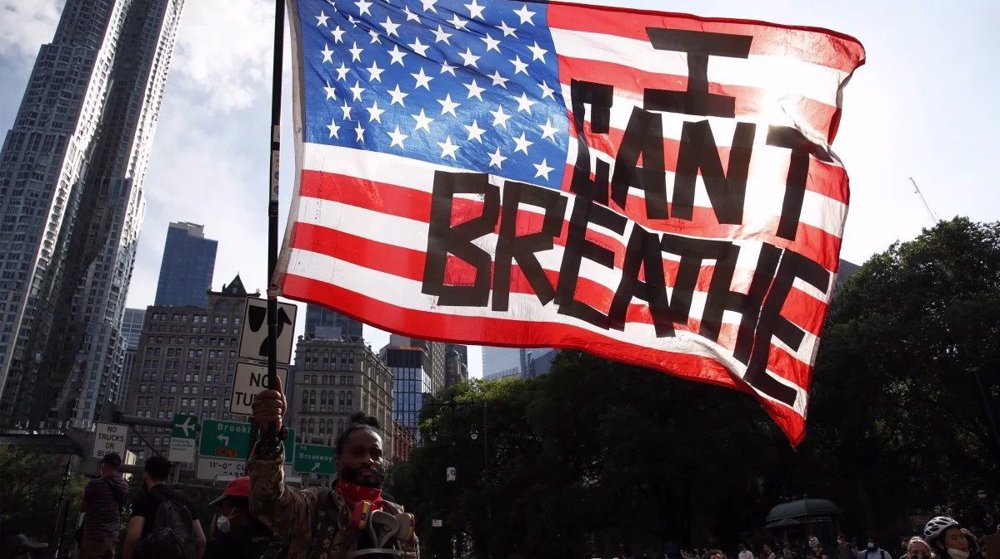
An unjust burden: Black man held in US jail for decade without trail

Protesters marched in Old City in honor of Walter Wallace Jr. after the release of officer body cam footage showing his fatal shooting.
A black man has been held in US jail without a trial and without representation for 10 years after being charged in connection with a double murder in Georgia, once more revealing the failure of US so-called justice especially towards people of color.

Maurice Jimmerson, now 32, and four others were arrested by police in 2013 for murder. A jury acquitted two of them, but for a decade, Jimmerson has spent the majority of that time in county jail, legally innocent.

Several factors such as the COVID-19 pandemic, a 2021 courthouse flood, and the decision by the previous judge to try Jimmerson and his codefendants separately caused the delay, according to Gregory Edwards, the local district attorney talking to Atlanta News First (ANF), a local news station.

Jimmerson has been left without an attorney for the past eight months due to particularly bureaucratic errors.

“The county has been unable to find a public defender for Jimmerson, which has lengthened his time behind bars,” Edwards added.

According to ANF, Jimmerson's old attorney, Benjamin Harrell, filed requests in July and August of last year to be released from the case. But the court employees lost Harrell's request so he was technically listed as Jimmerson's attorney until April 12 of this year.

Though Jimmerson never received actual legal help from Harrell during this time, the Georgia Public Defender Council insists that Jimmerson has had access to legal counsel during the past eight months, despite the error.

ANF notes that Georgia's public defender system is plagued with issues, primarily understaffing and difficulty retaining attorneys. One judge insists that they lack public defenders for the work to be done, but on the other side the director of the Georgia Public Defender Council disputes this, saying, “We have more employees than we've ever had in the history of the agency.”

Regardless of the source of the issues, it is indicated that when the bureaucracies go unchecked, defendants like Jimmerson—who cannot afford their own lawyers and must rely on public defenders—are in danger of being effectively denied their Sixth Amendment right to a speedy trial.

The Sixth Amendment of the US Constitution guarantees people accused of crimes the right to a speedy trial and access to an attorney if they cannot afford one.

“For so many of the people that I’ve met with in jails, who have been in there for months and sometimes years, I’m the first attorney that they’ve seen,” said Maya Chaudhuri, an attorney with the Southern Center for Human Rights, an Atlanta-based civil rights organization.

Over the past few months, Chaudhuri said she’s traveled across the state tracking down people in jail charged with crimes who do not have court-appointed attorneys and Jimmerson is one of them.

Human rights vs. inhumane conditions in US jails

The police violence has assumed alarming proportions in the US in recent years, with people of color being the main targets. In line with its commitments under international law, the Biden administration must prioritize addressing this urgent human rights crisis.

In the United States, people of African descent and other people of color are subjected to police brutality that terrorizes ordinary civilians and, if imprisoned, are more likely to experience prison conditions that may amount to torture.

A 2021 study in the medical journal The Lancet recorded 30,800 deaths from police violence across the country between 1980 and 2018, far higher than estimates offered by the US National Vital Statistics System.

Recent studies also show that Nearly 50,000 people are held in prolonged solitary confinement in US prisons. In some cities, the majority of people in solitary confinement are people of color.

It said more than 55 deaths of deaths from police violence in the US from 1980 to 2018 were misclassified or unreported in official vital statistics reports.

Moreover, according to new data released earlier this month, US police killed at least 1,176 people in 2022, making it the deadliest year on record for police violence in the country since experts first started tracking the killings.

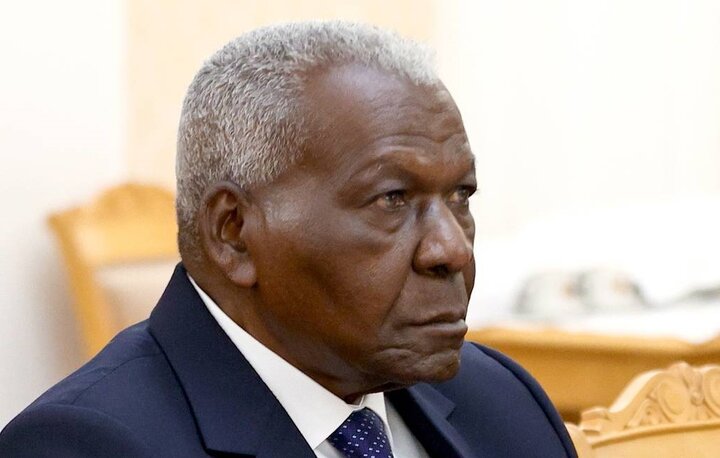
Cuban parl. speaker blames US for fomenting Ukraine conflict

Cuban parl. speaker blames US for fomenting Ukraine conflict

TEHRAN, (MNA) – Cuba's parliament speaker Esteban Lazo says that the United States is guilty of fomenting conflict in Ukraine.

The US leadership is responsible for fueling the conflict in Ukraine and is trying, through media pressure, to blame Russia for the crisis, the President of the National Assembly of People's Power, Cuba's parliament, said on Saturday.

"We reiterate on behalf of the Cuban parliament the most vigorous condemnation of the unilateral sanctions imposed against Russia," he said at a meeting with State Duma Chairman Vyacheslav Volodin in Havana.

"We oppose the policy of isolating Russia through a powerful media campaign aimed at inciting hatred against Russia, which they seek to blame for the escalation of the conflict. We are well aware of how the US government operates, the true culprit of this problem," TASS quoted Lazo as saying.

Lazo noted that Cuba also condemns the policy of NATO expansion and bringing NATO closer to Russia's borders.

On Saturday, the Russian Foreign Minister said that efforts by the US and its satellites to isolate Moscow are failing completely, with the global majority being unwilling ‘to pull the chestnuts out of the fire’ for former colonial powers.