Tuesday, January 02, 2018

Iran Is Not Hungry, America Has So Many Hungry Kids

Trump Tweet Iran d4f6e
Dear Donald Trump! A few days ago, some protests began in Iran. Right away, you started to tweet on the matter. Since I have been living among the Iranians for the past four years, let me clear some issues in response to your tweets:
The people of Iran are not hungry, they have food more than you can ever imagine and they are such hospitable people. They have so much food that during their holidays or special occasions, food is distributed on the streets for free, maybe you have never heard of this food; they call Nazri. You probably do not know what food on the streets for free is like, especially as the CNN asks why does America have so many hungry kids?
The people of Iran have the right to express themselves. Maybe you have never attended any of their conferences or meetings when regular university students or citizens attack the government officials and they are allowed to speak and describe their problems elaborately, or maybe you have not seen the peaceful protests that take place in the streets. Maybe you should have been there on the night of the presidential elections to see how the people were on the streets to sound support for their candidates. Ironically, they seem to have more freedom than that kid in the US who called Hillary Monica and got kicked out quickly.
The people of Iran are wise, and well-educated. Yes, there are problems in the country, there is corruption here or there, and unemployment is a problem, just like the case is across the globe. But these people are wise I tell you, and share a history dating back to some six thousand years of consecutive ancient civilizations unlike the US which was established after kicking out its indigenous people. I bet you have no idea what I am talking about!
The people of Iran have been supporting people across the region. The Palestinians have the right to live in peace, but they cannot because you have decided to confiscate their homeland by supporting the apartheid regime. Yes, Hebollah is not a state-actor, but it is a popular movement that first came to light in the 80s, when Israel decided to occupy its land. I do not think anyone recalls that it was the other way round. Yemen is under Saudi fire and siege, your number one ally in the region. Leaked memos revealed that the terrorist groups in Syria and Iraq were supported by your country and its allies in the region, mainly Saudi Arabia and Qatar. Also, for your information, it is in Islamic teaching and identity, which you fear, that you help your brothers and sisters when in need.
Let us take a look at your country for a second. In the 1890s, Americans struggled with financial crashes, substance abuse, family instability, and much more. Now, a century and a few decades later, they seem to struggle with the same if not more issues if we add environmental problems and other issues.
According to the New York Times, and based on the famous Gallup polling carried out by the US, the biggest problem cited by the Americans themselves in February 2017 is dissatisfaction with the government. That is to say, after your inaugural speech in January.
Back to terrorism here, an FBI report said that the number of “hate crimes” committed in the United States rose in 2016 for the second consecutive year, with African-Americans, Jews and Muslims targeted in many of the incidents. I wonder why you call them hate crimes, isn’t it terrorism when you kill others for no reason, or even if you kill them for hate? 
If there is any soil growing ripe for protests and a final fall apart, it is the United States of America with Islamophobia, homophobia, misogyny, xenophobia and racism expanding throughout its culture. The US is neither a melting pot nor a salad bowl. It is a ripe soil for instability in the coming years. 
Despite the pressure you try to put on Iran, the Iranians will not yield. And at the time you say the majority of the people express dissatisfaction, Iran is a nation of 80 million, please tell me how many are on the streets? The rioters who broke public property, burned Iran’s flag, and killed some innocent people to whom you have sounded your support are also backed by voices like some Israeli regime officials and the head of the MKO terrorist group Maryam Rajavi via social media.
Yes, it is true that Iranians are sounding their dissatisfaction with the economy, but if anyone was to blame in first place it would have been you. Since the signing of the nuclear deal, Iran has kept its word and as the IAEA has repeatedly assured the country is abiding by the commitment at the time when the US keeps breaching the deal and its spirit.
Today Monday, Iranians poured into the streets to participate in demonstrations, not against the government but to distance themselves from the rioters and voice their demands in a civilized manner.
Maybe it is time for you to taste some of the famous Iranian dish Ghrome Sabzi, or drink some saffron tea and read some Hafiz poetry. Or just like some of my American friends did, maybe you should travel across the borders and come see for yourself. Maybe it is best if you come here and know who Iran is, and avoid another flagrant mistake of ignorance like you did while meeting Lebanon’s Prime Minister Saad Hariri when you said“Lebanon is on the front lines in the fight against ISIS, Al Qaeda, and Hezbollah.”
In a country named Iran, there is freedom of expression, there are well-educated people, and there is enough food to put on the table. And yes, the country has problems of its own but who doesn’t? Just keep in mind that this country has chosen to have an identity of its own.

WRITER

Saudi Arabia in the Grip of the ‘Frenemy’

Viktor Mikhin
SUS
Over 40 countries joined the Islamic Military Alliance, the creation of which was announced with fanfare by the Crown Prince of Saudi Arabia, Mohammed bin Salman. This military alliance will become a ‘strong signal’ to terror organisations, which in recent years maintained activity on the territory of ‘our countries’, as the prince assured in Riyadh at the first meeting of defence ministers and experts on security of the alliance countries. According to the prince’s opinion, the most threat that is posed by the terrorists, is not only the death of innocent people, however damaging the reputation of the Islamic religion as well.
41 member countries of the newly created alliance are planning to unite their ‘military, political and financial’ efforts for the joint counter-stand to international terrorism. They are mainly Sunni Muslim countries which surround Saudi Arabia, and they will be part of the anti-terror coalition. There are some notable absentees, as Iran, Iraq, Syria and Qatar did not become part of the alliance.
We should remember that this is not the first attempt of Riyadh to knock a military bloc together out of several countries that would execute orders of the King of Saudi Arabia in full obedience. In the early 2010s, Saudi Arabia, with the active support of Washington, tried to unite the armies of the Cooperation Council for the Arab States of the Gulf (GCC). The Americans called the combined military units of the Arab states as ‘Arab NATO’. The armies of other countries, such as Jordan and North Africa countries were to join this alliance of ‘regional security’ pushing back against Iran. The military source in Tehran reported at the time that they set about entering this plan since the military intervention in Libya, where several countries of the said region were in the war, notably Qatar. The crisis in Bahrain increased the anxiety, which threatened the existence of ‘American Salafism’ in the Gulf region.
Washington believed that a window of opportunity emerged to kill two birds with one stone, with the larger command in the GCC armies; firstly, their military demands would increase, and the USA would be able to sell them even more of their expensive armaments. Secondly, an army against Iran would be created, which would instigate a war between the Shias and the Sunnis and at the same time would dispense the military units of the Western countries of the necessity to deal with Iran directly. Thirdly, the Americans were intending, simultaneously with the withdrawal of troops from Iran and Afghanistan, to create new forms of their presence in the region. The fourth reason, the problem of ‘Arab Spring’ influence spreading to Arab countries in the Gulf which have strategical importance for the USA, would be solved. However, the plan of creation of ‘Arab NATO’ failed as fast as it appeared. Not everything is that good as in Europe and might not fit the turbulent Middle East.
However, in Riyadh, they continued to behave like a child with a new toy. In December 2015, it was announced about the creation of the so-called Arab Coalition when Saudi Arabia began the combatting of the rebels-Houthis in Yemen, and at the time 31 countries joined, including Qatar. However, this notorious coalition came to ought, as most of the countries knew on their participation in the coalition only when the list of its participants was published. The participation of Qatar Air Force and United Arab Emirates Air Force was negligible. That is where it all stopped.
And now, one can see the third attempt of creating this military alliance, this time combatting the international terrorism. One should note that this topic, started in the aftermath of the 9/11 attack, when the American elite blew up the three buildings in New York in the attempt to justify their plans in the achievement of world supremacy, is quite tempting and topical. It is most appealing exactly for Saudi Arabia, at the time when the ISIS bandits and terrorists battered by the Russian Aerospace Forces in Syria are faced with an urgent issue; where will they flee from Syria and where to lay another stepping stone? In the world press, there were reports that the American special forces soldiers, who were illegally deployed on the Syrian territory, have already saved and evacuated part of the ISIS leadership.
Now the terrorists are confronted with two short paths. The first one is through the desert region at the Iraq-Syria border to get across to Iraq and remain in the south, where one can easily get lost and where there is very scarce population, mainly Bedouins. The other option is to continue and move along the corridor of sandy terrains in the north of Saudi Arabia, when they can regroup, recuperate and with the aid of the USA, who repeatedly allegedly dropped the armaments for the terrorists from the war-craft, to replenish their supplies.
In Iraq, where the Shia are in power headed by Haider al-Abadi and the Iranian armed forces, terrorists are unlikely to feel secure. Neither the government of Iraq, nor Iran will tolerate the presence of the Sunnis from ISIS in the country. It is more realistic that the terrorists might leave for the deserts of Saudi Arabia, which is ultimately critical for Riyadh and quite attractive for Washington. Firstly, ‘The Merchant’, – the American President Donald Trump, will sell a vast amount of special armaments for the military engagement in the desert. Secondly, he will be able to press down the Crown Prince, who is constantly evading the American trap, and is trying to arrange friendly relations and contacts with the bitter enemy of the USA, namely Russia. At present, the Washington elite is screwing a face into a smile upon remembering the visit of the King of Saudi Arabia into Moscow and the agreements reached there. Thirdly, the Americans have not given up their plans yet to develop the production of light tight oil, in the way of which are included in the agreements between Mohammed bin Salman, whilst presiding in OPEC and Russia.
One can wonder whether the prince of Saudi Arabia will stay lucky for the third time in the creation of and most importantly in the functioning of the new coalition. As of now, he was out of luck on several occasions and is being characterised by failures, this can be specifically seen at the example of the Yemen crisis unleashed by the Prince himself. The representative of the United Nations International Children’s Emergency Fund (UNICEF) in the Middle East and North Africa region, Gert Kappeler announced that about 11 million children in Yemen “are in need of emergency humanitarian assistance” and “one child, every 10 minutes in Yemen dies from diseases that can be prevented”. According to Kappeler, “since the beginning of operation, led by Saudi Arabia, of the international coalition against the Yemeni rebels, the Houthis, about 5 thousand children have been killed or seriously injured”.
And even the widely advertised campaign on the bribery control, during which from 200 princes and officials, approximately 100 billion dollars were wheedled out, did not lend éclat to them. In the society of Saudi Arabia, despondency and fear prevails – who will be arrested next? We should not forget that Saudi Arabia is a Middle Eastern country, where bribery, nepotism and the principle “you scratch my back, and I will scratch yours” exist for centuries. It would be enough to say that any foreign country, operating in the kingdom, is to give 50% of its equity capital to a Saudi Arabian, who, then, without working, will make quite a good money ‘harvest’. Is this a bribe as well? In this case, up to 60% of the adult population of the country are to be arrested.
By the way, as the world mass media report, the money ‘wheedled’ out of certain Saudi Arabians are unlikely to be diverted to the modernisation of the kingdom, and will rather be spent, by recruiting foreign troops, to provide the security of the country. Hence is the ambition of the Saudi Prince, who will any day now become the King, to form the new coalition and saturate it with the received ‘gratuitous’ money.

Victor Mikhin, a corresponding member of RANS, exclusively for the online magazine “New Eastern Outlook.

Monday, January 01, 2018

Saudi Arabia's purge: Is the prince moving too fast?


Gasping for the rationale behind the recent purge, while officially claimed to be a crackdown on corruption, seems more like an attempt for quick financing. Not only would it enable MBS to proceed with his so-called reforms in the short-term, but will also eliminate any potential political opposition in the long run and win him the popular support.
It is no secret that low oil price and years of austerity have left Saudi Arabia’s economy battered. Ever since 2014, and the horizon hardly looks bright, too, as global oil demand is forecaster to be weaker than expected this year and the next and Saudis’ non-energy exports are yet to compensate for the drop in oil prices.
The Saudi kingdom is also bogged down in Yemen’s cash-bleeding quagmire for more than two years. For the Saudis, the war is far more expensive compared to their adversaries. A Harvard study says it may cost Saudi Arabia as much as $200 million a day.
The need for cash can be pinned down in Mohammad bin Salman’s privatization plans, the scale of which dwarfs any attempt done in history. Around $200 billion of firms doing everything from making flour to providing pilgrimage services are set to be offered.
And the biggest headline is the plan to sell a 5% stake in the oil giant Aramco via the biggest IPO ever to raise another $100 billion.
Yet none of the attempts so far have been effective in addressing the kingdom’s economic woes. Austerity measures are seen as short-term solutions, and little progress has been made regarding Aramco’s IPO first unveiled more than a year and a half ago. The potential $800 billion up for grabs can be a timely solution.
Even though Saudi Arabia’s economy is staggering, the royal family unofficially known as “Al Saud Inc.” has shown few signs it’s willing to share the burden.
On a visit to Russia this month, King Salman brought 1,500 people, a golden escalator, his own carpets and booked out two luxury Moscow hotels, according to people familiar with the details.
The king also spent $100m on his annual summer holiday to Morocco, visiting his 74-acre purpose-built summer palace.
Yet, the king is the king, and lavish spending is hardly surprising. Saudi Arabia’s anti-corruption champion and reform hero, however, was expected to be different. The Crown Prince, who is leading an austerity drive at home, has recently been named as the bidder who paid a record $450.3 million for a 500-year-old painting by Leonardo da Vinci, according to a Wall Street Journal report.

Zionists Have No Place in Al-Quds: Ex-CIA Agent

Zionists Have No Place in Al-Quds: Ex-CIA Agent

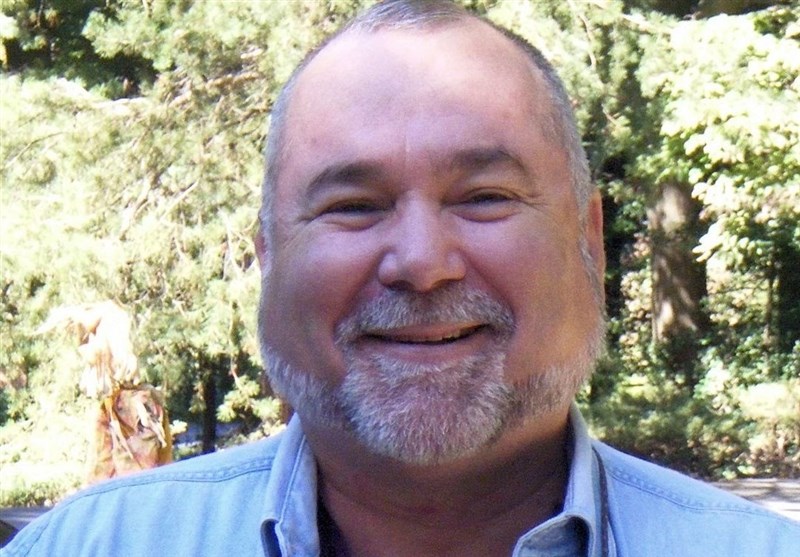
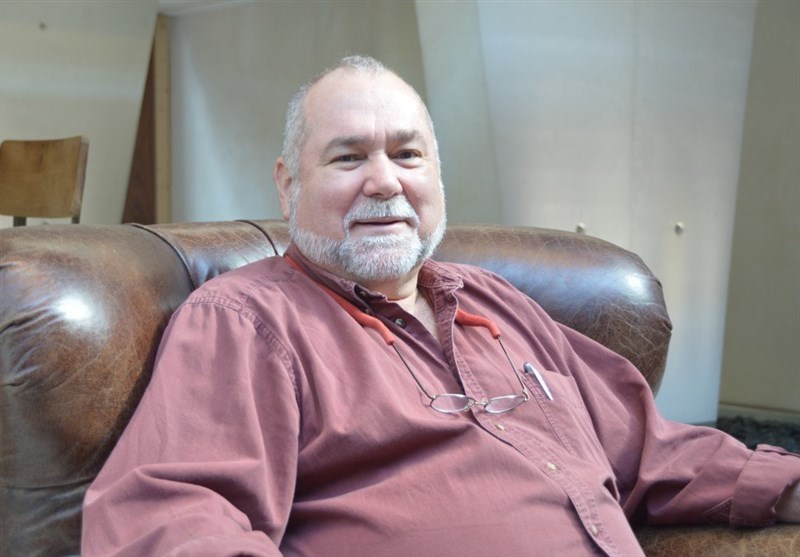
TEHRAN (Tasnim) – A former officer of CIA Clandestine Service denounced the Zionist regime of Israel as a crime against humanity, saying the city of al-Quds (Jerusalem) must exclude all forms of Zionists.

 In an interview with the Tasnim News Agency, Robert David Steele hailed the recent UN General Assembly’s vote against the US decision to recognize Quds as the capital of Israel, saying it shows the world is aligned against Zionism and its genocidal policies against the Palestinians.

He also slammed the Zionist regime of Israel as a crime against humanity, saying Quds must become an international city that excludes all Zionist uniforms.

Born in 1952, Mr. Steele is a former military intelligence officer, a former Central Intelligence Agency officer, co-founder of the Marine Corps Intelligence Center, founder of conferences, and author of several books on intelligence reform and electoral reform. He is widely known for his promotion of open-source intelligence (OSINT).

What follows in the American analyst’s interview with Tasnim:

Tasnim: As you know, 128 UN members defied US President Donald Trump last week and voted in favor of a resolution calling for the US to withdraw its decision to recognize Jerusalem (al-Quds) as the capital of Israel. How meaningful or effectual, do you think, was the move by such resounding majority of UN members, as only nine voted against?

Steele: The vote at the UN is meaningful in one small sense: it is demonstrating that the entire world is aligned against Zionism and its genocidal policies against the Palestinians, its destabilization activities across the Middle East and Europe, and its fascist subversion of the USA and other democracies -- including India's democracy -- for its own ends. The UN is a dysfunctional archipelago of nepotistic fraudulent "special agencies" licensed to steal, and should be disbanded. 

Tasnim: Do you see any chance that Trump would press ahead with his plan to relocate the US embassy to Jerusalem given the widespread international opposition?

Steele: Absolutely not. Apart from the fact that Jerusalem must become an international city that excludes all Zionist uniforms (at the same time that the Vatican loses its diplomatic immunity that it uses to smuggled gold, cash, drugs, guns, and small children), Donald Trump is a brilliant man who is also a very good street-fighter. As I wrote in Donald Trump: Next Year in Jerusalem — NOT — How Donald Trump Just Diminished Benjamin Netanyahu and Zionist Influence/Looting USA, his announcement was a very clever means of putting a stake in criminal-fascist Benjamin Netanyahu's heart. Donald Trump understands the anger against Zionism that is emergent across the USA, your readers would benefit from reading my most recent article, Robert Steele: Zionism in America – Seven Strikes and Counting. The "ends times" have arrived for the illegal state of Israel that is a crime against humanity in its present form. This is not worth fighting over. They --and the Saudis-- have rotted from within.

From where I sit --never mind the traitor Herbert McMaster who is in my view an agent of Israel in the White House-- the President is not only a street-righter, he has a grasp of "realpolitik" on a par with Richard Nixon. Minister Mentor Lee Juan Yew of Singapore said it best: "Demography (not democracy) is the future." The Jews are out-numbered, and now that we are taking down both their financial and media empires, at the same time that we are destroying them in the eyes of the public with our huge campaign to expose the major pedophiles and the role of pedophilia and Satanic blood rituals (the Vatican will be destroyed at the same time on the same fronts), it is inevitable in my view that the Chinese Century will be followed by the Muslim Century.

Tasnim: What are the practical consequences of the controversial decision by the US administration to declare Jerusalem capital of Israel? How would it influence regional developments and the already delicate situation in the Middle East?

Steele: There are zero practical consequences. It takes 10-20 years to move an Embassy and everyone understands that moving the Embassy, less perhaps a token person or two, to Jerusalem is an impossibility -- the support structure, the housing for Americans that love their air conditioned homes and big garages and so on, is simply not there. In my view the situation in the Middle East is stabilizing -- the Saudi purge is a fork in the road that will either lead to a revolution within or a break with Israel, a reconciliation with Qatar and Turkey and Iran. The Ottoman and Persian Empires are rising, the Russians (and the Chinese behind the scenes) are the new ombudsmen of peace in the region, and Donald Trump is tentatively on his way to ending all US financial / military support for dictators (and Israel). It will take 5-7 years to completely punish Zionist Israel as they merit, in the end it will be up to Egypt, Jordan, Iran, and Saudi Arabia to decide if Lebanon and the free state of Palestine to be formed properly.

Iran and Russia and Egypt should be working very closely together to design the future of the Middle East.

Does the New “Axis of Evil” Plan a War against Iran?

Israeli Saudi alliance 49f50
Israel, the USA, and Saudi Arabia are doing everything to lay the foundations for war against Iran. That is why Iran and its people must be demonized and dehumanized. The Israeli governments have been doing this since the Shah of Iran was overthrown by the Iranian people. In general, all Sunni Muslim countries get along very well with Iran, except the regime of Saudi Arabia and those Arab regimes that succumb to their financial pressure, which doesn't surprise anybody because they collaborate closely with the Zionist regime such as Egypt.
In a flattering interview with the New York Times, the Saudi crown prince and future king, Mohammed bin Salman, called the Supreme Leader of Iran, Ali Khamenei, the "new Hitler of the Middle East." And he continued with a skewed comparison, saying: “But we learned from Europe that appeasement doesn’t work. We don’t want the new Hitler in Iran to repeat what happened in Europe in the Middle East.” The same rhetoric used Netanyahu when he agitated against the nuclear deal with Iran.
Besides the silliness of such comparisons, it's an incredible insult to the highest Shiite authority by a Sunni Muslim, who is going to be the next "King of Saudi Arabia." The Iranian clerical elite will never forgive and forget. They rebuked this insult elegantly saying: "No one in the world and the international arena gives credit to him because of his immature and weak-minded behavior and remarks." As an old deep-rooted people, the Iranians gave bin Salman a good advice: "Now that he has decided to follow the path of famous regional dictators ... he should think about their fate as well."
This provocation by a regime that can only survive by the American and Zionist sword and their financial tribute in the form of large weapon purchases and mercenary pay for terrorist fighters should have not future. But there is a sneaky plan behind bin Salman's slander. It started with Donald Trump's silly speech he delivered during his visit to Saudi Arabia in which he called Iran "the top state sponsor of terrorism." And Israel's Prime Minister Netanyahu called Iran "the world's leading sponsor of terrorism." Both leaders cooperate very closely in deranging the nuclear deal signed under the Obama administration. Now, Mohammed bin Salman has thrown himself into the fray.
At least for the time being, President Trump is not jet willing, despite his anti-Iranian bias and rhetoric, to go to war with Iran for Israel's and Saudi Arabia's sake. To sacrifice American lives for two rogue regimes would be politically very unwise. That is why an image cultivation of the Saudi regime has already started in the United Kingdom and the US. In the case of Israel, the reporting in the US and the UK are one-sided and incredibly biased. Hence, the Saudis have to catch up.
The British Guardian and the leading newspaper of the US Empire, the New York Times, have started to paint the new Saudi strongman, Mohammed bin Salman, as a kind of visionary reformer, although he has been spreading terror and blood since he took office. That Saudi Arabia has been fighting a brutal war against the people of Yemen, supports the different terror groups in Syria and stirs up tensions against Iran is silently skipped byThomas L. Friedman from the NYT. Even bin Salman's crackdown on large parts of the political and economic elite and his bloody purge against political opponents celebrate the NYT as a fight against "corruption." Nobody should be surprised that the US and its major media outlets are embracing this brutal strongman because he serves US interests. Saddam Hussein was the best case in the point until he fell from US grace.  
While the Guardian was full of praise of bin Salman during the year, the NYT reported more cautiously until Thomas L. Friedman took over. In a kind of press release, the Guardian was full of praise for the future Saudi King.  He did arrest not only 11 peopled but also sidelined 20 billionaires. That several people died in an organized helicopter crash was not worth reporting to the Guardian.
Friedman didn't want to be in no way inferior to the Guardian's uncritical reporting. He even topped it writing: "The most significant reform process underway anywhere in the Middle East today is in Saudi Arabia."  All the other Arab Spring movements failed miserably happening from bottom up; the Saudi one is led from the top down by bin Salman. That the Crown Prince wants to reform a degenerated Saudi version of Islam seems worth reporting. Time will tell. Reading all these articles, one can ask who paid for these base flatteries.
Why didn't Friedman ask bin Salman about his 500 million US-Dollars worth yacht? Or the cost of the last vacation in Morocco, where he and his father's royal household spent 950 million US-Dollars. So much to combat corruption, Mr. Friedman.
Bin Salman also maintains an unconventional and rough diplomatic contact with other heads of states when they are on a Saudi drip-feed. When Lebanese Prime Minister Saad Hariri visited Saudi Arabia, he was forced to announce his resignation via Saudi TV. Apparently he feared for his life. For a few days, he stood under house arrest. Due to the speech of Hassan Nasrallah, the leader of Hezbollah, the whole Lebanese leadership rallied behind Nasrallah and called for Hariri's return to announce either his resignation or to stay in office. The President of France, Manuel Macron, also intervened on behalf of Hariri. Finally, Hariri could leave Saudi Arabia via France from where he returned to Lebanon to celebrate the country's independence day. Bin Salman's farce failed miserably. Almost the same happened to Palestinian President Mahmoud Abbas. The Saudis ordered him to Riyadh and presented him an outline of the American Israeli "peace plan." After returning to Ramallah, Abbas rejected the US Zionist document of surrender.
It's an open secret that the Saudi and the Zionist regime are cultivating intensive diplomatic contacts not only on security issues. A rare interview by the head of Israel's armed forces to a Saudi owned news outlet fueling talks of close links. Despite the denial of the Saudi foreign minister Adel el-Jubeir, these rumors won't disappear. “There are no relations between Saudi Arabia and Israel,” Jubeir said. Formally, he seems correct, but what about the informal contacts. Hasn't Mohammed bin Salman visited Israel in camera?
According to Danny Danon, Israel's ambassador to the United Nations, Israel enjoys "warm relations" with many Arab countries despite the fact that these nations officially refuse to recognize Israel diplomatically. Prime Minister Netanyahu has been boosting for quite some time about the close contact with several Arab countries.
The Israeli Saudi American alliance aims at Iran. They want to push back Iran's influence in Iraq and Syria. For the time being, bin Salman's plan to sell Israel to war against Lebanon to crush Hezbollah has failed. Hariri was not the Saudi stooge bin Salman thought. What these three rogue states have in common is the destruction of Iran like they did with Iraq, Syria or Libya. Netanyahu has warned President Bashar al-Assad not to allow Iran to build military bases in Syria. Israel will never accept it as they will never tolerate a nuclear Iran, so Netanyahu.
It remains to be seen whether the new "Axis of Evil" or the Russian Iranian Turkish alliance will prevail in the Middle East. So far, the Zionist, American and Saudi cooperation have brought devastation to the region; it's time Russia and the other rational actors bring stability back to the area.


WRITER

“Ayatollah Khamenei” Is another Name for Middle East's Stability

 Ayatollah Khamenei Middle East 5f63d
Ayatollah Khamenei is the focal point of Iran's historical determination to confront the enemy. "Ayatollah Khamenei" is another term used to describe the security of the Middle East. Had it not been for him and his prudence, ISIS would have been ruling over the greater part of the Middle East, preparing themselves to raid on East Asia and North Africa.
Ayatollah Khamenei is the same person who—with the assistance of his young admirers from Iran, Iraq, Syria, Afghanistan, Pakistan, Lebanon and elsewhere—annulled the plots of the U.S., Saudi and the Zionist regime in the Middle East.
"Ayatollah Khamenei" is another term used to describe the independence and territorial integrity of Iran over the most chaotic periods of its history. It is precisely because of their animosity towards an independent Iran that, from Bin Salman and Netanyahu to the entire U.S. entity and their media outlets, they target him.
The citizens definitely have the right to criticize their Leader's three-decade record of ruling, and the Leader has always welcomed criticism. However, there is enough evidence to suggest that these protests have taken aim at a different matter.
Since yesterday, all famous Zionists in Washington have lined up, Saudis and their mercenaries at western think-tanks and media have risen up, and fellow, sellout Iranians have also joined them at Persian and English speaking media outlets. They have all targeted Iran and her allies' defense issues. Trump and Tillerson have anchored onto this wave of riots, claiming that the people of Iran are fed up with their country's support for her allies in the region.
The story is the same story of the past over thirty years. For three decades they have been pressuring Iran to give up her defensive armaments, so that, later on, they can either humiliate her and make her surrender, easily, or bring her to the division and destruction that Syria, Libya, Yemen, Iraq and Afghanistan were afflicted with.The issue is once again the slogan of "No to Gaza, No to Lebanon,” but this time louder, because they came to realize that U.S., Britain, and Saudi's hundreds of billions dollars did not manage to confront Iran, Syria, and Hezbollah's old armaments. Because they have realized that, within Hezbollah and the defenders of the Shrines and in the faith of individuals like Mohsen Hojaji who obey Khamenei, there is a hidden weapon which won't fall short of confronting the most technologically developed weapons of the West.
And Ali Khamenei is the common name for all those who have resisted against this paradigm of surrender.

Sunday, December 31, 2017

Iran in 2017: Boosting regional power, confirming US distrust policy


December 31, The Iran Project – The year of 2017 was full of ups and downs for the Islamic Republic of Iran. In one hand, coming to power of US president Donald Tramp created serious challenges for Iran in dealing with its most important international treaty after the end of Iran-Iraq war (the eight-year war imposed by the regime of former Iraqi dictator Saddam on the Islamic in the 1980s). On the other hand, Iran’s endeavors to restore its regional power during the past years had brought up fruitful results.
Tramp vs Iran: Mutual Confrontation
Although, Trump became president in November 2016, he actually came to power on January 19, 2017. From the very first moments after he took the presidency helm, the viewpoints of many Americans and non-Americans changed about the US.
The ex-US president, Barack Obama’s strategy in dealing with Iran was based on a soft approach and changing the officials’ opinions in decision-making. In the meantime the slogan of “regime change” also had been removed from the American authorities’ literature. But after Trump presidency, the American authorities’ literature also changed, and what they were thinking behind the scene about the Islamic Republic of Iran publicly become apparent.
Tramp, who described the nuclear agreement clinched with the P5+1 group of countries as the worst deal for US, was looking for a way out of deal or at least was seeking to withdraw from the deal, known as Joint Comprehensive Plan of Action (JCPOA) in words.
For sure, the US’ withdrawal from JCPOA is not appropriate for Americans’ dignity and even speaking of it would fuel a wave of distrust to  United States among other countries. Of course, the disloyalty of US had already been predicted by the Supreme Leader of the Islamic Revolution Ayatollah Seyyed Ali Khamenei and inside Iran the move reinforced the oppositions’ stance that were against amending relations with US.
Syria: End of Daesh, resistance Neighborhood with Israel
One of the most pivotal achievements of Iran, which its ground was prepared in the past years, was the official annihilation of Daesh terrorist group in Iraq and Syria and the terror campaign approximate destruction.On Nov 21, Commander of Quds Force of the Islamic Revolution Guards Corps (IRGC) Major General Qasem Soleimani in a letter to Supreme Leader announced the termination of the corrupt tree of Daesh and congratulated the glorious victory to the Islamic World.
Thanks to the Islamic Republic of Iran’s leading role, the resistance axis managed to defeat the evil axis in Saudi Arabia, Turkey, the United Arab Emirates and the United States which were undermining the process of defeating Deash in Syria. This resistance also brought about another important results which paved the way for stationing of resistance forces in joint border areas between Syria and Israel, and if Iran and its allies intend to “cut the head off the snake”, then land access from Syria and Lebanon would be provided to them.
Tearing out of Persian Gulf Cooperation Council and Iran’s big hug for Qatar
Another achievement for Iran in 2017 was Saudi Arabia’s siege against Qatar which was formed far from Tehran’s will and eventually served the interests of the Islamic Republic.  The siege of Doha in fact fanned the flames of Saudi Arabia’s rivalry with Qatar in the region. Riyadh believed that Qatar’s siege would change its foreign policy and even its rulers, but thanks to Iran and Turkey supports, Riyadh’s dreams did not come true and led to a change in Qatari mass media viewpoints toward the Saudi Arabia.
Yemen, friend of Iran, the thorn in Saudi Arabia’s eye
Saudi Arabia will have the right if it finishes 2017 year with a blockade nightmare from Iran.Thanks to enjoying US, UK and other Western countries’ state-of art weapons, Saudi Arabia is incessantly bombarding Yemen and not yet succeeded in defeating this Arab country. In a meantime, the nightmare of missile attacks to Riyadh by Houthis has been terrified them.
The Houthis mostly shared same stances with Iran and are considered the new member of resistance axis. Besides, this new member is Saudi Arabia’s neighbor, and it is possible to get involved in more conflicts with Al Saud.
To sum up, it could be said that the 2017 was a triumphant year for Iran’s regional policy, and on the other hand, with regard to Trump’s threats to tear up the JCPOA, the correctness of Tehran’s policy of  distrust to US proved again.
It seems the 2018 year would be considered for Iran as the year of development of regional power and extension of influence in the international arenas. Despite the presence of global and regional rivals, Iran will be more successful to achieve its goals.