Showing posts with label 74th Anniversary of Hiroshima. Show all posts

Tuesday, August 13, 2019

Long after Hiroshima, Nagasaki

ONE per cent of the US military budget could give the world clean drinking water. Three per cent could end starvation worldwide, writes David Swanson
HOW do we honour victims? We can remember them and appreciate who they were. But there were too many of them, and too many unknown to us. So, we can remember a sample of them, examples of them. And we can honour the living survivors, get to know and appreciate them while they are still alive.
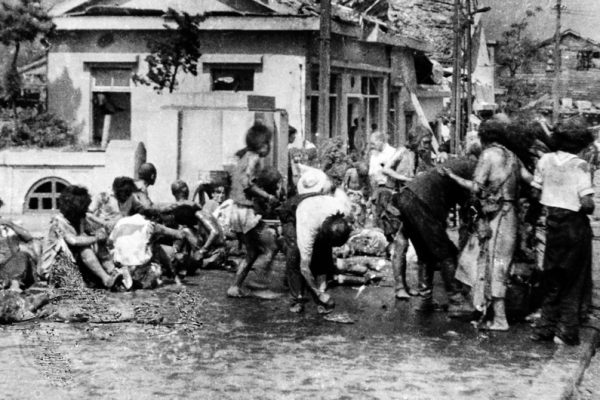
We can remember the horrific way in which those killed were victimized, in hopes of manipulating ourselves into doing something serious about it. We can remember those who were instantly vaporised, but also those half-burnt, partially melted, those eaten out from the inside by maggots, those who died slowly in excruciating pain and in the presence of their screaming children, those who died from drinking water they knew would kill them but who were driven to it by thirst.
And then, when we are ready to take action, when we have built up a righteous anger, what is it we should do? We should not, of course, commit some new atrocity under the banner of cosmic balance. Nuking Washington DC or spray painting Harry Truman’s grave would not honour anyone in any way. Instead of resorting to magical means of undoing the mass killing, we have to face up to the fact that we cannot in any way whatsoever undo it. We cannot bring back those slaughtered in Japan 74 years ago. We cannot bring back any of the millions murdered in that war or any of the millions murdered in any of the wars since.
But here’s the good news. There are many things that are commonly thought of as just as impossible or more so than bringing back the dead which we most certainly can do. And they are things that I believe honour the victims in the most profound way imaginable.
The key to understanding this is that, apart from feedback loops set in motion by environmental destruction, anything — absolutely anything — created by humans can be uncreated by humans, can be replaced by something radically different by humans.
After the bombings that did not end the war, after the Soviet invasion, after the war finally did end, a system of victors’ justice was established in which war was for the first time prosecuted as a crime, but only if you’d lost it. An international system of government was created which, this time around, the United States joined, but it was a system that made the biggest war makers and weapons dealers more equal than everybody else. The veto power at the UN Security Council is not an immutable genetic or physical or mystical inheritance. Its words on a computer screen. The International Criminal Court does not have to prosecute only Africans in the way in which an apple that detaches from a tree has to move downward, but rather in the way in which the US House of Representatives had to oppose ending the Korean War until this past month when it started supporting ending the Korean War.
The same body, which I usually refer to as the House of Misrepresentatives, also this past month passed a requirement that every foreign US base be justified as benefiting US security. If that were to be followed through on, the US would not become able to undo the injustice inflicted on Hiroshima and Nagasaki, but it would be compelled to cease inflicting injustice on Okinawa.
Seventy-three countries have signed and 23 ratified a new treaty banning nuclear weapons. Every country on earth except the United States has signed and ratified the Convention on the Rights of the Child. Most countries on earth, unlike the United States, are party to the Paris Climate Agreement, and the Convention on Economic, Social, and Cultural Rights, and the International Covenant on Civil and Political Rights optional protocols, and the Convention on the Elimination of All Forms of Discrimination Against Women, and the Convention Against Torture optional protocol, and the International Convention on the Protection of the Rights of All Migrant Workers and Members of Their Families, and the International Convention on the Protection of All Persons from Enforced Disappearance, and the Convention on the Rights of Persons With Disabilities, and the International Convention Against the Recruitment, Use, Financing, and Training of Mercenaries, and the Rome Statute of the International Criminal Court, and the Convention on the Non-Applicability of Statutory Limitations to War Crimes and Crimes Against Humanity, and the Principles of International Cooperation in the Detection, Arrest, Extradition, and Punishment of Persons Guilty of War Crimes and Crimes Against Humanity, and the Convention on Cluster Munitions, and the Land Mines Convention.
The notion that the US government, misrepresenting 4 per cent of humanity, cannot do what most of humanity’s governments do because of a non-existent imaginary monster called ‘human nature’ is the purest example I know — of George Orwell’s description of propaganda. He said that propaganda gives an appearance of solidity to pure wind.
Nuclear weapons are not our masters. We are their masters. We can dismantle them like duelling grounds and segregated water fountains and electric chairs and statues of Confederate generals if we choose to. But it will be difficult to do so without dismantling the institution of war. A nation like North Korea does not appear eager to give up its nukes while under threat of attack, even if that attack would use non-nuclear weapons. Yet, again, there’s good news. The institution of war can be dismantled too. And, for those who’ve been tragically misinformed that nothing new can happen, it’s worth noting that most humans who have ever lived have had nothing to do with war, and most human societies have had nothing to do with war. Those who do participate in war, even from the comfort of a joystick in a trailer in Nevada, usually suffer for it horribly. They are not driven to it by their inherent inevitable core whatchamawhootchie; they are driven to it by deprivation of a good education and prospects for a good nonviolent life.
Some countries spend $0 per year on war. The United States spends $1.25 trillion. No other country is closer to the United States than it is to $0. All other countries combined are closer to $0 than to the US level of spending. We can and we must convert from militarism to environmental protection. The benefits will be economic, social, moral, environmental, and beyond our capacity to fully imagine. We can shift from hostility to generosity. One per cent of the US military budget could give the world clean drinking water. Three per cent could end starvation worldwide. Start trying to imagine what 8 per cent or 12 per cent could do.
It is well documented that 95 per cent of all suicide terrorist attacks are conducted to encourage foreign occupiers to leave the terrorist’s home country. In fact, I’m not aware of a foreign terrorist threat, attempt, or action against the United States, in which a motivation was stated, where that motivation was anything other than opposition to US military imperialism. Meanwhile precisely 0 per cent of terrorist attacks, suicide or otherwise, have been motivated by resentment of the generous giving of food, water, medicine, schools, or clean energy.
Government secrecy and suspicion and surveillance are not inevitable and not defensible without first accepting the baseless assumptions of a culture gone mad for war. Actual democracy is possible. Governance by public vote or by representatives who have not been bought and paid for is possible. Completely altering our ridiculous beliefs in the inevitability of certain institutions is possible. Not only is it possible, but it constitutes the major events in human history. The notion that we cannot make such changes is a lie. The claim that we are powerless is a vicious lie.
Peace activist Lawrence Wittner once asked former officials from Ronald Reagan’s Administration about the Nuclear Freeze movement, and they usually claimed they’d paid no attention to it. Then one of them, Robert McFarlane spilled the beans, recounting a ‘massive administration campaign to counter and discredit the freeze.’ When Wittner then interviewed Ed Meese, Meese claimed to know nothing, until Wittner told him what McFarlane had said. And, Wittner says, ‘a sheepish grin now spread across this former government official’s face, and I knew that I had caught him.’ When you’re tempted to internalise the absurd notion that they aren’t paying attention to us, remember that all government is always on the verge of a sheepish grin.
We can scale back war, nuclear and otherwise, together with racism, together with extreme materialism, together with environmental destruction, together with exceptionalism, together with blind subservience to authority, together with irresponsibility toward future generations. We can create a culture of peace, a structural society of peace, a cooperative world of mutual respect and love. Whether we will do so or not is a question to be answered not by predictions but by our actions.
At World BEYOND War we are working on peace education, on mobilising action, on divesting funds from the war machine, on closing foreign military bases — and domestic bases too. We are eager to work in partnership with anyone and everyone to advance these goals. When Joe Hill asked us to not mourn his death but to organise for the change he had worked for, he gave us advice so powerful that when we follow it, it becomes harder to think of Joe Hill as a victim. We’re almost forced to think of him as an ally. Perhaps if we imagine the victims of Hiroshima and Nagasaki asking us to not mourn but organise we can after all achieve the impossible, we can undo their victimisation and honour them as our brothers and sisters in struggle.
Perhaps we can imagine Shelley speaking to the nuclear victims, saying Rise like Lions after slumber In unvanquishable number, Shake your chains to earth like dew Which in sleep had fallen on you — Ye are many — they are few.

Wednesday, August 07, 2019

Hiroshima and the New Arms Race—No Winners

When our children’s children look back, it will be noted and remembered what side of history we were on when our planet was threatened. The choice is ours.


by
Nuclear war and climate change are the two existential threats we face today. (Photo:US Department of Defense)
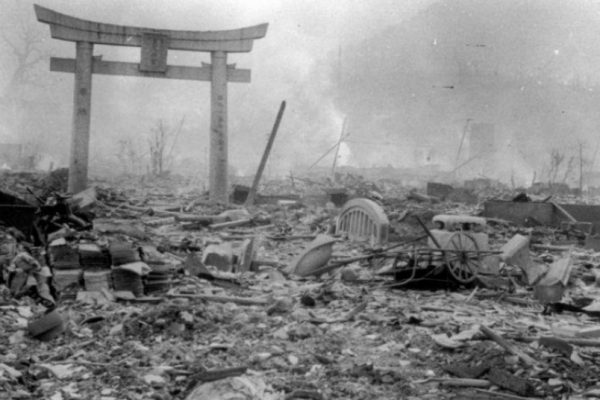
74 years ago today the United States dropped the first atomic bomb over the city of Hiroshima, Japan. This nuclear weapon resulted in the deaths of an estimated 140,000 individuals. Three days later on August 9, a similar attack was carried out on the city of Nagasaki, Japan killing an additional 80,000 people. These events changed history and made the U.S. the most feared and ultimately most dangerous country in the world. That danger continues to this day as the new arms race unfolds.

Following World War II the Cold War between the United States and the former Soviet Union resulted in our most immediate existential threat and the bloated nuclear stockpiles of today that contain 13,850 weapons. The majority, 91%, of these weapons are controlled by these two countries with the rest in seven other nuclear states. Most of today’s weapons are many times more powerful than the Hiroshima and Nagasaki bombs.

For decades, arms control treaties have been the mainstay of efforts to contain and check the arms race and continue a dialogue with Russia and its predecessor, the Soviet Union. At the height of the Cold War there were in excess of 60,000 nuclear weapons. This resulted from a false sense of security derived from the theory of deterrence where if my enemy had two weapon, I was safer with two and so on to 60,000 weapons! It was as though the superpowers existed together in a pool of gasoline and one had a single match and the other had one. There can be no winner!
The 1970 Nuclear Nonproliferation Treaty (NPT) committed the nuclear powers to work in “good faith” to eliminate nuclear weapons under Article VI.

In 1987, the Intermediate Nuclear Forces Treaty (INF), negotiated at the peak of the Cold War went into force. This landmark treaty eliminated an entire class of exceptionally dangerous weapons capable of immediate launch on warning and first strike capacities. In total, 2,692 short, medium and intermediate range nuclear missiles with a range of between 550- 5,500 km were eliminated.  The treaty which contains language to address concerns and compliance was terminated on August 2nd of this year when the United States withdrew from this treaty. This move was just the latest by the Trump administration following on the withdrawal of the U.S. last year from the multinational Iran Nuclear Deal.

As the planet warms, competition for scarce natural resources increases causing conflict potentially involving the superpowers as they vie for influence and access in their proxy states.
Unfortunately, with this latest move coupled with others before, the United States has lost its credibility in arms control.
The new arms race began in 2011 as President Obama made his “grand bargain” when he agreed to modernize the U.S. weapons arsenal in trade for needed Republican support to ratify the New Start Treaty. This renewed arms race has been estimated to cost $1.7 trillion over the next 30 years with inflation. And again with deterrence theory, each of the seven nuclear nations, not to be outdone is following suit in rebuilding their arsenals.

In January, the Bulletin of Atomic Scientists, identified the risk posed by nuclear weapons and climate change as the “new abnormal” announcing their Doomsday Clocksetting at 2 minutes till midnight where midnight represents nuclear apocalypse, the closest at any point during the Cold War.

Then in June, the United States inadvertently showed its hand, temporarily, when the Joint Chiefs briefly published online and later took down their “Nuclear Operations”Document 3- 72. It outlines plans for fighting and “winning” a nuclear war. Incredibly, the document states:

“Using nuclear weapons could create conditions for decisive results and the restoration of strategic stability…Specifically, the use of a nuclear weapon will fundamentally change the scope of a battle and create conditions that affect how commanders will prevail in conflict.” These statements fly in the face of scientific fact and reality.
Nuclear war and climate change are the two existential threats we face today. As the planet warms, competition for scarce natural resources increases causing conflict potentially involving the superpowers as they vie for influence and access in their proxy states.

The current presidential debates has seen minimal questioning on proposed climate change policy, but no significant questions have been asked of candidates regarding their positions about the eminent threat of nuclear war. As if a code of silence existed between our corporate media and political parties, or a complete lack of understanding of this risk, the silence persists.

Fortunately, the United States medical and scientific communities working with the international community continue to speak out, warning of these threats. Identifying the humanitarian and climate effects of even a small nuclear war, Physicians for Social Responsibility in the “Nuclear Famine: 2 Billion People at Risk” report, has documented that even a limited regional nuclear war using less than 1/2 of 1% of the global nuclear arsenals would result in the potential deaths of 2 billion people on the planet. There is no adequate medical or humanitarian response to nuclear war. Prevention is the only answer and that can only be achieved with the abolition of nuclear weapons. Civil society and the non-nuclear states have responded. With the leadership of the International Campaign to Abolish Nuclear Weapons (ICAN), the international community has spoken. The 2017 United Nations Treaty on the Prohibition of Nuclear Weapons (TPNW) is their response. This Treaty, now with 70 signatory nations and 23 states parties, is positioned to go into effect in 2020 once 50 nations have ratified it. At that point nuclear weapons will join all other weapons of mass distraction in becoming illegal. From that point forward it will be a breach of international law to have, develop, produce, transfer or threaten the use of nuclear weapons.

American citizens, faith communities, scientific, medical and NGO’s are endorsing a growing movement supporting the abolition of nuclear weapons. This is a national movement called “Back from the Brink” that supports the Treaty and the precautionary steps necessary while waiting for it to go into effect and while nuclear arsenals still exist. All organizations and individuals are invited to endorse the campaign. Ultimately, our security policy has relied on luck to protect us from nuclear attack either by accident, miscalculation or intent and time is running out.  Now is the time to make our voices heard. When the people lead, the leaders will follow. 

When our children’s children look back, it will be noted and remembered what side of history we were on when our planet was threatened.  The choice is ours.

What Hiroshima means to me as a Japanese-American Muslim

“…do not let the hatred of a people prevent you from being just. Be just; that is nearer to righteousness. And fear Allah ; indeed, Allah is Acquainted with what you do [Quran 5:8].”


August 6th marks the day in 1945 that the United States dropped an atomic bomb on the city of Hiroshima in southern Japan, killing 80,000 innocent civilians instantly while the total death toll from the aftermath of the bombing rose to more than 140,000. The U.S. claims the use of atomic bombs on Hiroshima and Nagasaki was necessary in the pursuit to end the Pacific War, however this has been largely discredited as tens of thousands of civilians were killed unnecessarily even after Japan was ready to surrender.
As someone who comes from a mixed heritage, with an American father and a Japanese mother, I’ve always felt the deep complications that come from being so personally tied to one of the most horrific wars in human history.
My grandmother’s stories of running barefoot through the American firebombing of our city of Osaka while trying to find safety is frankly quite hard to listen to. Her older brother was killed while serving in the Imperial Japanese Army, and the letter he wrote to our family as his final goodbye is nothing short of heartbreaking to read.
Another older brother of my grandmother was captured and held as a prisoner of war in northern China. We called him Long Ears as a nickname, and I remember he always seemed quieter than the rest of my great-uncles. I wish I had asked him more questions while he was still alive. My great-aunt’s husband, who passionately loves world history, refuses to speak one word about WWII. I don’t dare ever open the subject with him.
The trauma from any war is generational, and I can’t seem to help but feel deep anger at the horrifying atrocities that happened during WWII’s Pacific War. The atomic bombing of Hiroshima and Nagasaki was undoubtedly unnecessary. No amount of convincing will ever sway me into thinking that those bombings were justified, or that the tens of thousands of innocent people killed was for a just cause. This idea is simply unacceptable to me.
A younger brother of my grandmother makes the trip down to Hiroshima on the anniversary of the atomic bombing almost every year. Most of my family think it is a waste of time – why bother revisiting such a painful memory? He comes back with gifts from the city, sweets or random delicacies, that have nothing to do with the real reason why he visited. I can’t help but question how a nation collectively decides to move on from such an atrocity…do we look up and forget or look down in remembrance? Can we do both?
As a revert to Islam, living my life as a Muslim has changed in many ways the way I view the world we live in. Understanding our duty towards justice, our submission towards the will of God, and faith in the goodness of the world are only a few of the core ideals that have changed my life. If I cannot change history, if I cannot heal the wounds of everyone pained during war, can I not instead direct my anger towards initiating change and promoting collective hope? Can I not instead direct my energy towards protecting those who are vulnerable today and are facing injustices?
Although I didn’t realize it before, the memories and stories from my Japanese family shaped my life in ways I did not know. It’s made me both weaker and stronger with empathy. It’s made me both hopeless and hopeful for humanity. Being Muslim now has given me the strength to really understand how I can use my emotions and passions instead of staying stuck in the history of past atrocities.
If anything, remembering Hiroshima, alongside other painful memories of war, can help us understand why we so desperately need good people in this world. And not just good people who are ignored and pushed to the sidelines, but good people who we work towards uplifting and celebrating.
I guess it is possible to both look down in remembrance as well as look up towards the future. It’s the same walk we take as Muslims, the walk of remembering where we stand while we look up to God. So on this day of remembrance, I’ve decided to remember what happened to Hiroshima with an attitude of respect, remembrance, and yes, hope.
I’ve learned that its normal to remember Hiroshima with the pain and emotions that come naturally from such an atrocious act, but it is equally important to move forward with an equal amount of duty towards repairing the present and building a future where defending justice is the norm. In a world where anti-Semitism, Islamophobia, and rampant racism are among the many injustices plaguing our world, it becomes more important than ever to use the memories from history like Hiroshima to better our world today.
Maybe it is possible to remember those innocent people killed in the atomic bomb on Hiroshima by standing up to oppression, protecting the vulnerable, and fighting injustices. Maybe it is possible to ensure their deaths were not in vain. I’ve decided to do this not just because of my family history, or the fact that it is an Islamic duty to stand up to oppression, but because it is simply the right thing to do. If we cannot change the painful past of innocent deaths, let us instead work towards protecting innocent lives today. We owe it to all of them.
“…do not let the hatred of a people prevent you from being just. Be just; that is nearer to righteousness. And fear Allah ; indeed, Allah is Acquainted with what you do [Quran 5:8].”

Monday, August 05, 2019

Hiroshima, city of ashes

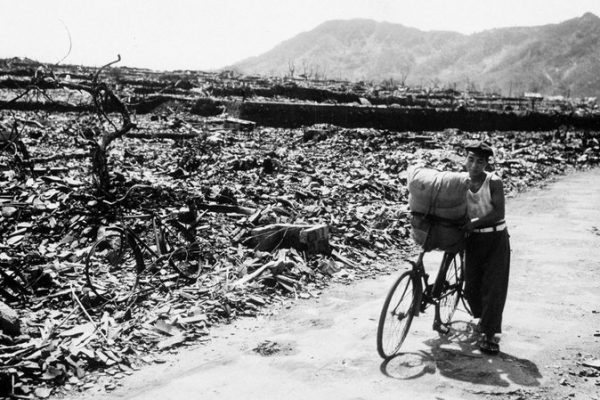
Revisiting American war crimes: This week 74 years ago (1945), during WWII, the US became the first and last country to ever use nuclear bombs on another country (Japan).