
Saudi Arabia’s return to proxy warfare in Yemen risks reviving the same battlefield it spent years trying to contain.

The Cradle

What came sooner than expected was Sanaa’s response. Before the forces being assembled against it could move, the YAF struck troop concentrations, command posts, and supply centers still being prepared for battle.
The attacks were presented in Sanaa as a pre-emptive strike, aimed at breaking up the Saudi-backed buildup before it could advance. Their pace and geographic spread also suggested that Sanaa had been monitoring the buildup closely and had selected the principal assembly points in advance, rather than responding hurriedly after the first attack.
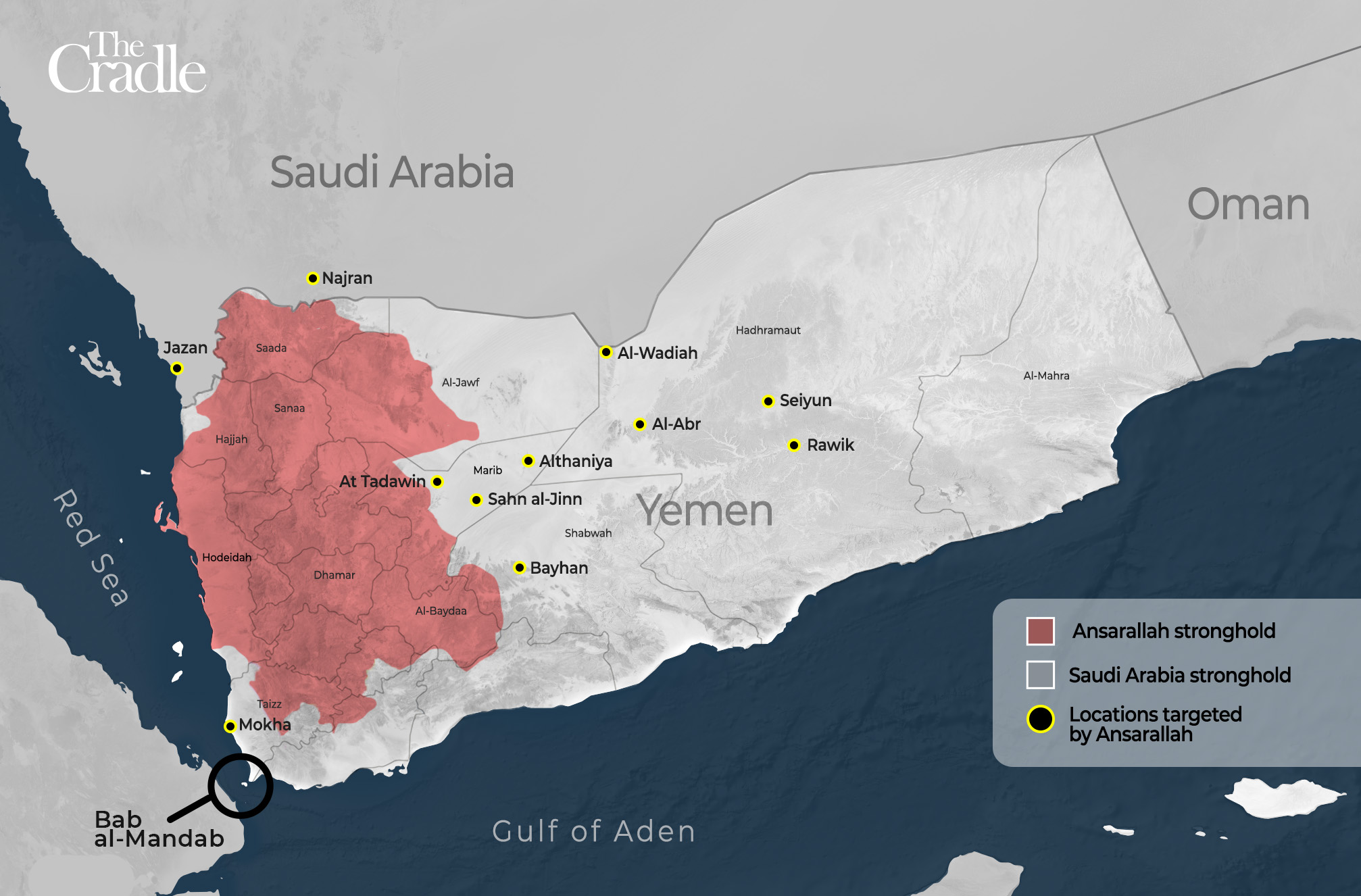
Beginning on 6 August, the strikes spread from military sites in Marib and Hadhramaut to the western coast, Aden, Abyan, and Taizz. They unfolded alongside pressure at sea in the Bab al-Mandab Strait and Red Sea and renewed attacks inside Saudi Arabia.
Sanaa did not wait for Riyadh’s proxies to open the front. It moved against the men, weapons, and infrastructure meant to sustain it, attempting to disrupt the planned offensive and redraw the battlefield before the first ground assault.
The question now is how far Saudi Arabia is prepared to go in a war it once sought to leave behind – and whether force can still change an equation built over a decade of failure.
Riyadh rebuilds its proxy forces
The final days of July brought a rapid series of Saudi moves to equip forces affiliated with Yemen’s Aden-based government. On 28 July, Riyadh resumed salary payments after months of interruption. Reports said monthly pay for some soldiers would rise from roughly $27 to 1,000 Saudi riyals, or about $266.
Within days, the buildup was visible on the ground. Saudi military reinforcements arrived in Marib, other units were reported in Shabwa, and tribal forces from the Al-Rayyan area were moved closer to the lines of contact in Al-Jawf.
At the beginning of August, two fully equipped Homeland Shield brigades arrived in Al-Dhale. In Shabwa, forces associated with the UAE-backed Southern Transitional Council (STC) regrouped as new training sites and drone facilities appeared in the east of the governorate.
Weapons, vehicles, and supplies were transferred to the area, while guard and observation posts were established near Azzan, Al-Houta, Wadi Hajar, Bilhaf, and the coastal approaches.
Diplomat and media commentator Ali al-Zuhri tells The Cradle that the Saudi mobilization was part of a wider effort to prepare local forces to fight on Riyadh’s behalf – recruiting, training, arming, and reorganizing them for a new campaign.
He points to Sanaa’s earlier warning that Saudi Arabia would be held responsible for any attack by forces whose decision to advance ultimately rests with Riyadh:
“From this perspective, the transfer of strikes to the positions of mobilization, command, and supply does not represent a random expansion of the target bank, but rather the application of an equation that considers that the internal escalation is indirectly led by Saudi Arabia, and therefore the response is aimed at the party behind it, all the way to the Saudi depth.”
A naval coalition takes shape
Alongside the buildup inside Yemen, Saudi Arabia moved to strengthen the maritime front. On 30 July, Riyadh announced a defensive naval arrangement under the stated purpose of protecting navigation in the Red Sea, Bab al-Mandab, and the Gulf of Aden.
The move answered Sanaa’s declared “blockade for blockade” policy against Saudi-linked shipping. With Riyadh seeking to move more oil through Yanbu and the northern Red Sea amid disruption in the Strait of Hormuz, the YAF extended its operations into the Gulf of Aden and the northern Red Sea.
According to Sanaa, eight Saudi oil vessels had been attacked since the maritime ban began, while another 29 were forced to turn back in the Red Sea and Arabian Sea.
Saudi crude exports had already fallen sharply amid the regional war and disruption to Gulf shipping. Joint Organizations Data Initiative (JODI) data put Saudi crude oil exports at 3.434 million barrels per day (bpd) in May, the lowest monthly level in records dating back to 2002.
That fall, however, cannot be attributed to the Yemeni blockade alone, with conflict around the Strait of Hormuz, reduced production, and higher domestic refinery use also being decisive.
Speaking to The Cradle, Colonel Rachid al-Watiri doubts that a wider international presence will reverse the balance at sea. He cites the US-led Operation Prosperity Guardian and the EU’s Operation Aspides, neither of which ended Sanaa’s pressure on Red Sea shipping.
In his view, a new coalition will confront the same limits. The formula of “blockade for blockade and escalation for escalation” will therefore remain in place, with Saudi interests and the routes serving them exposed to further attacks if Riyadh presses ahead.
Sanaa widens its target map
The first wave of attacks moved beyond isolated positions and struck the rear areas needed to assemble an offensive force. On 6 August, the YAF announced a large missile and drone operation against concentrations at Ruwaik, Al-Abr, and Al-Thaniyah – positions belonging to the First and Third Emergency divisions; and weapons depots, vehicles, and military installations around Al-Wadiah.
The attack followed the movement of units from the First Military Region, based in Seiyun in Wadi Hadhramaut (Hadhramaut Valley), toward Al-Abr and Ruwaik. With the STC and other southern forces reluctant to join the northern fronts, Riyadh relied on the Saudi-funded Emergency Forces, which draw partly from fighters with Salafi backgrounds.
Ruwaik, Al-Abr, and Al-Thaniyah host facilities tied to coalition operations, while Al-Wadiah and Al-Abr form a major corridor for troops and supplies moving across the Saudi border.
On 7 August, the attacks shifted to Sahn al-Jinn in Marib, where the YAF said it struck troop concentrations, weapons depots, vehicles, and equipment with missiles and drones. The compound is important because it houses command facilities used by the Aden government’s Defense Ministry and operations rooms established with Saudi support.
A day later, the strikes reached westward to Mokha. Sanaa said it had targeted troop concentrations and weapons stores, as well as military supplies at Mokha Port, Yakhtal, Jabal al-Nar, and the Abu Musa al-Ashari camp near Al-Khokha. The attacks came after dozens of vehicles and armored vehicles were reportedly transferred from Aden to the coast. Mokha's position on the Red Sea, close to Bab al-Mandab, makes it an advanced base for any move toward Hodeidah.
The same round also extended east to Seiyun and Wadi Hadhramaut, where Sanaa said drones struck a supply center, First Military Region positions, weapons depots, and Seiyun Airport. These are among the principal rear bases linking the Saudi border to forces deployed across eastern Yemen.
On 9 August, the confrontation crossed openly into Saudi territory. Ansarallah claimed a drone strike on the Aramco refinery in Jizan after Saudi aircraft entered the skies over Saada and Hajjah.
The refinery had already been shut on 27 July following an earlier YAF attack two days before. Aramco CEO Amin Nasser later acknowledged that recent attacks on the company’s facilities had caused some production interruptions, although he said they had no material operational or financial impact.
The strikes continued over the following two days, expanding on 10 and 11 August to Mokha Port and its surroundings, as well as sites on the western coast, Aden, Abyan, and Marib. The attacks targeted Saudi-backed troop concentrations, weapons depots, and command posts, while a booby-trapped boat was intercepted and more than 16 drones were shot down, damaging port facilities and setting military boats ablaze.
Watiri expects Riyadh’s next move to center on reactivating the Marib and Al-Abr fronts, with possible advances toward Sirwah or Nihm. Such a campaign would force Sanaa to commit men and weapons to ground combat and reduce the pressure it can exert at sea.
The recent strikes, however, have disrupted that plan before the mobilized forces reached the offensive stage, leaving Riyadh to reassess both its timetable and the units available to carry it out.
Fault lines inside the Saudi–UAE camp
The mobilization against the YAF is unfolding alongside a struggle over the southern camp itself. Riyadh has strengthened the Homeland Shield Forces and reorganized funding, leadership, and formations under its influence.
Despite formally withdrawing its remaining military personnel from Yemen, Abu Dhabi, working through STC-aligned networks and southern armed groups, has continued to defend the military and political presence it built in Shabwa, Hadhramaut, Aden, and the western coast.
The rivalry sharpened after Saudi-backed forces pushed the STC out of much of Hadhramaut and Al-Mahra in late 2025 and early 2026, then recaptured Aden in January. Although the STC announced its dissolution, important figures and armed networks associated with it remained active.
Mutual accusations have accompanied the buildup. Saudi-aligned voices blame UAE-backed factions for refusing to fight on the northern fronts, while southern critics condemn leaders of the Aden-based government who direct the war from Riyadh hotels as ordinary Yemenis bear its cost. Demands have grown for political and military leaders to return and direct the fighting from inside the country.
Ahmed al-Hassani, spokesman for the Supreme Council of the Yemeni Revolutionary Movement, believes these contradictions may produce another attempt to remake the southern political order. With demands for southern autonomy still alive, Riyadh could seek to gather disparate southern forces under a new structure and hand it responsibility for Aden and the neighboring governorates, allowing the confrontation with Sanaa to remain a proxy war.
Hassani does not expect the STC to return in its old form:
“Saudi Arabia will not accept its return, but work is being done to produce a new southern leadership through the coordination project that Riyadh is working to build through coordination councils in the provinces.”
He places the proposal against continuing divisions between southern figures associated with Abu Dhabi and others operating from Riyadh. He also cites former STC official Amr al-Beidh’s warning that a military confrontation between STC-aligned forces and Saudi Arabia could not be ruled out.
Riyadh returns to Yemen’s trap
The expanding target map has exposed the weakness of Saudi Arabia’s chosen strategy. Riyadh wants a Yemeni force capable of fighting in its place, yet the same camp remains divided by the contest with Abu Dhabi and by rival southern projects.
Sanaa’s strikes have meanwhile carried the cost of escalation beyond Yemen’s internal front lines to Saudi territory, oil infrastructure, and the Red Sea routes on which the kingdom increasingly depends.
Riyadh now faces three unappealing courses: It can continue rebuilding local forces and opening new fronts, accepting that Saudi sites and shipping may face wider attack; it can deepen its reliance on regional and international military arrangements, increasing the risk that a Yemeni escalation draws in other states; or it can again adjust its policy toward Sanaa and reduce the number of fronts it is trying to manage at once.
Years of war failed to dislodge the Sanaa government or deprive it of the means to strike across Yemen’s borders. A new proxy campaign begins from an even less favorable position, given that Saudi Arabia’s allies are divided, its export routes are under pressure, and Sanaa has already shown it will attack the rear before waiting for the front to move.
Riyadh’s problem now extends well beyond the battlefield with Sanaa. Every new front risks feeding another and pulling the kingdom back into the Yemeni war it failed to win.

No comments:
Post a Comment