
Trump appeared optimistic — so much so that he even dismissed critics within his support base as “losers”. Secretary of State Marco Rubio confirmed the two countries were close to agreement. Oil prices fell, stock markets rose, and hopes cautiously replaced fears of a global recession. About 45 million people were spared from slipping into war-induced poverty.
Details of the deal spread across the Internet: the Strait of Hormuz was to reopen under a new mechanism; US$24 billion of Iran’s frozen funds were to be released; sanctions were to be lifted; US forces were to be withdrawn from the region; a permanent ceasefire in Lebanon was to be announced; the nuclear issue addressed in a follow-up deal within 30 days; and all agreements legalised through a United Nations resolution. Unfortunately, high expectations gave way to frustration. Ironed-out disagreements between the US and Iran resurfaced. The US launched military strikes on Iran’s Bandar Abbas region in the south. The opportunity for peace was lost—all within 24 hours on Monday.
The agony continues, with the world’s poor hardest hit. Netanyahu celebrated the collapse of the peace deal by intensifying the Lebanon war. One of Iran’s main conditions for a deal was peace in Lebanon. The Trump administration secured a ceasefire agreement between Lebanon and Israel after talks in Washington. Yet it remained only on paper. Israel continues its bombing campaign while occupying 14 per cent of southern Lebanon. Hezbollah refuses to honour the ceasefire, insisting that Israel end its occupation.
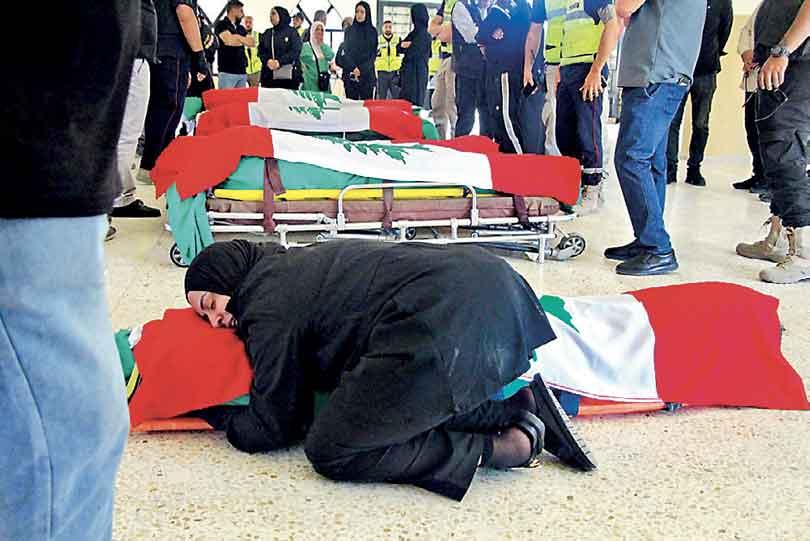
The Lebanese government remains powerless, lacking the courage and military strength to confront Hezbollah. How could it? After all, Hezbollah is doing what the government should have done — fighting to free the country from occupation. Since March, nearly 4,000 people, mostly civilians, have been killed in Israeli attacks on Lebanon. More than 1.2 million civilians have been displaced, their homes and livelihoods destroyed.
Just as Gaza has been depopulated and prepared for annexation, Lebanon — or at least part of it — is being emptied to be absorbed into Israel. If peace is to be achieved, Trump needs to keep Netanyahu in check. He did so last week, when the peace process — with Pakistan’s mediation — made progress. Netanyahu was furious. Ignoring US concerns, he escalated the war on Lebanon.
Despite the sabotage, a high-level Iranian delegation led by Foreign Minister Abbas Aragchi arrived in Doha. The inclusion of Iran’s central bank governor lent weight to speculation that Iran would regain access to its frozen funds. Qatar’s involvement underscored the Gulf states’ desperation for a return to normality, essential for reviving economies devastated by war. While Doha and other Middle Eastern capitals worked overtime with diplomacy, the US attacked Iranian navy boats and military facilities near Bandar Abbas on Monday. Iran retaliated by shooting down a $30 million US MQ-9 Reaper drone.
Trump called the strike an act of self-defence, but others saw it as the familiar pattern of undermining the peace process just as a deal was within reach. Thankfully, the peace process was rescued by the Gulf nations, even as Netanyahu intensified efforts to sabotage it. The Iran war is increasingly unpopular in the US, and Trump knows it.
With rising oil prices burdening the working class, he is desperate for a peace deal ahead of the November midterm elections. Then suddenly, Trump sought to appease Netanyahu by introducing the Abraham Accord as part of the broader peace framework. He urged Saudi Arabia, Qatar, Kuwait, Turkey, Egypt, Jordan, and Pakistan to sign the Accord, which seeks to decouple these countries from the Palestinian freedom cause. He made it a prerequisite for peace with Iran. “I am formally requesting that all countries immediately sign the Abraham Accords, and that, if Iran signs its agreement with me, as President of the United States of America, it would be an honour to have them also be part of this unparalleled World Coalition,” Trump wrote in a post on Truth Social.
Pakistan outright rejected the demand, while others did not reply. Trump said that except for one or two countries with reasons not to join, most should be “ready, willing, and able to make this settlement with Iran”.
In effect, Trump is attempting to kill two birds with one stone – securing peace with Iran while silencing or winning the consent of influential Islamic countries for Israel’s genocide in Palestine, Lebanon, and who knows what next.
The rejection of the US demand by Arab and Islamic nations highlights West Asia’s emerging new security architecture, where no country can enter into a security deal that undermines Iran’s security. The peace process is held hostage by US–Iran brinkmanship.
Iran’s position appears to be that if the US wants war, it will give war; if the US wants peace, it will give peace. With hope for peace shattered and Trump complicating efforts by adding Abraham Accord conditions, the affected multitude teeters between war and peace, hope and despair. In the end, it seems Trump is not putting America first, but Israel first.

No comments:
Post a Comment