
By Palestine Chronicle Staff
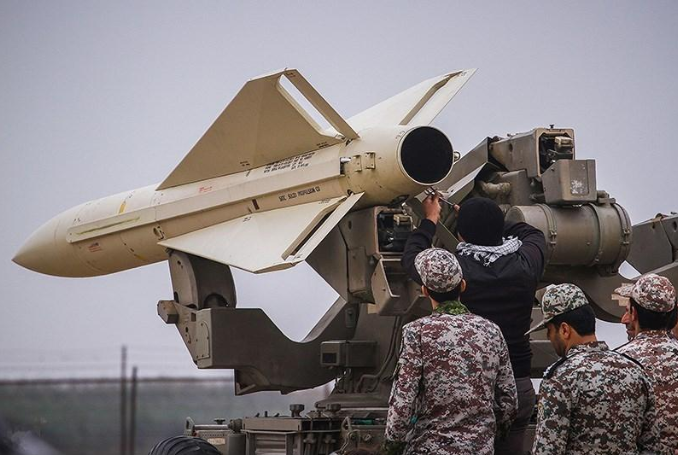 Iran’s air defense is structured as a layered system composed of long-, medium-, and short-range components. (Photo: Tasnim/ Wikimedia)
Recent battlefield evidence points to layered systems, passive detection, mobility, and hybrid technologies sustaining Iran’s air-defense operations under pressure.
A month into the war, available reporting across Western, Iranian, and independent defense sources points to a consistent military picture: Iran’s air-defense network has been degraded, but it remains operational.
Confirmed incidents include the loss of a US fighter jet over Iran on April 3, as reported by Reuters and The Washington Post, alongside earlier damage to an F-35 and repeated losses of MQ-9 drones during operations over Iranian territory.
These developments indicate that US aircraft continue to operate in contested conditions rather than a fully permissive environment.
At the same time, data compiled by conflict monitoring organizations such as ACLED shows that hundreds of Iranian air-defense assets were targeted in the early phase of the war. However, subsequent battlefield activity suggests that enough capability survived to maintain a functioning defensive system.
What is The Structure Of Iran’s Air Defense System?
Iran’s air defense is structured as a layered system composed of long-, medium-, and short-range components operating in coordination.
At the upper tier is the Bavar-373, a domestically developed long-range surface-to-air missile system designed to engage aircraft, drones, and cruise missiles.
Defense reporting indicates the system uses phased-array radar and Sayyad-series interceptors, with an operational range exceeding 200 kilometers, according to technical overviews published by regional defense outlets such as VietBao.
The middle layer includes systems such as Khordad-15, which can track multiple targets simultaneously and engage aircraft at intermediate ranges. Analysis published by Global Defense Corp describes it as capable of engaging low-observable targets at shorter distances, complementing longer-range systems.
At lower altitudes, Iran employs short-range systems and point-defense platforms, including Tor-type interceptors and other mobile units, creating overlapping coverage zones.
This layered configuration allows different tiers to remain functional even when others are degraded.
How is The System Integrated?
Iran’s air-defense system operates as a network rather than as isolated units.
Satellite imagery analysis and defense reporting before the war indicated that Iran integrated Russian-origin systems such as the S-300 alongside domestically produced platforms.
According to Defense Security Asia, this created a hybrid architecture combining multiple generations of technology within a single operational framework.
This integration allows for variation in radar frequencies, tracking methods, and engagement profiles. It also reduces reliance on a single system or command structure, complicating suppression efforts.
How are Targets Detected?
Detection methods appear to extend beyond traditional radar.
Modern stealth aircraft are designed to reduce radar visibility but remain detectable through other signatures.
Defense reporting and technical analysis indicate that Iran employs a combination of radar, infrared, and electro-optical systems to identify airborne targets.
Technical overviews of Iran’s radar network describe the use of passive detection systems capable of identifying heat signatures and emissions. These systems operate with lower electromagnetic output, making them less vulnerable to jamming and electronic warfare.
This multi-method approach does not eliminate detection challenges but increases the probability of intermittent tracking sufficient for engagement.
How has the System Survived Initial Strikes?
Early in the campaign, US and Israeli officials stated that a significant portion of Iran’s air defenses had been neutralized, or totally ‘oblierated’. Conflict data compiled by ACLED indicated that more than 200 systems were targeted during the opening phase.
However, continued battlefield activity suggests that the system retained functionality.
The survival of Iran’s air defenses appears linked to dispersion and system design.
Rather than relying on centralized infrastructure, Iran’s network includes mobile launchers and distributed radar units. This reduces vulnerability to follow-up strikes targeting command-and-control nodes.
Defense analysis published by Army Technology has noted that while the network suffered degradation, it did not collapse entirely, indicating structural resilience.
What Role Does Mobility Play?
Mobility is a key operational factor.
Iranian air-defense systems are typically mounted on mobile platforms, allowing relocation after detection or engagement. This reduces the effectiveness of suppression strategies that depend on tracking and destroying fixed positions.
Recent reporting on upgrades to systems such as Bavar-373-II, cited by Army Recognition, indicates increased autonomy, with launchers capable of operating independently. This further reduces dependence on centralized coordination and increases survivability.
Mobility also contributes to uncertainty in targeting, as system locations may change frequently.
How Does Redundancy Affect Performance?
Iran’s system incorporates redundancy across multiple layers.
Older systems, including legacy Soviet-era platforms, remain in operation alongside newer domestic systems. While these older platforms are less advanced, they contribute to overall system density.
Regional defense assessments published by outlets such as Forum for Maritime Security note that this redundancy increases the number of potential targets and complicates suppression efforts.
The result is a higher volume of defensive activity, even if individual systems have limited capability.
What External Technologies are Involved?
Iran’s air-defense architecture includes both domestic and foreign components.
In addition to indigenous systems, reporting indicates the integration of Russian-origin platforms and, in some cases, Chinese-designed technologies. Industry analysis published by Spherical Insights notes that such hybridization introduces diversity in system behavior and technical characteristics.
This diversity affects radar coverage, missile guidance, and system interoperability, making the network less predictable.
How Could This have Led to the Downing of A US Fighter Jet?
Available data allows for a plausible operational sequence based on known system capabilities.
Detection could have occurred through a combination of radar and passive systems.
As outlined in technical reporting on Iranian air defenses, including coverage by VietBao, passive sensors such as infrared and electro-optical systems can identify aircraft through heat signatures or emissions, even when radar visibility is reduced.
Once a target is detected, tracking may be maintained through integrated radar networks or short-range systems operating within overlapping coverage zones.
Medium-range systems such as Khordad-15, described in analysis by Global Defense Corp, are designed to engage multiple aerial targets and may operate in conjunction with other sensors.
Engagement would likely involve surface-to-air missiles launched from mobile platforms. The use of dispersed launchers reduces vulnerability to counterstrikes and allows for engagement from multiple positions, increasing the probability of a successful hit.
Additional factors may include electronic warfare conditions, the presence of multiple threats in the airspace, and the cumulative effect of sustained operations over time. Reporting by Air & Space Forces Magazine and other defense outlets has noted that even advanced aircraft can be exposed to risk when operating repeatedly in contested environments.
Taken together, these elements—multi-layer detection, integrated tracking, mobile launch systems, and overlapping engagement zones—provide a framework through which the downing or damage of advanced aircraft can occur under current battlefield conditions.
(Reuters, WP, Guardian, ACLED, CSIS, BI, Defense Analysis, PC)

No comments:
Post a Comment