Sunday, November 30, 2025

Herut, another Canada-to-Israel illegal money pipeline plugged

Crescent International

Image: Courtesy Just Peace Advocates
Herut Canada Charitable Foundation (business number 714293479RR0001; aka Magen Herut Canada or Herut Canada) finally lost its charitable status on November 15, 2025.

This was announced by the Canada Revenue Agency (CRA) after human rights groups like Just Peace Advocates (JPA) called for audit of its accounts.

While the CRA did not provide many details on Herut’s revocation in the Canada Gazette, it did cite three Income Tax Act provisions as the basis for its decision, according to JPA’s press release.

These provisions confirm that Herut Canada failed to comply with the requirements of the Income Tax Act, including at least some of sections 230 to 231.5.

JPA welcomed the news after making two submissions to the CRA requesting an audit, and community members sent 19,282 letters in support.

Charities in Canada enjoy certain privileges.

They pay no tax on donations.

They also issue tax receipts to donor that enable them to reduce their taxes by a certain percentage.

As the name suggests, charities are required to spend the money on charitable purposes.

Expressly forbidden is support to terrorist entities as well as to foreign militaries or groups involved in acts violating Canadian or international law.

In one of its complaints to the CRA, JPA also called for audit of Shomrim Toronto, another zionist paramilitary group.

Based in Dorval, QC, Herut Canada was initially registered as a charity in January 2021.

Its roots extend to the pre-Israeli state terror group, Irgun.

In 1948, Albert Einstein and other prominent Jewish intellectuals labeled Herut “a political party closely akin in its organization, methods, political philosophy and social appeal to the Nazi and Fascist parties.”

In the late 1980s, Herut became the Likud Party, the current ruling party in Israel that is involved in the Gaza genocide.

Herut market themselves as a “proud zionist organization” on their website homepage.

Their long list of activities includes: “Support for Lone Soldiers in the IDF [and] Practical Zionism / Settling the Land of Israel.”

They clearly encourage illegal settlements, as noted in their statement: “We promote Aliyah [migration to Israel] and support the right of Jewish communities to live and thrive throughout Israel, including in Judea and Samaria.”

Zionists refer to the occupied West Bank, including East Jerusalem as “Judea and Samaria”.

“This violates domestic and international law, as well as Canadian public policy,” says JPA.

Herut Canada also spews anti-Palestinian racism throughout their website, denies the reality of Israeli apartheid, and falsely claims that “under international law, the Jewish people own the entire Land of Israel.”

As of November 17, 2025, Herut Canada continued to offer tax receipts, JPA found.

Magen Herut Canada

After October 7, 2023, a sub-group of Herut Canada was established: Magen Herut Canada (MHC).

Described as “a newly formed Jewish safety patrol group” they purported to be “stepping up to protect the Jewish community on university campuses.”

In Toronto MHC acts as a vigilante group.

For instance, in the fall of 2024, its members descended on the University of Toronto to intimidate opponents of Israel’s genocide in Gaza.

MHC offers free workshops of Krav Maga, training used by the Israeli military.

They have also openly fundraised to purchase protective gear for members who are required to have experience in security, policing or the military.

MHC works closely with the private security firm JFORCE, which provides “protest security” for Israel supporters.

Backlash from zionist supporters

In response to a tweet about the revocation announcement, zionist supporters were outraged.

Herut Canada’s National Director even claimed “auditors were candid in explaining what prompted their review. ‘They actually did admit it was due to outside pressure…we knew from day one they had made up their mind… it had nothing to do with finances.’”

Herut Canada and their supporters may continue spewing anti-Palestinian racism, repeating anti-Muslim rhetoric, and aiding Israel’s apartheid, occupation, and genocide.

But they can no longer do so while using tax-subsidized dollars.

“We encourage the CRA to continue investigating charities that violate international and domestic law, as well as Canadian public policy (whether from Global Affairs or the CRA itself)”, said JPA in its press release.

The CRA must end the Canada to Israel charity pipeline.

Listed below are other Jewish ‘charities’ that funnelled hundreds of millions of dollars to Israel for illegal activities.

Their charitable status has now been revoked by CRA:

1: Jewish National Fund of Canada Inc. (JNF Canada)

2: Beth Oloth

3: Colel Chabad Lubavitch Foundation of Israel

4: Gates of Mercy

5: Chasdei Levy Yitzcok

6: Ne’eman Canada

Between 2021 and 2025, Just Peace Advocates submitted dozens of complaints to the CRA focusing on more than 50 Canadian Jewish charities and qualified donees.

Key submissions include the Ne’eman Foundation (now revoked), HESEG Foundation, Gerald Schwartz & Heather Reisman Foundation, Mizrachi Canada (6 times), United Israel Appeal of Canada (2 times), Canadian Zionists Cultural Association (3 times), and many more.

Some of these submissions were made alongside other organizations such as Independent Jewish Voices, Palestinian and Jewish Unity, Canadian Foreign Policy Institute, ICJP Canada, and others.

These efforts also grew out of the Palestinian-led movement Defund Racism.

Through various campaigns, the CRA has also received tens of thousands of letters from Canadians demanding immediate and decisive action to end their complicity with permitting the funding of illegal zionist activities.

West BankHerut CanadaIllegal zionist settlementsCanada Revenue Agency (CRA)

Araghchi: Pressure will not determine Iran’s nuclear decisions

 By Xavier Villar

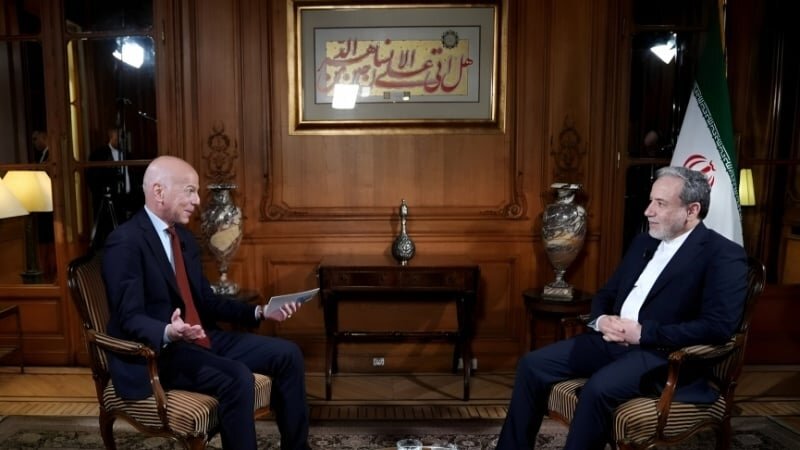
MADRID – Abbas Araghchi’s recent interview with France 24, during his visit to Paris, provides a clear window into how Iran projects power, manages its international relations, and balances domestic interests with complex regional dynamics. 

The topics discussed, including the prisoner swap with France, nuclear negotiations with the United States and Europe, correspondence with Saudi Arabia, the situation in Syria, and the recent twelve-day war, reflect a deliberate and strategic approach that combines firmness on core principles with tactical flexibility.

First, the prisoner swap with France illustrates how Iran handles delicate matters under the umbrella of national law and strategic interests. Araghchi highlighted that the release of Cécile Kohler and Jacques Paris, after three and a half years of detention, is part of a process regulated by the Supreme National Security Council and framed within national interests. At the same time, Iran has requested the release of Mahdieh Esfandiari, an Iranian citizen detained in France, turning the swap into a carefully managed mechanism of reciprocity. By emphasizing that all legal procedures will be completed according to the timelines of each country, Araghchi reinforces the perception of Iran as an actor that respects internal processes while acting with strategic clarity, projecting order and predictability to the international public.

This approach not only protects domestic legitimacy but also projects an image of international pragmatism. The insistence that “the swap will take place as soon as the judicial procedures in France are completed” demonstrates a balance between firmness and flexibility. The narrative constructed reinforces the perception that Iran acts consistently, legally, and predictably, despite Western propaganda that frames such cases as political kidnapping.

Regarding nuclear negotiations, Araghchi makes it clear that Iran remains willing to engage in dialogue—but under conditions of parity and respect for its interests. He notes that there is currently no active negotiation channel with the United States due to Washington’s unwillingness to commit on equitable terms. Nevertheless, the message is unmistakable: Iran is always open to serious discussions leading to mutually beneficial outcomes. This reflects a mature strategic approach, in which the country safeguards its position without closing the door to diplomatic solutions. References to previous negotiations, including those in 2015, establish continuity and coherence, countering the Western framing of Iran as an unpredictable actor.

The recent correspondence from the Iranian president to Mohammed bin Salman, Crown Prince of Saudi Arabia, was addressed with particular care by Araghchi. He emphasized that the letter related exclusively to pilgrimage and cultural cooperation, not to nuclear mediation between the United States and Iran. Iran underscores that the resolution of nuclear issues does not depend on regional intermediaries; responsibility rests directly with Washington.

This nuance is crucial: although Saudi Arabia has significantly improved its relations with Tehran and participates in a strategic rapprochement under Chinese mediation, it does not act as a mediator in nuclear talks. Araghchi’s interpretation reinforces Iran’s narrative of autonomy and control over its negotiation processes, preventing external actors from limiting its maneuvering space.

The normalization of relations between Tehran and Riyadh represents a far-reaching strategic adjustment. While there has been an increase in bilateral trust, particularly regarding regional stability and security cooperation, Iran carefully defines the limits of such collaboration. Tehran’s priority lies in consolidating the stability of its immediate environment, mitigating tensions and direct risks, while preserving its independence from external pressures. This approach reflects a sophisticated understanding of regional dynamics, where historical rivalries are managed through pragmatic coordination rather than unilateral concessions.

Interaction with the International Atomic Energy Agency (IAEA) highlights a complex dimension of Iran’s strategy. Araghchi notes that, while the agency presents itself as a technical body, in practice its decisions reflect a political orientation, aligned with Israel and the United States. From this perspective, recent resolutions do not account for prior attacks on Iranian nuclear facilities carried out by these countries. Tehran’s response seeks to balance technical compliance with strategic defense, demonstrating its intent to protect its interests and sovereignty without violating international law.

Defense and security occupy a central place in the discourse. Araghchi emphasized the effectiveness of Iran’s defensive systems during the recent twelve-day war with Israel, highlighting that Iran successfully defended its territory and critical infrastructure. He noted that the war was not only contained but resulted in a de facto strategic victory: Iranian missile systems operated with precision and efficiency, limiting the impact of Israeli attacks, while Israel and its allies were forced to request a ceasefire after suffering significant losses and failing to achieve their objectives. Araghchi’s narrative underscores that Iran’s ability to withstand direct aggression strengthened its regional position, demonstrating resilience and deterrent capacity.

In Syria and Lebanon, Iran’s strategy remains at the level of active observation and indirect support. Araghchi emphasized that Iran does not intervene in Lebanon’s sovereign decisions and that its goal in Syria is stability, state unity, and the end of Israeli occupation. This stance reflects a diplomacy of containment and risk management, in which Iran prioritizes consolidating stable state structures rather than engaging in direct conflict.

The interview also reveals the economic and energy dimension of Iran’s strategy. Despite ongoing Western sanctions, Iran has developed mechanisms to maintain economic resilience, diversifying trade relations—particularly with China—and securing influence over energy transport routes. This enables Tehran to mitigate pressure and project regional economic power. The combination of energy influence, negotiation capacity, and institutional resilience makes Iran an actor with maneuvering space against sanctions and diplomatic pressure without compromising its sovereignty or strategic objectives.

Iranian foreign policy is therefore built around an adaptive balance: firmness on principles such as sovereignty, the civil nuclear program, and defensive capability, combined with tactical flexibility and diplomatic pragmatism. This “diplomacy of balance” allows Iran to project stability and legitimacy while navigating a complex and changing international environment. The narrative crafted by Araghchi reinforces the perception that Iran acts strategically, aware of its limitations and opportunities, and with a long-term vision combining security, diplomacy, and economy.

Iranian diplomacy is characterized by a calculated approach to timing and opportunity. Araghchi’s statement that “they are not in a hurry” reflects a strategic understanding of international rhythms, leveraging negotiation margins to consolidate its position. This temporal prudence is combined with tactical flexibility, allowing Tehran to respond efficiently to changes in the international environment without compromising its core principles.

In terms of narrative and perception, Iran has learned that managing strategic image is as important as possessing material capabilities. The combination of effective defenses, calculated diplomacy, and legitimacy-building allows it to be a solid, resilient, and reliable actor, capable of negotiating from positions of relative strength while protecting national and regional interests.

Finally, the interview shows Iran’s accumulated learning after decades of sanctions, international pressure, and regional conflicts. The contemporary strategy combines institutional resilience, alliance diversification, and asymmetric capability development, raising the cost of direct confrontations and ensuring pragmatic risk management. Iranian diplomacy in 2025 thus emerges as a model of adaptive state action: firm in principles, flexible in tactics, capable of managing complexities, and projecting sustainable influence in a transitioning world.

In short, Araghchi’s interview not only reveals Tehran’s stance on immediate issues but also projects a long-term vision: an Iran seeking regional stability, international recognition, and autonomous capacity for action. This strategy combines diplomacy, defense, economy, and narrative into a coherent framework of resilience and pragmatism, showing that in the complex geopolitical landscape of the 21st century, strength is measured as much by negotiation and adaptation capacity as by military or economic presence.

Staff and facilities ‘continue to come under fire’ despite Gaza ceasefire: UN

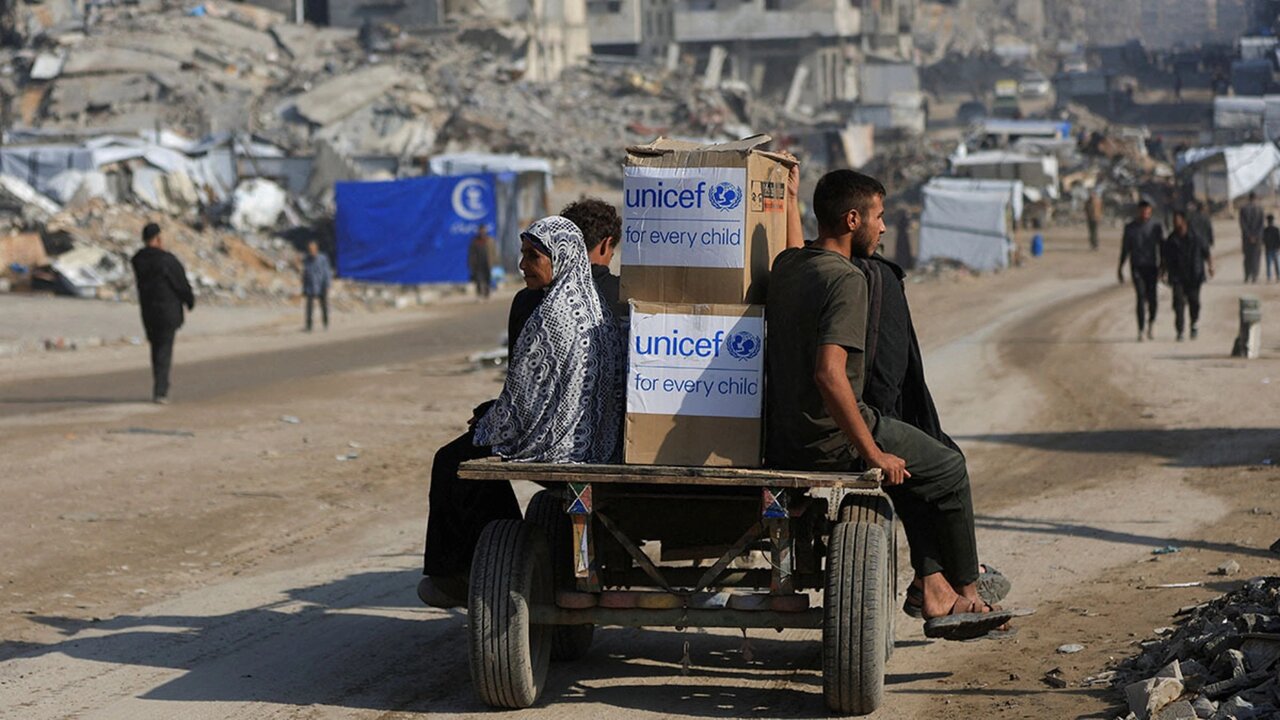
The UN humanitarian office said Friday that despite a ceasefire in the Gaza Strip, its staff and facilities "continue to come under fire," creating dangerous conditions that are obstructing humanitarian operations, Anadolu reported Saturday.

In a statement, the UN Office for the Coordination of Humanitarian Affairs (OCHA) said it "warns that despite the ceasefire in the Gaza Strip, UN staff and facilities continue to come under fire, posing unacceptable risks to their safety."

OCHA stressed that "civilians, including humanitarian workers, and civilian infrastructure – including humanitarian convoys, supplies and facilities – must always be protected in accordance with international humanitarian law."

It said ongoing attacks "expose UN staff, NGO partners, and the people who depend on their services to grave risks, including death and injury, and further impede humanitarian work."

Calling on all sides to safeguard civilians and aid operations, the UN urged all sides "to protect civilian lives and allow the safe passage of life-saving aid."

Despite the risks and "other obstacles preventing a full implementation of the humanitarian scale-up," OCHA said the UN and its partners "continue providing services and critical items to people in need across Gaza."

Turning to the occupied West Bank, OCHA said the violence "continues unabated," with daily reports of casualties, damage, and displacement. Palestinians’ mobility is increasingly restricted, with "thousands placed under curfew" and many others facing limits that hinder access to workplaces, schools, and essential services.

Updated OCHA figures show that more than 1,600 illegal Israeli settler attacks since early 2025 have affected over 270 Palestinian communities. The number of Palestinians injured "has now topped 1,000," including about 700 directly hurt by illegal Israeli settlers, roughly double the figure recorded in 2024.

Hezbollah Calls on Visiting Pope to Condemn Israeli Strikes on Lebanon

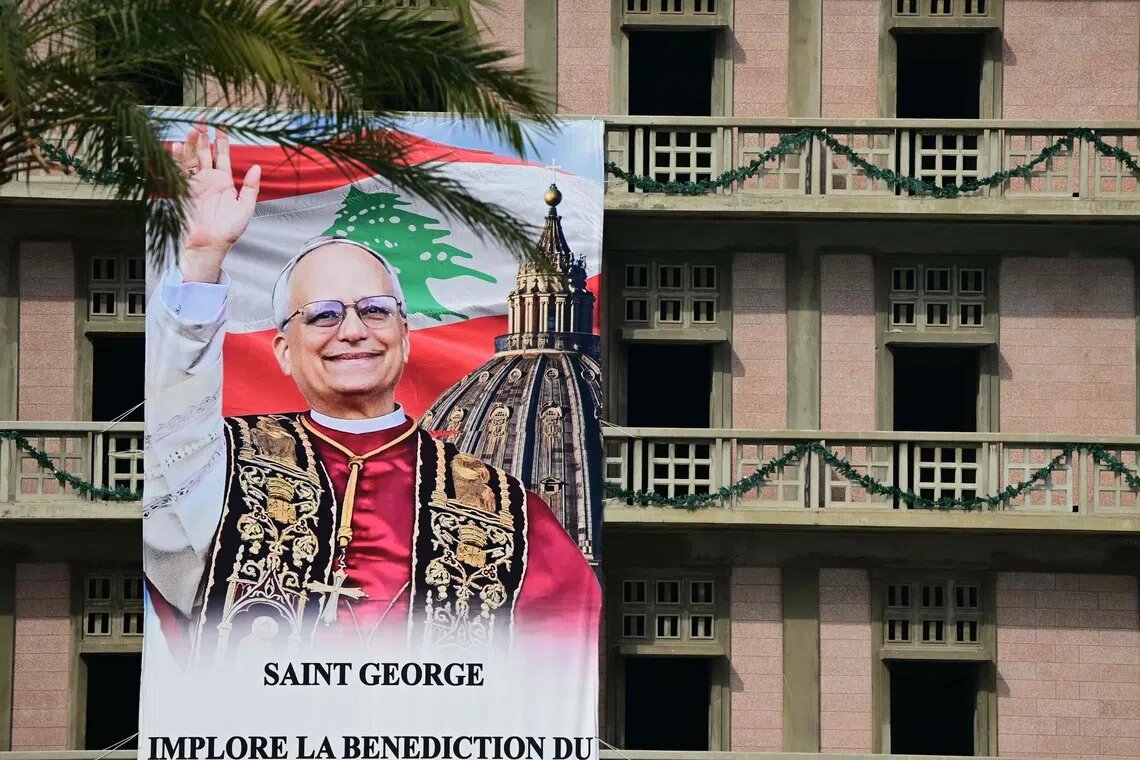
 IQNA – The Lebanese resistance movement Hezbollah called on the head of the Catholic Church to denounce the ongoing Israeli violations of a ceasefire deal and its ongoing aggression against the Arab country.

Pope Leo XIV

“We in Hezbollah take advantage of the occasion of your auspicious visit to our country, Lebanon, to reaffirm from our side our commitment to coexistence,” read Hezbollah’s message to the pope, published on the group’s social media channels on Saturday. 

It also reiterated the group's dedication to supporting the Lebanese army and nation in confronting any aggression against or occupation of their land.

The resistance movement noted that what Israel “is doing in Lebanon is unacceptable ongoing aggression.”

“We rely on your holiness’s stance in rejecting the injustice and aggression our nation of Lebanon is subjected to at the hands of the Zionist invaders and their supporters,” the statement added.

The statement comes as Pope Leo XIV is going to visit Lebanon over the weekend. He is reportedly set to meet civil and religious authorities, visit mosques and ancient churches, pray at Beirut’s port in memory of the victims of the 2020 explosion, and hold a private meeting with President Joseph Aoun.

The pontiff is also going to plant a cedar at the presidential palace in Beirut, and offer prayer at the tomb of St Charbel and before the statue of Our Lady of Lebanon.

During a speech on Friday, Hezbollah Secretary-General Sheikh Naim Qassem welcomed the upcoming visit of Pope Leo XIV to Lebanon. He mentioned that members of the group had been assigned to deliver a letter to the pope, which would also be shared publicly through the media.

He emphasized that his group has adhered to the ceasefire agreement established in November 2024, and called for a halt to the ongoing Israeli attacks on the nation.

“We welcome this visit at this pivotal moment, and we pray that the Holy Father will contribute to spreading peace in Lebanon, liberating it, ending the (Israeli) aggression, and standing by it and by the oppressed, as we have always known him to do,” Sheikh Qassem highlighted.

Israel and the Hezbollah resistance movement reached a ceasefire agreement that took effect on November 27, 2024. Under the deal, Tel Aviv was required to withdraw fully from the Lebanese territory, but has kept forces stationed at five sites, in clear violation of UN Security Council Resolution 1701 and the terms of last November’s agreement.

Since the implementation of the ceasefire, Israel has violated the agreement multiple times through repeated assaults on the Lebanese territory.

Lebanese authorities have warned that the Israeli regime’s violations of the ceasefire threaten national stability.

Source: Press TV

Weaponizing women's rights: How imperialists justify invasions

Zahra Shafei, cultural researcher

Here you are, Freedom

“Because of our recent military gains in much of Afghanistan, women are no longer imprisoned in their homes. They can listen to music now. The terrorists and the Taliban wouldn’t allow them to paint their nails.” These were the words of Laura Bush, the First Lady of the United States, in a radio address to the American people on November 17, 2001. Following the US military invasion of Afghanistan, the US government equated the liberation of Afghan women from Taliban rule with the fight against terrorism and extremism, making it one of the main objectives of the war. This humanitarian voice was heard from the wife of the US president in Washington. In this speech, she equated patriarchy with terrorism and framed the so-called “war on terror” as a battle for the freedom and dignity of women. Just days after American bombs began to rain down on Afghan homes, a female member of the US Congress, dressed in the traditional blue burqa worn by Pashtun women – which had been portrayed in Western media as the most grotesque symbol of oppression and backwardness – expressed her appreciation for this "compassionate war."

Carolyn Maloney’s speech in the US House of Representatives in 2001

During the days of the military invasion of Iraq, after the US failed to find any "weapons of mass destruction," the issue of defending the rights of Iraqi women became a headline in the media campaigns of the coalition countries. With the cooperation of organizations such as Human Rights Watch and Amnesty International, public opinion in the West supported the continuation of the war in Iraq, which left millions dead and displaced. This occurred despite the fact that Saddam Hussein's regime was secular, and the hijab worn by Iraqi women and their lifestyle was not a result of Ba'athist intervention, but rather a reflection of the beliefs and culture of the Iraqi people.

It took 15 years and several million deaths for the next President of the United States to make a shocking confession: "They want to wear it [the hijab]. [They say] we've worn them for a thousand years. Why would anybody tell us not to. What are we getting involved for?"

Like father, like son

From the British colonization of India to the French occupation of Algeria and the subsequent military occupation of Iraq by the United States, a Western power that inherited the legacies of the former two, a recurring pattern of using women's rights as a pretext to advance the goals of Western countries is clearly observable.

In 1893, while Britain was busy expanding its influence and dominance in India and fighting against Muslim Resistance Movements, Western writers referred to the liberation of girls and widowed women from the oppression and tyranny of "Mohammedans" as one of the accomplishments of Britain's invasion of India.

An article from the Associated Press in 1893, two years before the complete military occupation of India by Britain


They had written that, before Islam, women in Hindu and Sikh culture were free and educated. Interestingly, more than 40 years later, when Hindus also joined the resistance against British colonialism, Katherine Mayo, who had a history of writing books against anti-colonial movements, wrote the book Mother India to criticize Hindu culture and its treatment of women, reinforcing a negative image of Indian culture.

On May 16, 1958, just four years before Algeria would free itself from 130 years of French rule, French generals eager to demonstrate their commitment to continued colonization and provide evidence of Algerian support to the French government, hired hundreds of locals to chant pro-French slogans. While staged pro-French rallies were common during the colonial era, what was different this time was the presence of a group of Algerian women who had been unveiled by French women. This act was aimed at undermining the values of Algeria's freedom fighters and Muslim revolutionaries[1].

Support for women's rights: A cover for colonial goals

In his 1959 article Algeria UnveiledFrantz Fanon writes: "The dream of a total domestication of Algerian society by means of 'unveiled women aiding and sheltering the occupier' continues to haunt the colonial authorities." The same France that defended the "right to freedom of dress" for Algerian women banned the wearing of the hijab in its schools and universities decades later. The same Britain that fought against the 'oppression of Muslim women' was a major supporter of tribes in their struggle against the Ottomans, who paid no attention to the actual rights of women in Islam.

The United States also formed a coalition of countries to attack Iraq, using countries that had even made it illegal for women to drive. It is clearly evident that "defending women's rights" has been nothing more than a pretext for extensive military campaigns. These profitable campaigns could not have dragged on for so long without a humanitarian veneer.

In a meeting with various groups of Iranian women on December 17, 2024, Imam Khamenei highlighted the West's instrumental use of women's rights. He stated: "Global capitalists and politicians intervene in the topic of women just as they do in all aspects of people’s lifestyle. What is their goal? Their true goal is political and colonial intrusion. They intervene to lay the groundwork and provide cover for further encroachment, and greater interference. This motive is hidden behind a humanitarian appearance."

For the colonialists and capitalists, what could be a greater incentive than the fact that during the approximately 150 years of British colonial presence and occupation of India, this country injected a sum of 45 trillion dollars into its own economy. India, which once had the largest textile and spice industries in the world, fell under British rule and was forced to pay tribute to Britain for its exports.

France, having almost lost the Mediterranean in its colonial competition with Britain, seized one of the most important shores of the Mediterranean, Algeria, under the banner of civilization and freedom. During its more than 130 years of colonial occupation of Algeria, France confiscated all the Islamic endowments of the Algerian people and plundered its natural resources. Statistics show that between 80 and 180 billion dollars were transferred to the French treasury as a result of this plunder.

The United States, the self-proclaimed champion of women's rights worldwide, accused Iraq of developing weapons of mass destruction and collaborating with terrorists after Saddam Hussein decided to take Iraq's oil out of the petrodollar system. At a time when the Ba'athist regime in Iraq was actually using German-made weapons of mass destruction against the people of Iran and its own people, the United States provided the Iraqi regime with detailed intelligence on Iranian military infrastructure through its spy planes. However, as soon as Saddam stood against the US, the issue of Iraqi women being subjected to misogyny and oppression became the main concern of mouthpieces in all international human rights platforms. Today, all of Iraq's oil export revenue is directly deposited into American accounts. Even for basic expenses such as paying salaries, the Iraqi government has to request dollars from the United States in writing, and receive it in suitcases.

The attack on Afghanistan, not only generated substantial profits for the US arms industry and private contractors but also fostered an environment conducive to drug production and trafficking. Moreover, it positioned the United States in a strategically advantageous position to encircle and attack Iran. As the Imam Khamenei stated in his speech on January 1, the main goal of the attacks on Afghanistan and Iraq was to encircle and destroy Islamic Iran. Achieving this goal would have given the United States complete control over the world's largest oil-producing region.

It is plausible to speculate that, following Iraq and Afghanistan, Iran would have been next in line for the US to ostensibly "bring rights and freedoms for women."

[1] Abu-Lughod, Lila. Do Muslim Women Need Saving? Harvard University Press, 2013, pp. 33–34.

Hezbollah message to Pope Leo rejects Israeli aggression, affirms sovereignty and coexistence

On the occasion of the Pope’s Lebanon visit, Hezbollah issued a statement on Saturday, presenting the country as a bridge of interfaith coexistence, urging protection of human rights at the level of peoples, condemning atrocities in Gaza and aggression in Lebanon, and reaffirming commitment to national sovereignty, consensual democracy, and unified living.

The resistance group's full message to Pope Leo XIV:

In the name of God, the Most Gracious, the Most Merciful.

Your Holiness the Supreme Pontiff of the Catholic Church in the world,
Pope Leo XIV, most esteemed.

Greetings and peace be upon you.

At the outset, we express our full welcome and high appreciation for your esteemed person, and for the visit you have devoted to Lebanon; this beautiful country that God has blessed with its geographic position and orderly sectarian diversity, within a framework of shared living and general consensus—two essential features for the stability of its political system and national security.

Your predecessor, Pope John Paul II, previously considered Lebanon “not merely a country, but a message.” The reality confirms that Lebanon, with its diverse composition, represents a civilizational link between the followers of the two divine messages, Christianity and Islam, and between followers of religious, cultural, and secular orientations in all countries and continents of the world.

When the human being is the focus of concern for all religions—and even for secular ideological orientations—one can be hopeful and optimistic about the possibility of achieving lasting peace and security.

As we read in your guidance and messages a firm commitment to human rights and the necessity of respecting and protecting them, we affirm that those rights transcend the individual aspect to a broader sphere: the sphere of peoples.

Regarding the conflicts the world witnesses today, the deeper cause is the disavowal by some of any commitment or recognition of the rights of the other human being, whether due to differences in religion, color, race, language, or interests.

It is no secret that the erosion of respect for human rights among some—whether leaders, groups, parties, sects, states, or organizations—nourishes and feeds tendencies of greed, domination, and subjugation, and the resort to force instead of appealing to justice.

The tragedy witnessed in Gaza in occupied Palestine over the past two years—and continuing—is a tragedy resulting from the occupiers’ persistence in stripping the Palestinian people of their rights to their land, homeland, and self-determination, and from the international system’s failure to adopt the measure of justice and right to find a solution to the ongoing conflict in our region—between the owner of the land and homeland and the occupying usurper of both.

Likewise, the suffering experienced by the Lebanese people—due to the Zionist occupation of parts of their land, the continuation of its attacks against them, and the threat to their security and stability in their own country—arises from greed to dominate their waters, land, and gas wealth, and from attempts to impose upon the Lebanese submission to its boundless security, expansionist, and political conditions.

Without doubt, the Zionist occupation—very regrettably—enjoys unlimited support from major powers that share its tendency toward domination and greed for the interests of our country and region, without any regard for the rights of our people and the peoples of the region.

What the Israeli enemy has perpetrated in Gaza against the Palestinian people is a described crime of genocide; and what it is doing in Lebanon is an ongoing aggression that is rejected and condemned.

We in Hezbollah seize the opportunity of your blessed visit to our country, Lebanon, to affirm, on our part, our commitment to unified shared living; to consensual democracy; to preserving internal security and stability; and to our care for national sovereignty and its protection, by standing with our army and our people to confront any aggression or occupation of our land and country.

We also affirm our legitimate right to reject foreign interference that seeks to impose its tutelage over our country and people, and to confiscate our national decision and the powers of our constitutional authorities.

And as our creed confirms that the supporters of Jesus Christ, son of Mary, are messengers of love, the safeguarding of rights, and respect for the human being, we count on Your Holiness’s stances in rejecting the injustice and aggression to which our homeland, Lebanon, is subjected at the hands of the Zionist invaders and their backers.

This is what we entrust to you during the visit in which you express to all Lebanese your care, love, and cooperation. We wish Your Holiness comfort and safety in your stay, and we ask God Almighty to bestow upon the oppressed in the world justice, security, and relief.

With best wishes.

Voices for Palestine: Silence is an unforgivable crime

TEHRAN – The International Day of Solidarity with the Palestinian People, observed worldwide on November 29, has once again brought diverse voices together in defense of Palestinian rights and dignity.

The Palestinian resistance movement Hamas issued a statement emphasizing that international solidarity remains crucial in backing the legitimate rights of the Palestinian people as they continue their struggle for freedom, dignity, and independence. The resistance group urged Muslims, activists, and “freedomseekers” across the globe to raise their voices against Israel’s violations of the ceasefire in Gaza and “terrorist actions” in the occupied West Bank and Al-Quds. Hamas also stressed that increased public pressure could strengthen calls to open border crossings, facilitate the entry of humanitarian aid into Gaza, and pave the way for reconstruction efforts in the besieged territory.

At the United Nations, Secretary-General António Guterres delivered a message highlighting the immense suffering endured in Gaza and the West Bank. He noted that survivors are mourning tens of thousands of deaths — nearly a third of them children — while hunger, disease, and trauma run rampant. He stated: “The killing of so many civilians, the repeated displacement of an entire population and the obstruction of humanitarian aid should never be acceptable under any circumstances.” He also pointed to ongoing challenges in the occupied West Bank, including settlement expansion, settler violence, evictions, demolitions, and threats of annexation. Guterres repeated his call for an end to the unlawful occupation and for irreversible progress toward a two-state solution, affirming the Palestinian people’s right to dignity, justice, and self-determination.

Adding to these calls, Hojjatoleslam Mohammad Qomi, head of Iran’s Islamic Ideology Dissemination Organization, issued a powerful message on his X account, saying: “People of the world… stand with Gaza. Silence is an unforgivable crime.”

Qomi’s words resonate deeply on this day of solidarity, reminding the international community that silence in the face of injustice is itself a moral failing. His stance reflects a broader commitment to amplifying the Palestinian cause and ensuring that the struggle for dignity and independence remains at the forefront of global consciousness.

Rayan 2025 AI, programming contest announces winners

TEHRAN – The winners of the Rayan 2025 international artificial intelligence and programming competition, known as World Finals, were announced here on Friday.

Iranian students showcased a great performance in both AI and programming sections. In the programming section, Ali Safari was placed first. China secured second and third place, followed by India, Vietnam, Armenia, Serbia, and Pakistan, respectively, ISNA reported.

In the AI section, Iranian teams, namely, no Trust issues here, Pileh, AI Guardians of Trust, AIUoK, red-serotenin, Persistence, and GGWP were placed first to seventh.

The final round of the Rayan international artificial intelligence and programming contest was held on Friday at Sharif University of Technology in Tehran, with participants from 25 countries.

Supported by the Vice Presidency for Science, Technology, and Knowledge-Based Economy, the event kicked off on November 25, attracting hundreds of contestants from the U.S., Russia, China, India, Italy, Chile, Australia, Armenia, Pakistan, Bangladesh, Belarus, Afghanistan, Ukraine, Taiwan, Romania, Singapore, Poland, Slovakia, Vietnam, Serbia, Argentina, Colombia, Kazakhstan, and Ethiopia, as well as the host, Iran.

The solo programming section was held on Friday morning, with 60 Iranian and foreign participants who worked individually to solve nine complicated algorithmic problems within a duration of three to four hours.

The scientific competition aimed to promote knowledge, foster international networking, and establish scientific authority in AI and programming.

Enhancing algorithmic thinking, problem-solving skills, teamwork, developing innovative ideas, starting new businesses, and expanding AI engineering and programming were among the other objectives of the contest.

Recent achievements

Iranian students secured three gold medals and a special award in the International Science and Invention Fair (ISIF) 2025, ranking them among the top innovators worldwide.

Raman Nafarieh won a gold medal and a special award in biotechnology.  The team, comprising Radin Abbasi and Sam Rashidi, clinched a gold medal in engineering. Moreover, Matin Hayati won a gold medal in educational technology and artificial intelligence.

Iranian students continued to showcase their excellence at international competitions by winning medals at the Yakutia International Science Fair (YISF) and the World Invention Creativity Olympics (WICO).

YISF was held in Yakutsk, Russia, from July 6 to 9. The event brought together 129 teams from 10 countries, participating in two different categories.

The first category included mathematics, computer science, and information technology, and the second one involved physics, astronomy, and engineering.

In the second category, Mehran Rajabi and Alireza Jafarnejad ranked first for their project titled ‘EcoNet Bin: AI-Driven Waste Segregation with IoT-Enabled’.

‘Protecting Curious Little Minds: A Smart Child Safety Solution with IoT and Image Processing’ was the name of the project presented by Moeid Rajabi and Helena Rajabi, who secured second place.

Artin Radmatin, Baran Bahman, Mohammad-Hossein Ezzati, Niki Abtahi, Sarina Nosrati, and Baran Derakhshandeh won third place for ‘Evaluation of the effect of using magnetic gear in improving the performance of process systems based on mechanical gear’.

Also, Zhina Aminorroaya-Karladani grabbed the special prize for her project, ‘UVGuard Grooming Brush’.

In the first category, Artin Salari and Amir-Abbas Kavosi Amin ranked second for ‘Smart Glasses for the Blind with Real-Time Object Detection.

Ilia Majidzadeh Heravi and Parsa Karimi Yazdi came in third for their project titled ‘CommuniMate SmartApp: An Innovative Solution for Deaf Communication’.