
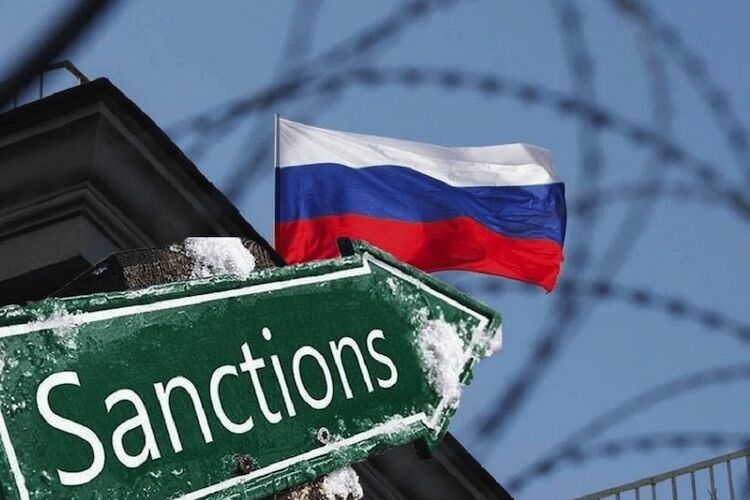
Arash Razavi, in an interview with the Strategic Council on Foreign Relations’ website, stated: “Although Europeans have imposed the most extensive and strictest economic restrictions in their history against Moscow in recent years, these measures have still not been able to achieve the predicted strategic objectives fully.” According to him, “Since 2014 and following the Crimea crisis, the European Union’s approach towards Russia was gradual and cautious. The sanctions at that stage were largely symbolic and included asset freezes for some Russian officials, export restrictions on advanced technologies, and travel bans for individuals. These restrictions were less intense and extensive compared to the sanctions policy of the United States, because some key members of the European Union at the time were not willing to cut off profitable economic relations with Moscow.”
The economics analyst continues: “However, the start of Russia’s military operation in Ukraine in February 2022 created a turning point in Brussels’ sanctions approach. Over the past two years, the European Union has approved 14 comprehensive sanction packages targeting almost all key sectors of the Russian economy, including energy, the financial system, the military-industrial complex, and even the service and transportation sectors. For the first time, the concept of secondary sanctions, which was previously specific to the sanctions policies of the United States, was placed on the European Union’s agenda so that any cooperation of third countries with Moscow would also face additional pressure.”
According to Razavi, despite these measures, “the main question about the effectiveness of these sanctions remains.” He clarifies in this regard: “Statistical evidence indicates that although the sanctions have caused significant damage to the Russian economy, especially in the areas of energy revenues and foreign investment, this country, by adopting a strategy of diversifying trade partners and pivoting to the East, has compensated for a significant part of the losses. The expansion of economic cooperation with China, India, and West Asian countries allowed Russia to replace some of the lost markets in Europe with new destinations.”
This expert also points to the European Union’s internal challenges in implementing sanctions uniformly and says, “Differences in national interests among EU members, especially countries with high dependence on energy imports from Russia, have caused the European Union’s sanctions policy to lack the necessary cohesion and coordination. In some cases, hidden economic interactions with Moscow show that part of the Union’s sanctions capacity has been weakened due to the lack of complete political consensus.” According to the international economics expert, “One of the most important developments after 2022 is the change in the qualitative nature of the European Union’s sanctions policies.” He adds about this: “Unlike the past, when sanctions were mostly imposed with symbolic and political objectives, Europe is now seeking to establish continuous assessment mechanisms to determine to what extent these restrictions have been able to disrupt Russia’s economic performance. This new approach has caused the issue of sanctions effectiveness to be placed on the main agenda of European leaders, and even discussions of heavier penalties for violators of these restrictions have been raised.”
However, Razavi emphasizes that “economic sanctions alone cannot change Russia’s geopolitical behavior. Historical experience shows that long-term external pressure can lead to the strengthening of economic adaptation strategies and the adoption of alternative policies. In the case of Russia, evidence indicates that the country, by developing domestic industries, import substitution, and investment in key sectors, is moving towards reducing dependence on the Western economy.”
In conclusion, this economic analyst emphasizes that “the European Union is inevitably forced to reconsider its sanctions strategy in the near future. The lack of complete consensus within the Union, the limitations of economic pressure capacities, and the emergence of non-Western powers allied with Moscow have all doubled the necessity for designing smarter policies. Otherwise, the continuation of the current situation will not only reduce the efficiency of the sanctions. Still, it may also lead to the weakening of the European Union’s geopolitical position in the international system.”

No comments:
Post a Comment