Friday, October 31, 2025

Sharm El-Sheikh Summit 'part of Trump's plan for Arab world'

Leader’s advisor

TEHRAN, (MNA) – Senior Adviser to the Leader of the Islamic Revolution Ali Akbar Velayati has said that Sharm El-Sheikh Summit is a part of US President Trump’s sinister economic plan for the Arab world.

In a post on his X account, Velayati wrote, “Trump's goal in denying the ceasefire violation by the child-killing Zionist regime in Gaza is not to preserve peace, rather, he seeks to remove obstacles to implement his financial agreements with Arab countries and make the most use of their wealth! So, Sharm El-Sheikh Summit was held in this direction.”

Remove the obstacles to implement his financial agreements with Islamic countries and make optimal use of their wealth is Trump's goal in denying the violation of the ceasefire by the child-killing Zionist regime in Gaza, he underlined.

The 2025 Gaza Peace Summit, also known as the Sharm El Sheikh Summit, was a diplomatic meeting held on October 13, 2025 in Sharm El Sheikh, Egypt, following an agreement to implement the first phase of the Gaza peace plan to end the Gaza war which began on October 07, 2023.

Egypt FM holds phone calls with Araghchi, Grossi

TEHRAN, (MNA) – Egyptian Foreign Minister Badr Abdelatty held separate phone discussions with Iranian counterpart Abbas Araghchi and IAEA chief Rafael Grossi to advance peaceful solutions for Iran's nuclear program.  

Minister of Foreign Affairs, Emigration, and Egyptian Expatriates Badr Abdelatty held separate phone calls with Iranian Foreign Minister Abbas Araghchi and Director General of the International Atomic Energy Agency (IAEA) Rafael Grossi.

According to local Egyptian media on Friday, the talks focused on restoring Tehran's cooperation with the international atomic agency and reducing regional tensions surrounding Iran's nuclear activities.

The calls focused on developments regarding the Iranian nuclear file and on efforts to support regional security and stability through peaceful means.

Abdelatty stressed the importance of continuing dialogue between the relevant parties, resuming and strengthening cooperation between Iran and the IAEA in line with the agreement signed in Cairo on September 9, and intensifying communication among all parties in the coming period.

He further noted that the discussions were conducted under the directives of President Abdel Fattah El Sisi, aimed at reducing escalation and promoting calm in the Middle East. 

Iran, Russia, China declare end of UN oversight on nuke deal

TEHRAN, (MNA) – In a joint letter to the International Atomic Energy Agency, the ambassadors of Iran, Russia, and China to the UN declared that Security Council Resolution 2231 --and the IAEA's reporting mandate-- ended on October 18, 2025.

In a joint communication to the IAEA on October 30, the permanent representatives of Iran, Russia, and China informed IAEA Director General Rafael Grossi that, with the expiration of UN Security Council Resolution 2231 on 18 October 2025, the Agency’s mandate to report on Iran’s nuclear activities under that resolution has formally ended.

The three countries also reiterated their opposition to the European “snapback” initiative, calling it legally baseless, and urged all parties to pursue dialogue and diplomacy rather than unilateral measures.

What follows is the text of the letter by Iran’s Saeed Iravani, China’s Fu Cong, and Russia’s Vassily Nebenzia:

Excellency,

We have the honour to transmit herewith, in the attachment, a joint letter dated 24 October 2025 from the Ambassadors and Permanent Representatives of the People's Republic of China, the Islamic Republic of Iran, and the Russian Federation to the United Nations Office at Vienna, addressed to His Excellency Mr. Rafael Mariano Grossi, Director General of the International Atomic Energy Agency (IAEA), concerning the expiration, on 18 October 2025, of Security Council resolution 2231 (2015) and the consequent termination of the mandate of the Director General to report on verification and monitoring pursuant to that resolution.

We would appreciate it if the present letter and its attachment could be circulated as an official document of the Security Council.

Please accept, Excellency, the assurances of our highest consideration.

H.E. Rafael Mariano Grossi, Director General of the IAEA

Excellency,

We, Ambassadors and Permanent Representatives of the People's Republic of China, the Islamic Republic of Iran, and the Russian Federation, have the honor to refer to the joint letter of our Foreign Ministers dated 28 August 2025 (INFCIRC1314-A/79/1004-S/2025/546), in which they set out common position regarding the recent actions by the United Kingdom, France, and Germany (E3) in relation to United Nations Security Council Resolution 2231 (2015).

We reaffirm that the invocation of the so-called "snapback" by the E3 is, by its very nature, legally and procedurally flawed. The E3, having themselves violated their commitments under both the JCPOA and United Nations Security Council Resolution 2231, and having failed to exhaust the procedures established under the Dispute Resolution Mechanism (DRM), lack the requisite standing to invoke its provisions.

Therefore, we affirm that in accordance with UNSCR 2231, all its provisions have been terminated on 18 October 2025. In light of this termination, the mandate for the IAEA Director General's reporting on verification and monitoring under the UNSCR 2231 has lapsed. In the IAEA the implementation of the JCPOA, as well as verification and monitoring in the Islamic Republic of Iran in light of UNSCR 2231, were enacted by the resolution of the Board of Governors of 15 December 2015 (GOV/2015/72). This resolution remains in force and is the sole guidance that the IAEA Secretariat is bound by in this matter.

Operative paragraph 14 of this Resolution unequivocally stipulates that the Board "decides to remain seized of the matter until ten years after the JCPOA Adoption Day or until the date on which the Director General reports that the Agency has reached the Broader Conclusion for Iran, whichever is earlier". Consequently, as of 18 October 2025, the related agenda item has been automatically removed from the agenda of the Board of Governors, and no further action is required in this regard.

Our countries once again emphasize that it is essential that the relevant parties stay committed to finding a political settlement that accommodates the concerns of all parties through diplomatic engagement and dialogue based on the principles of mutual respect, and refrain from unilateral sanction, threat of force, or any other action that may escalate the situation, and that all countries should contribute to creating a favorable atmosphere and conditions for diplomatic efforts.

It is the hope of the Permanent Missions of China, the Russian Federation and the Islamic Republic of Iran that this letter will be duly circulated to all IAEA Member States by the Secretariat as an INFCIRC document.

Please accept, Excellency, the assurances of our highest consideration.

Gaza Faces ‘Slow Genocide’ Amid Ongoing Blockade

By Al Ahed Staff, Agencies

Gaza Faces ‘Slow Genocide’ Amid Ongoing Blockade

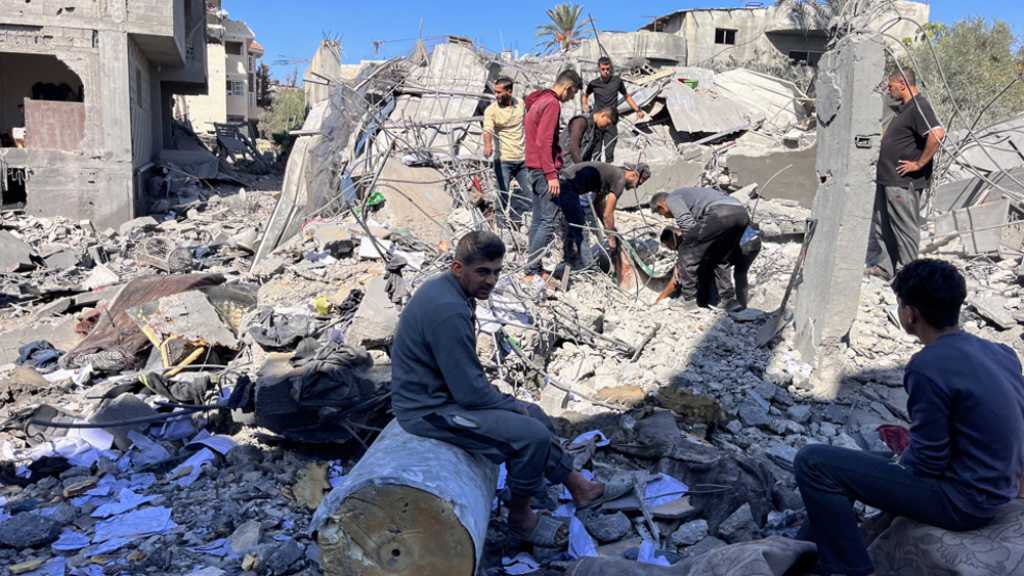
The Gaza Government Media Office has warned that while direct "Israeli" bombardments have largely paused, Palestinians in the besieged territory continue to face “slow genocide,” driven by the ongoing blockade and severe restrictions on humanitarian aid.

In a statement released on Tuesday, Ismail al-Thawabta, director of the media office, said the cessation of heavy bombing does not mean the end of suffering.

He said "Israel" is continuing the campaign “with other tools” such as the closure of crossings, the obstruction of aid deliveries, and restrictions on essential relief materials such as tents, blankets and caravans.

According to the media office, more than 288,000 Palestinian families remain without shelter due to the continued blockade of basic materials.

The office also highlighted the collapse of Gaza’s healthcare system, reporting that over 20,000 wounded and sick people are in urgent need of evacuation for medical treatment abroad.

It said "Israel’s" attacks have destroyed hospitals and clinics, adding that more than 1,700 medical personnel—including doctors, nurses, and other staff—have been martyred since the start of the genocidal war. 

The office also noted that only 93 trucks of humanitarian aid are currently entering the territory each day, adding that this is “a meager number compared to the needs of 2.4 million people living under siege.”

The media office urged the international community to take concrete action, saying Gaza requires more than just statements of solidarity.

“Gaza does not need statements of solidarity; it needs binding international decisions to hold the occupation accountable, end the siege, open the crossings, and save what remains of life,” it said.

Despite the truce, conditions remain dire. Many Palestinians attempting to return to their homes in northern Gaza face “a daily struggle for survival.” Large parts of the region remain inaccessible due to the continued presence of the IOF.

The "Israeli" occupation continues to violate the ceasefire agreement with Hamas, carrying out airstrikes and shootings, while restricting aid into the territory.

According to Gaza officials, nearly 100 Palestinians have been martyred and more than 230 others wounded in "Israeli" attacks since the ceasefire took effect.

Resistance, unity sole way to confront US hegemony

Senior cleric

TEHRAN, (MNA) – The provisional leader of Tehran Friday Prayers says that keeping national unity and resistance are the only way to tackle the United States' hegemony-seeking policies.

Speaking this week's Friday Prayers sermon in the Iranian capital of Tehran, Hojjatoleslam Mohammad Javad Haj Ali Akbari pointed to the anniversary of Aban 13th as the National Day of Fighting Global Arrogance in the Iranian calendar a few days later, saying that "it is a day to take a look at history and [a period of time in Iran's contemporary history], which begins with 1953 coup, to the exile of the late Imam Khomeini, the massacre of students, and the capture of the Den of Espionage (former US embassy), and events after the revolution. It is a sign of America's deep-rooted 72-year-old anymosity towards the Iranian nation. Moreover, this year a new page in history was recorded when Iran, during negotiations with the US was attacked by it and its unleashed dog, namely the Zionist regime. Because Global Arrogance is opposed to the principle of a strong Iran, the identity of an independent Iran, and a prosperous Iran."

He described US embassy takeover by the Iranian students, reciting Imam Khomeini's words who described the students' action as more important the 1979 Islamic Revolution. 

Haj Ali Akbari also said that the US under Donald Trump is what America is in nature, which does every crime against humanity for money. 

The Tehran Friday Prayers leader went on to describe America and the Zionist regime as the most detested regimes in the world.

He said at the end of his speech maintaining national unity and resistance are the only ways to tackle the United States' hegemony-seeking policies.

Iran names Nov. 30th as day of trio islands

TEHRAN, (MNA) – Iran has named November 30th as the national day of the trio islands in the Persian Gulf Greater Tunb, Lesser Tunb and Abu Musa.

Gholamreza Basirnia, an official with Iran's Supreme Council of the Cultural Revolution (SCCR) said that it was decided that November 30th be named as the national day of the trio islands in the Persian Gulf Greater Tunb, Lesser Tunb and Abu Musa.

Basirnia explained that November 30th coincides with the anniversary of the retaking of the three Persian Gulf islands from the British occupiers by the Iranian Army Navy in 1971 .

He said that also in the SCCR's recent meeting, "November 12th, which coincides with the anniversary of the martyrdom of IRGC Major General Hassan Tehrani Moghadam in 2011, and also in order to pay tribute to the great martyrs of Iran's aerospace and missile industry, such as Major General Hassan Tehrani Moghadam and Major General Amir Ali Hajizadeh, was named as 'National Aerospace Day.'"

Iran could become among top 10 countries in AI: VP

TEHRAN, (MNA) – Iran’s First Vice President Mohammadreza Aref says that Iran could become among the top 10 countries in the world in terms of Artificial Intelligence (AI).

Speaking at the General Assembly of Academy of Sciences, he stated that Iran has a single-digit rank in the world in the field of nanotechnology as Leader of the Islamic Revolution Ayatollah Seyyed Ali Khamenei has emphasized in this regard.

Iran has high potential to become among the world’s top 10 countries in AI which is achievable, Aref underlined.

He seized this opportunity to express his thanks to the nonstop and unflinching efforts of all scientists, researchers and university lecturers of the country over the past four decades, highlighting that higher education system, and scientific sector of the country have always been successful since the beginning of the victory of the Islamic Revolution.

Turning to the scientific and technological strategy of the Vision Document, the first vice president stated, “In this Vision Plan, it is planned that the country should stand at the first place in science and technology in the region.”

Elsewhere in his remarks, Aref pointed to the impact of sanctions in Iran’s economy, adding that the administration of President Pezeshkian is making its utmost effort to solve economic problems facing the noble people of the country.

Referring to the 12-day Israeli-US aggression on the country back in June, Aref said that the Iranian nation came out victorious despite the fact that the opposite side employed all its means, including the most advanced warfare equipment.

The Calculus of Betrayal: Abu Dhabi’s Mirage and the Scorn of Arab Solidarity

By Mohamad Hammoud

The Calculus of Betrayal: Abu Dhabi’s Mirage and the Scorn of Arab Solidarity

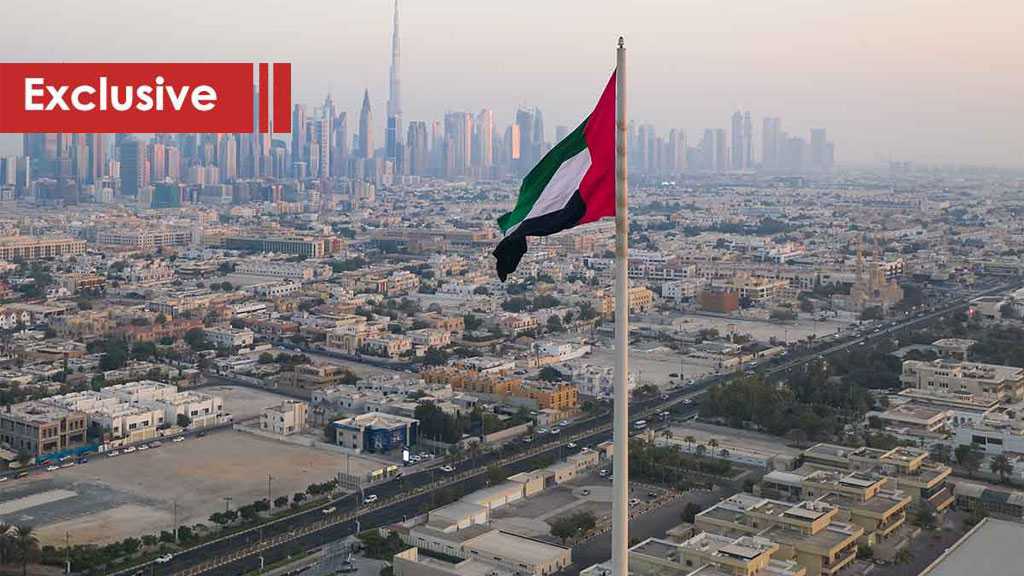
Lebanon – Behind the gleaming skyline, the United Arab Emirates cynically trades Arab allegiance for self-serving strategic gain, quietly backing military actions and regional proxies.

On a blistering May afternoon, as “Israeli” bombs rained down on Gaza’s al-Rimal district, an Emirati C-17 cargo jet reportedly landed at Nevatim Air Base. Reports indicated the aircraft was carrying “Israeli”-made drones refitted in Abu Dhabi, later used to relay infrared feeds above Rafah to “Israeli” command posts. This image—of an Emirati aircraft supporting an “Israeli” military operation while Palestinian neighborhoods burned, hospitals were shelled, and civilians fled—exposes a stark contradiction in Abu Dhabi’s foreign policy: the UAE presents itself as a modern, tolerant nation while simultaneously enabling violence abroad, carrying out lethal interventions discreetly to avoid the moral censure of the Muslim world.

The New Axis: Normalization as Militarization

After 2014, Emirati leaders, viewing US outreach to Iran as a security vacuum, pursued a quiet security partnership with “Israel.” This shift was motivated by a desire to guarantee protection and suppress political Islam, which the Emirate’s ruling class views as an existential threat. Reporting in Foreign Policy and investigative outlets documented how the Abraham Accords unlocked access to sophisticated “Israeli” surveillance, intelligence and defense technologies, which Abu Dhabi quickly utilized to meddle in other countries’ affairs. This normalization was not diplomacy; it was militarization outsourced. This cynical approach set a pattern: secure influence abroad while avoiding direct risk at home, using proxies and strategic alliances to extend a damaging geopolitical reach.

Yemen: The Proxy Proving Ground

Yemen became the initial testing ground for this aggressive doctrine. Joining the Saudi-led coalition in 2015, the UAE quickly pursued its own independent strategy—seizing southern ports, training local militias, and establishing bases at key maritime chokepoints. Reports from Reuters and The New York Times documented the deployment of foreign mercenaries and surveillance hubs, which critics claimed were later enhanced with “Israeli” expertise. This campaign secured vital maritime routes for the UAE and its strategic partners, including “Israel” and the US, although critics argued that it primarily aimed at commercial control of the Red Sea corridor at a significant cost to civilians.

Sudan’s Lethal Extraction

The same remote-control model was also observed in Sudan. A July 2024 article in Foreign Affairs titled “The UAE’s Secret War in Sudan,” by John Prendergast and Anthony Lake, reported that Abu Dhabi provided financial support and weapons to the paramilitary group known as the Rapid Support Forces [RSF], which has been linked to mass atrocities. Investigations traced these shipments, often disguised as humanitarian aid, through a network of complex front companies that sought to obscure the Emirati regime’s involvement.

The motives behind this support are clear: Abu Dhabi seeks to control Sudan’s gold resources and gain access to strategic Red Sea ports, as highlighted by Peoples Dispatch. Politically, the goal is to prevent any future government in Khartoum from aligning with Islamist or pro-Palestinian movements that could threaten Abu Dhabi’s regional dominance. Sudan illustrates that this aggressive strategy can be replicated and executed from a distance and is closely tied to securing both economic and ideological supremacy, often at a substantial human cost.

The Betrayal Unveiled

The same opportunistic logic applies to the war in Gaza. Since the Abraham Accords, intelligence and commercial ties with “Israel” have grown, as reported by Ynetnews and Al Jazeera. During recent “Israeli” offensives, Abu Dhabi presented itself as a neutral humanitarian mediator while quietly maintaining alliances that support “Israeli” operations against Hamas. For many Arabs, this stance was seen as an apparent betrayal: a wealthy nation choosing to side with Tel Aviv over the lives of Palestinians. The alliance with “Israel” enables the Emirates to exert influence beyond its limited physical size.

The question of why a state with fewer than ten million residents would extend its reach so far is answered by its vast wealth and the deep insecurity of its elite. Concerned about potential internal unrest, the ruling elite utilizes sovereign wealth funds to buy external influence and leverages “Israeli” technology for protection. This creates an exportable security model: invest capital, supply proxies, import intelligence, and avoid direct military risks. However, these advantages come at a cost that is borne by human lives across the region. These tactics undermine the Emirates’ moral authority and stir significant, lasting resentment throughout the Arab world. The coming years will test whether Abu Dhabi’s cynical façade can withstand the weight of the devastation it has caused.

US bill backs ‘dangerous’ Israeli control of al-Aqsa Mosque

A camera operator falls as an Israeli policeman runs after him during clashes with Palestinians at the compound that houses Al-Aqsa Mosque. (A file Photo by Reuters)
Several US lawmakers closely aligned with Israel are reportedly preparing to introduce a highly controversial resolution in Congress that seeks to cement Israeli domination over the al-Aqsa Mosque compound in occupied East al-Quds.

The initiative, led by Congresswoman Claudia Tenney and Congressman Clay Higgins, calls on the US House of Representatives to formally endorse Israel’s unilateral authority over one of Islam’s holiest sites, media reports said Thursday.

The draft resolution also urges lawmakers to recognize what it describes as “the inalienable right of the Jewish people to full access to the site and their right to pray and worship therein.”

It claims that Jews and Christians face “severe restrictions” compared with Muslims in accessing the compound. Additionally, the proposal reaffirms US recognition of occupied al-Quds as Israel’s “capital”, following President Donald Trump’s controversial 2017 declaration.

Right-wing groups, including the Zionist Organization of America and the Middle East Truth Foundation, both closely associated with Israeli prime minister Benjamin Netanyahu, are reported to be supporting the measure.

Observers have described the resolution as a “dangerous political move” aligned with the Israeli right’s longstanding agenda of asserting full control over al-Quds and dividing al-Aqsa Mosque both temporally and spatially.

The policy of partitioning access at the mosque has long been opposed by Palestinians and much of the international community.

Under the existing status quo, only Muslims are allowed to worship inside the compound, while non-Muslims may visit but are prohibited from praying there.

Following Israel’s occupation of al-Quds in 1967, an agreement signed with Jordan reaffirmed this arrangement. However, in practice, enforcement has often disadvantaged Muslims, raising fears that the proposed resolution could formalize further restrictions and inflame tensions.

The situation is compounded by repeated intrusions at al-Aqsa Mosque by Israeli settlers under the protection of Israeli forces.

Itamar Ben Gvir, head of the extremist Otzma Yehudit party and a key partner in Israel’s ruling coalition, has made public visits to the mosque during periods of heightened tension.

Ben Gvir and others in his party are long-time proponents of Jewish rituals at al-Aqsa—a practice widely considered illegal under international law.

Illegal settlers storm al-Aqsa Mosque under protection of Israeli forces

The Palestinian resistance movement Hamas has condemned these incursions as a “flagrant violation” of the mosque’s sanctity and a “desperate attempt” to Judaize the holy site.

Palestinian leaders have repeatedly emphasized their commitment to defending al-Aqsa and preventing its division or takeover by Israeli authorities.

Gaza-based groups have called on Palestinians to strengthen their presence at the mosque and actively confront settlers’ intrusions.

The resolution comes amid a broader context of escalating violence. Since early October 2023, Israel’s military aggression in Gaza have killed at least 68,800 Palestinians, many of them women and children.

US support for Israel has continued unabated, with billions of additional dollars in military aid approved in recent months, reinforcing the perception among critics that Washington’s backing enables the continuation of what they describe as systematic violence against Palestinians.

Analysts warn that any US endorsement of Israel’s unilateral control over al-Aqsa could have severe regional and political ramifications.

By challenging the delicate balance established under the 1967 agreement with Jordan, the measure risks inflaming tensions not only in East al-Quds but across the broader West Asia.

Security experts have cautioned that legitimizing Israeli dominance at one of Islam’s most sacred sites could provoke unrest on an unprecedented scale.

Observers say the resolution reflects a larger strategy by Israel and its allies to assert control over Palestinian religious and political life in East al-Quds, effectively using US political support to reinforce its territorial ambitions.

In essence, the proposed US resolution threatens to institutionalize Israeli authority over al-Aqsa Mosque, potentially rewriting the centuries-old religious and legal framework governing the site, while further deepening the humanitarian and political crisis faced by Palestinians in occupied East al-Quds.

China Reaffirms Plan to Land Astronauts on Moon by 2030

By Al Ahed Staff, Agencies

China Reaffirms Plan to Land Astronauts on Moon by 2030

China has reaffirmed its goal of landing astronauts on the moon by 2030, underscoring steady progress in its expanding space program. The announcement came Thursday alongside the unveiling of a new Shenzhou crew set to depart for the Tiangong space station this week.

“Each program of the research and development work of putting a person on the moon is progressing smoothly,” said Zhang Jingbo, spokesperson for the China Manned Space Program.

He cited advancements in the Long March 10 rocket, new lunar suits, and a moon exploration vehicle as key milestones, stressing that China’s goal “remains firm.”

The latest Shenzhou mission is scheduled to launch Friday at 11:44 p.m. local time from the Jiuquan Satellite Launch Center, carrying a three-member crew for a six-month rotation aboard Tiangong.

During their mission, the astronauts will conduct scientific experiments and station maintenance, supporting China’s broader plan to establish long-term space habitation and prepare for deep-space exploration.

Global Heat Crisis: A Life Lost Every Minute

By Al Ahed Staff, Agencies

Global Heat Crisis: A Life Lost Every Minute

Rising global heat is now killing one person a minute around the world, a major report on the health impact of the climate crisis has revealed.

It said the world’s addiction to fossil fuels also causes toxic air pollution, wildfires and the spread of diseases such as dengue fever, and millions each year are dying owing to the failure to tackle global heating.

The report, the most comprehensive to date, said the damage to health will get worse with leaders such as Donald Trump ripping up climate policies and oil companies continuing to exploit new reserves.

In 2023, governments handed fossil fuel firms $2.5 billion daily in subsidies—roughly equal to what people lost due to heat keeping them off farms and construction sites.

Cutting coal saves 400 lives daily, renewables rise, but continued fossil fuel funding threatens the future.

Dr. Marina Romanello of University College London [UCL] said the report shows a grim global health toll that will keep worsening until fossil fuel dependence ends.

“We’re seeing millions of deaths occurring needlessly every year… as key leaders, governments and corporations backslide on climate commitments,” she warned.

The report said the heat-related deaths have risen 23% since the 1990s, averaging 546,000 a year [2012–2021].

“That is approximately one heat-related death every minute,” said Prof. Ollie Jay of the University of Sydney, noting the number is rising and largely preventable.

Laura Clarke, the chief executive of the environmental law firm ClientEarth, said we’re now living through the era of climate consequences, with accountability for impacts “no longer a question of if but when.”

The 2025 Lancet Countdown on Health and Climate Change, led by UCL with World Health Organization [WHO], involved 128 experts from over 70 institutions.

In the past four years, humans faced 19 life-threatening heat days annually—16 due to global heating—causing 639 billion lost work hours in 2024 and 6% GDP loss in the poorest nations.

Fossil fuels fuel heat and air pollution, causing millions of deaths; wildfires killed 154,000 in 2024, and droughts and heatwaves left 123 million more people food insecure in 2023.

In 2023, governments gave $956 bn in fossil fuel subsidies—far exceeding the $300 bn pledged at Cop29 to help vulnerable countries—even as it was the hottest year on record.

In 2023, the UK gave $28 bn and Australia $11 bn in fossil fuel subsidies, while 15 countries—including Saudi Arabia, Egypt, Venezuela, and Algeria—spent more on subsidies than on health.

The world’s top 100 fossil fuel firms plan production that would triple CO₂ emissions allowed under the 1.5 °C Paris target, while the 40 biggest banks invested $611 bn in fossil fuels versus $532 bn in green projects in 2024.an

Romanello said: “If we keep on financing fossil fuels and enabling this expansion of fossil fuels, we know that a healthy future is not possible.”

She said the solutions to avoid a climate catastrophe and protect lives existed, from clean energy to city adaptation to healthier, climate-friendly diets.

“Any optimism comes from local communities and the health sector seeing impacts firsthand and stepping up, but momentum must continue,” she said.

Tehran, Sanaa officials discuss Yemeni peace roadmap

TEHRAN, (MNA) – Iranian Deputy Foreign Minister for Political Affairs Majid Takht-Ravanchi and Spokesman for the Ansarullah Resistance Movement Mohammed Abdul Salam met to discuss the roadmap for peace in Yemen.

The two officials met and held talks in Omani capital of Muscat to discuss bilateral ties and issues of mutual interest.

Abdul Salam, who is also the head of Yemen’s National Salvation Government’s negotiating team, submitted a comprehensive report on the latest field developments in Yemen, emphasizing the national unity and amity among the people of this Arab country.

He also expressed appreciation for the political and moral support extended by Iran to the government and people of Yemen in the face of foreign aggression.

Takht Ravanchi, for his part, praised the resilience and principled stance of the Yemeni people, highlighting their support for the Palestinian cause.

He described Yemen’s steadfast resistance against unlawful and aggressive actions by the Zionist regime as both historic and dignified.

The two sides further exchanged views on the ongoing political developments and consultations with various parties regarding the implementation of the Yemen peace roadmap.

Iran in past week; Key developments at home and abroad

MNA's Friday to Friday briefing;

TEHRAN, (MNA) – Here is a concise weekly digest of the most significant political, economic, cultural, and social developments in Iran, published every Friday by Mehr News Agency.

In Iran, Friday marks the final day of the week — a natural point for reflecting on the major political, economic, and social events that shaped the country over the past seven days. This weekly roundup provides a concise overview of the key developments that defined Iran’s domestic landscape and its regional and international engagements.

Each section below is designed to be brief, sourced, and balanced — the essentials you need to understand what moved in Tehran and beyond over the past seven days.

Asian Youth Games: Iranian delegation shines in Bahrain with colorful medals
Iran in past week; Key developments at home and abroad

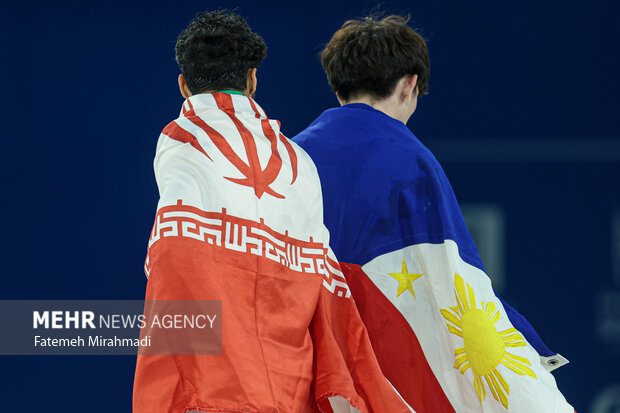
Iran’s delegation, known as the “Ambassadors of Hope,” wrapped up its campaign at the 3rd Asian Youth Games in Bahrain with a remarkable 76 medals — 22 gold, 18 silver, and 36 bronze — securing 4th place in Asia.

The result marks a 16-place jump compared to the previous edition, highlighting a major leap in Iran’s youth sports performance across individual and team categories.

Tehran International Short Film Festival concludes, announces top winners
Iran in past week; Key developments at home and abroad

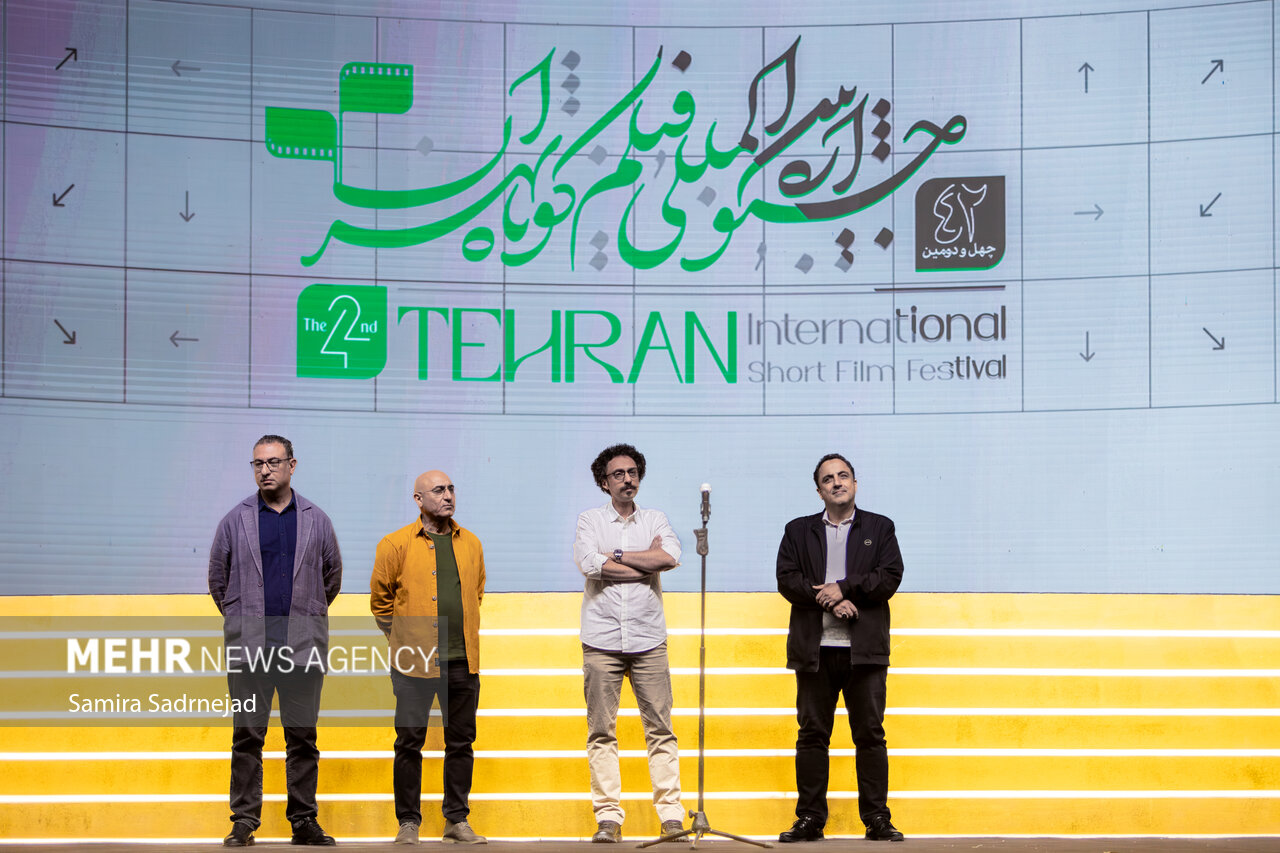
The 42nd Tehran International Short Film Festival (TISFF) wrapped up Friday evening at Iran Mall, honoring the best in national and international short films. The ceremony was attended by prominent figures including Zahra Behrouz Azar, deputy president for women and family affairs, and filmmakers and cinematographers from across the country.

In the international category, Argentina’s Juan Zabal won Best AI Film for “The Valley”, while Armenia’s Natalia Mirzoyan took Best Animation, and China’s Keran Abukasimu earned Best Fiction Film with “Baozhda”. Iran’s own Mohammad Tarahhomi received the Emerging Horizons award for “Whispering Rocks”. The festival’s Grand Prize went to Chile’s “The Cannon” by Martin Seeger, now eligible for the Academy Awards.

National winners included “Goodbye Trash” by Bahram and Bahman Ark, earning both Best Directing and the Audience Award, and “Life for All” by Mohsen Asdeghpour as Best Film. The event highlighted Iran’s growing presence in global short film production and showcased a diverse array of talent across genres.

Iran joins Afghanistan and Turkey in trilateral railway cooperation
Iran in past week; Key developments at home and abroad

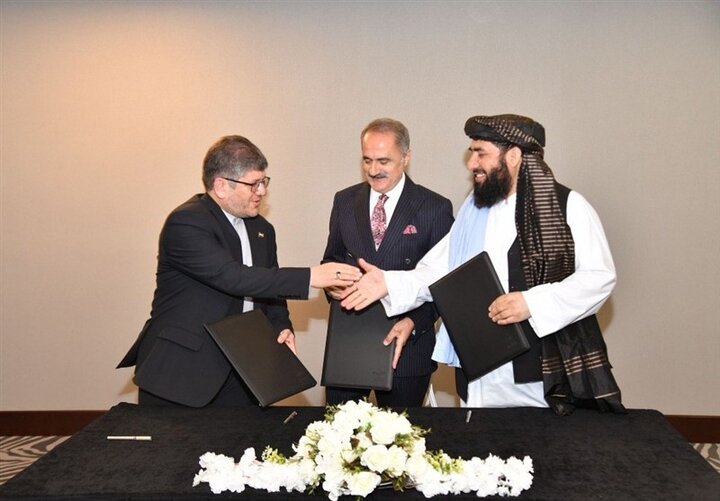
Iran has taken an active role in enhancing regional rail connectivity by signing a trilateral agreement with Afghanistan and Turkey aimed at developing railway lines and boosting cargo transit. This partnership underscores Tehran’s commitment to strengthening trade and transportation links in the region.

According to the agreement, Iran will contribute technical, financial, and human resources to support the development of the Khaf–Herat railway line extending to Mazar-i-Sharif. The pact also emphasizes facilitating cross-border cargo transit and increasing rail transport capacity, highlighting Iran’s pivotal role in regional infrastructure projects.

Officials say the memorandum will also foster technical and educational cooperation among the three countries, further cementing Iran’s position as a key player in advancing regional rail networks.

Iran, Pakistan strengthen cross-border trade with truck and railway initiatives
Iran in past week; Key developments at home and abroad

Iran is stepping up regional transit cooperation with Pakistan, announcing measures to facilitate truck travel and modernize railway lines, signaling Tehran’s growing role in enhancing regional trade and transport networks.

Speaking after her recent visit to Pakistan, Iranian Minister of Roads and Urban Development Farzaneh Sadegh highlighted that both countries have agreed on smoother customs procedures and improved railway lines, emphasizing that these measures will make truck transit easier for businesses.

The minister also pointed to the broader strategic impact, noting that these developments will strengthen road, rail, and maritime connections, linking Iran and Pakistan more closely with regional trade routes, including the corridors connecting China to Europe.

Iran to host SCO counterterrorism drill, highlighting regional security role
Iran in past week; Key developments at home and abroad

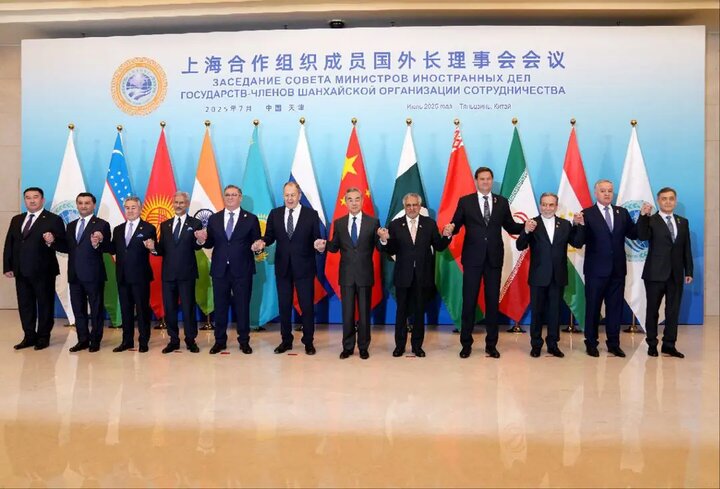
Iran will host the 2025 Shanghai Cooperation Organization (SCO) joint counterterrorism exercise, underlining Tehran’s growing role in regional security and multilateral cooperation.

The drill, named “Sahand Counterterrorism 2025,” is scheduled near Tabriz on December 4 and will involve intelligence and security agencies from all SCO member states. Olarbek Sharshiev, Executive Committee Director of the SCO’s Regional Anti-Terrorist Structure (RATS), said that invitations and detailed schedules for participating and observer countries will soon be issued.

Designed to strengthen operational readiness against cross-border terrorist threats, this exercise marks the second live joint counterterrorism drill hosted by the SCO, following last year’s exercise in China’s Xinjiang region. The initiative emphasizes cooperation in combating terrorism, extremism, and separatism while also addressing emerging threats such as narcoterrorism and drug smuggling, showcasing Iran’s strategic role in Eurasian security frameworks.

Iran, Russia think tanks hold forum to strengthen strategic and intellectual ties

Iran in past week; Key developments at home and abroad

Iran’s Institute for Political and International Studies (IPIS) and Russia’s Institute of the Commonwealth of Independent States (CIS) convened a joint roundtable in Moscow, underscoring the importance of deepening dialogue and cooperation among the two countries’ elites.

The session, opened by IPIS head Saeed Khatibzadeh and CIS Director Konstantin Zatulin, highlighted the role of academic and intellectual exchanges in fostering mutual understanding of Iran and Russia’s capacities and shared strategic interests. Khatibzadeh emphasized that such cooperation also strengthens collaboration with the Global South amid evolving international dynamics.

The roundtable featured discussions on a range of bilateral, regional, and global issues. During his visit, Khatibzadeh signed a memorandum of understanding with Russia’s Institute of Scientific Information for Social Sciences, further formalizing cooperation between the research institutions and reinforcing Tehran’s commitment to strategic partnerships beyond conventional diplomacy.

Iran signs UN Convention Against Cybercrime in Hanoi
Iran in past week; Key developments at home and abroad

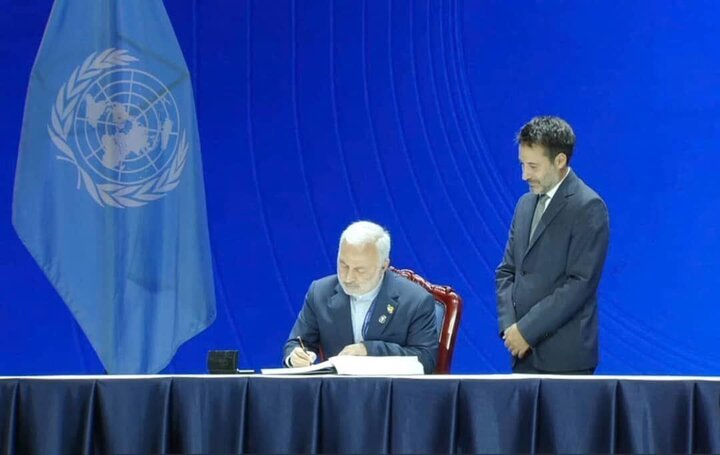
Iran formally signed the United Nations Convention against Cybercrime on Saturday in Hanoi, Vietnam, marking a significant step in the country’s commitment to international cooperation in cyberspace.

Deputy Foreign Minister Vahid Jalalzadeh represented Iran during the signing ceremony, emphasizing Tehran’s role as a responsible member of the global community. According to Jalalzadeh, Iran actively contributed to the drafting of the convention over the past four years, reinforcing the nation’s constructive engagement in combating cybercrime.

Iran approves National AI Organization to advance domestic tech ecosystem
Iran in past week; Key developments at home and abroad

Iran’s Parliament has approved the establishment of a National Artificial Intelligence Organization, a major step toward structuring the country’s AI ecosystem and integrating artificial intelligence development into national policymaking.

The newly approved organization will operate as an independent body under the supervision of the President, coordinating with relevant government ministries and agencies to implement Iran’s national AI strategies. The head of the organization will be appointed directly by the President.

Under the law, the organization is required to draft its statute within three months, collaborating with the Vice Presidency for Science, Technology and Knowledge-Based Economy, the Planning and Budget Organization, and ministries including Science, Health, ICT, Labor, and Education. The statute will then be submitted to the Cabinet for approval. This legislative move reflects Iran’s ambition to institutionalize AI governance and strengthen its domestic technological capabilities.

Iran celebrates National Nurse Day, honoring the backbone of health care
Iran in past week; Key developments at home and abroad

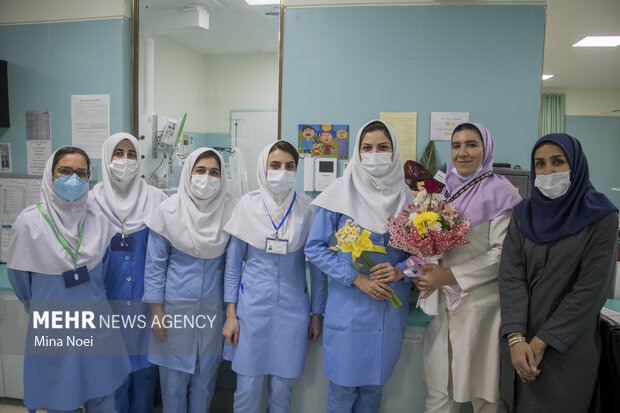
Iran marked National Nurse Day, coinciding with the birth anniversary of Hazrat Zeinab (SA), a revered figure in Shia Islam and daughter of Imam Ali (AS). The day celebrates the dedication, compassion, and essential role of nurses across the country.

Iranian nurses are widely recognized as the beating heart of the health system, providing care, comfort, and advocacy for patients, families, and communities. Their responsibilities encompass health promotion, illness prevention, alleviation of suffering, and support for individuals and populations, reflecting the core values of the nursing profession.

This observance underscores the societal appreciation for nurses, highlighting their pivotal contribution to maintaining public health and the overall functionality of Iran’s healthcare system.

Iran deputy FM visits Afghanistan for trade and border talks
Iran in past week; Key developments at home and abroad

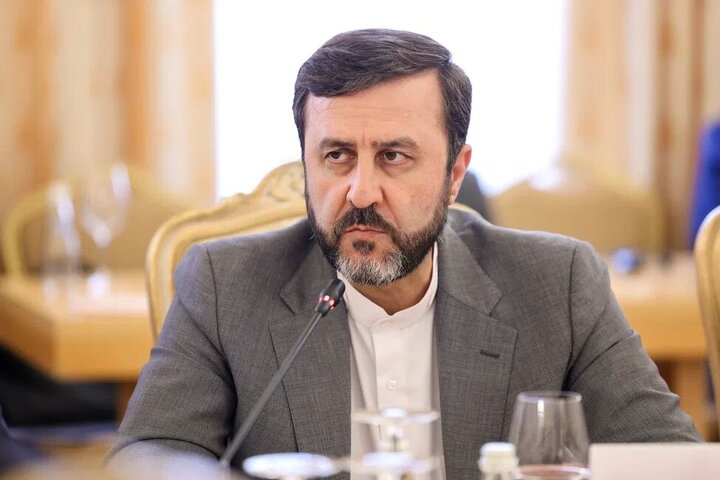
Iran’s Deputy Foreign Minister for Legal and International Affairs, Kazem Gharibabadi, emphasized the importance of leveraging regional capacities along the Iran-Afghanistan border during a visit to Herat.

Meeting with Herat Governor Noor Ahmad Islamjar, Gharibabadi highlighted the long-standing neighborly, cultural, and religious ties between the two countries and stressed closer cooperation to address challenges and boost economic and trade relations.

The discussions included key projects like the Khaf-Herat railway, with proposals to extend it to Mazar-i-Sharif, as well as joint agricultural initiatives such as cultivating water-intensive crops in Afghanistan according to Iranian standards. Collaborative plans in industrial livestock production were also explored to meet Iran’s meat supply needs.

The visit concluded with a tour of border areas to assess ongoing issues, reflecting Iran’s continued focus on practical neighborhood diplomacy and regional collaboration.

ECO ministers meet in Tehran
Iran in past week; Key developments at home and abroad

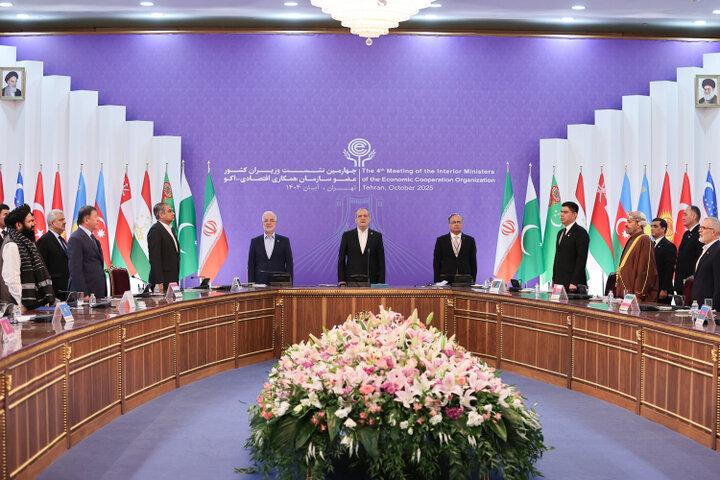
The fourth Economic Cooperation Organization (ECO) Ministerial Meeting was held in Tehran on Tuesday, with Iran’s President Masoud Pezeshkian emphasizing the need for a unified and sustainable regional security framework to support stability and economic growth.

Iran’s Interior Minister Eskandar Momeni highlighted multilateral cooperation to address shared challenges, including terrorism, organized crime, cybercrime, and illegal migration, proposing initiatives such as “ECO Smart Cities” projects and a joint ECO visa system to facilitate cross-border trade and travel.

ECO Secretary-General Asad Majeed Khan praised Iran’s role in promoting regional cooperation and implementing joint security and crime-prevention measures.

Iran begins test flights of home-made cargo plane 'Simorgh'
Iran in past week; Key developments at home and abroad

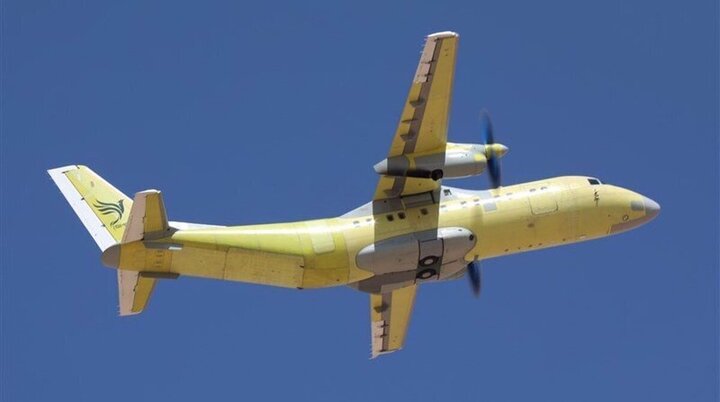
Iran has launched test flights of its domestically produced cargo plane, Simorgh, marking a milestone in the country’s aviation industry.

The aircraft, capable of carrying 6 metric tons over 3,900 kilometers, is undergoing 100 hours of test flights at Shahin Shahr airfield before joining Iran’s cargo fleet. Developed over 15 years, Simorgh is equipped with two 2,500-horsepower engines and a maximum takeoff weight of 21.5 tons.

Authorities say the plane, designed for agility and high cargo capacity, will strengthen Iran’s transport capabilities for both civilian and defense purposes. The project places Iran among fewer than 20 countries worldwide able to fully design and manufacture aircraft.

18th Mariwan street theater festival wraps

Iran in past week; Key developments at home and abroad

The 18th edition of the annual international Mariwan street theater festival in the border town Marivan in Kordestan province wrapped up with a closing ceremony during which the winners were awarded.

Reported by Mohaddeseh Pakravan