Monday, June 30, 2025

Foreign Minister Araghchi: Iran Firmly Supports a World Without Weapons of Mass Destruction

ALWAGHT- Foreign Minister Abbas Araghchi stated that the Islamic Republic of Iran, having suffered the most from chemical weapons in modern history, has consistently championed the cause of a world free from weapons of mass destruction (WMDs).

On the anniversary of the chemical attack on Sardasht, Iranian Foreign Minister Abbas Araghchi commemorated the victims and condemned the Baath regime of Saddam Hussein for launching the first chemical assault on a civilian city in 1987. He highlighted the suffering endured by the people of Sardasht, describing it as a tragic symbol of chemical warfare and a dark chapter in Iran’s history, made worse by the complicity or silence of Western powers that supplied Saddam with chemical weapons.

Araghchi also criticized the recent aggression by the Zionist regime and the United States against Iran, which targeted civilians and critical infrastructure, drawing parallels to past atrocities. He condemned the tacit support or silence of Western countries regarding these attacks and called for an emergency session of the Organisation for the Prohibition of Chemical Weapons (OPCW) to address the threat posed by strikes on Iran’s industrial chemical facilities, warning of potential humanitarian and environmental disasters.

Emphasizing Iran’s role as the greatest victim of chemical weapons in modern history, Araghchi reaffirmed the country’s commitment to a world free of weapons of mass destruction and its leadership in initiatives for a nuclear-free Middle East. He paid tribute to the resilience of the Iranian people and armed forces in responding to recent aggressions and expressed hope for a future where peace replaces violence and no one suffers from such devastating weapons again.

Is Trump lying about Fordow Nuclear Site Attack?

Alwaght- While the US President Donald Trump claims that Iranian nuclear sites have been "obliterated" in the American air attacks a week ago, many in the US question veracity of his claims about a big damage to Iranian nuclear program.

According to the secret assessment of the US intelligence, the airstrikes at three key Iranian nuclear sites have failed to obliterate them and Tehran's nuclear program was just delayed several months. A top-secret document made by the Defense Intelligence Agency (DIA) as the intelligence arm of the Pentagon contradicts Trump's claims about results of the June 22 air operation targeting Natanz, Fordow, and Isfahan nuclear enrichment facilities. Trump insists that the three nuclear facilities were completely destroyed with a combination of bunker-busting and conventional bombs, but official reports do not support this claim.

At the same time, Trump and senior US administration officials have denied the intelligence reports, calling the DIA assessment report "fake news." Trump also said last week at a NATO summit in The Hague that he believes Iran’s nuclear program has been set back decades.

What does DIA report say?

In the preliminary report prepared by the DIA, it is said that the American bombardment only set back the Iranian nuclear program several months.

Before the Israeli aggression on Iran on June 13, American intelligence agencies noted that if Iran wanted to make a nuclear bomb, it will take it only three months. Now the DIA report suggests that Iran is less than six months away from nuclear bomb if it wishes to make. According to the findings, the US attack only blocked entries of the sites without destroying the underground facilities.

The DIA report also revealed that Iran’s stockpile of enriched uranium had been removed from the sites before the attacks.

However, the US president said on Wednesday that he did not believe claims by some Iranian officials that they had removed enriched uranium from the Fordow nuclear facility. 

“I believe they did not have a chance to remove anything because the US acted quickly,” Trump said. “If it had been a two-week strike, it might have been possible to move it, but it is very difficult and dangerous to move this type of material in a short period of time.”

CNN first published the DIA report, citing unnamed officials who said that the impact of the US strikes on all three sites was largely limited to the above-ground structures, which were severely damaged, but the underground facilities were not significantly damaged.

On the other hand, two people familiar with the matter told CNN that Iran's enriched uranium has not been destroyed and that the centrifuges are largely "intact."

Analysts told Reuters that if the assessment is based on satellite imagery, the extent of damage to the Fordow uranium enrichment facility would not be apparent because the facility is underground and out of reach of satellite imagery.

How did the US attack nuclear sites? 

Fordow is an underground uranium enrichment facility and according to reports is hundreds of meters deep into the mountains of northwestern Iran. Natanz is the biggest and most central uranium enrichment site of Iran that includes a vast hall of centrifuges with some underground. Isfahan is also home to a large center for nuclear research and production site and hosts uranium conversion facilities and nuclear fuel production plants. 

According to Trump's claims, US forces dropped 14 30,000-pound (13,000-kilogram) bunker-busting bombs, while Navy submarines coordinated cruise missile strikes on the Natanz and Isfahan sites.

The US Department of Defense has also said that the attack used the GBU-57 Massive Ordnance Penetrator (MOP) bomb - the most powerful bunker-busting bomb in the US military arsenal, weighing approximately 13,000 kilograms (30,000 pounds).

Other sources refute the Trump's claims

On the other hand, after DIA report was published by CNN and the New York Times, the AP, citing American intelligence report, said that Iranian nuclear sites have not taken major damage and the attack only delayed the program several months. 

Wall Street Journal, citing initial intelligence reports, noted that the American operation only pushed the Iranian nuclear program several months. 

Israel's Channel 13 reported that Israel sources told ABC News that probes show that the results of the US attack on Iran's Fordow nuclear facility "are not good." 

Is Trump lying? 

Given the fact that several American and even Israeli intelligence sources are rejecting Trump's claims, the question is that why the US president is insisting on his claims about obliterating Iran's nuclear program? 

Even Rafael Grossi, the Director General of the International Atomic Energy Agency, has announced in his new position that Iran can resume uranium enrichment in a few months. This position is in direct opposition to Trump’s claims about the complete destruction of Iran’s nuclear program, so why is Trump insisting on his claims about destroying Iran’s nuclear power?

Trump has repeatedly shown that he seeks to exaggerate about his gains. He now touts bombing of the Fordow nuclear facility in Iran a great achievement for himself and it is natural that he will reject any report that proves otherwise. His entire presidency has been planned in such a way to reflect the glory of his powerful personality and shows a narrative of Trump’s brave, unique and powerful leadership. Therefore, information that contradicts this myth is not welcomed by him.

It should also be kept in mind that Trump may be seeking to avoid another costly conflict with Iran and is not interested in entering into a fruitless war of attrition with Iran. Therefore, by claiming to have achieved the goals of bombing Iran’s nuclear facilities and destroying Iran’s nuclear capability, the US president is trying to remove the excuse of starting another war. In fact, any evidence that Iran has retained the ability to resume its nuclear program after the airstrikes will raise questions: Will the US resort to another military action to end Iranian nuclear program? Will there be a several-year-long psudo-war with Iran in which Trump is not interested? Such an outlook will seriously put his supporters in the isolationist movements on a shaky ground and he will actually risk losing them since his voters called on him to avoid more wars in West Asia and costly military actions in other countries, and war on Iran runs counter to the demands of his traditional voter base. 

Steven Collinson, a CNN senior reporter, believes that the fundamental question is whether the bunker-busting bombs first used in Iran actually penetrated the Fordow nuclear facility, buried under hundreds of feet of rock and cement, and destroyed the centrifuges that spin uranium. And the more important question is whether Trump is actually doing his job as president or is just looking for political commotion.

Mizan -
The Head of the Judiciary stated: "The enemy will undoubtedly try to undermine the unity and cohesion of the Iranian nation through various means and its diverse devilish tools. Therefore, we must be extremely vigilant and avoid any words or actions that disrupt unity."

According to the Judiciary Media Center, Mohseni Ejei, speaking on Monday (30 June) during a meeting of the Supreme Council of the Judiciary, while offering renewed condolences for the martyrdom and mourning of Imam Hussein (AS), said: "In recent events, the fruits of the wise, prudent, and insightful guidance of the Supreme Leader were once again evident, as the enemy's plots and deceptions were neutralized and exposed through this guidance. The Supreme Leader, in these recent events, once again became the axis of unity and cohesion for the people, and the Islamic nation of Iran gathered around the axis of Velayat (Guardianship), truly proving their allegiance to it. In recent days, we saw that even those who might have had grievances about the country's conditions stood in defense of Velayat against the enemy and declared their obedience to the Leader."

UN Nuclear Chief: Iran Could Resume Enrichment Within Months

By Al Ahed Staff, Agencies

UN Nuclear Chief: Iran Could Resume Enrichment Within Months

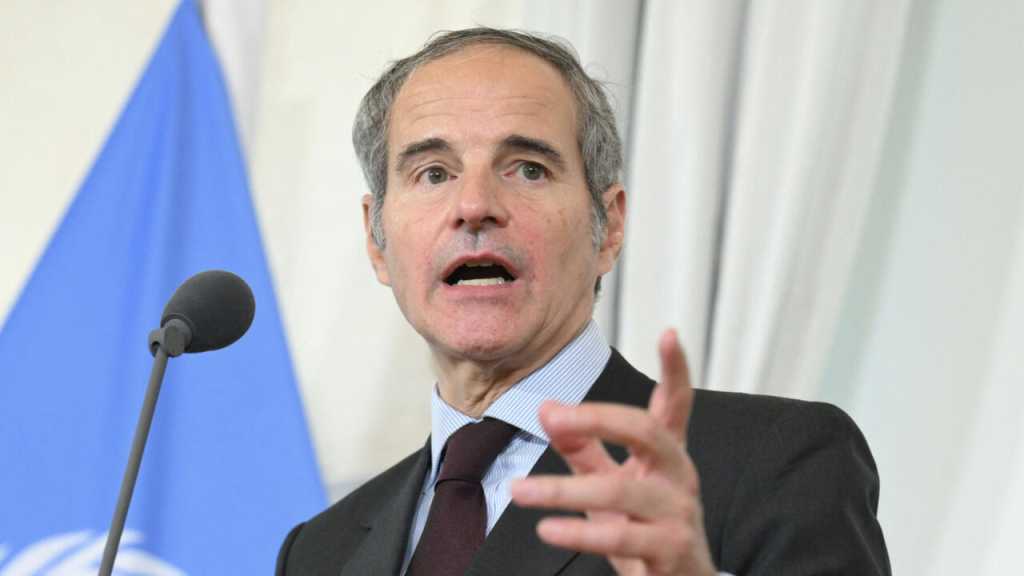
The head of the UN’s nuclear watchdog Rafael Grossi announced that US strikes on Iran fell short of causing total damage to its nuclear program and that Tehran could restart enriching uranium “in a matter of months,” contradicting US President Donald Trump’s claims the US set Tehran’s ambitions back by decades.

Grossi’s remarks align with a US intelligence assessment that recent strikes on Iranian nuclear sites caused only limited damage, likely delaying the program by just a few months.

While the final military and intelligence assessment has yet to come, Trump has repeatedly claimed to have “completely and totally obliterated” Tehran’s nuclear program.

In an interview with CBS broadcast Sunday, Iran’s ambassador to the United Nations, Amir-Saeid Iravani, said that his country’s uranium enrichment will “never stop” because Iran has an “inalienable right” to do so for “peaceful nuclear activity.”

US military officials have in recent days provided some new information about the planning of the strikes, but offered no new evidence of their effectiveness against Iran’s nuclear program.

Following classified briefings this week, Republican lawmakers acknowledged the US strikes may not have eliminated all of Iran’s nuclear materials – but argued that this was never part of the military’s mission.

Meanwhile, The Washington Post reported on Sunday the US had obtained intercepted messages in which senior Iranian officials discussing the attacks said they were not as destructive as they anticipated.

Asked about the different assessments, Grossi, director general of the International Atomic Energy Agency [IAEA], told CBS’s “Face the Nation with Margaret Brennan”: “This hourglass approach in weapons of mass destruction is not a good idea.”

“The capacities they have are there. They can have, you know, in a matter of months, I would say, a few cascades of centrifuges spinning and producing enriched uranium, or less than that. But as I said, frankly speaking, one cannot claim that everything has disappeared and there is nothing there,” he told Brennan, according to a transcript released ahead of the broadcast.

“It is clear that there has been severe damage, but it’s not total damage,” Grossi went on to say. “Iran has the capacities there; industrial and technological capacities. So if they so wish, they will be able to start doing this again.”

Grossi also told CBS News that the IAEA has resisted pressure to say whether Iran has nuclear weapons or was close to having weapons before the strikes.

“We didn’t see a program that was aiming in that direction [of nuclear weapons], but at the same time, they were not answering very, very important questions that were pending.”

Iran Rejects Claims of Weapons-Grade Enrichment

By Al Ahed Staff, Agencies

Iran Rejects Claims of Weapons-Grade Enrichment

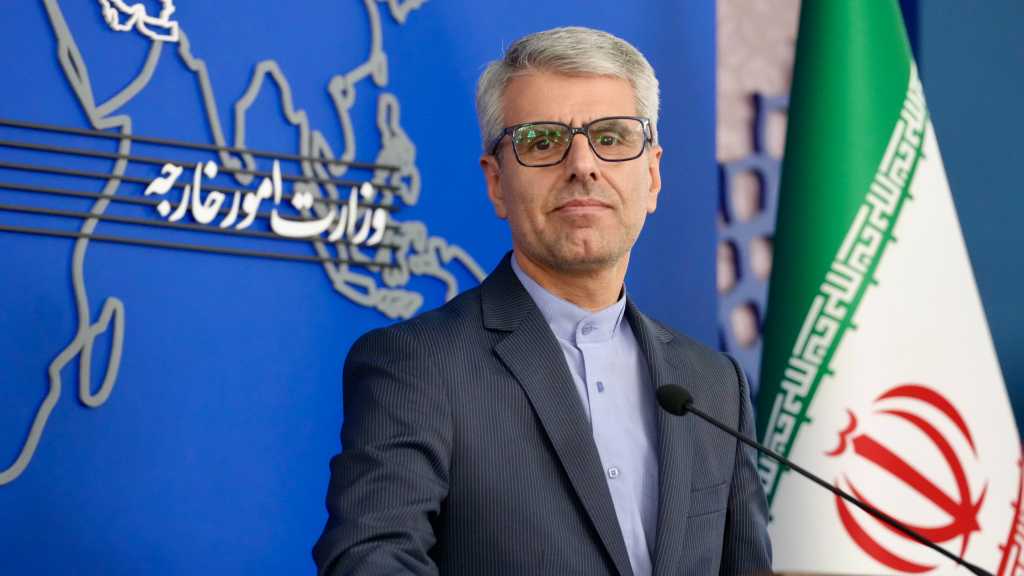
Spokesperson for the Iranian Foreign Ministry Esmaeil Baqaei vehemently refuted the Zionist entity’s claim that Tehran has a clandestine program to develop nuclear weapons.

“Iran has no plans to obtain nuclear weapons, but reserves the right to enrich uranium for civilian use,” Baqaei announced.

He also condemned the recent "Israeli" and US strikes on Iran’s nuclear facilities as a dangerous and unprovoked action.

The spokesman dismissed the "Israeli" claims that Tehran had been secretly developing nuclear weapons, which were cited as a justification for the military attacks, adding that reports from the International Atomic Energy Agency [IAEA] support Iran’s position.

“I think Iran has made it clear for the past two or three decades that it is not seeking nuclear weapons,” Baqaei said. “There has never been weapons-grade enrichment in Iran. Please, you can go through the reports by the IAEA and show me one single clue or evidence of Iran’s nuclear program deviating from peaceful purposes.”

“It is a matter of fact that Iran’s nuclear program remains totally peaceful,” he stressed.

The spokesman referred to remarks by IAEA Director General Rafael Grossi, who stated earlier this month that the agency has found no evidence of “a systematic effort” by Iran to develop nuclear arms.

Baqaei also voiced frustration with the IAEA for not strongly condemning the strikes. “What is expected from the IAEA and its Board of Governors is to remain loyal to their responsibilities and mandates by condemning, unambiguously, the US and 'Israeli' attacks on our nuclear facilities,” he said.

Baqaei further defended Iran’s right to enrich uranium under the Treaty on the Non-Proliferation of nuclear weapons [NPT].

“The US is offering a very dangerous interpretation of the NPT --that developing states have no right to use nuclear energy for peaceful purposes. It is not acceptable for any responsible, decent member of the NPT,” the Iranian spokesman said.

Senior Iranian Clerics: Any Attack on Leadership Is Tantamount to War Crime

By Al Ahed Staff, Agencies

Senior Iranian Clerics: Any Attack on Leadership Is Tantamount to War Crime

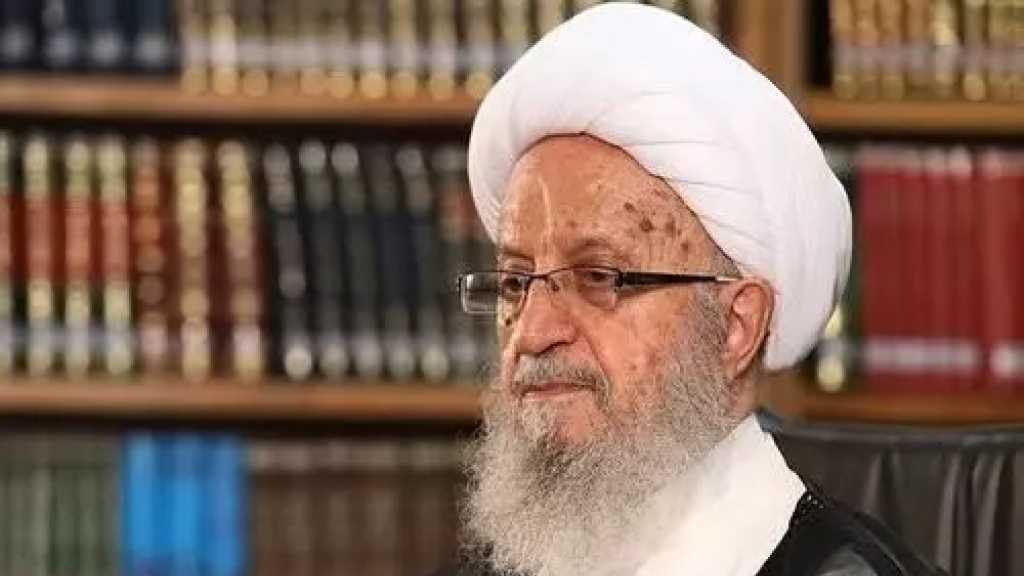
Grand Ayatollah Nasser Makarem Shirazi and Grand Ayatollah Hossein Nouri-Hamedani said any attack or threat to the leadership and religious authority is tantamount to a war crime.

The Senior Iranian clerics said this in their religious decrees issued on Sunday.

Ayatollah Shirazi said that any person or regime that threatens or attacks the leadership and religious authority in order to harm the Islamic Ummah and its sovereignty is subject to the ruling of confrontation.

Any denial of this or any support for such acts by Muslims or Islamic governments is forbidden, he added.

“All Muslims around the world must make these enemies regret their words and mistakes, and if they suffer hardship or loss, they will have the reward of a fighter in the path of Allah, God willing,” he stated.

“May Allah protect the Islamic community from the evil of the enemies,” he said.

Ayatollah Noori-Hamedani said that insulting the position of the Shiite authority and the person of the Leader of the Islamic Revolution His Eminence Imam Sayyed Ali Khamenei, is considered an insult to the very principles of Islam.

“Today, His Eminence is leading the Islamic Ummah with all his strength and courage. There is no doubt that supporting him is obligatory, and weakening him is forbidden, especially in these circumstances when all the enemies of Islam, the Quran, and the Ahl al-Bayt [peace be upon them] have united,” he stated.

“Any attack or threat against him and the Shiite authority, whether by an individual or a state, is regarded as an act of enmity. Anyone who assists in this crime is considered equally responsible,” he said.

Iran’s Larijani: ’Israel’ Failed to Topple Tehran, Lost 12-Day War

By Al Ahed Staff, Agencies

Iran’s Larijani: ’Israel’ Failed to Topple Tehran, Lost 12-Day War

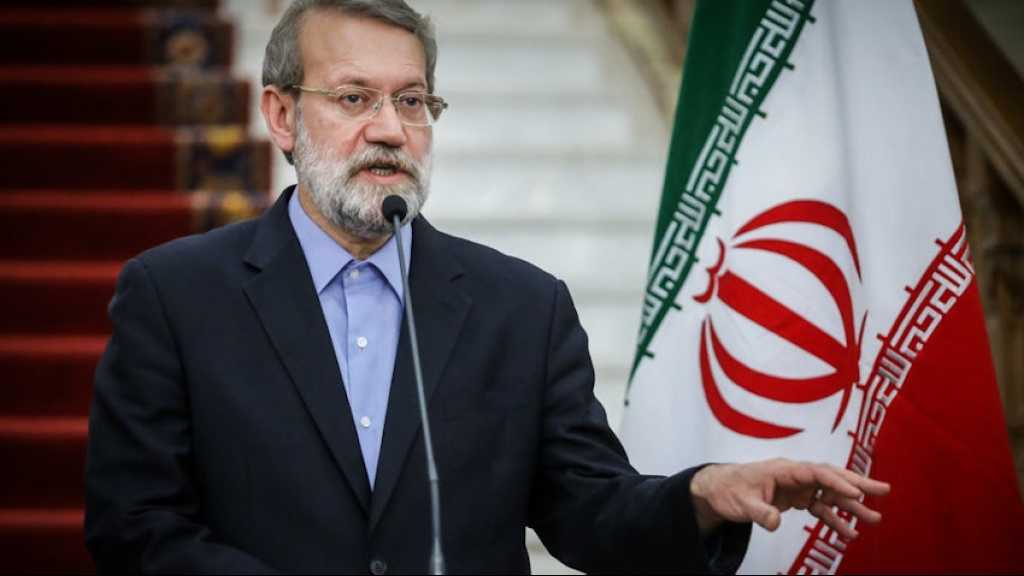
The Senior advisor to the Leader of the Islamic Revolution in Iran, Ali Larijani, said the "Israeli" entity and the United States both plotted to bring down the Iranian government in under a week.

"They believed they could end the Islamic Republic in five or six days," Larijani stated. “Netanyahu’s main goal was the surrender of the Iranian people.”

Larijani added that the plot extended beyond strikes targeting the leadership. “After planning to target the heads of the three branches of power, "Israel" intended to move on to assassinate the Leader of the Revolution, Sayyed Ali Khamenei,” he disclosed.

The Iranian official emphasized that this plan reflected a deep misunderstanding of the Iranian nation. “The Zionist enemy and the United States failed to grasp the culture and historical depth of the Iranian people,” Larijani said.

Recounting a personal threat, he received during the war, Larijani revealed, “I received a call warning me that I had 12 hours to leave the country or I’d be killed.”

He described a turning point in the conflict on Saturday, June 21, when mediators began to intervene. “They realized 'Israel' had reached a dead end,” Larijani said, noting that by Monday, June 23, "Tel Aviv" began scrambling for a ceasefire.

“They thought we would beg,” he said, “but by the end of the war, they were the ones begging.” Larijani pointed to The Guardian’s post-war analysis, “The Islamic Republic turned out to be far stronger than the US and 'Israel' had assumed.”

Larijani unequivocally declared the war a failure for Tehran's adversaries. “The enemy was defeated in this battle,” he said, stressing that attempts to destabilize Iran through psychological warfare and internal division had backfired.

He added that Iran’s missile capabilities had shifted the balance of power, and that this played a decisive role in forcing the "Israeli" entity into a strategic retreat.

Larijani also criticized Rafael Grossi, Director General of the International Atomic Energy Agency [IAEA], for his role in the crisis. “Grossi was one of the facilitators of the 12-day war,” he charged. “He failed to do his duty.”

Larijani questioned the value of Iran’s continued participation in the Nuclear Non-Proliferation Treaty [NPT]. “Why should we remain committed to the NPT?” he asked, emphasizing, “Nuclear knowledge will never leave Iran.”

He added that the Iranian nuclear file was merely a pretext used to justify aggression, “It was never about the nuclear issue. It was about weakening the state.”

According to Larijani, Iran must now “reconsider two key issues, negotiations and cooperation with the IAEA.” He also pointed out the silent role of three European countries backing the "Israeli" occupation throughout the war, without offering Iran any support in return.

“China and Russia,” he said, “realized the limits of American power during this war.”

Larijani concluded that Iran’s victory resonated globally, “All nations rejoiced in our triumph—even though we lost 18 senior commanders.”

Larijani confirmed that Iran had directly hit a US military base in Qatar. “Six missiles with 400-kilogram warheads struck the base with precision,” he said. He accused US President Donald Trump of covering up the scale of the losses, “Trump falsely claimed only one missile hit the target.”

He continued, “At the beginning of the confrontation, Trump said he would wait two weeks to see what happens with Iran. But just two days later, he escalated.”

On the 10th day of the war, Larijani said, Trump ordered strikes on Fordow, Isfahan, and Natanz nuclear facilities. “The US Secretary of Defense rushed to claim that Iran’s nuclear infrastructure had been destroyed, attempting to deceive American and global public opinion,” he added.

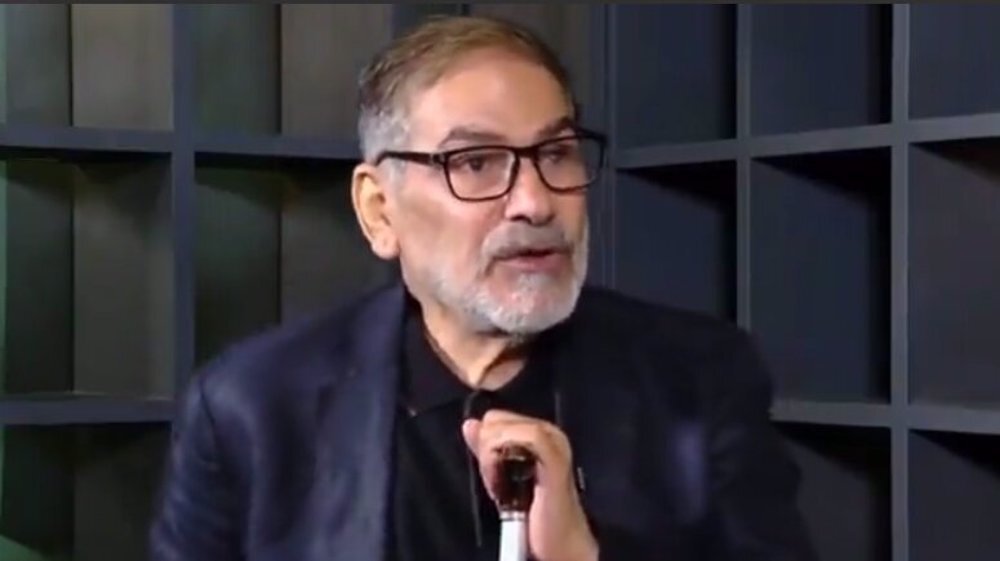
Ali Shamkhani, advisor to the Leader of the Islamic Revolution and the Islamic Republic of Iran, revealed that an "Israeli" assassination attempt against him had failed. Speaking in an interview with Iranian television, Shamkhani stated that he is aware of the motive behind the attempt but cannot reveal it at this stage. "I taught them a harsh lesson," he said.

Shamkhani explained that Tehran had recognized from the beginning that negotiations with the US were not genuinely aimed at achieving an agreement. Instead, he said, the talks were used to create an atmosphere conducive to internal agitation and destabilization within Iran.

He emphasized that Iran's leadership had been fully prepared for any scenario, noting that "leaders were replaced within just 12 hours" and that all operations following the attempt were carried out according to pre-established plans. This preparedness, he added, reflected the country's robust military and security posture against any form of escalation or infiltration.

The enemy made a catastrophic miscalculation

Ghasem Mohammadi, PhD in an interview with Mizan

Mizan
The former member of the Islamic Consultative Assembly emphasized that the enemies made a catastrophic miscalculation in confronting a powerful Iran, and now they must await its irreparable consequences.

In an interview with Mizan, Ghasem Mohammadi, PhD stated:“The recent message of the Supreme Leader of the Islamic Revolution and his special praise for the dignity, timeliness, and courage of the Iranian people is rooted in a reality we’ve witnessed since the victory of the Revolution. That reality is the collective awareness of the Iranian people toward the true nature of the enemy and its conspiracies, and their ability to distinguish internal issues from the plots of the U.S. and the Zionist regime. The Zionist regime, along with its main supporter—the United States—designed a complex and multilayered plan to confront the Iranian nation and system. But what dismantles this enemy structure is the Iranian people’s ability to recognize and counter those schemes. The extraordinary and admirable unity and solidarity among Iranians today is clear proof of this.”

This legal expert and political analyst added: “The Zionist enemy believed that by attacking Iran’s sacred soil, the people would become confused and detached from their homeland. But the Iranian nation’s unwavering support for the armed forces and their unmatched unity in confronting the sworn enemy of humanity—the Zionist regime—has completely undermined that calculation.”

Four takeaways from Shamkhani’s first interview after surviving Israeli terrorist attack

TEHRAN – Admiral Ali Shamkhani, advisor to the Leader of the Islamic Revolution, talked to Iranian TV on Sunday, over two weeks after he was targeted by Israel in simultaneous attacks that led to the massacre of dozens of Iranian civilians, military officials, and nuclear scientists on June 13.

Shamkhani was visibly feebler than people remembered him to be. He needed an incentive spirometer multiple times throughout the interview, a handheld device that helps individuals take deep, slow breaths after injury or surgery.

Despite his diminished physical health, however, Shamkhani appeared morally firm and strong. He spoke about the day he was targeted, what he endured during the first few hours after the attack, and what he thinks will be happening between Iran and Israel, which halted fighting on June 24 after a request by Tel Aviv and Washington.

Here are 4 key takeaways from Shamkhani’s first interview held after the terrorist attack:

  1. Details of the assassination attempt: Shamkhani revealed harrowing details of the Israeli airstrike on his home, including being trapped under rubble for three hours. He denied Israeli claims that he lost his legs and said the attack was a failure. He said he was targeted because he had “taught Israel a harsh lesson”. He, however, did not elaborate on what that lesson was.
  1. Military preparedness and vigilance still needed: He stressed the need for Iran to maintain and advance its military capabilities to counter external threats, particularly from Israel and the U.S. Shamkhani highlighted Iran’s readiness for any scenario, suggesting that pre-established defense plans are in place to handle escalations.
  1. U.S. negotiations were a “trap”: Shamkhani said the five rounds of negotiations held between Iran and Washington between April and June were used as a cover-up by the United States for the impending attack. Washington’s real goal was to create internal instability in Iran.
  1. Public unity a strategic asset of Iran: The advisor to Iran’s Leader said the Iranian public’s solidarity after recent events showed Iranians have a deep understanding of regional and geopolitical developments, adding that the national unity present in Iran is a strategic asset of the country.

Greece’s Travel Agents Strengthen Ties with Palestinian Tourism Professionals

The Hellenic Association of Travel and Tourist Agencies (HATTA) and the two largest Palestinian travel and tourism organizations have signed a Memorandum of Understanding (MoU) aiming to strengthen tourism flows between Greece and Palestine.

The memorandum was signed during the 37th Philoxenia International Tourism Expo in Thessaloniki by HATTA’s president, Nikolas Kelaiditis, the president of the Palestinian Society of Tourist and Travel Agencies (PSTTA), Hani G. Lama, and the president of the Holy Land Incoming Tour Operators Association (HLITOA), Michel Awad.


By signing the memorandum, both sides recognize the important role that a close and effective collaboration in tourism can play in Greece’s and Palestine’s future economic development and employment rates.


The agreement will also see the launch of mutually beneficial tourism related programs as well as actions promoting a better understanding of the historical ties that unite the two countries.


Yussef Dorkhom, the Chargé d’Affaires of the Diplomatic Representation of Palestine to Greece was also present at the event, which included a presentation of Palestine as a tourism destination to an audience of tourism professionals, locals and Palestinian students studying at the Aristotle University of Thessaloniki.


According to Palestinian media outlets, the Covid -19 pandemic had a grave effect to Palestine’s tourism industry with more than 30,000 Palestinians losing their jobs.


Since then, the Palestinian Tourism Ministry has collaborated with the private sector to create new travel packages including trails that cover unknown sites in Palestine and others that aim to develop socially responsible tourism.

Five Iranians invited to join Academy of Motion Picture Arts and Sciences

TEHRAN – There are five Iranians among the 534 artists and executives invited by the Academy of Motion Picture Arts and Sciences to join the organization.

Filmmakers Hossein Molayemi, Shirin Sohani, and Saeed Roustayi, actor Payman Maadi, and cinematographer Ali Ghazi are the Iranians who have received the invitation. The invitees have all distinguished themselves by their contributions to motion pictures in the past years, ISNA reported.

“We are thrilled to invite this esteemed class of artists, technologists, and professionals to join the Academy,” said Academy CEO Bill Kramer and Academy President Janet Yang. “Through their commitment to filmmaking and to the greater movie industry, these exceptionally talented individuals have made indelible contributions to our global filmmaking community.”

Earlier in March, Hossein Molayemi and Shirin Sohani won the 2025 Oscar for Best Animated Short Film at the 97th Academy Awards for “In the Shadow of the Cypress”. It was the first Iranian animated or live-action short film to win at the Oscars.

Molayemi and Sohani can choose between the Animation branch and the Short Films branch to join the Academy.

The pair hold master’s degrees in animation directing from the Tehran University of Art. Molayemi started his professional career in 2004. He has worked as a director, character designer, storyboard artist, animator, and university lecturer.

Sohani started her professional career in 2012 and has served as a director, concept artist, background artist, script writer, and production manager.

Saeed Roustayi, 35, is known for “Leila’s Brothers,” “Law of Tehran,” “Life and a Day,” and “Woman and Child”.

A filmmaker, screenwriter, and producer, Roustayi’s works primarily focus on issues of social injustice, as well as his portrayals of women in Iranian society.

He graduated from Soore University with a Bachelor of Film and Television in directing. He won two Crystal Simorgh awards for best directing and best screenplay at the Fajr International Film Festival for his debut feature film “Life and a Day” (2016). The movie also received the 2016 Reflet d'Or for Best Feature at the Geneva International Film Festival Tous Ecrans.

Roustayi’s second feature film “Law of Tehran” (2019) was nominated for the César Award for Best Foreign Film. Also known as “Just 6.5,” it was well received by critics at the 76th Venice Film Festival and won multiple awards, including the Crystal Simorgh for Audience Choice of Best Film, at the 37th Fajr Film Festival.

His third and fourth films “Leila’s Brothers” and “Woman and Child” competed in the Cannes Film Festival 2022 and 2025, respectively, with the former winning the FIPRESCI Prize as well as the Citizenship Prize at the Cannes 2022.

Payman Maadi, 54, is the star of the Oscar-winning drama “A Separation,” by Asghar Farhadi, who received the Silver Bear for Best Actor at the Berlin International Film Festival for his role in the film in 2011.

Maadi co-starred with Kristen Stewart in U.S. director Peter Sattler’s debut “Camp X-Ray” in 2014 and collaborated in Japanese director Kazuaki Kiriya’s action-adventure “Last Knights” in 2015. He has also appeared in all Roustayi’s films.

Ali Ghazi, 49, is a director of photography at cinema, known for “Life and a Day,” “A Hero” (2021), and “About Elly” (2009), both by Asghar Farhadi.

The Academy chooses members based on professional qualifications, with an ongoing commitment to representation, inclusion, and equity remaining a priority. Of the 2025 invited class, 41 percent are women, 45 percent belong to underrepresented communities, and 55 percent are from 60 countries and territories outside the United States. There are 91 Oscar nominees, including 26 winners, and three Scientific and Technical Award winners among the invitees.

If all the invitees accept, the total members, including emeriti, will be 11,120, and the number of voting members will be 10,143. In addition, 35 percent of the Academy would be women, 22 percent would be from underrepresented communities, and 21 percent would be international.

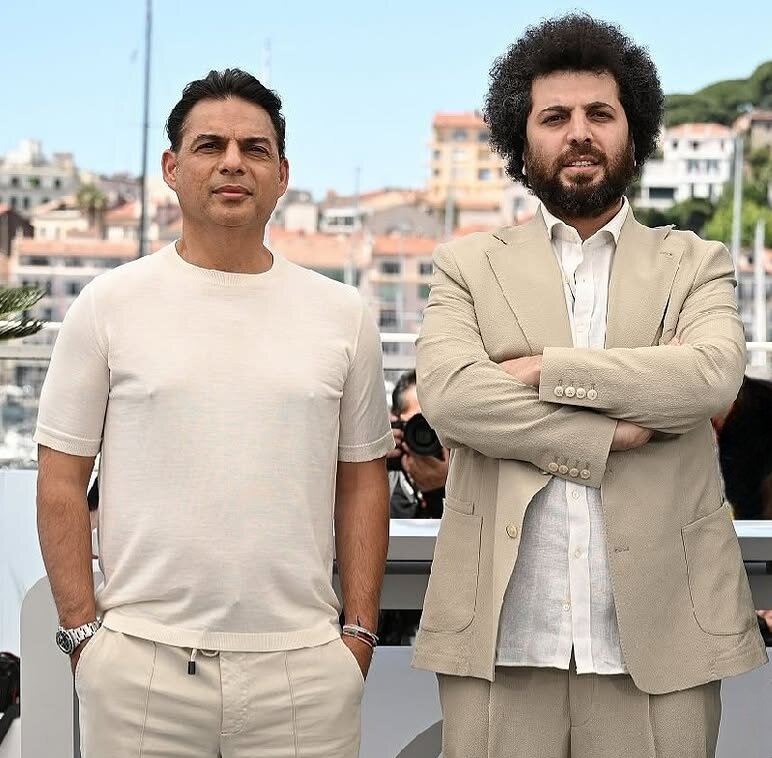
 Photo: Payman Maadi (L) and Saeed Roustayi pose during a photocall for the film “Woman and Child” at the 78th Cannes Film Festival in France, on May 23, 2025.

The Strategic Fallout of the Israel-Iran War

Amid all the military calculations and geopolitical theater, Ramzy Baroud says one truth stands out. When it mattered most, the Iranian people stood united.

The June 19 funeral for 2-month-old Rayan Ghasemian, who was killed by an Israeli attack on Behesht-e Zahra, a residential area of Tehran. (Mehr News Agency/Wikimedia Commons/ CC BY 4.0)

By Ramzy Baroud 
Z Network

On Tuesday, U.S. President Donald Trump announced a truce between Israel and Iran following nearly two weeks of open warfare.

Israel began the war, launching a surprise offensive on June 13, with airstrikes targeting Iranian nuclear facilities, missile installations, and senior military and scientific personnel, in addition to numerous civilian targets. 

In response, Iran launched a wave of ballistic missiles and drones deep into Israeli territory, triggering air raid sirens across Tel Aviv, Haifa and Beersheba and numerous other locations, causing unprecedented destruction in the country. 

What began as a bilateral escalation quickly spiraled into something far more consequential: a direct confrontation between the United States and Iran.

On June 22, the United States Air Force and Navy carried out a full-scale assault on three Iranian nuclear sites — Fordow, Natanz and Isfahan — in a coordinated strike dubbed Operation Midnight Hammer. Seven B-2 bombers of the 509th Bomb Wing allegedly flew nonstop from Whiteman Air Force Base in Missouri to deliver the strikes. 

The Pentagon’s timeline of its June 21 Operation Midnight Hammer. (Department of Defense/Wikimedia Commons/Public Domain)

The following day, Iran retaliated by bombing the Al-Udeid U.S. military base in Qatar and firing a new wave of missiles at Israeli targets.

This marked a turning point. For the first time, Iran and the United States faced each other on the battlefield without intermediaries. And for the first time in recent history, Israel’s long-standing campaign to provoke a U.S.-led war against Iran had succeeded.

No Regime Change

A U.S. Air Force B-2 Spirit is prepared for operations ahead of an attack on Iranian nuclear facilities under Operation Midnight Hammer at Whiteman Air Force Base, Missouri, on June 21. (U.S. Air Force – DVIDS, Wikimedia Commons/Public Domain)

Following 12 days of war, Israel achieved two of its goals. First, it pulled Washington directly into its conflict with Tehran, setting a dangerous precedent for future U.S. involvement in Israel’s regional wars. Second, it generated immediate political capital at home and abroad, portraying U.S. military backing as a “victory” for Israel.

However, beyond these short-term gains, the cracks in Israel’s strategy are already showing.

Netanyahu did not achieve regime change in Tehran — the real objective of his years-long campaign. Instead, he faced a resilient and unified Iran that struck back with precision and discipline. Worse still, he may have awakened something even more threatening to Israeli ambitions: a new regional consciousness.

Iran, for its part, emerges from this confrontation significantly stronger. Despite U.S. and Israeli efforts to cripple its nuclear program, Iran has demonstrated that its strategic capabilities remain intact and highly functional. 

Tehran established a powerful new deterrence equation — proving that it can strike not only Israeli cities but U.S. bases across the region.

Even more consequentially, Iran waged this fight independently, without leaning on Hezbollah or Ansarallah, or even deploying Iraqi militias. This independence surprised many observers and forced a recalibration of Iran’s regional weight.

Iranian Unity

Perhaps the most significant development of all is one that cannot be measured in missiles or casualties: the surge in national unity within Iran and the widespread support it received across the Arab and Muslim world.

For years, Israel and its allies have sought to isolate Iran, to present it as a pariah even among Muslims. Yet in these past days, we have witnessed the opposite. 

From Baghdad to Beirut, and even in politically cautious capitals like Amman and Cairo, support for Iran surged. This unity alone may prove to be Israel’s most formidable challenge yet.

Inside Iran, the war erased, at least for now, the deep divides between reformists and conservatives. Faced with an existential threat, the Iranian people coalesced, not around any one leader or party, but around the defense of their homeland. 

The descendants of one of the world’s oldest civilizations reacted with a dignity and pride that no amount of foreign aggression could extinguish.

The Nuclear Question

International Atomic Energy Agency Director General Rafael Mariano Grossi meeting with IAEA representatives LI Song of China, HE Reza Najafi of Iran and Mikhail Ulyanov of Russia about Iran’s nuclear program at the agency’s Vienna headquarters on April 24, 2025. (Dean Calma / IAEA/Flickr/CC BY 2.0)

Despite the battlefield developments, the real outcome of this war may depend on what Iran does next with its nuclear program. 

If Tehran decides to withdraw from the Nuclear Non-Proliferation Treaty (NPT) — even temporarily — and signals that its program remains functional, Israel’s so-called achievements will be rendered meaningless.

However, if Iran fails to follow this military confrontation with a bold political repositioning, Netanyahu will be free to claim — falsely or not — that he has succeeded in halting Iran’s nuclear ambitions. The stakes are as high as they’ve ever been.

A Manufactured Farce

Some media outlets are now praising Trump for supposedly “ordering” Netanyahu to halt further strikes on Iran. 

This narrative is as insulting as it is false. What we are witnessing is a staged political performance — a carefully orchestrated spat between two partners playing both sides of a dangerous game.

Trump’s Truth post, “Bring your pilots home,” was not a call for peace. It was a calculated move to reclaim credibility after fully surrendering to Netanyahu’s war. It allows Trump to pose as a moderate, distract from Israel’s battlefield losses, and create the illusion of a U.S. administration reining in Israeli aggression.

In truth, this was always a joint U.S.-Israeli war — one planned, executed, and justified under the pretext of defending Western interests while laying the groundwork for deeper intervention and potential invasion.

Return of the People

Amid all the military calculations and geopolitical theater, one truth stands out: the real winners are the Iranian people.

When it mattered most, they stood united. They understood that resisting foreign aggression was more important than internal disputes. They reminded the world — and themselves — that in moments of crisis, people are not peripheral actors in history; they are its authors.

The message from Tehran is unmistakable: We are here. We are proud. And we will not be broken.

That is the message Israel, and perhaps even Washington, did not anticipate. And it is the one that could reshape the region for years to come.

Dr. Ramzy Baroud is a journalist, author and the editor of The Palestine Chronicle. He is the author of six books. His latest book, co-edited with Ilan Pappé, is Our Vision for Liberation: Engaged Palestinian Leaders and Intellectuals Speak Out. His other books include My Father was a Freedom Fighter and The Last Earth. Baroud is a non-resident senior research fellow at the Center for Islam and Global Affairs (CIGA). Here is his website.