Thursday, November 12, 2026

Netanyahu accused of attempting ‘coup’ after election defeat

Israeli politicians and commentators have accused Prime Minister Benjamin Netanyahu of attempting a coup after his election defeat on Oct. 27, which followed a historic turnout among Palestinian citizens of Israel. 

They say he is using the Shin Bet, Israel’s domestic intelligence agency, to undermine the result and retain power.

More than a week after the results showed the Netanyahu-led bloc trailing the opposition, Shin Bet chief David Zini is reportedly leading investigations into the Palestinian vote. The inquiries have raised allegations of voting fraud, bribery and foreign interference, despite no evidence being made public.

The investigations coincide with Netanyahu’s campaign to delegitimize the Palestinian-led parties Ra’am and the Joint List, which together secured an unprecedented 19 seats in the Knesset. Critics say the effort is aimed at keeping him in power.

On Tuesday, the Shin Bet arrested Middle East Eye contributor Abd Abu Shahadeh, citing a “security-related investigation”. Israeli media reported that Zini also wants Palestinian political leaders Ahmad Tibi, Sami Abou Shahadeh, Mansour Abbas and Ayman Odeh questioned.

Yair Golan, leader of the opposition Democrats party, warned on Wednesday that Israeli democracy was under threat.

“The police are detaining political activists without a warrant. The Shin Bet is trying to question senior elected officials without presenting evidence. The outgoing government refuses to recognize the election results,” he said.

Golan later accused Netanyahu of trying to “carry out a coup and seize power by force”.

Former prime minister Yair Lapid made a similar accusation on Tuesday, saying Netanyahu was attempting “to crush democracy and steal the elections with the help of sleeper agents of the regime in the security establishment”, an apparent reference to Zini, who was appointed as head of Shin Bet by Netanyahu. 

Gadi Eisenkot, leader of the opposition bloc, was more measured. He accused Netanyahu of leading “an organized attempt” to “sabotage Israeli democracy” through incitement to violence against elected officials and in the streets, as well as the dismantling of law enforcement agencies. 

Israeli journalists and commentators have also accused Netanyahu of mounting an assault on democracy, describing his actions as an attempted coup. 

“The prime minister, his circle, and his collaborators in the security branches and the media outlets are energetically driving Israel into the most critical constitutional crisis in its history,” Haaretz journalist Amos Harel wrote on Wednesday.

Netanyahu was attempting a “regime coup”, Harel said, using tactics familiar from “the playbooks of dark regimes”. He cited the use of the secret service, incitement against minorities, threats of violence and refusal to recognize election results.

An opinion piece in Calcalist, a mainstream Israeli financial news outlet, levelled similar accusations against Netanyahu and the Shin Bet.

“Refusing to recognize the election results is a significant escalation,” journalist Moshe Gorali wrote, arguing that the government was following a “familiar dictatorial-fascist protocol” by using a loyal intelligence service to overturn the outcome of an election.

Ynet journalist Ronen Bergman said Israel was “in the midst of a coup attempt”. 

Trump answers midterm defeat by elevating the ‘extremist’ architect of his rejected agenda

 By staff writer

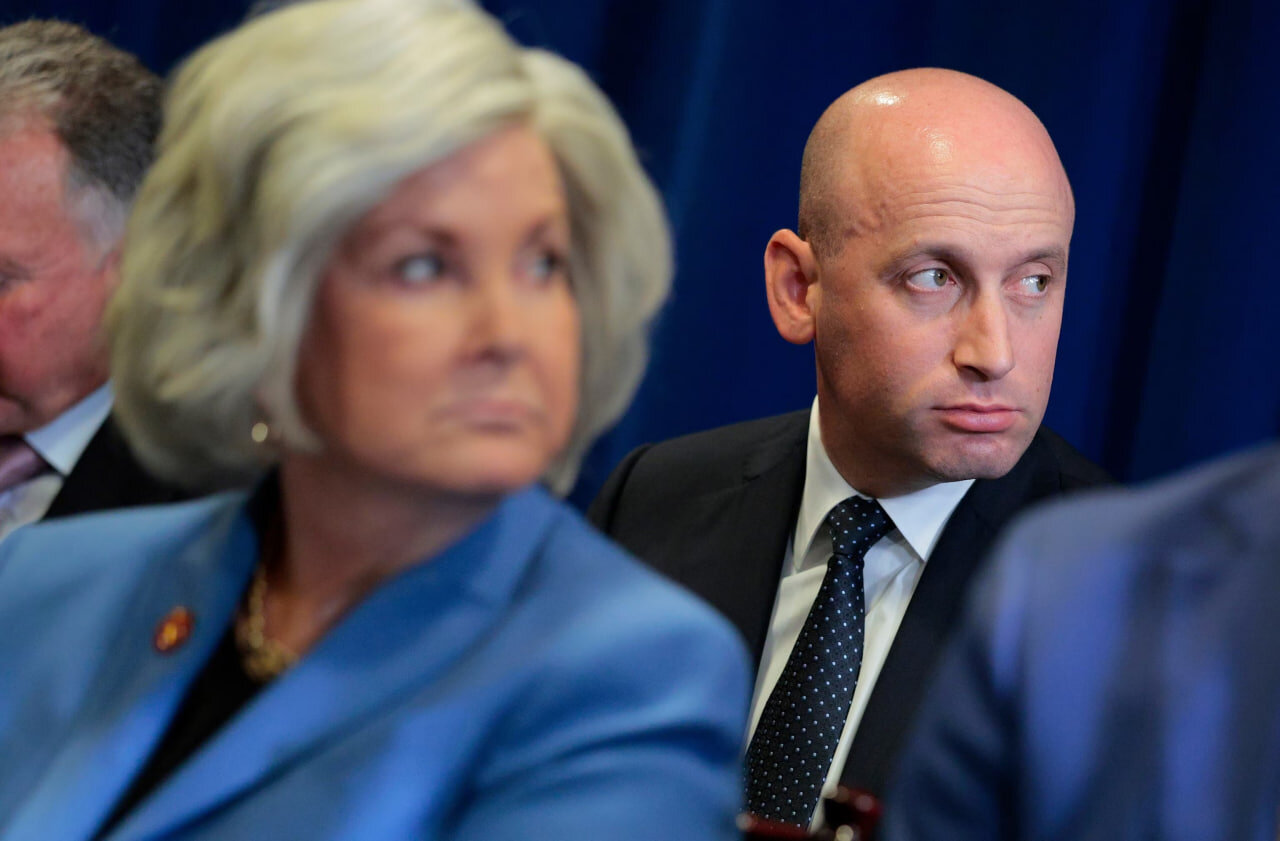
TEHRAN — Just days after Republicans lost control of Congress in Tuesday’s elections, President Donald Trump appointed Stephen Miller as White House Chief of Staff on Friday. Miller, key architect of the administration’s immigration and deportation strategy, replaces Susie Wiles and officially begins his duties on Monday.

Democrats took both chambers in what was described as the most decisive political rout in half a century.

For a few days, Trump sounded almost conciliatory and said he could strike an immigration deal with the opposition.

Then he announced the swap on Truth Social. “I wanted to make a change,” he told reporters before flying to Florida. Asked what Miller should do differently, he answered in four words: “Just run things well.”

Miller is a 41-year-old pro-Israel Jewish hardliner who has served as deputy chief of staff for policy since January 2025.

He has reportedly drafted or edited nearly every executive order Trump has signed, runs a daily 10 a.m. call with agencies to collect new ideas for the crackdown, and has had some agency posts report directly to him, around cabinet secretaries. After the election, he ran that call as usual and never acknowledged the result, according to the Wall Street Journal.

Some ICE officials now reportedly fear their work will get more dangerous. Polls suggest the enforcement tactics he designed turned off many voters and helped cause the losses.

Wiles takes the fall

Trump has accepted no blame. He reportedly berated Wiles in front of guests at the East Room watch party on election night, and has turned on James Blair, who ran his outside political operation.

Wiles and other advisers had told him until last weekend that Republicans could keep the Senate. Steve Bannon demanded her removal publicly on Friday. Her allies say she is paying for a strategy Trump largely wrote himself.

Wiles previously worked as a consultant on Benjamin Netanyahu’s 2020 election campaign in Israel and reportedly helped advance pro-Israel interests within the White House during her tenure as chief of staff.

Katie Miller, the new chief of staff’s wife, spent weeks lobbying for him, Politico reported, urging people to call the president and phoning about half a dozen of them after the vote, Treasury Secretary Scott Bessent among them.

Other names discussed included Bill Pulte, Lee Zeldin and Sergio Gor, and the thought of Pulte in charge alarmed many inside the administration.

‘A dangerous xenophobe and reckless extremist’

Wiles made clear she did not see her job as protecting the country from the president. Miller is far more willing to push legal boundaries.

In June, Will Scharf, the White House staff secretary, warned in memos against Miller’s proposals to suspend detainees’ right to challenge their detention in court and to invoke the Insurrection Act.

In an April 29, 2025 memo to Wiles, he reportedly wrote that only Congress can suspend habeas corpus, and only in cases of rebellion or invasion, which was Miller’s proposed route for stripping detainees of the right to challenge their detention in court.

Furthermore, with budget director Russ Vought, Miller is charting a second-term agenda of executive actions that need no approval from Congress, and he is helping plan the response to the investigations Democrats have promised.

He has seen this before. Miller is one of two top West Wing staffers who were there in 2018, when the House flipped, and the subpoenas arrived.

Associates say his first test will be Trump’s demand to punish perceived enemies. The president has fumed that the Justice Department is too slow against alleged leakers, reporters who publish classified material and political opponents.

Schumer, who is expected to lead the Senate, said Trump “learned nothing from his historic defeat.” Jeffries, headed for the speakership, called Miller “a dangerous xenophobe and reckless extremist” and demanded he be fired.

Republican praise came mostly from the cabinet and from allies such as Sens. Eric Schmitt and Mike Lee. Rep. Marlin Stutzman of Indiana called the move a “horrible decision.”

Exiting Rep. Don Bacon said the president’s inner circle is “living in a bubble” and that when he and colleagues warned Miller’s staff the approach would cost the midterms, “he didn’t believe it.”

Miller’s answer on X was to vow to “Fight with all of our soul to support our President.” Rep. Robert Garcia, set to chair the Oversight Committee, had an answer ready: “Stephen Miller should lawyer up.”

‘The reason we lost is the war’

“The reason we lost is the war,” Vice President JD Vance wrote on X the morning after the Midterms results came in. Trump, asked about it, called that “largely true” because the war “drove gasoline up a little bit short-term,” then added that he would launch it again.

Only days earlier he had called it “a very soft war,” and in late October he promised fuel prices would “drop like a rock” once it ended. At one point oil topped $100 a barrel, and the national gasoline average jumped nearly 50 cents in a week.

Vance’s four-point fix for the party starts with ending the war and ends with a call to “change our relationship to Israel.”

A report carried by Fox News said Vance has privately called Netanyahu “wrong on everything” about Iran, and that Netanyahu pressed Trump to resume the war before Trump held off.

Miller has defended the war in public, but the New York Times reported that his pitch for the job was to wind it down, a campaign of aggression that core supporters see as a betrayal. Some Republicans are already demanding “War” Secretary Pete Hegseth’s ouster.

US-Israel military aid: End of dependence, or a new chapter?

 By Ali Minabi

TEHRAN – On November 3, President Trump said the U.S. would end what he described as approximately $4 billion in annual aid to Israel by the end of the year.

Trump claimed he had reached an understanding with Benjamin Netanyahu on the move, adding that Netanyahu himself had proposed the idea several months earlier. However, the U.S. announcement came as a surprise, both in its timing and the speed with which it was presented. 

In January 2026, Netanyahu had expressed his desire to phase out U.S. military aid over ten years, a position he reaffirmed in May.

The existing agreement between the two sides runs until the end of 2028, meaning Trump’s announcement represents a political direction that still requires administrative arrangements on both sides, rather than a fully implemented executive decision. Details concerning which forms of funding are covered by the announcement, and how the termination would be carried out, remain unclear.

Why does Netanyahu want to end U.S. aid?

Netanyahu’s proposal was not made without reason, nor can it be understood simply as an attempt to ease Washington’s financial burden. The genocidal war on Gaza demonstrated to the regime that, however vital the U.S. military umbrella may be, it remains vulnerable to shifts in American public opinion.

Arms shipments and military assistance can become sources of anger among voters who made their position clear in the U.S. midterms. Voters punished Biden at the Presidential election for supporting a genocidal war, and now they have punished Trump by voting against his Republican Party.  

Against this rising anti-Israeli sentiment, Netanyahu is seeking to reduce the regime’s security dependence on fluctuations in U.S. domestic politics, particularly as support for the regime has declined among segments of both the Democratic and Republican parties, while opposition to continued funding from American taxpayers has grown. 

He recognizes that military aid, long regarded as a central pillar of bipartisan U.S. support for the regime, has become increasingly vulnerable to partisan divisions and electoral pressures.

Yet avoiding political pressure is not the only motivation. Netanyahu wants to redefine the regime’s military relationship with the U.S., moving away from receiving financial grants towards a partnership based on arms purchases, technological cooperation, and joint research and development. The Israelis summarized this approach as a transition “from aid to partnership.” 

Netanyahu has also proposed establishing a joint U.S.-Israeli fund to finance the development of new weapons systems, alongside efforts to strengthen the regime’s domestic war industry. 

There is also a domestic political benefit. His proposal allows the regime to present itself as a mature economic and military power that no longer needs American grants and can finance a larger share of its own military requirements. 

More importantly, this strategy reflects a broader regime ambition to build a more independent military and industrial base, reduce reliance on foreign suppliers for weapons production and development, and give it greater freedom in making military decisions. 

That ambition, however, does not mean abandoning U.S. technology or the strategic partnership with Washington.

Financial grants or a strategic relationship?

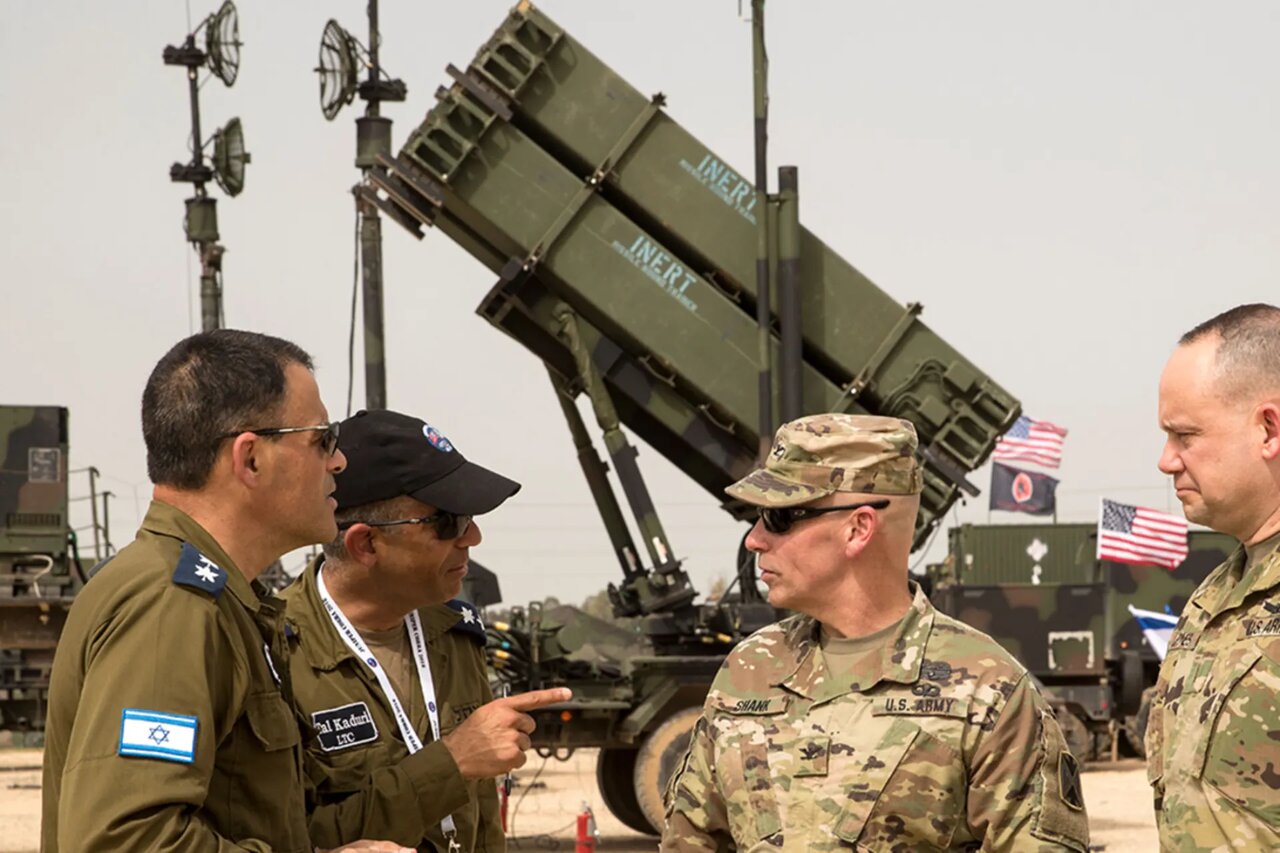
The current framework for U.S. military aid dates back to a 2016 MOU. It covers fiscal years 2019 through 2028 and is worth a total of $38 billion: $33 billion in foreign military financing, equivalent to $3.3 billion annually, and $5 billion for missile programs, amounting to $500 million per year. Under the agreement, annual assistance totals $3.8 billion, rather than the $4 billion cited in Trump’s remarks.

This funding is not simply transferred into the Israeli treasury. Most of the military financing is earmarked for purchasing U.S. weapons and equipment, reinforcing the regime’s military ties to the U.S. military industry complex while providing U.S. companies with ongoing contracts and commercial interests. 

Cooperation on missile systems, research, and development also extends well beyond the value of the annual grant itself.

It is important to distinguish between ending military aid and ending military cooperation. Trump’s own statement referred to the continuation of arms sales, suggesting that the proposed scenario does not involve dismantling military ties. 

Rather, it would change the funding arrangement: The regime would pay from its own budget for equipment it previously purchased, at least in part, with U.S. funds, while cooperation in weapons procurement, technology, and joint defense continues.

Another relevant factor is that the current MOU already provides for the gradual elimination of the provision allowing the regime to spend part of its U.S. aid on domestic purchases, known as Offshore Procurement (OSP). 

This arrangement is scheduled to end entirely in 2028. In other words, the regime was already moving towards restructuring how it uses U.S. assistance, even before Trump’s latest announcement.

Reshaping the alliance, not ending it

Washington continues to regard the regime as its strategic partner in the region, while Israelis remain dependent on U.S. support in areas such as arms procurement, technology, intelligence, and military coordination. 

Continued arms sales and cooperation on defense systems would allow both sides to preserve their shared interests, even if the funding arrangement changes.

Nevertheless, this shift carries political significance that extends beyond its financial value. U.S. military aid has never been simply a contribution to the regime’s war budget. It has also served as an institutional expression of Washington’s commitment to Israeli security and reflected the importance of the relationship within U.S. politics. 

When such assistance becomes a subject of partisan and electoral disputes, it reveals that the traditional consensus surrounding it is no longer as firmly established as it once was.

Ending military aid does not mean Washington is abandoning the regime or withdrawing its support for maintaining its military superiority. 

Trump reaffirmed that the U.S. would assist Tel Aviv whenever necessary and explicitly stated that arms sales would continue. What is changing, however, is the distribution of financial burdens and the nature of the two sides’ dependence on one another. 

The regime is seeking to develop a more independent military and industrial capacity that reduces its need for external funding without relinquishing its strategic partnership with America.

This is where the paradox lies: The regime wants to become more independent in building its military strength without losing the U.S. umbrella that helps sustain its superiority. 

Can it strike this balance, or will the limits of its military independence continue to be shaped by two factors: its economic capacity and the scale of the security threats it faces, on the one hand, and the extent of the support Washington is willing and able to provide, on the other?

Iran to present three intangible heritage nominations at UNESCO meeting in China

TEHRAN – Iran will present three nominations for inscription on UNESCO’s intangible cultural heritage lists at the 21st session of the Intergovernmental Committee for the Safeguarding of the Intangible Cultural Heritage, scheduled to take place in Xiamen, China, from November 30 to December 5.

The nominations cover Tirgan, a traditional celebration honoring water and rain; lullabies and singing traditions for children; and the traditional art of felt-making, Hassan Fartousi, secretary-general of the Iranian National Commission for UNESCO, announced.

Speaking to IRNA on Wednesday, Fartousi said the Tirgan nomination had been jointly prepared with Armenia, while the dossier on lullabies and singing traditions for children would be submitted jointly with Turkmenistan.

He described lullabies as a cultural heritage passed down through generations and said Iran hoped all three nominations would receive UNESCO recognition.

Fartousi said representatives of the Iranian National Commission for UNESCO, the Ministry of Foreign Affairs and the Ministry of Cultural Heritage, Tourism and Handicrafts, together with experts involved in preparing the dossiers, would attend the meeting.

Iran currently has 27 elements and programs inscribed on UNESCO's intangible cultural heritage lists and registers. If all three nominations are approved, the number will rise to 30, placing Iran fourth globally in terms of the number of registered elements and programs, according to Fartousi.

Iran's most recent inscription was the traditional art of mirror-work in Iranian architecture, which was added to UNESCO's intangible cultural heritage list in 2025.

The country's internationally recognized intangible heritage encompasses a wide range of traditions, performing arts, craftsmanship, rituals and traditional knowledge transmitted across generations.

Among the best-known inscriptions are Nowruz, the Persian New Year celebration; the Mehregan and Sadeh festivals; Yalda Night; traditional wrestling and zurkhaneh rituals; Ta'zieh, a form of religious theatrical performance; Naqqali, traditional Iranian storytelling; and the radif of Iranian classical music.

Other inscribed elements include the music of Khorasan's Bakhshi performers, the art of making and playing the dotar and kamancheh, the traditional game of chogan, and the art of miniature painting.

Traditional carpet-weaving skills in Fars and Kashan, the Qalishuyan ritual in Mashhad-e Ardehal, traditional Iranian boatbuilding and navigation skills in the Persian Gulf, and the cultural practices associated with preparing and sharing traditional bread are also among Iran's registered intangible heritage.

The list further includes the art of illumination, Turkmen needlework, the traditional craftsmanship of making and playing the oud and rabab, traditional sericulture and silk production, and the pilgrimage to the St. Thaddeus Monastery.

In addition to individual heritage inscriptions, Iran's national program for safeguarding traditional calligraphy was included in UNESCO's Register of Good Safeguarding Practices in 2021.

Naqqali and the traditional skills of building and navigating Iranian Lenj boats are also included on UNESCO's List of Intangible Cultural Heritage in Need of Urgent Safeguarding.

Massie’s ‘kissed The Wall’ jab lands hard after GOP’s historic defeat over Israel

 By staff writer

TEHRAN — Thomas Massie needed nine words. “Republicans hit a wall because they kissed The Wall,” the Kentucky Republican wrote on X on November 7, just days after his party lost Congress. The post quietly racked up over 6 million views not long after, the sort of number that makes you raise an eyebrow.

Massie was ousted in May by a primary that AIPAC-linked groups helped make the costliest in House history. He has said that every Republican, but him, has an “AIPAC babysitter.”

The ritual

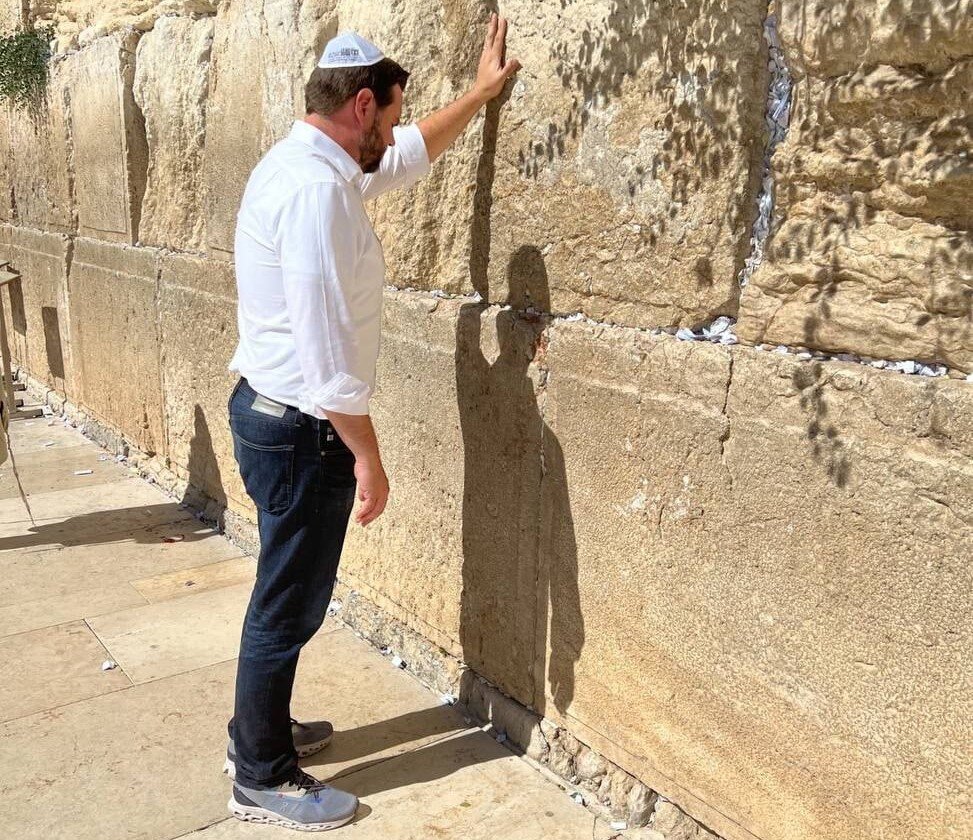
The Wall is the Western Wall in al-Quds (Jerusalem), a near-mandatory stop for American delegations. Donald Trump became the first sitting president to visit in 2017, laying a hand on the stones and wedging in a note.

Mike Pence, Marco Rubio and Speaker Mike Johnson followed, and Kristi Noem wrote in the guest book that “Israel is the chosen nation.”

David Friedman, Trump’s first ambassador, was photographed kissing the stones, as were NYC’s Eric Adams and Argentina’s Javier Milei. 

JD Vance was photographed there in a white kippah in 2022, then skipped it as vice president in October 2025 during his trip to Israel, taking Mass at the Holy Sepulchre instead.

The bill

Voters sent it. Democrats took the Senate with at least 54 seats, flipping Maine, Ohio, Iowa, and Texas, and the House with roughly 254, a gain of 42.

Vance posted that “the reason we lost is the war,” listing four causes: Iran, living costs, failure to put America first, and the Israel relationship.

Trump called that “largely true,” then said he would do it again. ABC’s voter poll put the war as crucial for 34 percent, behind corruption at 55 and prices at 49, so Vance’s certainty outruns the data.

The war’s tab does not: more than $47 billion, at least 21 Americans dead, nearly $2,000 per household by Moody’s estimate. The war on Iraq cost Republicans both chambers in 2006.

On election day, Trump claimed Washington would wind down roughly $4 billion in annual military aid to Israel by year’s end.

Massie called it “a desperate election day lie” and “pennies on the dollar” against more than $50 billion spent on the war “on behalf of Israel,” a figure above the Pentagon’s own $47 billion.

The revolt on the right

Tucker Carlson, who calls it “Israel’s war,” apologized in April for having “misled” voters into backing Trump. Marjorie Taylor Greene said Vance and Trump should have listened to her and Carlson.

Nick Fuentes, the white nationalist that Carlson hosted in October 2025, told his loyal base of followers (“groypers”) in March: “Do not vote in the midterms, and if you do, vote Democrat.” On election day, he posted: “Get out and vote Democrat today.”

The two have turned on each other. Carlson implied Fuentes is a “fed,” while Fuentes calls Carlson “most likely some form of intelligence asset,” citing his father’s government career.

The reactions to Massie’s post have been ugly. Rep. Randy Fine quote-posted Massie with a meme stamped “LOSER.” John Podhoretz wrote, “He’s like openly a Nazi.”

James Fishback, who has embraced the groypers, questioned Fine’s loyalty to America. Fine has called Carlson “the most dangerous antisemite in America.”

What the polls say

The Chicago Council’s July survey put American favorability toward Israel at 44 out of 100, down from 58 in 2022, the lowest since 1978. 56 percent want aid cut or stopped. Republicans still score Israel at 62, but Gen Z and Millennial Republicans sit at 48 against 65 for older ones.

Gallup found Americans sympathizing more with Palestinians than Israelis, 41 to 36, for the first time since 2001. Only 28 percent of Republicans under 35 view Israel’s government favorably, Pew found.

AIPAC has claimed that being pro-Israel is “good policy and good politics.”

Yemen hits Aramco tower in Riyadh in response to Saudi attacks on civilians

TEHRAN – An attack on Sunday in the capital of Saudi Arabia damaged an office tower belonging to the state oil company, Saudi Aramco, amid an escalating war between the kingdom and the Yemeni Armed Forces (YAF).

The attack came in response to the Saudi air raids on a marketplace and residential buildings on Saturday that left over 120 civilians dead or injured.

The Saudi energy ministry said that no one was injured but that the building in the capital, Riyadh, sustained “minor damage” from “falling shrapnel.” The ministry did not say who had launched the attack, but the Saudi authorities said earlier in the day that they had intercepted three missiles fired at Riyadh by YAF, also called Ansarallah.

At least one floor appeared to be severely damaged, leaving a hole in the building, the New York Times reported.

For weeks, Saudi Arabia and YAF have been exchanging attacks, including strikes on energy facilities and airports, that have killed and injured civilians. The two sides returned to full-blown war last month, after a four-year truce unraveled after Saudi Arabia bombarded Sanaa airport on July 13 forcing an airplane carrying Yemen’s officials to land in the Red Sea port city of Hodeidah.  

The Aramco tower is in Riyadh’s financial district — where dozens of skyscrapers house banks, international companies and the offices of the Saudi sovereign wealth fund.

It was not clear whether anyone was inside the Aramco building when it was struck. Many employees in the financial district have been working from home in recent weeks, since the war reignited.

YAF issued a statement on Sunday afternoon stating, “In response to the Saudi aggression against our country and people, and as part of our response to its brutal massacres, the latest of which were the massacres at the Al-Hadara Market in Al-Wazi'iyah and at residential buildings in Bani Hushaysh, which left more than 120 people martyred and wounded, most of them women and children, the Yemeni Armed Forces… carried out four high-quality military operations using a number of ballistic and cruise missiles, as well as unmanned aerial vehicles (UAVs).”

It said, “The first operation targeted King Khalid International Airport, Aramco's oil storage facilities, and the Financial District in the Saudi enemy's capital, Riyadh. The strikes were direct and precise…, causing extensive damage to the targeted sites.”

YAF also carried out operations targeting Aramco's facilities in Abqaiq, Saudi forces in the Madghal district of Marib Governorate and the Al-Mudharaba area of Lahij Governorate.

The statement added, “The Yemeni Armed Forces will continue their military operations deep inside Saudi territory to avenge the blood of our people and deter the Saudi aggressor.”

YAF reiterated that it will not waver in responding to every move Saudi move accordingly.

“We will continue to enforce the equation of blockade for blockade, escalation for escalation, and target the military concentrations of the Saudi enemy and its officers until the aggression against our country ceases and the siege on our beloved nation is lifted.”

The war Americans never wanted

 By Ali Minabi

TEHRAN – There is no poll that shows a majority of Americans supporting the illegal U.S. war on Iran. There never was one.

From the moment the first strikes were launched on February 28, the American public was already against it. More than eight months later, in November, the opposition has only hardened.

An analysis of 153 public opinion surveys across seven major U.S. conflicts confirms what the streets have been saying since day one. The illegal U.S. war on Iran is the most unpopular conflict in modern American history, and it is not particularly close.

Three ways it is unprecedented

The analysis of the 153 polls comes from Stephen Semler, a policy analyst and data journalist who writes the Polygraph newsletter and co-founded the Security Policy Reform Institute. His review, adapted by Responsible Statecraft, measures net support. That is the share of Americans backing a war minus the share opposing it. 

At the outset of the conflict, 13 percent more Americans opposed it than supported it. In other words, the war began with more people against it than for it.

On that measure, the illegal U.S. war on Iran is historically alone in three distinct ways.

First, it is the only major U.S. war to begin with negative net support. That was a first in the modern polling era. World War II, Korea, Vietnam, the Persian Gulf War, Afghanistan, and Iraq all began with the public on their side. Iran did not.

Second, it is the least popular war on record. By June, net support had sunk to minus 32 percent. That fell below the minus 31 percent recorded in the final poll of the Vietnam War, a conflict that divided the U.S. for a decade.

Third, it is the first U.S. war to remain unpopular for its entire duration so far. As Semler writes, at no point have more Americans supported the illegal U.S. war on Iran than opposed it. There was no rally-around-the-flag moment. There was no brief window of national unity. The opposition was the baseline from the very beginning.

The speed is what separates Iran from every war that came before it. It took Americans nearly four years after the 2003 Iraq war to conclude it was a major mistake. It took more than six years for Vietnam to reach that same verdict. For Iran, it took less than two months. By late April, 61 percent of Americans already called the U.S. attacks a mistake. 

The political reckoning is already here

The unprovoked war that killed 168 schoolchildren and staff on the first day and its unpopularity have already reshaped American politics in real time.

The day after Republicans lost control of both chambers of Congress in the November midterms, Vice President JD Vance wrote that the reason Republicans lost is Iran. He challenged anyone who disagreed to say so plainly. If you would like to argue it was worth it, he wrote, that losing the Senate for the next six years was worth it, then do so.

Trump himself was more equivocal. Asked after the midterms whether it contributed to Republican losses, he conceded that Iran was a piece of it. But he insisted he would do it again. The contrast between the two men captures the difficulty the administration faces. The war is toxic enough that the vice president blames it for a historic defeat. 

Even Trump’s most loyal supporters have been peeling away over the course of the war. In May, half of Republican voters believed it was worth its economic costs, according to polling cited by Politico. By July, that number had collapsed to 37 percent. By the fall, nearly one in five Republicans said the U.S. should end its involvement regardless of the economic consequences. The base that once cheered the strikes is now split and looking for an exit.

A nation that said no from the start

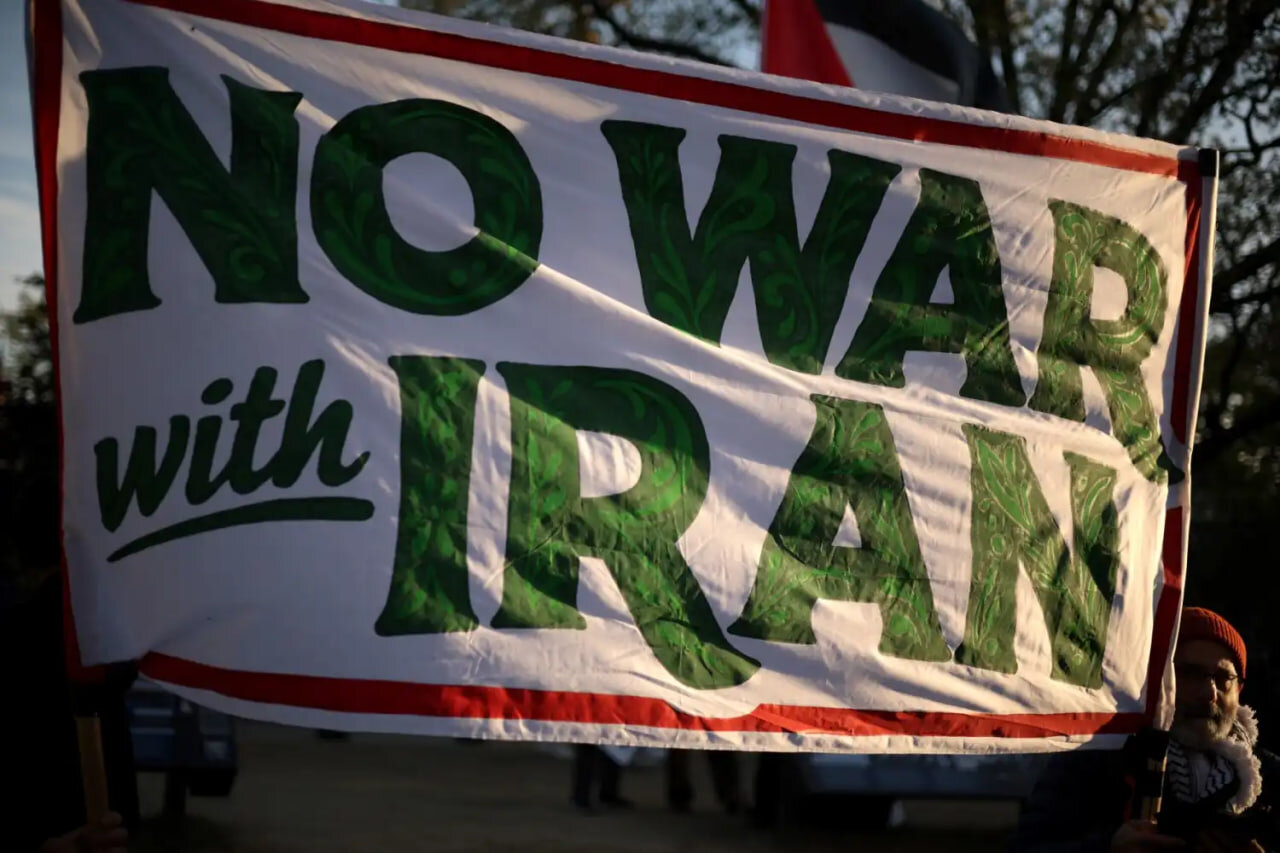
In late March, millions of Americans participated in more than 3,200 marches across all 50 states and several European countries. They were protesting the illegal war and the economic pain it has inflicted. They carried signs with messages like “No Kings” and “Trump Has to Go”. 

They were angry about the war as well as what it was doing to their daily lives. Gas prices climbed toward four dollars a gallon. The cost of fuel and food became inseparable from the cost of the conflict.

The opposition was not confined to civilians. In April, roughly 60 military veterans were arrested protesting inside the Cannon House Office Building. That is a congressional office building steps from the U.S. Capitol. Some of the veterans were visibly disabled. They unfurled banners reading End the War on Iran. They also held a flag-folding ceremony for service members killed in the conflict.

Mike Prysner, the executive director of the Center on Conscience and War, was among those arrested. The center supports service members who refuse to fight on moral or religious grounds. Speaking before his arrest, Prysner said the illegal war is already deeply unpopular. He added that more than 100 service members had already begun filing as conscientious objectors. These are troops refusing to serve in what they consider an immoral war.

The economic pain was not abstract. By late May, the national average for a gallon of gas had reached $4.55, according to AAA data. That was a roughly 50 percent rise since the war began.

Lower-income households cut gas consumption by about 7 percent. Even so, they still spent 12 percent more on fuel, according to research from the Federal Reserve Bank of New York.

That explains why the backlash was so durable. When Politico asked Trump voters in July what they thought, 57 percent of Republicans and 63 percent of non-Republican Trump voters said the conflict was to blame for rising fuel costs. 

The verdict is in

Every war eventually becomes unpopular. The U.S. war on Iran arrived there before it even began.

It is the only one in which opposition has fallen deeper than it did at the end of the Vietnam War. The polls have been consistent from the first day. The protests have been nationwide. Veterans have refused to fight. And the political consequences are already being counted in lost seats and fractured coalitions.

This is an illegal and unprovoked war that lost public support before it was even launched. It is not a war that has lost public support over time. It is a war that never had it.