Wednesday, October 28, 2026

Knesset Elections: The Ballot Box Won’t Change “Israel’s” Doctrine of War

By Latifa Al-Husseini
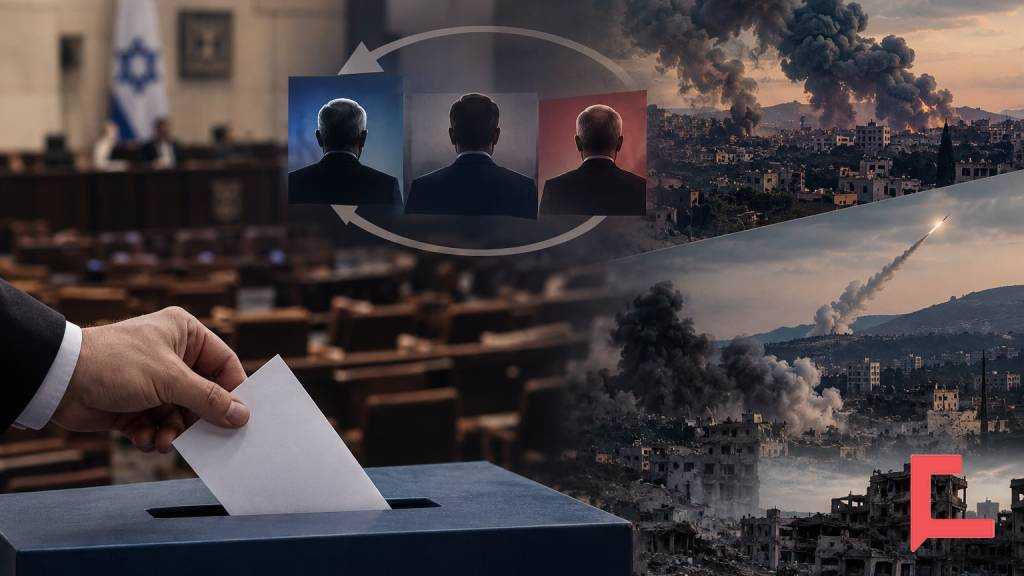
Knesset Elections: The Ballot Box Won’t Change “Israel’s” Doctrine of War

The electoral landscape in the “Israeli” entity appears highly complex. Competition is fierce, and no bloc seems capable of securing a decisive victory and winning a majority, opening the door to multiple possible scenarios.

Numerous questions arise over the fierce battle for Knesset seats and what the day after the election might look like in cabinet. How can the political landscape on the ground be described ahead of the vote? To what extent do these elections amount to a referendum on Benjamin Netanyahu’s continued rule? What factors could determineGadi Eisenkot’s position in the electoral equation and its aftermath? With seats fragmented among parties and blocs, what scenarios could lead to the formation of the next cabinet? And to what extent could the identity of the next prime minister alter "Israel’s" security doctrine? What would Eisenkot or Naftali Bennett’s entry into cabinet mean for the fronts in Lebanon, Iran and Gaza?

According to Dr. Abbas Ismail, a specialist in “Israeli” affairs, the current electoral landscape is heated, fiercely contested, noisy and highly tense. This stems from divisions within enemy society, uncertainty surrounding the results, and the fact that no one can guarantee a victory. Combined with the highly charged rhetoric, these factors suggest that the results are likely to be close.

Ismail considers surprise outcomes the most realistic possibility, given voter turnout, voting patterns and the potential collapse of smaller parties.

He argues that “whoever reaches the premiership will depend on the prospects of their political camp and bloc being able to secure the final outcome, rather than simply on which party wins the most seats.”

If Netanyahu and his allies in the Likud bloc- including “Jewish Power, Religious Zionism and the ultra-Orthodox parties Shas and United Torah Judaism”- manage to secure a majority of the votes, his chances of returning to power will undoubtedly be high. However, all current polls indicate that he has yet to reach a majority of 60 seats or more.

Two parties, “Amkha Yisrael” and the Economic Reservists, are hovering around the electoral threshold. If they fail to cross it, they will lose a combined four seats. Their collapse would significantly weaken Netanyahu’s bloc and diminish his chances of returning to the premiership.

Ismail notes that the “change camp,” now led by Eisenkot through his “Yashar” party, differs from Netanyahu’s bloc and its allies in one important respect: none of its parties is hovering around the electoral threshold, and all its allied parties are expected to secure representation. However, the camp lacks an absolute majority, according to opinion polls, preventing it from forming a cabinet unless it secures the support of Arab Knesset members.

As for “Israel’s” military posture and the fate of its wars on the Gaza, West Bank, Iran and Lebanon fronts, Ismail warns that it would be a mistake to link escalation to the identity of the next prime minister.

He argues that there is a cross-party consensus in “Israel” that the entity faces a range of threats under its prevailing, newly formulated security doctrine. Consequently, Netanyahu’s opponents are no less hardline than he is when it comes to the various war fronts.

“It is wrong to assume that Netanyahu’s defeat would mean an end to the threats and escalation, or that an Eisenkot victory would bring peace,” Ismail says. “That is an inaccurate assessment. The two men may differ in how they manage military campaigns and in certain other matters, but they agree on ‘Israel’s’ broader strategic direction, with the exception of their approaches to Gaza and the Palestinian Authority.”

Ismail is adamant that the “Israeli” elections will not bring about any fundamental changes. Approaches to security threats are virtually identical across military and political circles, particularly among the leading contenders. Netanyahu’s rivals Naftali Bennett and Avigdor Lieberman are, in fact, even more hardline than he is on issues ranging from Gaza to Iran.

Whoever becomes “Israel’s” next prime minister, Ismail concludes, will adhere to the new security doctrine currently being pursued by the “Israeli” entity, without any fundamental adjustments.

Regarding the Arab parties contesting the elections- the United Arab List, led by Mansour Abbas, and the Joint List, an alliance comprising the Democratic Front for Peace and Equality, the Arab Movement for Change and the National Democratic Assembly- Ismail explains that they could, mathematically, tip the balance. Together, they hold 14 Knesset seats, giving them the potential to change the political equation.

But can that numerical weight be translated into real political power?

“Perhaps not,” Ismail says, “because 'Israel' is a racist entity, and there is no acceptance of a Zionist cabinet being formed with Arab votes.” At the same time, he points out that this reality does not rule out the possibility of some Arab votes being sought or relied upon.

Could Arab ministers, then, serve in an “Israeli” cabinet?

“It is possible, and it has happened before,” Ismail replies. “But it depends on the coalition agreement. Mansour Abbas is prepared for this possibility, specifically to support an Eisenkot-led alliance with the aim of ousting Netanyahu and securing the rights of Palestinians in the 1948 territories- that is, Palestinians living inside the occupied lands.”

October 27 will be a decisive day for the “Israeli” entity. The numbers that emerge from the ballot box will determine the shape of the next cabinet. One thing, however, remains certain: there will be no reversal of the enemy’s military doctrine. The contenders all view war, whether ongoing or intermittent, as a means of consolidating control and expanding their influence across the region.

While the election results may pave the way for a change in political figures and alliances, they offer little indication of any fundamental shift in "Israel’s" security doctrine. Rather, the contest is about who will manage the wars, and how their costs and gains will be determined.

Even Gadi Eisenkot, who presents himself as an alternative to Benjamin Netanyahu and criticizes the prolongation of wars without translating them into political achievements, is not proposing a break with the use of force. Instead, he advocates deploying it within a clearer strategy- one that includes maintaining a “security zone” in Lebanon, continuing the confrontation with Iran and rejecting the establishment of a Palestinian state.

Ultimately, hopes that a change in leadership will bring about a fundamental shift in policy remain limited, as the military and settlement-related principles underpinning the platforms of the competing parties remain firmly in place.

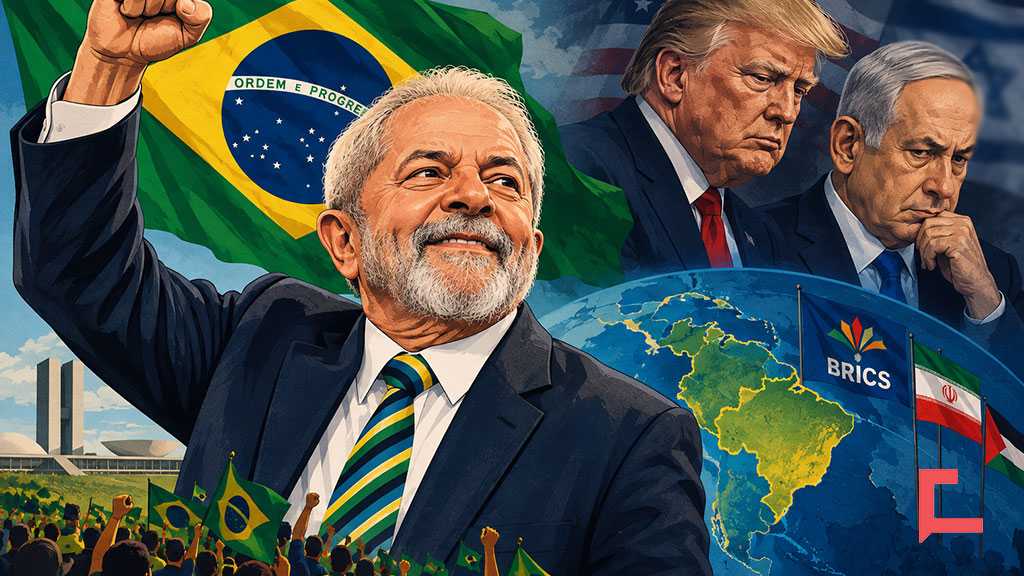
Trump’s and Netanyahu’s Setback in Brazil: Lula’s Victory Reshapes the Geopolitical Balance

By Mohamad Hammoud

Trump’s and Netanyahu’s Setback in Brazil: Lula’s Victory Reshapes the Geopolitical Balance

Brazilian voters have reelected President Luiz Inácio Lula da Silva over Flávio Bolsonaro, son of former President Jair Bolsonaro, delivering a political setback with consequences beyond Brazil. The outcome frustrates the ambitions of two foreign leaders who stood to benefit from a Bolsonaro victory: Donald Trump, who sought another political ally in Latin America, and Benjamin Netanyahu, who hoped to restore closer relations between Brazil and “Israel”.

A Setback for Washington

A Bolsonaro victory would have brought Latin America’s largest economy closer to Washington’s regional agenda. Bolsonaro supported closer cooperation with the United States and proposed joining Trump’s Shield of the Americas initiative, which Lula rejected in favor of maintaining Brazil’s independent foreign policy.

Trump’s efforts to influence Brazil’s political direction, however, extended beyond cultivating alliances. His administration imposed steep tariffs on Brazilian goods, citing, among other grievances, the prosecution of former President Jair Bolsonaro. Rather than yielding to Washington’s economic pressure, Lula turned the confrontation into a defense of national sovereignty, declaring that Brazil was nobody’s backyard.

Even after Lula’s victory, Trump questioned the election’s legitimacy. According to Spain’s La Sexta, he suggested, without presenting evidence, that Brazil’s election had followed the same playbook he accused Joe Biden of using in the 2020 American presidential election. Flávio Bolsonaro also refused to concede and demanded that the results be annulled, Reuters reported.

Netanyahu’s Disappointment

The election result was equally unwelcome to Netanyahu. Hebrew-language newspaper “Ynet” described Lula’s victory as a blow to Trump and disappointing news for “Israel”, while “Haaretz” identified Bolsonaro as Netanyahu’s ally, highlighting the diplomatic stakes for his government.

Netanyahu had openly expressed hopes of restoring relations with Brazil, while Bolsonaro promised to relocate the Brazilian embassy to Jerusalem. Expectations of victory were so strong that Bolsonaro’s personal pastor told “Ynet” of plans to celebrate in Occupied Al-Quds [“Jerusalem”], potentially alongside Bolsonaro and his prospective economy minister.

Those celebrations never materialized. Instead, Netanyahu faces another presidential term under Lula, whose criticism of “Israel’s” conduct in Gaza has contributed to strained diplomatic relations.

The disappointment also reached Netanyahu’s cabinet. According to Haaretz, “Israeli” Minister Amichai Chikli questioned the election results, alleging without presenting evidence that Lula had not won fairly. His reaction reflected the political importance some members of Netanyahu’s government attached to Bolsonaro’s candidacy.

Two Competing Foreign-Policy Visions

Behind the presidential campaigns stood fundamentally different visions of Brazil’s international role. Lula favors diplomatic autonomy, stronger cooperation among emerging economies, and reform of international institutions historically dominated by Western powers. Bolsonaro emphasized closer relations with Washington and “Israel,” while criticizing Lula’s engagement with governments opposed to American foreign policy.

That difference extends to BRICS, which Brazil helped establish and which now includes Iran. Lula’s victory preserves Brazil’s commitment to the bloc, strengthens cooperation with emerging economies, and maintains diplomatic ties with Tehran. It also limits Washington’s ability to draw Brasília into closer alignment with US and “Israeli” foreign-policy objectives.

Iran, Palestine and Strategic Independence

Lula’s independent approach extends to the Middle East. His government condemned American and “Israeli” military attacks on Iran, warning that military action threatens regional stability and undermines diplomacy. Bolsonaro, by contrast, favored closer cooperation with Washington and a more confrontational approach toward Tehran.

The divide is even clearer over Palestine. Lula has accused “Israel” of committing genocide in Gaza, supported Palestinian statehood, and backed international legal efforts to hold its government accountable. Bolsonaro, meanwhile, defended “Israel’s” military campaign and advocated closer diplomatic relations with Netanyahu’s government.

A Defeat Beyond Brazil

Lula’s reelection preserves Brazil’s independent position at a time when Washington is seeking stronger political alignment across Latin America. It also ensures that BRICS retains an influential member committed to economic cooperation outside Western-dominated institutions, while Iran maintains a diplomatic partner and Palestine retains a prominent international supporter.

Trump and Netanyahu had different interests in Bolsonaro’s candidacy, but both saw an opportunity to advance their foreign-policy objectives. Brazilian voters chose otherwise, leaving Latin America’s largest economy under a president determined to maintain diplomatic independence rather than align exclusively with Washington.

From Dirty Wars to the zionist Wave: Israel’s Dark Legacy in Latin America

Crescent International

South America’s renewed rightward political shift raises a troubling question: what interests are served when governments strengthen their relationships with Israel?

The zionist entity’s military and security establishments have a documented history of cooperation with some of the region’s most repressive socio-political forces.

During the Cold War, Latin America experienced one of its darkest chapters under US-backed military dictatorships and right-wing security forces.

Argentina’s Dirty War, Augusto Pinochet’s Chile and Guatemala’s genocidal campaigns left tens of thousands of dead or disappeared.

During this dark period, torture, clandestine detention and extrajudicial executions became instruments of state policy.

In all this, Israel was not merely a distant observer of these brutal crimes but an active brutal participant.

Historical research documents Israeli arms sales and political cooperation with Argentina’s military dictatorship between 1976 and 1983.

Israeli military assistance to Guatemala’s military junta during its campaigns against the people is likewise documented in academic research.

These relationships unfolded alongside grave abuses by the recipient regimes.

These histories matter today because military partnerships are never politically neutral.

Arms transfers, intelligence cooperation and security training can strengthen state institutions, but they also reinforce regimes that suppress dissent and violate basic human rights.

The interference continues today in a blatant form.

Under the Isaac Accords (keen observers will have noticed the opportunism with the so-called Abraham Accord signed with Arabian regimes), launched by Israel and Argentina in April 2026, the zionist regime is building a coordinated network of political, parliamentary and security relationships across Latin America.

Israel has expanded defence cooperation with Honduras and pursued closer diplomatic and economic ties with regimes aligned with its illegitimate objectives.

Benjamin Mileikowsky (Netanyahu), Israel’s indicted war criminal prime minister, publicly endorsed Brazilian presidential candidate Flávio Bolsonaro, delivering a video message at the launch of his campaign in July 2026.

For Latin America, a region scarred by foreign interventions, military dictatorships and externally supported repression, the historical record demands deeper scrutiny.

Who benefits from these partnerships, and whose interests are being sacrificed?

By aligning themselves so closely with Israel, Latin America’s ruling elites’ risk further distancing themselves from their own populations, many of whom oppose Israeli policies toward the Palestinians.

This alignment also carries tangible geopolitical and economic risks: prioritizing relations with one state undermines trade, diplomatic, economic and security partnerships with a much wider range of Muslim and non-Muslim countries opposed to the Israeli apartheid regime.

Ultimately, ordinary Latin Americans may bear the cost of their elite’s ideological commitments, as national interests and strategic autonomy become subordinate to the priorities of foreign partners.

There are two ways to counter Israeli influence in Latin America.

First, societies must be made aware of how Israel seeks to expand its political, economic and security influence across the region, at the expense of Latin American sovereignty and the interests of its populations.

Second, political movements and civil society must continuously educate the public about Israel’s documented military and security cooperation with repressive regimes that subjected Latin Americans to torture, disappearances and extrajudicial killings.

Exposing this historical record and scrutinizing contemporary alliances are essential to defending national sovereignty, public accountability and the right of Latin American societies to determine their own future.


Tehran quadrilateral meeting paved way for regional dialogue

: Araghchi

TEHRAN, (MNA) – Foreign Minister Abbas Araghchi said the quadripartite Tehran meeting created an opportunity to advance dialogue on regional peace and security and joint efforts against shared threats, with agreement to continue talks.

Iranian Foreign Minister Seyyed Abbas Araghchi said the recent Tehran meeting involving Iran, Saudi Arabia, Pakistan and Turkey provided a valuable opportunity to advance dialogue on regional peace and security and joint efforts against threats and challenges. He described the agreement to continue consultations as a significant step.

In a message posted on Instagram, Araghchi said turning this opportunity into sustainable cooperation requires agreement on principles, trust-building, mutual respect for the sovereignty of states and practical commitments.

From the Islamic Republic of Iran's perspective, he said, sustainable security must be provided with the participation of regional countries and without the military presence and interference of extra-regional powers.

He said this approach is based on regional countries taking responsibility for determining their own destiny.

Countering the evil and aggression of the Zionist regime is, in the same framework, a fundamental necessity for defending the independence and sovereignty of states and preventing the expansion of war, Araghchi said, adding that Iran's neighbors are its priority.

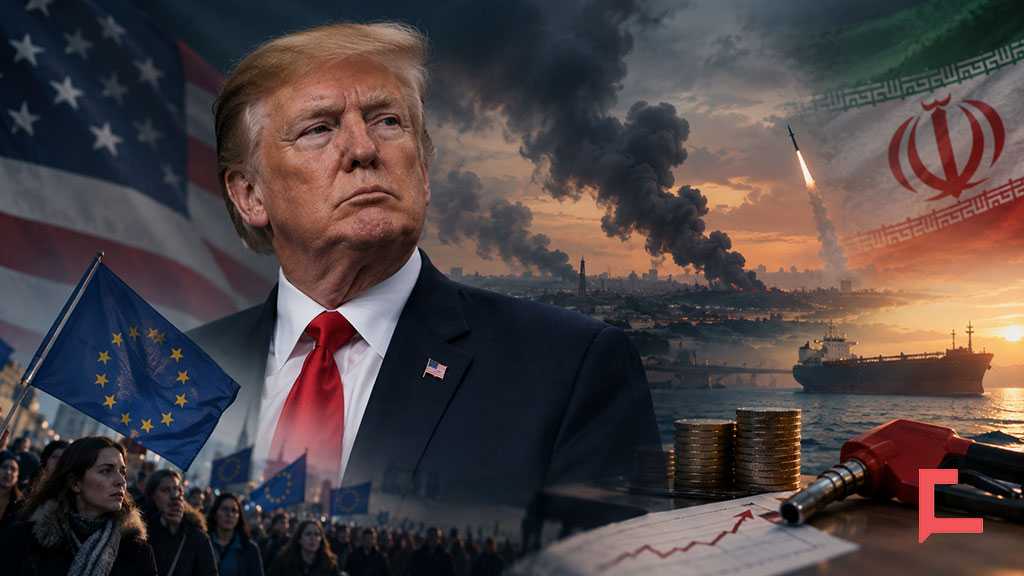
Trump’s War, Europe’s Bill: When Presidential Recklessness Becomes a Global Crisis

By Mohamad Hammoud

Trump’s War, Europe’s Bill: When Presidential Recklessness Becomes a Global Crisis

How Washington’s attack on Iran pushed Europe’s grievances into the streets and raised questions about the "Israeli" entity’s Prime Minister Benjamin Netanyahu’s influence over the American president.

Wars do not confine their consequences to the battlefield. They travel through disrupted trade, volatile energy markets, public budgets, and household bills. That is why the war against Iran is more than a military confrontation: it is a test of presidential judgment, and of who pays when Washington acts without bearing the full cost.

Across Europe, rising living costs have helped drive people into the streets. The conflict has intensified economic pressures that were already squeezing families and businesses; as European Commission President Ursula von der Leyen reported, European gas prices have risen about 140%, diesel prices have doubled, and Europe’s imported fossil fuels have cost an additional €100 billion since the war began. Those figures are not abstractions to the students, truck drivers, and working families who must make their budgets stretch further. They did not choose this war, yet its economic shock has reached their daily lives.

Europe Pays, Washington Decides

That imbalance – Washington decides while others pay – is at the heart of Europe’s anger. European leaders warned that a war with Iran could disrupt energy supplies and send consequences far beyond the Middle East. Their warnings went unheeded, and now those same leaders must answer to citizens for costs tied to a conflict they opposed but could not prevent. The people absorbing the shock had no meaningful say in the decision that helped cause it.

Rather than acknowledge that burden, Trump has blamed Europe’s unrest on immigration and domestic policy failures. Those issues may contribute to public dissatisfaction, but they do not make the energy shock disappear. By pointing to Europe’s internal problems, Trump deflects attention from the consequences of his own decision: families, workers and businesses are paying more as the conflict strains markets.

A Risk Presidents Recognized

The chain of consequences began on February 28, when American and “Israeli” forces attacked Iran, assassinating Leader of the Islamic Revolution His Eminence Imam Sayyed Ali Khamenei. Iran retaliated, disrupting shipping through the Strait of Hormuz, a waterway that ordinarily carries roughly one-fifth of global oil consumption. What began as a military decision quickly became an economic burden for people with no role in the fighting.

That risk was foreseeable. Former Secretary of State John Kerry said George W. Bush, Barack Obama and Joe Biden each rejected Netanyahu’s push for war because peaceful alternatives had not been exhausted. Obama pursued the 2015 nuclear agreement, which Trump abandoned in 2018. Despite their different approaches to Iran, those administrations recognized the dangers of military escalation.

Trump once claimed to recognize those dangers, too. He criticized earlier interventions, promised to put America first, and condemned prolonged foreign wars. Yet he chose a confrontation his predecessors had avoided, leaving Americans facing higher fuel and transportation costs while taxpayers shoulder the military expense. Voters who trusted his promises have every right to ask why he led them into another war.

That contradiction becomes more troubling in Trump’s relationship with Netanyahu. Despite criticizing some “Israeli” military decisions, Trump repeatedly cooperated with a prime minister who had urged earlier presidents to attack Iran. Trump’s decision to embrace a war he once warned against raises a more troubling question: whose arguments shaped American policy, and whose interests did that decision ultimately serve?

Influence and Accountability

Trump’s reversal on foreign wars has raised questions about Netanyahu’s influence over the American president and whether that influence extends beyond political persuasion. Those questions have gained another dimension through Trump’s documented association with Jeffrey Epstein, a convicted sex offender whose connections to powerful figures have fueled speculation about compromising information. Tucker Carlson has also questioned Netanyahu’s hold over Trump, while other commentators have suggested that Epstein-related leverage may help explain the president’s dramatic reversal. The question is no longer simply why Trump abandoned his promises, but what- or who- persuaded him to do so.

Whatever influence Netanyahu exercised, the responsibility for Washington’s decision rests with Trump. Trump chose the war. Netanyahu pursued his ambitions. Europe got the bill. Now Americans are left with the question Trump’s promises once seemed to answer: Why did a president who vowed to avoid another foreign war abandon restraint and launch one whose consequences the world would be forced to bear?

US spent more than $47bn on Iran war, Pentagon data shows

TEHRAN, (MNA) – The US military has spent more than $47bn on the war on Iran, more than 25 percent higher than the Pentagon’s estimate in July.

The US military has spent more than $47bn on the war on Iran, more than 25 percent higher than the Pentagon’s estimate in July, according to data obtained by Reuters.

The latest estimate includes more than $29bn to replace munitions used in the conflict, and more than $6bn to replace military equipment, including aircraft and drones lost during the war.

The figures mark a significant increase from Defense Secretary Pete Hegseth’s July estimate of $37.5bn.

Reuters reported that the estimate did not clearly account for the cost of repairing damage to US military bases caused by Iranian missile and drone attacks.

Pakistani Mustafa Prize laureate explores nanotechnology in fight against breast cancer

TEHRAN - Nanotechnology is opening new avenues for breast cancer treatment by improving drug delivery, overcoming resistance to chemotherapy, and reducing damage to healthy cells. Pakistani medicinal chemist Muhammad Iqbal Choudhary, a 2021 Mustafa Prize laureate, is among the researchers exploring how advanced drug-delivery systems can make cancer therapies more precise and effective.

Breast cancer remains a major global health challenge, with patients often facing recurrence, drug resistance, and severe treatment-related side effects. Conventional chemotherapy targets rapidly dividing cells but can also damage healthy tissues, including hair follicles, the gastrointestinal lining, and bone marrow. Meanwhile, cancer cells can develop multidrug resistance (MDR) by activating molecular pumps that expel drugs before they can take effect.

“Cancers are very difficult, complex, and diverse diseases,” Choudhary said. He explained that chemotherapy drugs often affect both cancerous and healthy cells, making it challenging to target tumors without causing significant side effects.

Choudhary, who heads the International Center for Chemical and Biological Sciences (ICCBS) at the University of Karachi, serves as vice president of The World Academy of Sciences (TWAS) and coordinates the Standing Committee on Scientific and Technological Cooperation of the Organization of Islamic Cooperation (COMSTECH).

Receiving the Mustafa Prize marked a turning point in his scientific career, providing renewed motivation and focus. Since then, his research group has increasingly concentrated on innovative breast cancer treatments and smarter drug-delivery technologies.

Nanocarriers offer one promising approach by encapsulating therapeutic compounds in microscopic particles that protect drugs from premature degradation and release them more effectively at tumor sites. These systems can use passive targeting, which exploits the increased permeability of tumor blood vessels, or active targeting, in which antibodies, peptides, or other molecules help nanoparticles bind to cancer-cell receptors.

According to Choudhary, nanoparticles can contribute both to drug discovery and to delivering existing medicines more precisely, potentially improving their effectiveness while limiting harmful side effects.

One promising strategy involves poly (lactic-co-glycolic acid) (PLGA), a biodegradable and biocompatible polymer widely investigated for controlled drug delivery. Adding vitamin E-derived TPGS may further help counter drug resistance by interfering with the energy-dependent mechanisms that cancer cells use to expel chemotherapy drugs.

Researchers are also investigating nanoparticles coated with natural cell membranes to help them evade immune clearance and accumulate more effectively in tumors. Platelet membranes are particularly promising because their surface proteins may support tumor targeting. A 2025 preclinical study reported greater uptake of platelet-membrane-coated, bufalin-loaded PLGA nanoparticles by tumor cells than that of uncoated particles.

These advances could be particularly valuable against triple-negative breast cancer, an aggressive subtype lacking estrogen, progesterone, and HER2 receptors, which limits conventional targeted treatment options. Nanoparticle-based systems that respond to local tumor conditions may offer alternative ways to deliver drugs without relying on these receptors.

Despite the promise, significant challenges remain. Producing platelet-membrane-coated nanoparticles consistently at clinical scale is difficult, and incomplete membrane coverage remains a concern. Such technologies must overcome manufacturing and regulatory hurdles before routine clinical use becomes possible.

Choudhary emphasizes that, although increasingly selective therapies are available, no drug can yet deliver absolute disease-specific precision. Integrating molecular biology, nanotechnology, and medicinal chemistry could nevertheless bring researchers closer to safer, more effective treatments for cancers that have long resisted conventional therapies.