Wednesday, September 16, 2026

Israel’s Blueprint for the West Bank

Do not look away. The events in the small Palestinian town of Qusra, south of Nablus are the story of the future of the West Bank, writes Ramzy Baroud.

Funeral procession of one of six Palestinian men killed in Qasra by Israeli settlers, Oct. 11, 2023. (ISM photo, Creative Commons)

By Ramzy Baroud
Z Network

If you want to understand the bleak future awaiting the occupied West Bank, do not look away. Just pay attention to the events in the small Palestinian town of Qusra, south of Nablus.

The story of the future of the West Bank begins here.

While much of the media is treating reports emerging from the area as simply another episode of “settler violence,” it is not. Qusra represents something far more consequential: a glimpse into the new Plan Dalet that Israel has in store for Palestinians.

Plan Dalet was the military blueprint through which Zionist forces conquered much of historic Palestine, village by village, during the Nakba.

The plan did not suddenly emerge in 1948. It built on military schemes dating back to 1945, developing into a strategy for conquering Palestinian towns and villages, destroying communities and expelling their inhabitants.

The significance of this history today is not merely symbolic. The Nakba was a process, implemented in stages. So, too, is the annexation of the West Bank.

A New Nakba
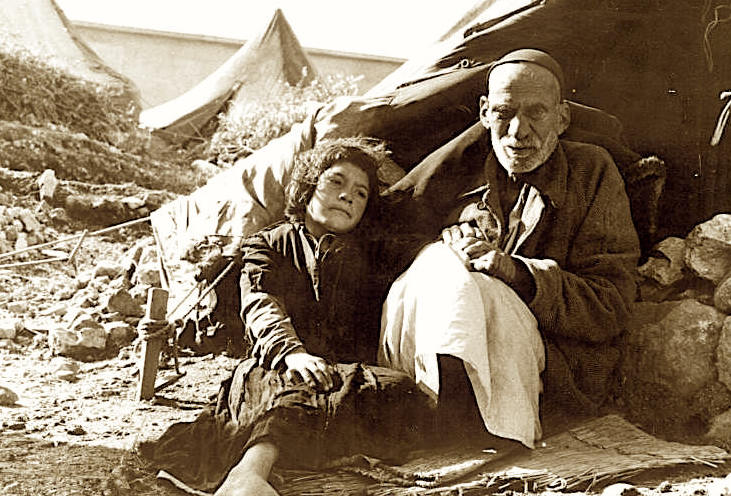
Sudden refugees forever, Palestine Nakba 1948. (Hanini, CC BY 3.0, Wikimedia Commons)

Nor is this merely an intellectual argument. Israeli officials have openly invoked a new Nakba as an intended outcome. In November 2023, Avi Dichter [now Netanyahu’s minister of agriculture and food security] declared: “We are now rolling out the Gaza Nakba,” adding, “Gaza Nakba 2023. That’s how it’ll end.”

True to form, this new Nakba carries many of the characteristics of the old one: coordinated violence, massacres, ethnic cleansing, forced displacement and land confiscation.

The genocide in Gaza represents the zenith of this violence — a more devastating manifestation, but a continuation of the original sin upon which the Israeli state was established.

While all eyes were on Gaza beginning on Oct. 7, 2023, the West Bank was largely ignored, allowing Israel the space to escalate violence in all its forms to levels unseen in decades.

The result has been staggering. Since Oct. 7, 2023, Israeli forces and settlers have killed more than 1,100 Palestinians in the West Bank, including over 240 children, and wounded thousands more. Tens of thousands have been detained, while more than 33,000 Palestinians remain displaced from the Jenin, Tulkarem and Nur Shams refugee camps alone.

Now, back to Qusra.

Beginning on Aug. 9, armed Israeli settlers surrounded three Palestinian homes in the Ras al-Ain area on the outskirts of the town.

They blocked access to the houses, erected tents outside them and cut water and electricity supplies. Families, including young children, were effectively trapped inside.

The Israeli military subsequently declared the surrounding area a closed military zone, restricting access by Palestinians, activists and journalists. 

Qusra a ‘Testing Ground’

What emerged was not simply settler violence but a division of labor: settlers create the crisis; the army imposes the restrictions; Palestinian movement is curtailed; and the victims themselves are pressured to leave.And the siege continued. As I write these words, the siege of the Qusra homes has concluded its second week.

Qusra is not incidental to this strategy. Israel has already confiscated its land for the settlement of Migdalim, while nearby outposts including Esh Kodesh have long been associated with attacks and attempts to seize Palestinian agricultural land.

Control of such areas is essential to the larger project of connecting settlement blocs, fragmenting Palestinian territory and transforming Palestinian communities into isolated enclaves.

A few years ago, the Israeli government behaved as though its plan to formally annex large swathes of the West Bank had been placed on hold. Yet, since October 7, annexation has moved from aspiration to obsession — in both words and action.

National Security Minister Itamar Ben-Gvir oversaw the mass distribution of weapons after Oct. 7, arming thousands of civilian security-squad members with rifles amid an already heavily armed settler population.
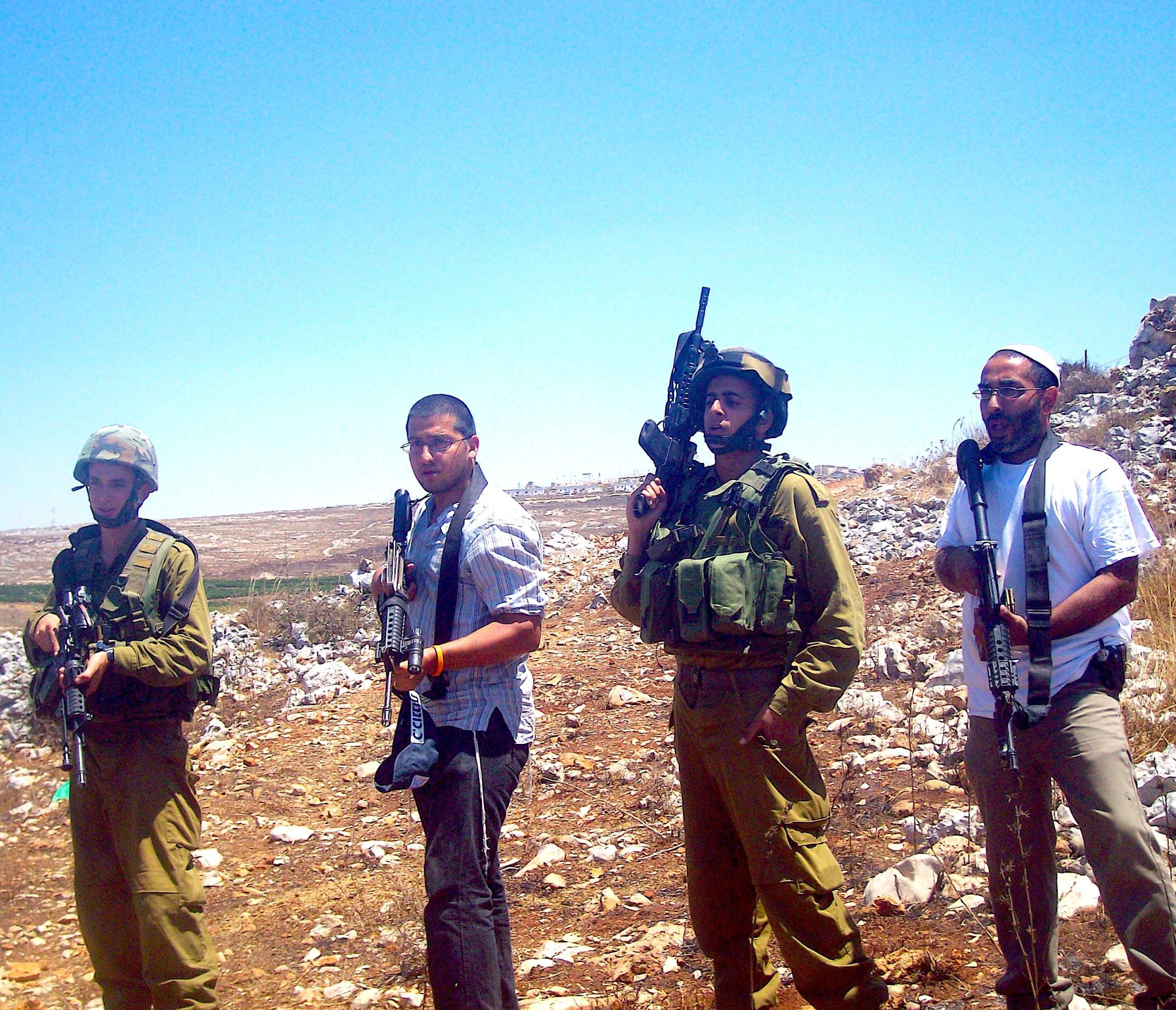
IDF soldiers and Israeli settlers during a Palestinian demonstration against settlers’ land seizure in the West Bank village of Iraq Burin in 2009. (ISM Palestine /Flickr / Wikimedia Commons / CC BY-SA 2.0)

Meanwhile, Finance Minister Bezalel Smotrich has systematically worked to transfer powers over the West Bank from military administration to Israeli civilian authorities — one of the clearest institutional mechanisms of annexation.

And now another piece is falling into place: Defense Minister Israel Katz has ordered preparations to transfer law-enforcement responsibility over Israeli settlers in the West Bank from the military to the Israeli police, another critical legal step toward annexation.

The picture is becoming complete: settler militias, government funding, weapons, the army, police, civilian bureaucracies, courts and political decisions originating at the highest levels of the Israeli state.

Seen in this wider context, Qusra becomes a microcosm — and potentially a testing ground — for the mechanisms through which larger-scale annexation can be implemented. These realities echo the past. The Nakba did not simply “happen,” but followed years of planning and incremental military schemes. That is why Qusra matters.

Some governments are warning of accelerating annexation; others sanction individual settlers, as though targeting a few extremists could reverse a blueprint implemented by an entire state apparatus.

Palestinians in the West Bank are fully aware of the challenge awaiting them. Urging the Palestinian Authority, which maintains security coordination with Israel, to suddenly devise a “strategy” is painfully redundant.

But for the rest of us who understand the horrors of the Nakba — and the reverberations of that catastrophe from Deir Yassin to the genocide in Gaza — recognition is no longer enough.

The price of silence is already being paid by every Gazan living among the ruins of the Strip and every Palestinian in the West Bank confronting the violence of settlers and their military partners.

Dr. Ramzy Baroud is a widely published and translated author, an internationally syndicated columnist and editor of The Palestine Chronicle. His latest book is The Last Earth: A Palestinian Story (Pluto Press, 2018). He earned a Ph.D. in Palestine Studies from the University of Exeter (2015), and was a non-resident scholar at Orfalea Center for Global and International Studies, UCSB. Visit his website.

Vijay Prashad: Global South Needs an Industrial Policy

While capitalism confines the Global South to raw extraction and cheap exports, democratic planning can break dependence, claim technological control, and turn resources into collective economic power.

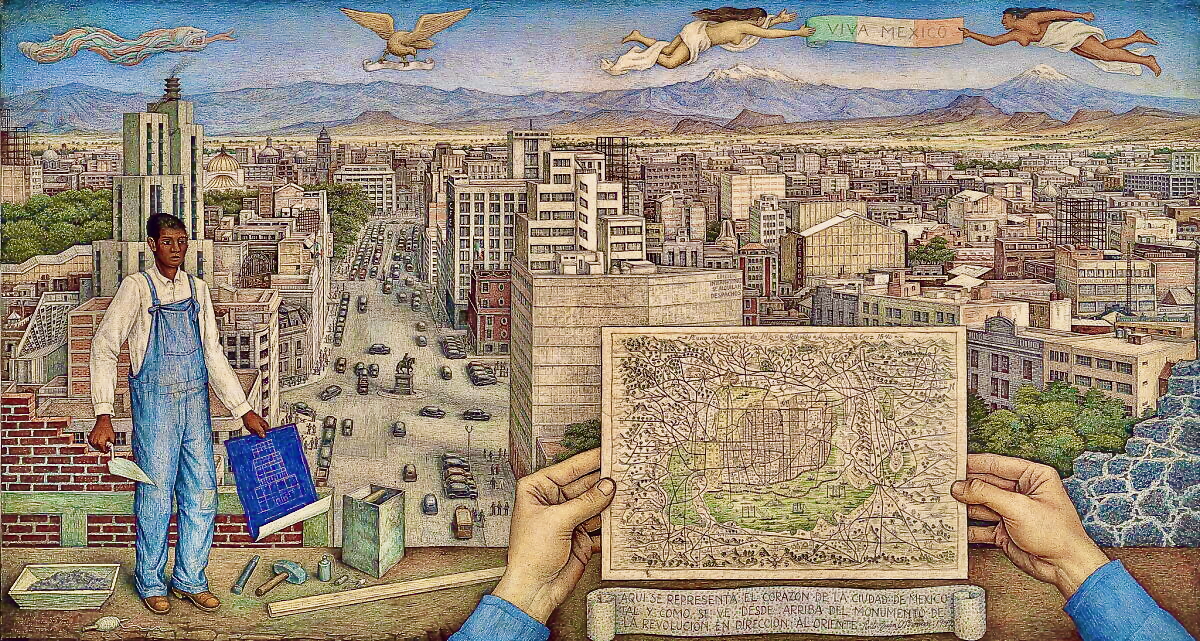
Juan O’Gorman, Mexico, Mexico City, 1949. (Via Tricontinental: Institute for Social Research)

By Vijay Prashad
Tricontinental: Institute for Social Research

For 40 years, the countries of the Global South were told that economic planning was an error. The state was to retreat, tariffs were to fall, public firms were to be privatised, and investment was to be entrusted to those who move money across borders at the speed of a keystroke.

Development would arrive through comparative advantage: each country should sell what it already had and buy what others had learned to make.

The result is visible from Harare to Jakarta. Countries rich in minerals, fertile land and young workers remain trapped at the least rewarding end of global value chains, exporting raw materials while importing the higher-value goods made from them.

Ghana, for example, exports cocoa and imports chocolate, while Venezuela exports crude oil and imports refined fuel. Wealth drains out of the Global South, while debt, informality and the discipline of austerity deepen.

A progressive industrial policy for the Global South must begin with a refusal of this deal. The “economy” is not a neutral or natural fact but a historical product of colonial intervention, neocolonial restructuring, property regimes and patterns of access to technology and capital. Growth rates are important, but even more important is the question of what is produced, how it is produced, who controls the process of production and how the benefits are distributed. The goal of development should not be growth per se but the flourishing of human life.

Charles Sheeler, United States, Water, 1945. (Via Tricontinental: Institute for Social Research)

The institutions that once made industrial policy taboo for the Global South — the International Monetary Fund (IMF), the World Bank and the Organisation for Economic Co-operation and Development (OECD) — have now begun to revise their prescriptions. 

The OECD, for instance, now acknowledges that market forces alone cannot resolve weak productivity, fragile supply chains and green and digital transitions; few firms would risk their capital for long-term investment unless compelled to do so. 

The World Bank goes further, arguing that only state-led investment can drive industrialisation, including through the creation of industrial parks, transport infrastructure, energy grids, and the provision of long-term financing. The IMF is more guarded — it recognises the importance of subsidies and trade protection for infant industries but warns against the protection of non-competitive sectors.

Each of these institutions now suggests, without saying outright, the need for planning. We add that such planning should be democratic and for the public good. We must build popular power and state capacity to discipline capital and penalise it when it refuses to meet social goals.

There is a revealing asymmetry in the old arguments about industrial policy. When wealthy states subsidise semiconductors, electric vehicles, defence industries, or green technologies, it is framed as “innovation” or “national security.” When poor countries try to process their own minerals or protect infant industries, they are warned about “distortion,” “inefficiency,” “corruption” and “fiscal risk.” 

The fact is that the world market is already planned by powerful states, transnational firms, patent regimes, financial institutions and military priorities. The real question is who plans, for whose benefit and at what level of the value chain.

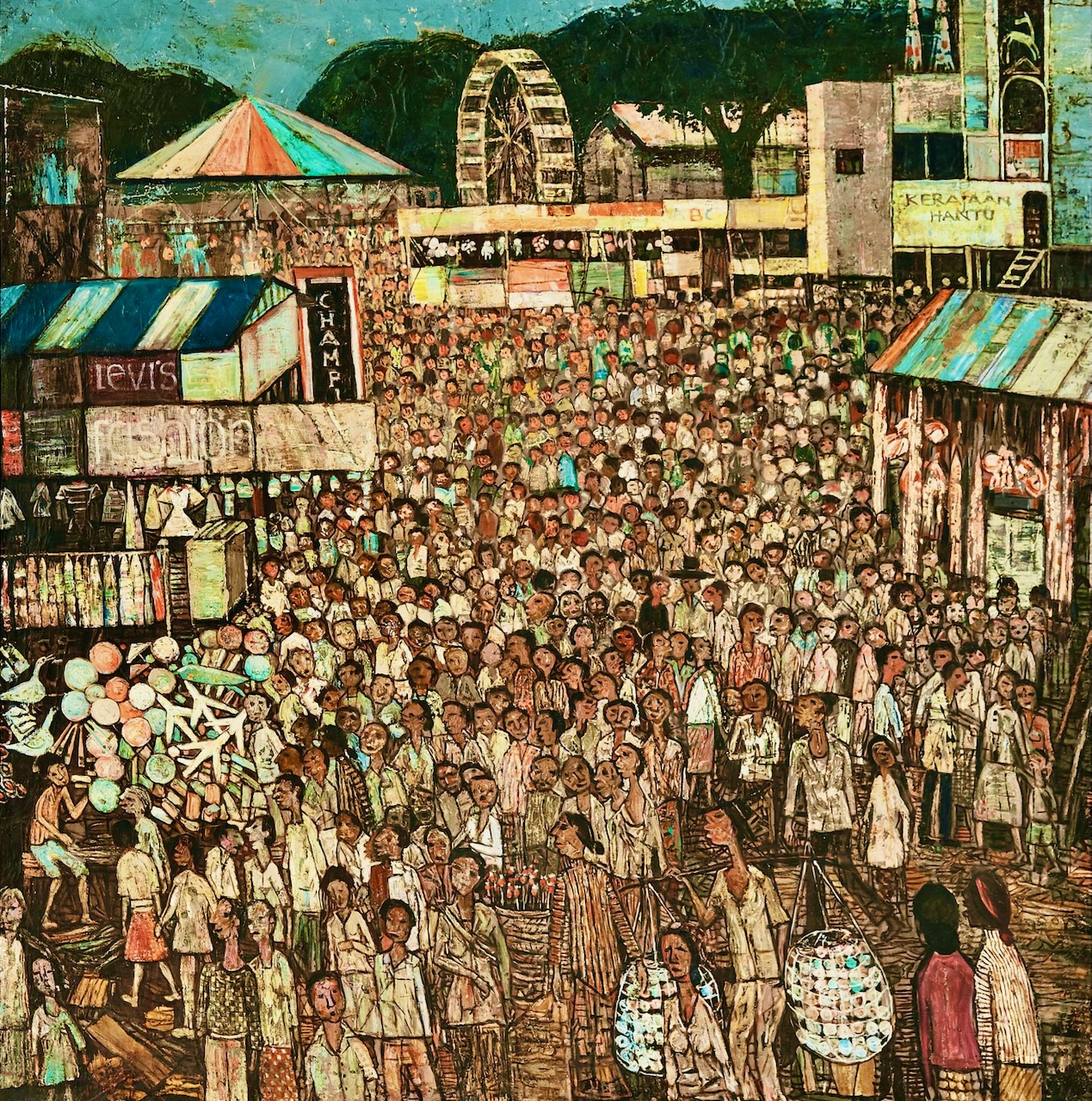
Haji Widayat, Indonesia, Perayaan Sekaten di Yogya / Sekaten Festival in Yogya, 1983. (Via Tricontinental: Institute for Social Research)

The U.N. Conference on Trade and Development (UNCTAD) emphasises the necessity for state coordination so that trade policy, energy policy, education and research policy, environmental policy and foreign investment rules move in the same direction. Without coordination, a government may announce local processing while its central bank starves industry of long-term credit, its power system fails factories and its trade regime rewards imports. UNCTAD’s arguments are useful, but they ignore the elephant in the room — capitalists seek profit, not the public good.

An industrial policy that does not discipline capital and channel it toward the well-being of society will necessarily fail. Public enterprises are necessary to make the long-term investments in socially necessary areas where the private sector shows no interest. Rather than use public funds for private speculation, it is far better to harness public funds for public institutions that can create managed markets, incubate new technologies and develop lines of production that are socially beneficial.

Ultimately, an industrial policy cannot be sustained unless countries restore some trade barriers and capital controls. Without these measures, governments will face severe foreign exchange shortages and heavy fiscal costs. Over time, these pressures will weaken public finances and undermine industrial development.

Part of the destruction of industrial policy in the Global South took place with the 1994 Agreement on Trade-Related Aspects of Intellectual Property Rights (TRIPS), which narrowed the policy space countries once used to imitate, adapt, and build on existing technologies. TRIPS made it harder for countries to build new technologies on their own terms. 

It is time for states in the Global South to reconsider the full recognition of intellectual property rights. Compulsory licensing already allows for the production of life-saving medicines when public needs are urgent. Similar tools should be extended to other critical sectors for industrial development. This would improve access to essential technology, strengthen domestic production, and reduce dependence on multinational corporations.

Gresham Tapiwa Nyaude, Zimbabwe, May Flights of Fance, 2019. (Via Tricontinental: Institute for Social Research)

Zimbabwe’s lithium policy is an important example of the economic imagination needed for contemporary industrial policy. In December 2022, Zimbabwe’s Statutory Instrument 213 prohibited the export of lithium-bearing ores and unrefined lithium without ministerial permission. The policy overturned the colonial common sense that an African country’s role is to dig and ship. 

The country used control over a strategic resource to pressure mining firms to invest in processing and create more value-addition, skills and tax revenue at home.

This is precisely the kind of measure that mainstream economics cautions against. But such bold instruments may be necessary when the existing system makes extraction appear “efficient” and industrialisation “inefficient.” Zimbabwe’s ban changed the calculation facing mining capital: access to the ore increasingly required investment in domestic processing. This helped push firms toward processing lithium ore into concentrate and, more recently, toward plans for lithium-sulphate facilities — bringing Zimbabwe one step closer to battery inputs.

Zimbabwe’s policy should be defended without romanticisation. Processing ore into concentrate is not the same as controlling the battery value chain. Foreign firms still dominate production. Technology, finance, and market access remain under the control of multinational corporations. Local communities have raised concerns over working conditions, land and water rights and poor regulation. An export ban by itself cannot produce engineers, reliable electricity, publicly owned research, or domestic manufacturers.

Zimbabwe’s next step must therefore be deeper and more public: a mine-to-manufacturing plan linking geological knowledge, state equity, development bank credit, vocational education, chemical processing, component production, recycling, and regional demand. Such a plan would need to grant mining communities and workers institutional power and ensure that public revenues build universal goods rather than private wealth.

Zimbabwe’s success should not be measured by processing plants but by whether lithium policy helps build new public schools, hospitals, water and transport infrastructure, energy grids and other public goods.

Alexander “Skunder” Boghossian, Ethiopia, Crossroads, 1992–1997. (Via Tricontinental: Institute for Social Research)

The United Nations’ Fourth Industrial Development Decade for Africa (2026–2035) recognises the urgency of our conjuncture. Nearly twelve million young Africans enter the labour force each year, while the African Continental Free Trade Area offers the scale needed to build regional value chains. 

The U.N. correctly calls for Africa to move from raw-material exports to the production of value-added goods. But declarations and “bankable projects” are not enough. As Grieve Chelwa and I argue in our book, How the International Monetary Fund Strangles Africa (2026), Africa needs public development banks, continental infrastructure planning, coordinated mineral policy, local-content rules, infant industry protection and relief from foreign debts that drain the very fiscal capacity industrialisation requires.

The opponents of industrial policy offer no neutral alternative. To leave investment to multinational corporations is to accept a plan written elsewhere: mines without industry, farms without food processing, cities without dignified work and a green transition in which technologies are designed in the North using minerals extracted in the South. Industrial policy is not a guarantee of emancipation, but it can be a terrain of class struggle over who controls investment, production, and economic surplus. The peoples of the Global South have the right to use their own resources to build the future.

The current conjuncture has opened space for debate about industrial policy, in part because the long stagnation that followed the 2008 financial crisis has made old prescriptions increasingly untenable. After decades in which planning was discredited and state capacity was weakened, the countries of the Global South must have the audacity to imagine something better than the deal handed down to them. There is an old Shona proverb from Zimbabwe that might be useful to remember: Chawawana batisisa mudzimu haupi kaviri — what you have found, hold on to it tightly, for the ancestors do not give twice.

Vijay Prashad is an Indian historian, editor and journalist. He is a writing fellow and chief correspondent at Globetrotter. He is an editor of LeftWord Books and the director of Tricontinental: Institute for Social Research. He is a senior non-resident fellow at Chongyang Institute for Financial Studies, Renmin University of China. He has written more than 20 books, including The Darker Nations and The Poorer Nations. His latest books are Struggle Makes Us Human: Learning from Movements for Socialism and, with Noam Chomsky, The Withdrawal: Iraq, Libya, Afghanistan and the Fragility of U.S. Power.

Iran rules out US talks until conditions are met

 By Mahmoud M. Ravi-Nejad

Iran’s Supreme National Security Council urged the negotiators not to be distracted by contradictory messages from US president

TEHRAN — Iran has ruled out any negotiations with the United States until its conditions are met, with Secretary of the Supreme National Security Council Mohsen Rezaei warning Washington that the strategic equations surrounding oil and regional waterways have changed and that attempts to contain the consequences of the conflict will not alter what lies ahead.

In a post on X, Rezaei urged Tehran not to be distracted by contradictory messages from US President Donald Trump, who has alternated between rejecting negotiations with Iran and signaling that Washington is prepared to enter talks.

“Do not let the contradictory signals from the US president distract you—from ‘we will not negotiate’ to ‘we are ready for talks,’” Rezaei wrote.

“The equations concerning oil and the straits have changed. Struggling to control the consequences will not prevent what is coming,” he added.

He then drew a firm line on diplomacy: “Until Iran’s conditions are met, there will be no negotiations. Period.”

Rezaei’s remarks came after Trump said on Monday that he was ready to reach a swift agreement with Iran and that the United States was open to negotiations. Trump said Washington was “open and ready” to reach a deal with Tehran.

Tehran sets conditions

Iranian officials have repeatedly said that any future dialogue with Washington must address the circumstances that led to the current confrontation rather than simply return to negotiations without resolving the underlying disputes.

Iran’s primary demand is for Washington to fully end the war and halt its attacks against the country. Tehran is also calling for the lifting of the blockade on its ports, compensation for war-related damages, the removal of sanctions on its economy, and the unconditional release of Iran’s frozen assets held abroad.

A central Iranian demand is an end to US military intervention and the withdrawal of American forces and military bases from the region. Tehran has argued that the continued deployment of US forces around Iran, including military facilities in neighboring countries, represents a direct security threat and cannot form the basis for a sustainable regional settlement.

Iran has also called for an end to the use or threat of force against the country, the lifting of unilateral US sanctions and respect for Iran’s sovereignty and legitimate national interests. President Masoud Pezeshkian has similarly said Iran remains open to dialogue provided Washington abandons pressure and sanctions and does not seek to dictate terms through force.

An end to the war on all Resistance Fronts, including Lebanon, is another important condition for Iran to negotiate.

The Iranian position effectively links any diplomatic process to a broader change in the US approach to the region: an end to military pressure, removal of sanctions and the establishment of security arrangements based on regional cooperation rather than permanent US military presence.

Hormuz and oil become central to the confrontation

Rezaei’s reference to oil and the straits comes amid heightened tensions surrounding the Strait of Hormuz, one of the world’s most strategically important energy corridors. Recent reports indicate that commercial traffic through the waterway has fallen sharply amid the continuing conflict and security concerns. Reuters reported that only four commodity vessels crossed the strait on Monday, compared with a pre-war average of about 125 daily transits.

Diplomatic efforts involving Iran and Persian Gulf states to address maritime security and the management of traffic through Hormuz have also been postponed. Oman had been preparing to host regional discussions, but the meeting was delayed amid disagreements among Persian Gulf states over proposed arrangements.

The developments have also had a direct impact on global energy markets. Brent crude has recently risen above $108 a barrel amid concerns over supply disruptions, underlining the international economic significance of the confrontation around the region’s strategic waterways.

Trump signals openness; Tehran demands a change in US policy

Rezaei’s warning followed renewed statements by Trump that Iran was seeking an agreement and that Washington remained open to engagement. Trump has nevertheless insisted that any settlement must meet US demands, while recently suggesting that the United States could maintain a presence in Iran and benefit from its oil resources.

Tehran has rejected such an approach, arguing that negotiations cannot be meaningful while the United States maintains military pressure and seeks to retain a dominant security role in the region.

Against this backdrop, Rezaei’s message reflects a broader Iranian position that any return to diplomacy must begin with a change in the strategic environment surrounding Iran. For Tehran, that means an end to US military intervention, the withdrawal of American forces and bases from the region, the lifting of sanctions, and recognition of Iran’s sovereignty and security interests.

The message also underscores Iran’s view that the balance surrounding the region’s energy routes has changed, making the security of the Persian Gulf and Strait of Hormuz a central component of any future political and security arrangement.

For now, Rezaei’s message leaves little ambiguity over Tehran’s position: Iran says it will not enter negotiations simply because Washington is ready to talk; the conditions for dialogue must first be created.

Iran's upper hand in Hormuz

The strategic balance in the Persian Gulf and the Strait of Hormuz increasingly gives Iran significant leverage over one of the world’s most vital energy corridors. The Strait carries a substantial share of global oil and LNG shipments, and recent disruptions have demonstrated how quickly Iran-related tensions can reverberate through international energy markets. 

Iran’s leverage does not rest solely on geography. The ability to affect maritime traffic through Hormuz gives Tehran a powerful strategic card in any confrontation with Washington, particularly as Persian Gulf energy flows remain vulnerable, and oil prices have moved above $100 a barrel.

A recent understanding between Iran and Oman has also highlighted that the future of the waterway is closely tied to the conditions Tehran has set for the United States, reinforcing Iran’s role as a decisive factor in determining the security environment around the strait. 

At the same time, the United States is facing growing pressure on its weapons and munitions stocks. Recent U.S. assessments have acknowledged significant challenges in replenishing critical munitions, with industrial-base constraints limiting the speed at which depleted inventories can be rebuilt. A recent U.S. defense assessment warned that the health of the country’s munitions production and stockpiles is critical to national defense and that existing production capacity remains insufficient for rapidly restoring strategic reserves.

It therefore appears that the remarks by Iran’s Supreme National Security Council secretary were not a political bluff but rather reflected his assessment of his country’s capabilities and its capacity to inflict serious damage on a power that is now not only struggling to support its regional allies, but also finding it increasingly difficult to ensure the security of its own military bases. 

Caitlin Johnstone: Israel Destroying the Evidence

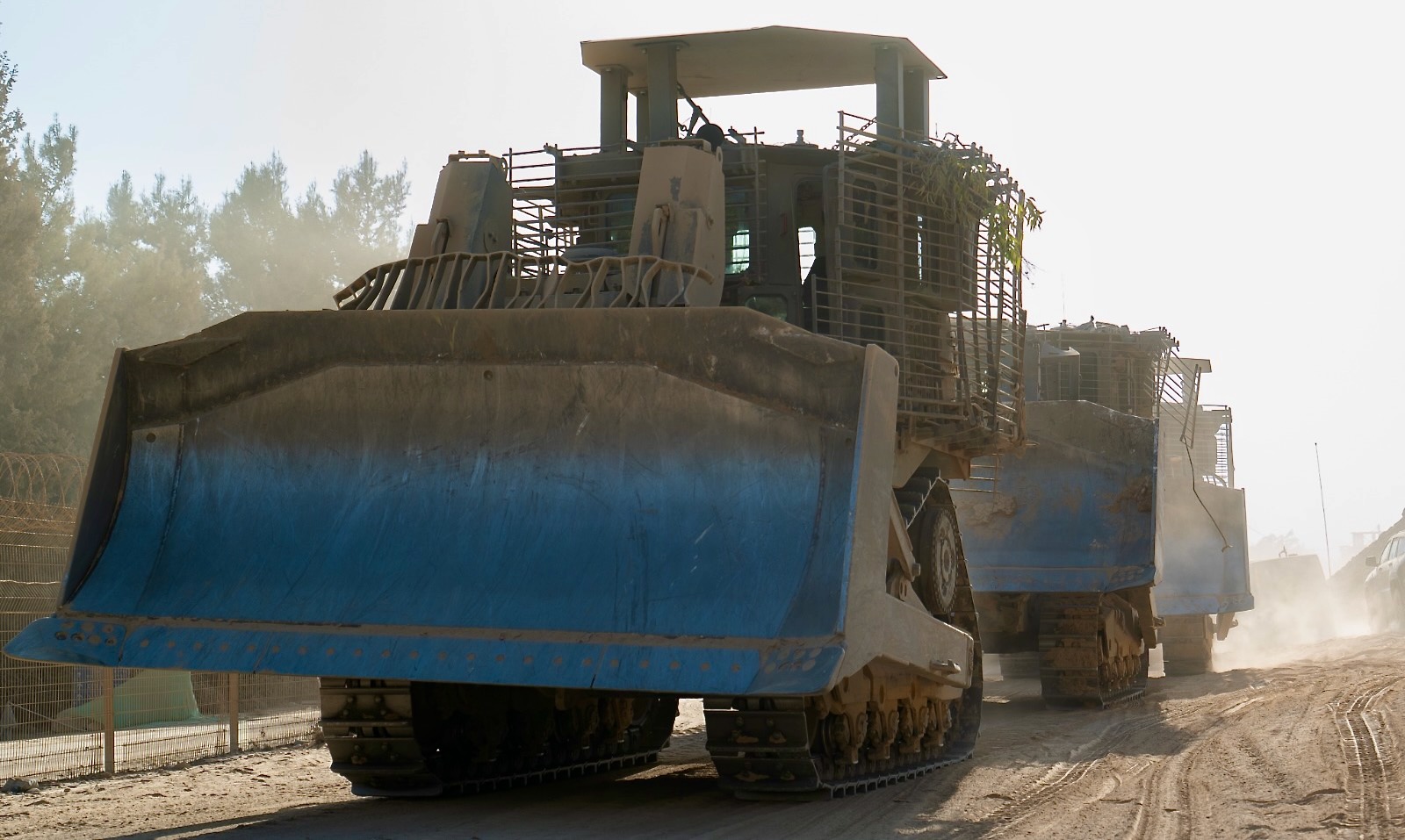
You don’t generally look at construction equipment and think of it as a tool for genocide, but in occupied Palestine that’s exactly what this machinery is used for.

IDF armored bulldozer in Gaza, 2023. (IDF Spokesperson’s Unit photographer/ CC BY-SA 3.0)

By Caitlin Johnstone
Caitlin’s Newsletter

Remember how we were always hearing that the official death toll in Gaza is an undercount because there are thousands of bodies trapped under the rubble?

Well, it looks like Israel has been moving those remains along with the rubble, conveniently destroying evidence of genocide.

Drop Site News reports:

“The Palestinian Center for Missing and Forcibly Disappeared Persons has accused Israel of destroying evidence that could identify thousands of Palestinians buried beneath Gaza’s rubble or reveal the fate of those forcibly disappeared.

The center says Israeli forces are moving hundreds of tons of debris each day from destroyed neighborhoods inside closed military zones. Crushing and removing it could pulverize human remains, mix them with rubble and waste, erase the locations of burial sites, and destroy DNA and other forensic evidence.

Around 7,000 Palestinians remain missing in Gaza, including an estimated 4,000 to 5,000 believed trapped beneath the ruins.

“These sites are not merely construction waste,” the center warned. It called for urgent UN and Red Cross intervention, access for rescue and forensic teams, and independent oversight of all future rubble removal.”

Last month, a report by Euro-Med Human Rights Monitor estimated that “at least 10 million tonnes of rubble have been removed, crushed, or moved from their original sites within the areas under Israel’s unlawful military control.”

“In recent weeks, Euro-Med Monitor tracked nearly 100 Israeli trucks daily leaving the Gaza Strip with debris,” the report reads. “These trucks carry rubble to undisclosed sites within Israel and further south of the occupied West Bank. The Israeli authorities have not provided details on the quantities removed, the routes taken, the destination sites, or how the material is utilised. They also have not permitted independent oversight of the sorting, weighing, or transport processes. This lack of transparency makes it very difficult to trace the transported material, identify evidence, or recover any human remains that might be present.”

Euro-Med Monitor notes that this removal occurs while Israel is still under investigation by the International Criminal Court for the crime of genocide, adding that the Rome Statute considers “destroying, tampering with or interfering with the collection of evidence” as criminal acts that hinder the ICC’s justice mission when done deliberately.

In South Africa’s genocide case against Israel in the International Court of Justice, the court ruled that “The State of Israel shall take effective measures to prevent the destruction and ensure the preservation of evidence related to allegations of acts within the scope of Article II and Article III of the Convention on the Prevention and Punishment of the Crime of Genocide against members of the Palestinian group in the Gaza Strip.”

These obligations are plainly being disregarded as Israel scrambles to cover up evidence of its crimes.

On Sunday, Palestinians in Gaza held a mass funeral for approximately 100 people, including 60 children. These individuals were not killed recently; the mass funeral was held because their bodies had been recovered from the rubble of destroyed buildings in Gaza City’s Zeitoun neighborhood.

This is the sort of thing Israel is working to prevent as it clears out the wreckage from its genocidal onslaught.

You don’t generally look at construction equipment and think of it as a tool for genocide, but in occupied Palestine that’s exactly what this machinery is used for. They use it to knock down homes. To bury their victims. To conceal the evidence.

The state of Israel should have a Caterpillar D9 bulldozer on its flag.

Caitlin Johnstone’s work is entirely reader-supported, so if you enjoyed this piece please consider sharing it around, following her on Facebook, Twitter, Soundcloud, YouTube, or throwing some money into her tip jar on Ko-fi, Patreon or Paypal. If you want to read more you can buy her books. The best way to make sure you see the stuff she publishes is to subscribe to the mailing list at her website or on Substack, which will get you an email notification for everything she publishes.  For more info on who she is, where she stands and what she’s trying to do with her platform, click here. All works are co-authored with her American husband Tim Foley.