Sunday, September 06, 2026

Iran urges BRICS to pursue war crimes accountability

TEHRAN- Iran has called on BRICS judicial authorities to take concrete legal steps against those responsible for 'war crimes and crimes against humanity' committed during two wars of aggression against the Islamic Republic, arguing that international justice must not be subordinated to political power.

Addressing the BRICS Chief Justices’ Forum in New Delhi, Iran’s Judiciary Chief Gholam-Hossein Mohseni-Ejei urged member states to condemn violations of Iran’s sovereignty and territorial integrity and to make use of the principle of universal jurisdiction to pursue individuals allegedly responsible for serious international crimes.

The BRICS Chief Justices’ Forum, hosted by India’s Supreme Court from Sept. 4 to 6, is bringing together chief justices, presidents of supreme courts and senior judicial officials from BRICS members and partner countries. Its agenda includes international commercial disputes, cross-border enforcement of arbitration awards, artificial intelligence in judicial administration and sustainable development.

Mohseni-Ejei said the international community needs justice “more than ever,” but warned that justice loses its meaning when it is applied selectively or shaped by political considerations.

He argued that the rule of law should not be sacrificed to geopolitical interests and that the rights of nations should not be determined by their relative power.

The Iranian judiciary chief pointed to BRICS’ growing international significance, describing the grouping as one of the world’s major economic and political formations and saying it has an increasingly important role in the emergence of a new international order.

He noted that BRICS declarations and other documents have repeatedly stressed mutual respect, respect for the sovereignty and territorial integrity of states, the peaceful settlement of disputes and adherence to the principles of the United Nations Charter.
Against that backdrop, Mohseni-Ejei said the gap between international legal principles and their implementation had become increasingly evident.

Despite major advances in science and technology, he said, the world is witnessing 'growing violations of national sovereignty, widespread breaches of human rights and international humanitarian law, unlawful unilateral sanctions and increasing pressure on independent states by hegemonic powers.'

Iran seeks international legal response

Mohseni-Ejei said Iran had paid a heavy price for maintaining its independence and accused the United States and Israel of launching “brutal aggression” against Iran during the current and previous Iranian years.

He argued that the attacks should not be viewed merely as a conventional military confrontation, but as an unlawful act with wider implications under international law.

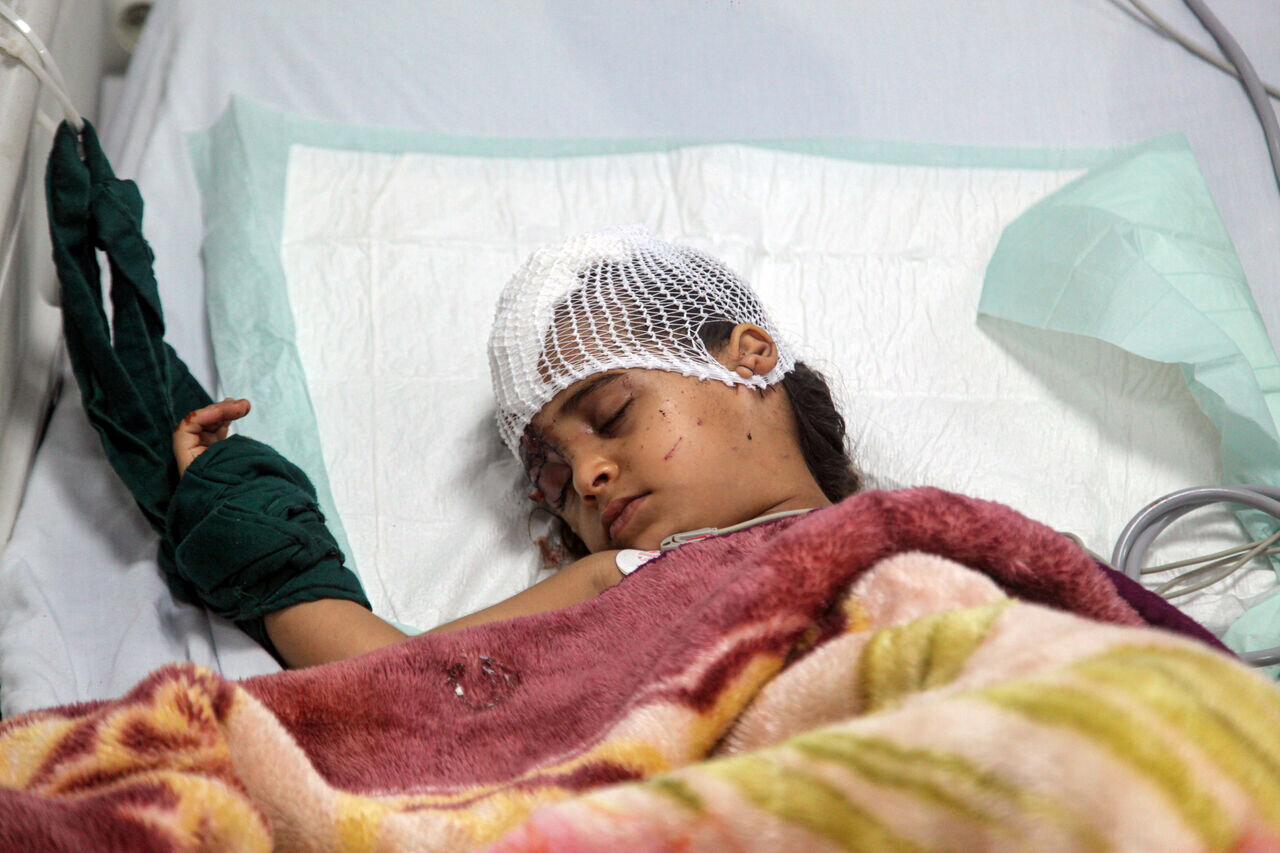
According to Mohseni-Ejei, many Iranian civilians were killed during the conflict, including 168 schoolchildren in Minab on the first day of the offensive. He said the incident represented only part of the casualties and destruction sustained during a 40-day war.

Hospitals, educational and cultural institutions, residential areas and other civilian infrastructure were also targeted, he said, resulting in the deaths of numerous civilians, including women and children.

The Iranian judiciary chief described the actions of the United States and Israel as clear examples of war crimes and criticized international organizations for 'their failure to respond adequately to the alleged violations.'

He said judicial systems and legal institutions had a responsibility to respond when fundamental human rights were violated, civilians were killed or forcibly displaced, civilian infrastructure was destroyed and perpetrators of international crimes escaped accountability.

Mohseni-Ejei called on BRICS judicial authorities to begin by formally condemning 'violations of Iran’s sovereignty and territorial integrity,' particularly in light of the principles enshrined in the UN Charter.

He also urged BRICS members to take practical measures to prevent further violations and invoke universal jurisdiction to pursue those responsible for alleged war crimes and crimes against humanity committed during the two conflicts.

Iran backs China’s call for homegrown security architecture for West Asia

TEHRAN — Iranian Parliament Speaker Mohammad Baqer Qalibaf has welcomed China’s call for a new security architecture in the Middle East, saying regional countries must take control of their own security and future and stressing that lasting stability cannot be achieved through arrangements imposed by outside powers.

In a post on X on Friday night, Qalibaf said Beijing’s emphasis on the concept of common security was consistent with a principle Iran has advocated for years.

“China’s emphasis on fostering common security reflects a principle Iran has long championed,” Qalibaf wrote.

“Regional countries must be taking their future into their own hands, and true stability can only come through a new security architecture that is homegrown. Iran stands ready,” he added.

Qalibaf’s remarks came shortly after Chinese President Xi Jinping unveiled a four-point proposal for establishing a new security framework for West Asia during talks with Egyptian President Abdel Fattah El-Sisi in Cairo.

Xi called for a regional security system based on common, comprehensive, cooperative and sustainable security, while urging West Asian countries to strengthen dialogue, reject external interference and take greater responsibility for resolving their own security challenges.

China calls for regional ownership of security

Xi’s proposal places particular emphasis on strengthening the internal drivers of regional security. He said the people of the Middle East should remain “masters of their own affairs” and that countries in the region should take their future into their own hands rather than rely on external powers.

The Chinese president also called for an integrated approach to the region’s interconnected conflicts, arguing that individual crises cannot be addressed in isolation. He identified development as a fundamental pillar of lasting security, while stressing the need to tackle the underlying causes of conflict.

The proposal also calls for stronger international coordination, with the UN Charter and international law serving as fundamental principles for addressing Middle Eastern affairs. Xi urged the international community, particularly outside powers, to respect the sovereignty and territorial integrity of regional states and avoid applying double standards.

China also expressed readiness to cooperate with West Asian countries in safeguarding international shipping lanes, advancing economic and development cooperation, building mutual trust and addressing the root causes of regional conflicts.

The emphasis on maritime security is particularly significance amid recent disruptions to regional shipping and heightened tensions around critical waterways, including the Strait of Hormuz, one of the world’s most important energy transit routes. Reuters has described Xi’s initiative as part of Beijing’s broader effort to deepen its role in the Middle East amid major shifts in regional security arrangements and uncertainty over the future role of the United States.

Tehran pushes for a regional security order

Qalibaf’s response is consistent with Tehran’s longstanding call for a regional security framework that reduces reliance on extra-regional military powers.

In a separate statement last month, Qalibaf said Iran had received numerous messages from neighboring countries concerning the formation of new regional security arrangements and expanded economic cooperation. He argued at the time that a “homegrown, independent” regional order would be the basis for lasting peace and security.

The latest convergence between Beijing’s proposal and Tehran’s position comes against the backdrop of a rapidly changing regional strategic environment. The war involving Iran, the United States and Israel has intensified debate among Middle Eastern governments over the reliability of existing security arrangements and the extent to which regional states should depend on outside military powers.

China’s initiative also reflects Beijing’s expanding diplomatic engagement in the Middle East. China previously played a prominent diplomatic role in facilitating the restoration of relations between Iran and Saudi Arabia, and Beijing has increasingly presented itself as a supporter of dialogue and political solutions to regional disputes.

Xi’s meeting with El-Sisi further underscored Beijing’s effort to deepen strategic relations with Egypt, a major Arab state and an important actor in regional security. 

Development and security seen as interlinked

For Beijing, the proposed security architecture is not limited to military arrangements. Xi has explicitly linked regional stability to economic development, arguing that sustainable peace ultimately requires addressing the economic and political conditions that contribute to instability.

That approach broadly overlaps with Iran’s argument that regional security should be built through cooperation among neighboring states rather than through military alliances dominated by external powers.

Egyptian President El-Sisi, for his part, welcomed China’s position and said Cairo was committed to de-escalation, resolving disputes through political means and advancing regional security and development. Egypt also expressed readiness to coordinate with Beijing on exploring a new regional security architecture.

The emerging discussion therefore goes beyond a diplomatic exchange between Tehran and Beijing. It points to a broader debate over what the Middle East’s security order should look like as regional states reassess traditional alliances and seek greater control over the mechanisms that govern their security.

For Tehran, Qalibaf’s endorsement signals that Iran views the Chinese proposal as broadly compatible with its own long-standing call for a homegrown, independent and cooperative regional security order — one in which neighboring states play the central role in determining the region’s security arrangements.

“Iran stands ready,” Qalibaf said, signaling Tehran’s willingness to participate in efforts aimed at building such a framework.

The Kuhestak tragedy: An unbroken American trail of blood and broken bodies

 By Syeda Farheen Naqi Mossavi

TEHRAN — There are moments when the machinery of war strips away every pretense and leaves only the sound of a mother’s scream.

In the small coastal town of Kuhestak, on a night meant for music, henna, and the shy laughter of a bride, American munitions turned a wedding into a slaughterhouse. Guests in bright dresses and flower garlands had gathered in the home of a simple fisherman to celebrate his daughter’s marriage. Then the roof came down. Four people were torn apart. More than sixty others were left bleeding, many of them children. Among the dead was a four-year-old boy whose small body had to be carried to the grave while his family still heard the music that had been playing only moments before.

This was not an isolated “battlefield incident.” It is the latest entry in a continuous ledger of civilian flesh paid by Iranian, Lebanese, and Palestinian families under American fire. The same Washington that now speaks of “precision” is the same aggressor that reduced the Shajareh Tayyebeh elementary school in Minab to a mass grave on February 28. There, scores of children, most of them young girls sitting at their desks, were buried under concrete and steel. Teachers who stayed to protect them died with them. Parents who ran toward the school never came home. Amnesty International has concluded that U.S. forces were very likely responsible. Human Rights Watch has demanded an investigation as a potential war crime. UNESCO called it a grave violation of international law. The dead numbered in the hundreds of children whose only crime was attending school.

CENTCOM answers in the cold language of military bureaucracy: American forces do not target civilians; precision-guided weapons strike military objectives. Precision describes the path of a missile. It does not erase the blood on a child’s school uniform or the shattered henna on a bride’s hands. Under international humanitarian law, distinction, proportionality, and precaution are not optional. A classroom full of little girls is not a military formation. A wedding courtyard filled with families is not a lawful target simply because someone in Washington decided it was.

The pattern is familiar and sickening. In Gaza and Lebanon, the same explanations are recycled: mistakes were made, civilians were not the intended target, investigations are ongoing. Yet the investigations never produce accountability. The word “mistake” becomes a shield. Victims become statistics. Responsibility dissolves into press releases while parents dig through rubble for pieces of their children.

This is the deeper rot. The International Criminal Court, the International Court of Justice, and the United Nations Security Council fall silent when the accused holds a permanent veto. The principle of distinction does not pause for American passports. The prohibition on disproportionate attacks contains no exception for U.S. national security. When justice depends on the identity of the perpetrator, it ceases to be justice at all.

Every child crushed in Minab, every guest blown apart in Kuhestak, becomes another permanent wound in Iran’s memory. Decades of sanctions, pressure, and targeted killings have not produced surrender; they have produced deeper rage and longer memory. Governments across the Persian Gulf watch closely. If Washington is willing to accept this scale of civilian carnage as the cost of its objectives, the value of its security guarantees collapses.

Kuhestak is not merely another strike. It is a test of whether civilian life still carries any weight in the eyes of the current American decision-makers. CENTCOM’s talk of precision cannot answer the only questions that matter: What intelligence justified turning a wedding into a kill zone? What precautions were taken to confirm a military objective existed inside a house full of celebrating families? Will an independent investigation ever be allowed to examine the evidence without political interference?

Repeating that civilians were not the intended target is not enough. Intent matters, but so do the nature of the target, the precautions taken, and the foreseeable civilian harm. The bombs that destroyed a wedding in Kuhestak must not also destroy the principle that civilian life remains protected in war.

The most devastating silence is not the silence of the rubble. It is the silence of the institutions created to speak when such acts occur. International law cannot remain credible if it keeps quiet. The International Criminal Court (ICC) cannot claim universal jurisdiction if accountability is selective. The United Nations cannot defend a rules-based order while its own machinery repeatedly fails when a permanent member is implicated.

If the strike on Kuhestak was an unlawful attack on civilians, an independent investigation is the minimum demand of justice, not a political favor. If it was lawful, the evidence must withstand open scrutiny. If it was not, those responsible must face consequences.

The dead of Minab and Kuhestak do not need another statement of regret. They need names, evidence, and accountability.

Iran will never forget the classrooms of Minab or the blood-soaked wedding in Kuhestak. The bombs have stopped. The silence of international law has not. When the aggressor can walk away from the bodies of children and wedding guests without consequence, the international community must feel abandoned.

Former US diplomat: Profit-driven foreign policy, American weapons enabled Gaza genocide

 By staff writer

TEHRAN — Hala Rharrit spent 18 years inside the United States State Department. She gave her adult life to American diplomacy. In April 2024, she walked away. She became the first American diplomat to resign publicly over the Biden administration’s actions in Gaza.

More than two years later, she views the institution she left behind as a hollowed-out machinery masking a profit-driven war apparatus.

In an interview with Middle East Eye published on August 31, Rharrit detailed a bureaucracy that systematically ignores war crimes, enriches military contractors, and treats Arab lives as expendable.

Her verdict leaves no room for ambiguity. American diplomacy in the Middle East is dead.

The receipts of complicity

Shortly after October 2023, Rharrit assumed a unique role as the Arabic-language spokesperson.

She says she refused orders to go on television and repeat State Department talking points that ignored Palestinian casualties and destroyed hospitals. Instead, she says she began compiling daily snapshots.

These intelligence briefs summarized Arabic-language media coverage and social media reactions, documenting the visual evidence of the carnage.

According to Rharrit, the reports traveled high up the chain of command. They reached an interagency task force, the assistant secretary for global public affairs, and the seventh floor where Secretary of State Antony Blinken sat.

Rharrit says she stuffed them with viral images of emaciated children and rubble. Career diplomats privately praised her.

Then the directive changed. In January 2024, the Bureau of Global Public Affairs told her the daily snapshots were no longer required. Washington had seen enough.

“At that point, it became evidence, right, of the war crimes,” Rharrit said. “It became evidence of everything that the administration actually did know. We’ve got the receipts. We know exactly what you knew when you knew it.”

A despicable public relations stunt

Recent media appearances by former Biden officials framing themselves as conflicted bystanders draw sharp contempt from Rharrit.

Former National Security Adviser Jake Sullivan and former spokesperson Matthew Miller have publicly expressed regret or conceded that Israel committed war crimes. Rharrit rejects this narrative outright.

“They’re so disgusting,” she said. “Those individuals, particularly Jake Sullivan and a handful of others, actually had the power to save human lives. They actually had the power to stop unconditional arms assistance to Israel.”

The scale of the destruction required Washington’s material support. “The Israelis were not killing the Palestinians by themselves,” she noted.

“The Israelis were killing the Palestinians with American bombs, with American jets, with American everything. We enabled it 100%. They enabled it 100%.”

She categorized their belated apologies as a cynical strategy born out of polling data.

Americans turned against forever wars. The former officials are simply trying to salvage their reputations to secure future employment.

The profit over people paradigm

Rharrit describes U.S. foreign policy through a strict financial lens. The military-industrial complex dictates outcomes. Democratic and Republican establishments both run on defense money.

The “Gaza pier” provides the clearest example of this structural greed. The project cost American taxpayers roughly $250 million. It functioned for barely 20 days.

It saved no one. The parallel airdrop campaign actually killed Palestinians when parachutes failed to open.

“Jake Sullivan did exactly what he was tasked to do,” Rharrit explained. “He made rich people richer. That was his mandate.”

This paradigm requires constant war. A destabilized West Asia allows Israel to pursue territorial expansion while U.S. military contractors secure endless government funding.

The Minab school massacre

This profit-driven model directly paved the way for the U.S.-Israeli war on Iran. Rharrit sees the two wars as a single continuous front.

Israeli Prime Minister Benjamin Netanyahu sold Washington faulty intelligence, promising easy regime change and access to Iranian oil.

The tactical execution mirrored the worst of the Gaza campaign. Rharrit pointed directly to the American strike on an elementary school in Minab. The U.S. murdered at least 155 civilians in the attack, including over 120 children.

She dismisses the possibility of an intelligence failure or accidental targeting. The U.S. military possesses incredibly precise imaging capabilities. According to Rharrit, the strategy was intentional.

“We took straight out of the Israeli playbook of going straight after school, going straight after children,” she said. The strike was designed as a double-tap operation. “That means we hit. We waited for more people to come, and in this case, it was parents and teachers and other kids, and we hit again.”

The war failed its strategic objective. Rather than sparking a revolution against the Iranian government, the massacre unified the population against foreign aggression.

Now, Rharrit watches her former colleagues go on television to intellectualize the war on Iran. None of them mention the dead children in Minab.

‘They got over Iraq; they’ll get over this, too’

Before finalizing her exit from the government, she met with a highly influential State Department official.

Rharrit says she delivered a final warning. The unconditional support for Israeli atrocities was spawning a dangerous wave of anti-Americanism across the Arab world.

The official offered a chilling response. “They got over Iraq. They will get over this, too,” the official told her, referencing the Arab public.

Over one million Iraqis died due to U.S. sanctions and the subsequent military invasion. That conversation cemented Rharrit’s realization that human life held zero weight in Washington’s strategic calculations.

She harbors no regrets about walking away from her career.

“I am grateful every single day when I wake up that I resigned, that I’m free,” she said. “Nothing for me is worth me [sic] selling my soul.”

Everyone is against this war, except its architects

US aggression against Iran hits rock bottom at home and abroad

TEHRAN — Growing opposition to the war launched by the US and Israel against Iran on February 28 has reached a breaking point, as mounting global rage, crippling domestic inflation, and a wave of political rebellion transform America's illegal assault into an unmitigated disaster. 

What Donald Trump promised would be a swift and decisive victory has transformed into a protracted geopolitical nightmare. From the halls of the US Congress to the streets of American cities, and from European capitals, a resounding global consensus has emerged: nobody wants Washington’s war.  

Inside Washington, resistance to the conflict is boiling over as American casualties mount and the domestic economy spirals. Senate Minority Leader Chuck Schumer fiercely condemned President Trump after the White House attempted to dismiss the  conflict as "small potatoes". In a post on X, Schumer wrote: "Tell that to the families of the 18 troops we have lost, the hundreds of wounded service members, and the Americans suffering every single day from record high prices." He added emphatically: "There’s nothing small about it."

Lawmakers are increasingly dismantling the administration's fabricated narratives. US Representative Ted Lieu explicitly questioned the White House’s insistence that Iran is a failed state, asking: "Then how does Iran keep launching drones and missiles at our bases and our allies?" Warning of a permanent quagmire, Representative Ro Khanna cautioned that the US risks getting pulled into "another endless war" if the conflict isn’t brought to an end before the midterm elections, noting that food and petrol prices are creating public pressure to act. Khanna said: "There are the political incentives to bring this war to an end. Food prices are high. Gas prices are high. The American people are demanding that the war end before they cast their votes in November." He revealed he is building an "unconventional coalition" – including outreach to former Republican Congressman Thomas Massie and others across the aisle – to push for a resolution. Appealing directly to Trump’s base, Khanna urged: "If you believe that we need to be for America First, if you voted for Trump on the promise of no new wars, then please, let us work together to bring a ceasefire to the war in Iran, to have diplomacy, negotiation, and prevent America from getting into another forever war in the Middle East."

Pentagon in panic

As American firepower falters, the US military establishment is turning on itself. The New York Times is reporting, citing government officials, that the Trump administration investigators have subjected roughly 50 members of the US military’s Joint Staff to polygraph tests over leaks to journalists, including about how the Iran war has created a shortage of crucial munitions. It was reported that the investigators asked military officers and civilian employees on the Joint Staff last month if they disclosed information about diminished US munitions stocks. In a statement to the newspaper, Pentagon spokesman Sean Parnell said that the department "does not comment on internal personnel or investigative matters but takes all leaks of classified national security information extremely seriously and investigates accordingly".  

Widespread discontent and operational strain are also rapidly eroding morale across the US armed forces, highlighted by severe distress aboard the USS Abraham Lincoln following exhausting deployments in the region. This frontline exhaustion is mirrored at the highest levels in Washington, where the resignation of high-ranking military leadership—including Army Secretary Dan Driscoll and Navy Secretary John Phelan amid clashes over war readiness and command purges—underscores a deepening crisis within an increasingly fractured US military establishment.

Iran’s strategic dominance

Even American intelligence agencies have been forced to admit that a more confident Iran has emerged after six months of war. Intelligence reports in recent weeks indicate that Iran has grown more confident in its ability to attack American bases in West Asia and appears determined to continue the conflict for months to frustrate the United States. Current and former officials note that Iran has emerged with a far better understanding of its military strengths and is more sure of its capabilities, while exercising precise control over the vital Strait of Hormuz.  

Representative Jason Crow, a member of the Intelligence Committee, admitted: "Iranians are feeling pretty bullish about their position. They have taken substantial damage, but that has always been built into their system. They understand they can take damage, and they are playing a much longer game here." Crow noted that Iran’s formerly splintered leadership is now more united, internal opposition has been silenced, and it continues to have a stockpile of missiles and drones. 

Representative Josh Gottheimer, another member of the Intelligence Committee who initially supported the war, also said the administration lacks a clear strategy. 

Americans pay at pump

The American public is suffering the direct fallout of Washington’s warmongering. Petrol prices in the US are likely to top $4 per gallon as the war on Iran continues to raise energy costs, with data from GasBuddy predicting a cost of $4.03 on Labor Day—far higher than the previous record of $3.83 per gallon set in 2012. The national average petrol price hovered at about $4.13 per gallon on Thursday, up nearly a dollar from last year’s average, as analysts told Reuters the $4 mark is the "pain point" for US consumers. National polling demonstrates widespread public opposition to the conflict, as President Trump’s approval rating plummets to record lows ahead of the November midterms.

Europe rejects war

Washington stands utterly abandoned by its Western allies, with both NATO and European states refusing to join the military conflict. Meanwhile, the economic contagion has hit the United Kingdom hard. New UK Chancellor John Healey warned of a tough upcoming budget amid the economic fallout from the US-Israel war on Iran, telling the Financial Times: "What’s happening in the Middle East is hitting inflation, it’s hitting growth, it’s hitting borrowing costs. It’s part of a more dangerous world that is more uncertain, and it’s one of the challenges we have to meet in this country." British economists have called for more tax increases following sweeping hikes last year under Healey’s predecessor, Rachel Reeves, as Healey pledged that he and Prime Minister Andy Burnham would find "a buffer" against economic uncertainty.

Russia, China stand with Iran 

While the West fractures, global powers Russia and China have condemned US-Israeli aggression and reaffirmed their strategic alignment with Tehran. Russian President Vladimir Putin recently met with Iranian President Masoud Pezeshkian and declared Moscow's full solidarity with the Iranian nation, stating that Russia is striving to provide all necessary assistance and essential goods during this difficult period while praising the courage of the Iranian people in defending their sovereign interests. President Pezeshkian reiterated that through multilateral platforms like the Shanghai Cooperation Organization and BRICS, Iran and its global partners will continue to counter Washington’s unilateralism and illegal sanctions. For now, the balance of power is clear: Iran stands resilient on its home soil, supported by key global allies, while an isolated White House faces economic collapse and deep popular rejection. Israel is also suffering from the strategic fallout of the war it waged jointly with the US against Iran. 

Israel’s war on UNRWA: Killing the witness

 By Ali Minabi

TEHRAN – For over seven decades, UNRWA has stood as more than a relief agency; it has been the living archive of Palestine’s dispossession.

Its schools, clinics, and registration ledgers not only dispense aid; they preserve the names, villages, and stories that Zionism has tried to erase. This is why the Israeli regime’s assault on the agency is not administrative or diplomatic; it is existential. 

When a criminal kills a witness to his crime in an attempt to conceal the evidence and erase it, in a futile and desperate effort to clear himself of the crime, they are implicitly acknowledging that the truth is closing in on them and that the crime itself is suffocating them. 

This is precisely what the Israeli regime is doing in its war against the United Nations Relief and Works Agency for Palestine Refugees in the Near East, known as UNRWA.

The regime’s war against UNRWA aims to kill the international living witness to the crime of the Nakba, the tragedy of displacement, and the United Nations’ enshrined right of return for the Palestinian diaspora. 

It is directed against the agency’s physical presence, including its buildings, institutions, refugee camps, employees, and services, as well as its moral and symbolic presence: what it represents as a humanitarian and political cause, a historical and legal record, a repository of the memory of the Nakba and displacement, and a narrative of tragedy and resilience.

Benjamin Netanyahu summed up the reason for the regime’s decision to target and kill the witness, UNRWA, when he said, “This agency perpetuated the refugee problem instead of solving it.”

The refugee problem is the very evidence of the crime that the Israelis seek to eliminate. Following October 7, 2023, and the beginning of the genocidal war, Netanyahu made his regime’s objective of killing the witness explicit, declaring: “It is time for the international community and the United Nations to understand that UNRWA’s mission must come to an end.” 

This marked the beginning of the Zionist crusade to eliminate UNRWA as a witness to the crime of the Nakba.

UNRWA is a witness to the crime of the Nakba through tangible evidence: the existence of 58 refugee camps administered by the agency across its five fields of operation, and the six million Palestinian refugees registered in its records. 

It is also a witness through the historical evidence contained in its extensive documentation of the tragedy of displacement and exile, preserved in archives filled with paper and digital records, as well as the information contained in Palestinian refugee registration cards and ration cards, which identify the original town of each Palestinian refugee family.

It is also a witness through legal evidence establishing refugee status and the right of return. Most importantly, Palestinian refugees are defined as those who were expelled from Palestine during the Nakba and their descendants; UNRWA’s existence is linked to United Nations General Assembly Resolution 194, which affirms the right of return; and UNRWA reports are regarded as legal documents that can be used before international forums and courts.

To kill the witness, UNRWA, to the Zionist crime of the Nakba, the regime has pursued several parallel paths. The most dangerous has been the campaign on the ground, whose latest episode was the seizure of the agency’s vocational training institute in the Qalandia refugee camp north of occupied al-Quds (Jerusalem).

This preceded the demolition of the agency’s central administrative headquarters in the Sheikh Jarrah neighborhood of occupied al-Quds. 

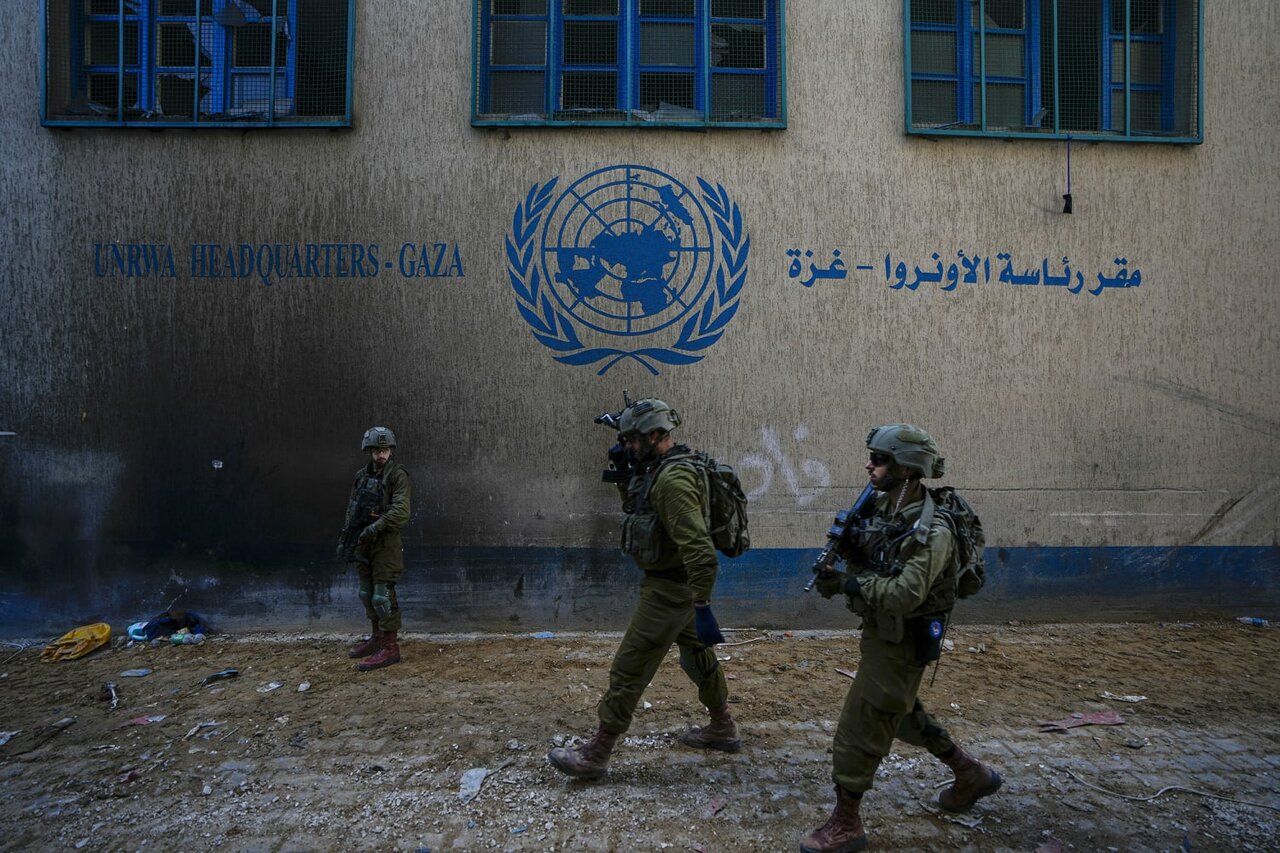
The campaign reached its most brutal peak during the genocidal war in the Gaza Strip, with most of the agency’s buildings and facilities destroyed through aerial bombardment and ground demolition, hundreds of its employees killed, and the delivery of aid to the agency blocked.

Alongside this destructive campaign on the ground, the occupying regime has pursued legal, media, and financial campaigns. The legal campaign took the form of Knesset legislation targeting UNRWA during the genocidal war, most notably banning the agency from operating in areas under the occupied territory, revoking the 1967 agreement between the regime and the agency, and prohibiting Israeli contact with UNRWA. 

The media campaign has taken the form of demonizing the agency, distorting its role, stripping it of its status as a neutral humanitarian organization, and accusing it of supporting terrorism without evidence. 

The financial campaign has involved pressuring Western countries that fund the agency to suspend their contributions in an effort to economically strangle it, a strategy that has succeeded completely with some countries and partially with others.

The paths that the regime has pursued in its war against UNRWA, as part of its policy of killing the witness to its ongoing Zionist crusade, are intended to eliminate humanitarian sympathy for the refugee cause and political solidarity with the Palestinian cause, while stripping the refugee issue of its national dimension and emptying it of the right of return. 

In this war, the regime understands that UNRWA is not just an international relief agency or a United Nations organization providing employment. It is also, and perhaps above all, a moral and symbolic agency and a living witness to the crime of the Nakba and displacement, the tragedy of diaspora and exile, and the rights to return and compensation.

UNRWA’s testimony is preserved through other means as well. Every registration card, a ration card that records an original town tells the story of a Palestinian family whose roots extend deep into the Palestinian land occupied during the Nakba, reinforcing Palestinian memory and the national narrative. 

In every schoolyard of a UNRWA elementary school, stories of the Palestinian Nakba are told, etching the tragedy of exile and the right of return into the Palestinian consciousness. 

In every courtyard of an agency health clinic, stories are told of the suffering of displacement and the hopes of finding a way out, planting in Palestinian consciousness the emergence of hope from the depths of pain. 

And outside every food distribution center, conversations about resilience and resistance take place, renewing the spirit of refugees and rekindling the will and determination of the people.

Islamic Iran and the Islamic Axis of Resistance - Part 8

Mohamed Ousman

Bay‘ah, Governance, and the Islamic Movement Compared with liberal democratic legitimacy theory

A critical comparison between the integrated Islamic framework outlined through al-Asi’s Qur’anic conditional authority, Bangash’s sirah methodology and Siddiqui’s movement theory on the one hand and liberal democratic legitimacy theory turns on a deeper question: what makes political authority binding - divine normativity or procedural consent? Both systems claim legitimacy, but they locate it in fundamentally different “sources of authorization” and resolve political obligation in different ways.

Foundations of Legitimacy: Divine Norm vs Popular Sovereignty

Islamic integrated framework (Al-Asi, Bangash and Siddiqui)

This framework rests on a theodological-centric legitimacy structure:

  • Sovereignty belongs to Allah (hakimiyyah)
  • Political authority is delegated, not originated by humans
  • Legitimacy is conditional on alignment with the Qur’an as the normative truth, the Prophetic method as historical implementation and collective moral mobilization of the ummah fulfilling the movement function.

Even when participation and consultation exist (shura), they are subordinate mechanisms, not ultimate sources of legitimacy. The core claim is that authority is valid only if it reflects divine justice and prophetic purpose.

Liberal democratic legitimacy theory

Liberal democracy rests on an anthropocentric sovereignty:

  • Legitimate authority originates in “the people”
  • Government derives power from consent (elections, representation)
  • Laws are valid if procedurally enacted, not metaphysically grounded
  • Key thinkers (Locke, Rousseau, Rawls) converge on legitimacy as popular consent combined with rights protection and procedural fairness.

The core claim is that authority is valid if it emerges from fair participation and reflects collective will.

Core divergence

Dimension

Islamic framework

Liberal democracy

Sovereignty

Allah

People

Source of legitimacy

Revelation and moral law

Consent and procedure

Binding force of authority

Conditional obedience to divine norms

Contractual consent via institutions

Failure condition

Injustice / deviation from Qur’an

Electoral illegitimacy / rights violations

The Role of Obedience and the Problem of Bay‘ah vs Consent

In the Islamic framework, bay‘ah as a moral contract is not unconditional. Obedience is ethically filtered and legitimacy collapses if rulers violate divine justice. Thus, obedience is normatively conditional loyalty within a moral covenant. Even the hadith “Whoever dies without bay‘ah…” is reinterpreted as requiring political-moral belonging, not blind submission.

In liberal theory citizens authorize government through elections. Obedience is legal, not moral-religious and dissent is structurally legitimate (opposition is built-in). But unlike the Islamic model, in liberal theory law remains valid even if morally “imperfect,” as long as procedure is valid. This creates a key asymmetry: in Islam, legitimacy is moral-substantive whereas in liberal democracy legitimacy is procedural-formal.

Authority, Law, and Moral Truth

Islamic framework: law is truth-bound

In al-Asi’s reading the Qur’an is not just guidance, it is truth itself; law is not human preference but divine instruction and deviation from justice is not political error but moral collapse. Bangash’s sirah model reinforces this as the Prophet ï·º is not only a ruler but a normative prototype of governance. Siddiqui adds that the state is secondary to the moral movement of the ummah. As a result, divine guidance to the Islamic Movement and law is anchored in transcendent moral reality.

Liberal democracy: law is agreement-bound

In liberal democracy, law is a product of negotiation among competing interests in which moral pluralism is assumed. No single metaphysical truth is allowed to dominate public law and society is governed by “overlapping consensus,” not ultimate truth. As a result, law is anchored in negotiated legitimacy, not transcendent truth.

Political Participation: Shura vs Electoral Democracy

Within the Islamic framework, shura (consultation) exists within moral boundaries. It does not override divine law. It selects qualified moral leadership not just popular leadership. Bangash’s sirah reading emphasizes participation as formative/building the community, and not merely electoral. Legitimacy is tied to moral character and trustworthiness. Siddiqui adds that participation is part of movement-building, not just governance.

In liberal democracy, elections are the primary legitimacy mechanism. It assume equality of political voice to prioritize the majority preference. Even if morally controversial outcomes emerge legitimacy remains intact if procedure is followed.

Key tension

Issue

Islamic model

Liberal democracy

Participation

morally bounded

procedurally equal

Leadership selection

Competence, taqwa and justice

popularity and representation

Error correction

moral/religious accountability

electoral replacement

Accountability: Divine Accountability vs Institutional Accountability

Within al-Asi’s Qur’anic framework, accountability is multi-layered. Ultimate accountability is to Allah, then to the Qur’an as the normative guiding text and then to the ummah in terms of collective moral oversight. In Bangash’s sirah model, leadership is constantly tested through ethical conduct. In Siddiqui’s Islamic Movement theory, movements succeed or fail based on moral coherence and direction. Hence, accountability is vertical, communal and moral.

In liberal democracy, accountability is institutional (elections, courts, media, separation of powers). It is not metaphysical but procedural. Accountability is horizontal and institutional.

Major Critiques Each System Makes of the Other

Islamic critique of liberal democracy

From the Islamic integrated framework (al-Asi, Bangash and Siddiqui) logic:

  • Relativism problem: no absolute moral anchor
  • Majoritarian injustice: majority can legitimize immorality
  • Elite manipulation: capital and media distort “consent”
  • Separation from divine justice: law detached from transcendence

The core claim is that procedural legitimacy does not equal moral legitimacy.

Liberal critique of Islamic governance models

From liberal theory:

  • Epistemic closure: divine truth claims are not publicly contestable
  • Risk of authoritarian interpretation: religious authority may centralize power
  • Limited pluralism: dissent can be morally delegitimized
  • Fusion of religion and state: reduces institutional checks

The core claim is that moral certainty can override individual liberty.

Deep Structural Difference

Within the Islamic framework, politics is a mechanism for realizing divine justice and moral order in society. Therefore, governance is ethical-religious in nature and the state is instrumental to moral civilization (ummah project).

In liberal democracy, politics is a mechanism for managing pluralism and competing interests peacefully. Therefore, governance is procedural and it is assumed that the state is a neutral arbiter among values.

Can They Be Reconciled?

Only partially, and conditionally. The possible overlap is that both reject arbitrary tyranny, both value accountability and both support consultative governance in some form. However, the fundamental incompatibility is that in Islam truth precedes consent whereas in liberal democracy consent precedes truth claims in law. This is not a minor disagreement, it is a hierarchy inversion problem: Who comes first: Allah or people?

When the hadith of bay‘ah is placed at the center of Islamic political theory, legitimacy becomes a conditional moral relationship between authority and the divine order, mediated through communal responsibility and prophetic method. In contrast, liberal democratic legitimacy becomes a procedural agreement among equal individuals to authorize governance regardless of metaphysical truth claims. Thus the deepest difference is not institutional, but theodological. In the Islamic model, politics is truth-governance but in Liberal democracy politics is consent-management. Or more sharply, One system asks whether authority is right before Allah while the other asks whether authority is authorized by people.

Having earlier illustrated how most Sunni scholars outside Islamic Iran fall into category where some Sunni scholars support “Islamic unity”, cooperation with Iran, or condemnation of Western-Israeli policy; but very few if any, mainstream, globally recognized Sunni scholars publicly endorse the Islamic Republic’s political system (Walayat al-Faqih) in clear theodological terms the open question presents itself: In light of the afore-mentioned, how is it that Sunni scholars support liberal secular democracy as a political system but not the Islamic Republic’s political system (Walayat al-Faqih)? This question may be equally posed to those Shi’i Muslim scholars who appear more attracted to the kufr system of liberal secular democracy than they are to the Islamic system of Walayat al-Faqih.

Bibliography

Al-Ä€sÄ«, Muhammad: The Ascendant Qur’an: Realigning Man to the Divine Power Culture. Various Volumes. Institute of Contemporary Islamic Thought, (2008-2024).

Bangash, Zafar: Pursuit of the Power of Islam: Major Writings of Kalim Siddiqui. Toronto: The Open Press (1996).

Bangash, Zafar: Power Manifestations of the Sirah. Toronto: ICIT. (2011).

Bangash, Zafar: Editorial introduction to Siddiqui’s collected works

Bangash, Zafar: Articles in Crescent International (various issues)

https://crescent.icit-digital.org/articles/the-seerah-as-a-model-for-the-total-transformation-of-society

https://crescent.icit-digital.org/articles/power-dimensions-in-the-sirah-of-the-noble-messenger-saws

https://crescent.icit-digital.org/articles/eid-milad-un-nabi-an-opportunity-to-broaden-our-perception-of-the-seerah

https://crescent.icit-digital.org/articles/the-importance-of-re-examining-the-seerah-of-the-prophet

https://crescent.icit-digital.org/articles/the-centrality-of-the-prophet-s-use-of-power-in-the-method-of-the-seerah

Siddiqui, Kalim: The Islamic Movement: A Systems Approach. London: The Muslim Institute, (1976).

Siddiqui, Kalim: Issues in the Islamic Movement. Toronto: The Open Press (1982).

Siddiqui, Kalim: Beyond the Muslim Nation-State. The Muslim Institute (1977).

Siddiqui, Kalim: Stages of Islamic Revolution. London: The Open Press, (1996).