Friday, September 04, 2026

Netanyahu and the approaching election

 By Ali Minabi

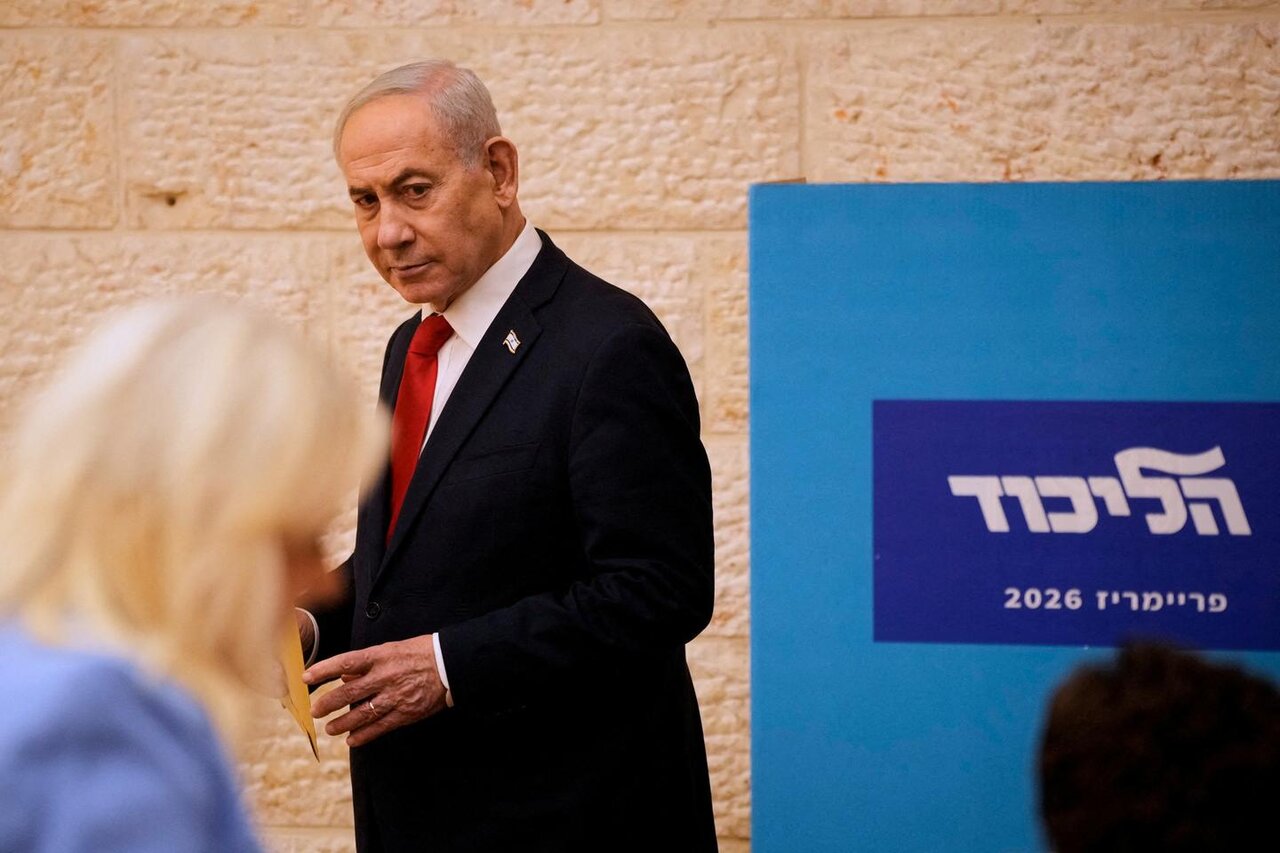
TEHRAN – Benjamin Netanyahu’s election strategy is based on keeping his camp united and avoiding a prison sentence domestically or in The Hague as a war criminal.

Netanyahu is focused on only one issue these days: the next election, which is less than two months away, particularly in light of the figures emerging from public opinion polls.

His concerns have grown following the announcement of the formation of a new right-wing party, Amcha Yisrael (People of Israel) , which could weaken the coalition and threaten the Religious Zionism Party, led by Bezalel Smotrich, by putting its ability to cross the electoral threshold at risk.

At the same time, there is no guarantee that the new right-wing party itself will win seats, which would give the opposition a greater margin for victory.

Although Netanyahu has succeeded in overcoming the sharp decline in the popularity of the Likud Party, which he leads, and of the governing coalition following the October 7 attack, he cannot completely escape responsibility for that failure, despite refusing even to acknowledge partial responsibility.

The opposition, along with a broad segment of the regime’s society, continues to refer to his government as the “October 7 government.”

The more successful the opposition is in bringing the issue to the forefront of public attention, the greater the pressure on Netanyahu, particularly as it repeatedly emphasizes his failure to achieve an absolute victory on all fronts. This is in addition to his inability to bring the genocidal war in Gaza to a decisive military conclusion, as well as his failure to translate what he describes as “military achievements” into political breakthroughs.

By contrast, Netanyahu’s repeated claims of unprecedented successes, including the assassination of leaders of the Axis of Resistance, the occupation of Gaza, Lebanon, and Syria, and strikes against Iran, do not, according to his opponents, give him a clean slate with settlers over the “disaster” that occurred under his watch.

The Gaza and Lebanon fronts also remain unresolved, with no political or military conclusion. The failure appears even more evident in Iran, following the exposure of the Mossad’s failed plan to bring down the Islamic Republic and Iran’s ability to withstand the aggression and rebuild its military capabilities, particularly its ballistic missile arsenal, which succeeded in striking the regime’s targets.

This has kept the home front in a state of anxiety and tension, after Netanyahu spent years promising that he was best positioned to destroy the Iranian threat through cooperation with the United States in a war against Iran.

Another problem facing Netanyahu is the deterioration of relations with the U.S. administration, as well as his personal relationship with President Donald Trump.

Netanyahu’s most recent visit to the White House reflected a cooling in relations between the two sides. During the first term of his presidency, Trump repeatedly praised Netanyahu on social media, called for him to be pardoned more than once, and described Netanyahu’s appearance before the court as a form of injustice rather than a reward for what he had done for the Zionist regime.

Trump also launched an attack on the regime’s president, Isaac Herzog, for failing to respond to his request to pardon Netanyahu over corruption charges. In recent months, however, Trump has offered Netanyahu no comparable support. On the contrary, several statements by Trump and members of his team have been interpreted as casting doubt on Netanyahu’s chances of winning the next election.

The deterioration in relations between the two allies is primarily attributed to U.S. involvement in the illegal war against Iran, which American and Israeli circles have blamed on the pressure Netanyahu put on Trump and the plans he presented to him: plans whose failure was subsequently demonstrated by events on the ground.

Netanyahu, a fugitive wanted for war crimes and crimes against humanity in Gaza by the International Criminal Court, does not give up easily. He is prepared to fight for political survival to his last breath and does not hesitate to use every tool and means available to keep himself in power.

For him, the end justifies the means; what he cannot achieve through deception, tactics, and favors, he seeks to accomplish through more of the same. 

He knows that the experience of governmental instability exhausted settlers before the current coalition’s victory and the political battle was settled in his favor.

Netanyahu is seeking to heat up various fronts because his supporters on the right and far right are drawn toward escalation and confrontation and are energized by them.

He therefore plans to keep the aggression fronts active, particularly in Gaza, the occupied West Bank, and Lebanon, as well as Syria, given the latitude for aggressive military operations that the U.S. administration has granted it on these fronts.

If the U.S. were to further expand the regime’s room for maneuver toward Iran, which is unlikely at this stage, Netanyahu would not hesitate to resume the aggression against Iran.

That could provide him with the justification he is looking for to postpone the election because of the war, should his fears of defeat grow.

The West Bank, meanwhile, appears to be the electoral arena most suited to the war criminal and the far right, amid the silence of the U.S. administration.

Netanyahu is weighing his options and examining them with considerable calculation in an effort to control the voters’ agenda, so that his government’s failures are pushed to the bottom of the list, particularly the major failure of the October 7 attack.

The shortest, least costly path in security and political terms, and the one most attractive to his right-wing base, appears to be the West Bank. He can deliberately push the situation there toward more deterioration by providing covert and overt support for settler terrorism and their escalating terror attacks against Palestinians and their property.

This would come alongside political measures and continuing international violations, including efforts to take control of UNRWA facilities, most recently the Qalandia Institute, as well as the events in the village of Qusra south of Nablus and the destruction of a Palestinian monument by one of the governing coalition’s lawmakers. It also includes support for and the establishment of additional settlement outposts in Areas A and B.

Netanyahu has already begun circulating media and political leaks suggesting that the Palestinian Authority could collapse, alongside reports that reservists’ leave has been canceled and that combat battalions are being reinforced in the West Bank out of concern over a “security deterioration.”

These leaks are being directed by Netanyahu and his team to shape settler public opinion, mobilizing the right in Netanyahu’s favor, and pushing the October 7 issue down the list of priorities for the public.

In the Gaza Strip, Netanyahu’s rhetoric has grown increasingly threatening as he searches for a pretext to intensify the genocidal war, even if the excuse is children’s kites, to justify escalation and derail the agreement for the second phase of the ceasefire.

Netanyahu understands that he still has time to escape the trap of political collapse by adopting security, political, and media strategies, and that he can benefit from the fragmentation of his opponents.

Ultimately, however, the election will alter little regarding the regime’s status as the primary source of regional insecurity. The reasoning may hinge less on individual personalities and more on a deeply entrenched strategic and political paradigm.

Both Netanyahu and his main challenger Gadi Eisenkot, share hawkish worldviews. Eisenkot, leader of the Yashar (Straight) Party, pioneered the “Dahiyeh doctrine of disproportionate force”. The regime’s political survival is tied to endless war in the region, which has long fuelled its pariah status and international isolation. In essence, the next prime minister, regardless of identity, will retain a confrontational posture, perpetuating the cycle of tension across West Asia.

Trump’s “help is on the way”: the TOEFL ban edition

 By Mehdi Garshasbi

TEHRAN – The United States is increasingly making education itself a target of economic pressure on Iran, raising a fundamental question: if Washington claims to target the Iranian government rather than the Iranian people, why are ordinary students being denied access to internationally recognized educational opportunities?

The US Treasury Department indefinitely suspended General License G on August 24, a measure that had for years permitted certain educational and academic services in Iran.

The authorization encompassed standardized testing activities and services associated with university admissions. Following the suspension of the authorization, the U.S.-based Educational Testing Service (ETS) confirmed the immediate suspension of TOEFL and GRE testing services in the country.

Duolingo also announced that its English Test was unavailable in Iran and for users with Iranian identification documents. The restriction is particularly significant because the test had become an affordable alternative for students who could not easily access more expensive international examinations.

The development follows the earlier suspension of IELTS testing inside Iran. IDP Education announced that January 31, 2026, would be the final IELTS test date in the country, citing financial and regulatory factors beyond its control. Iranian applicants have consequently been forced to consider travelling abroad simply to obtain the language certification required for university applications.

For students, however, these are not merely commercial services. A language examination can determine whether an applicant can submit a university application, qualify for a scholarship or meet the admission requirements of an international institution. Removing access to such examinations therefore creates an additional barrier to education.

International human-rights law recognizes education as a fundamental right. Article 13 of the International Covenant on Economic, Social and Cultural Rights recognizes “the right of everyone to education,” while UN guidance emphasizes that access to education must be provided without discrimination. UNESCO likewise identifies equality of opportunity and non-discrimination as fundamental principles of the right to education.  

Against that backdrop, the impact of sanctions on Iranian students raises serious questions about whether political and economic pressure can be reconciled with the international commitment to protecting educational access.

Minister of Science, Research and Technology, Hossein Simaei-Sarraf, has criticized sanctions targeting international exams such as the TOEFL for Iranian nationals, saying such measures aim to force Iran into submission.

“The enemy’s objective is to use sanctions to force our country to surrender, and it has tried various forms of sanctions so far,” ISNA quoted Simaei-Sarraf as saying on Tuesday.

He said academic sanctions were not unprecedented, noting that several Iranian universities have been under sanctions for years and that academic papers submitted with Iranian affiliations have faced rejection.

“What is interesting now is that simply taking an exam is being prohibited based on Iranian nationality and citizenship,” the minister said.

“These are no longer the same old measures; this is Stone Age behavior,” he added. “Trump claimed that he wanted to take Iran back to the Stone Age, but he himself is behaving in an entirely primitive and barbaric manner.”

Meanwhile, the reaction among Iranian users on social media has reflected precisely this concern. One user described the situation bluntly: “This only affects the common Iranian person.” Another wrote that educational sanctions “only punish ordinary people.” An Iranian student described how years of preparation for TOEFL had been thrown into uncertainty after the test was suspended.

In January, Donald Trump urged Iranian anti-government protesters to keep protesting, saying "help is on its way".

After bombing Iran, killing more than 140 students at the Minab school on the very first day of the imposed war on February 28, and killing thousands of ordinary civilians, the United States—having failed to achieve its objectives and failed to secure the victory it sought—is now apparently continuing its “Epic Fury” through these absurd measures.

Education is supposed to build bridges between societies, not become collateral damage in political disputes. When access to those bridges is restricted because of nationality, the consequences are felt not by officials, but by students sitting at home, preparing for examinations and trying to build their futures.

Thursday, September 03, 2026

Bothsides-ism: Israel and America’s Crude Propaganda Weapon

Crescent International

Since 2023, the mask has slipped.

Western regimes’ unconditional political, military and diplomatic backing for Israel has exposed their lack of principles and shattered the credibility of the old west-centric order.

A profound paradigm shift is underway.

Claims by western regimes and their media outlets are increasingly met with scrutiny and deep skepticism.

In response, the west-centric establishment is fighting back through crude bothsides-ism, false equivalence and moral relativism that attempt to blur the fundamental difference between aggressor and victim, imperial power and sovereign state.

A letter recently published in the Guardian is a good example of the ongoing information war.

Before analysing the propaganda framework advanced by the letter, it is worth noting that the circumstances surrounding its drafting and signing are already under serious scrutiny.

Prominent historian of Black radicalism Robin D. G. Kelley has withdrawn his signature, while Mumia Abu-Jamal, listed among the signatories, appears never to have authorised the use of his name.

Given that the Guardian continues to publish absolutely fake news on Iran, it is hardly surprising that this platform was chosen in an apparent attempt to restore credibility to a US-zionist propaganda narrative that has been severely damaged.

The letter in the Guardian should, therefore, be understood as one example of a much broader propaganda tactic: bothsides-ism.

Increasingly, when the credibility of western narratives is challenged, western propaganda resorts to false equivalence—placing two sides in the same moral frame regardless of the vast differences in power, history, responsibility and circumstances between them.

The purpose is not genuine balance, but to undermine moral clarity.

If both sides are equally guilty, then neither side can be clearly condemned; if every position is reduced to “both sides”, opposition to western policy can be portrayed as simplistic, extremist or hypocritical.

This is where bothsides-ism becomes a form of moral relativism.

It does not require denying that abuses occur on both sides; rather, it deliberately strips those abuses of context and hierarchy so that fundamentally different acts appear morally interchangeable.

The result is a political discourse in which aggressor and victim, coloniser and colonised, imperial power and sovereign state are presented as merely competing sources of violence.

The Guardian letter is simply one manifestation of this wider information strategy: when western narratives can no longer command automatic credibility, bothsides-ism becomes a means of manufacturing doubt, diluting responsibility and restoring a collapsing moral authority.

Yet the backlash against this letter reveals the deeper failure behind the tactic.

The desperate attempts to restore western dominance in the information field are evidence that this dominance is ending.

Bothsides-ism, false equivalence and moral relativism may once have been effective tools for managing the narrative, but they no longer command credibility.

The fact that such crude tactics now provoke widespread scrutiny rather than passive acceptance signals a profound shift: the era of unquestioned western information dominance is ending—and it is not coming back.

With the above in mind, it is important to understand why even proponents of American imperialism increasingly recognize that Islamic Iran has ended Pax Americana on multiple fronts—from the military sphere to the economic and geopolitical one.

The significance of this confrontation extends far beyond Iran itself.

The deeper question is whether the Muslim Ummah has recognized the implications of this shift.

Has it understood that the era in which western regimes could dictate the political, military and information boundaries of the Muslim world is rapidly coming to an end?

More importantly, does the Ummah intend to learn from Iran’s experience by learning from its insistence on sovereignty, strategic independence, resistance to foreign domination and the development of indigenous capabilities?

Iran’s direct confrontation with the US represents a genuine rupture with the old order.

The question is no longer simply what Iran has accomplished, but whether the rest of the Muslim world has the political will and intellectual confidence to learn from it.

US military bases across West Asia pounded in response to latest aggression against southern Iran

By Yousef Ramazani

In the early hours of September 2, 2026, the Islamic Revolution Guards Corps (IRGC) and the Iranian Army launched a coordinated wave of missile and drone strikes against American military positions across Jordan, Kuwait, Bahrain, Iraq, and the United Arab Emirates, exacting a heavy toll on US forces in retaliation for the bombing of southern Iran.

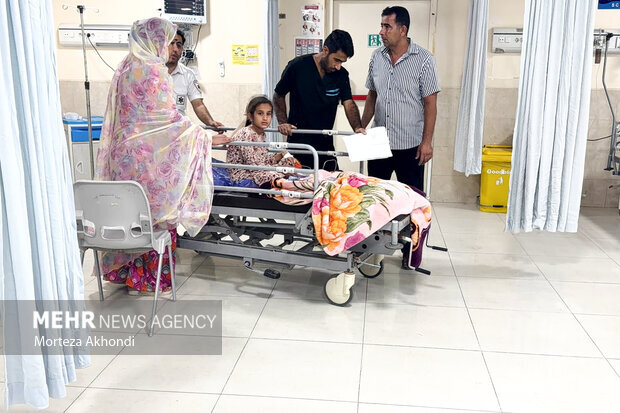
The latest round of Iranian retaliation came after US military struck a residential building in Kouhestak, Sirik County, Hormozgan Province, where a wedding celebration was taking place, killing at least five people, including a child and wounding 68 others.

The US military also targeted a civilian airport, fishmeal factory and power grids in southern Iran in a desperate military aggression drawing widespread condemnation.

The attacks revived harrowing memories of the brutality inflicted by the US-Israeli war machine on civilian targets across Iran during the earlier phase of the American-Israeli aggression, including the Minab school massacre and the Lamerd sports hall strike.

Iran's armed forces responded swiftly and decisively with combined missile and drone operations targeting American bases and assets across the region, inflicting extensive damage on their infrastructure, equipment, and personnel.

The strikes demonstrated Iran's ability to reach US positions far beyond the Persian Gulf, shattering the assumption that geographical distance could provide sanctuary for US forces.

Broader context

The latest round of attacks came after weeks of escalating US violations of the Islamabad Memorandum of Understanding (MoU) signed on June 17 with repeated acts of military aggression, maritime banditry and piracy.

In recent weeks, in blatant violation of the MoU, the US continued its illegal naval blockade of Iran and struck multiple locations in southern Iran, prompting Tehran to target US military facilities across the region and close the strategic waterway again.

On Sunday night, the US targeted Iran's Larak Island, prompting the IRGC to announce a retaliatory combined operation against US military positions in Jordan.

The US Central Command (CENTCOM) claimed it launched airstrikes in retaliation for what it termed attempts by Iran's IRGC to deploy sea mines in the Strait of Hormuz and a missile barrage directed at a US military base in Jordan, claims not backed by facts.

The spokesperson for the Khatam al-Anbiya Central Headquarters confirmed that Iran's Armed Forces had responded to the attacks by targeting American outposts across the region with drone and missile strikes, inflicting extensive damage on infrastructure, facilities, weapons, and equipment at the bases, and killing and wounding a significant number of US commanders and troops.

He emphasized that "these offensive operations against the Americans will continue to teach them a lesson until they regret their acts of aggression."

The immediate trigger for the September 2 retaliation was a US missile strike that sent shrapnel into a residential home in Kouhestak, Sirik County, where a wedding celebration was in progress.

The attack resulted in the martyrdom of five civilians, including a child, and wounded 68 others. Earlier reports had put the death toll at two, but the number rose as more casualties were confirmed.

The Red Crescent Society described the attack as "a US missile strike that sent shrapnel into a residential home in Kouhestak, where a wedding celebration was taking place." The Iranian Health Ministry confirmed the casualties, with a child among those killed.

Elsewhere in Sirik, the US military also attacked a fishing pier and a port authority tower, while a fishmeal factory on Qeshm Island was targeted. These attacks constituted clear examples of war crimes and exposed the true nature of American claims about human rights.

Here are the US military bases across the region that were attacked in retaliatory operations by the Iranian armed forces, including the IRGC and Army.

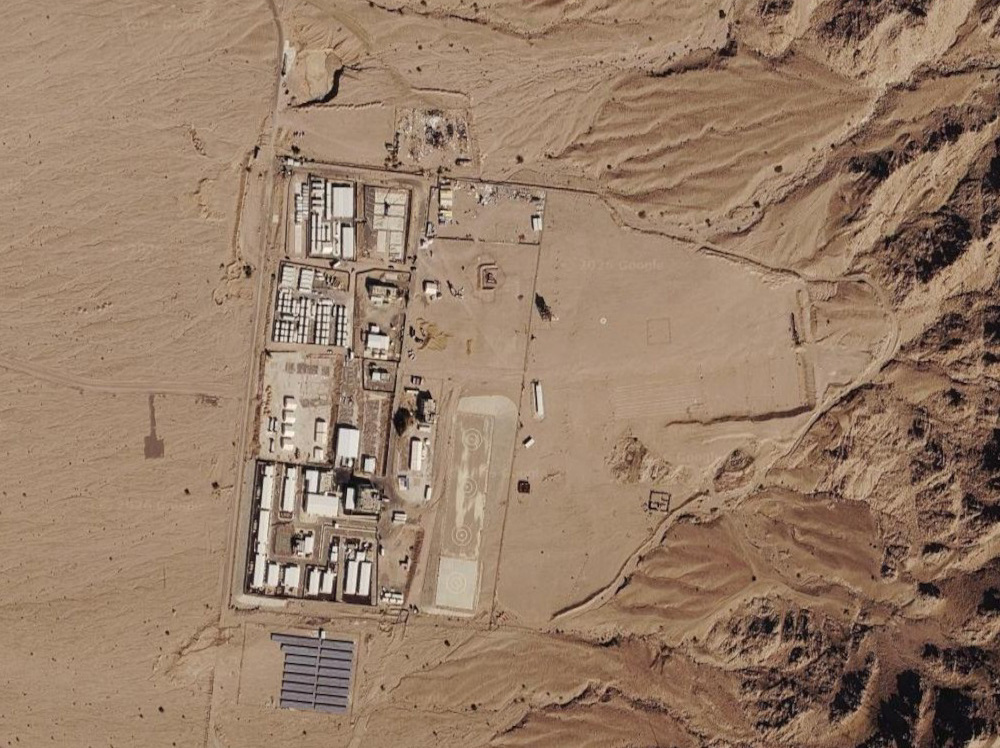
Camp Titin in Jordan

The IRGC's Aerospace Force carried out a heavy ballistic-missile retaliatory strike on the US Marine base known as Camp Titin in Jordan as part of the second wave of the "Punishment of the Aggressor" operation.

The strike killed a large number of American personnel and destroyed several key facilities and attack helicopters. Security sources confirmed that the Iranian attack on Camp Titin was powerful, destructive, and precise.

Camp Titin is located near Aqaba at the northern end of the Red Sea, relatively close to Eilat port in occupied Palestine and the Saudi Arabian border.

Its location makes it suitable for US Marine exercises, maritime infrastructure protection, amphibious operations, and the rapid deployment of military equipment and personnel.

US Navy sources have documented FASTCENT, a rapid-response Marine unit, conducting exercises at the camp, underscoring its role in supporting US Marine Corps operations and rapid force deployment.

According to reports, the United States sought to position part of its forces at Camp Titin, apparently assuming that Iran either lacked detailed intelligence on the deployment or would be unable to strike the location.

The targeting of Camp Titin demonstrated that geographical distance cannot necessarily put US military positions beyond Iran's reach. It also exposed the extent of Iran's intelligence capabilities regarding American military movements.

According to some reports, a medical evacuation helicopter was observed at a US base in Jordan, arriving to retrieve wounded soldiers or personnel after the Iranian attack, indicating that the strikes had caused significant casualties.

Camp Titin, a US Marine Corps site near the Gulf of Aqaba in Jordan

Prince Hassan Base in Jordan

The IRGC announced that its Aerospace Force also carried out a massive ballistic missile strike on the hangars housing RQ-4 and MQ-9 reconnaissance and strike drones at the US Prince Hassan Air Base in Jordan.

As a result of the retaliatory attack, several American drones were destroyed and a number of military pilots and technical aviation personnel were killed or injured.

The IRGC also reported that several technical infrastructures were set on fire in the retaliation. The attack was described as a heavy ballistic missile strike targeting the hangars and technical infrastructure of US long-range drones.

The RQ-4 Global Hawk and MQ-9 Reaper represent some of the most advanced surveillance and strike assets in the American inventory, and their destruction represents a significant degradation of US reconnaissance capabilities in the region.

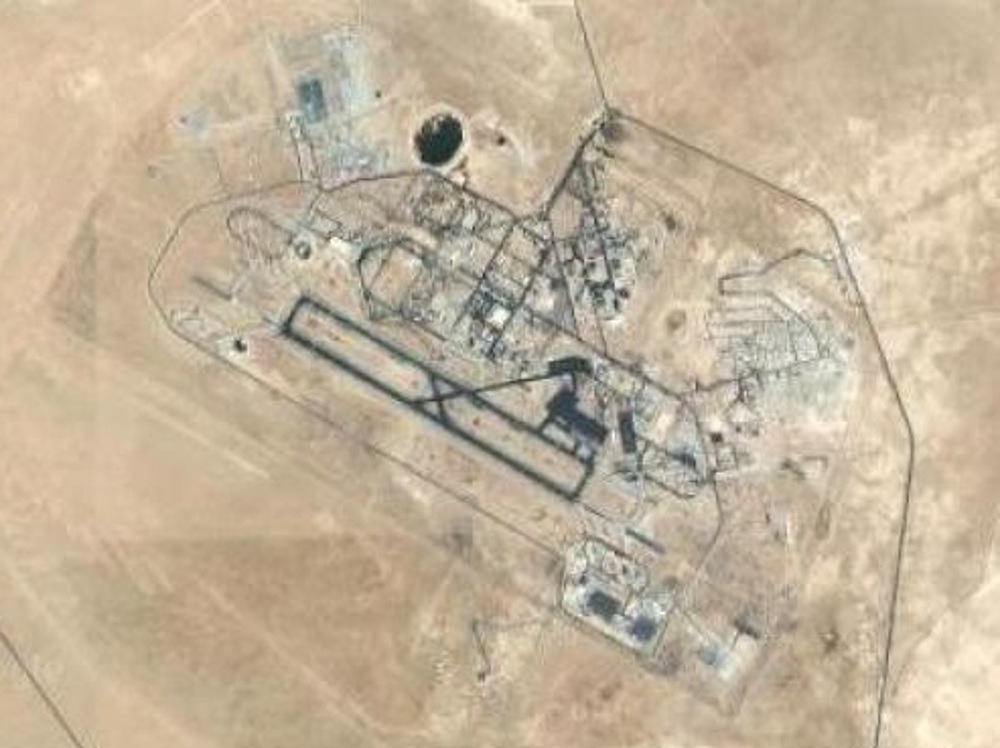
Ali Al-Salem Base in Kuwait

The IRGC announced that its forces struck the command compound and living quarters of a high-ranking US commander at Kuwait's Ali Al-Salem Air Base, setting fire to a drone hangar and deployment ramp and destroying a number of drones.

The attack killed several US personnel and was followed by strikes on a drone hangar and the ramp used to deploy drones involved in attacks against Iran.

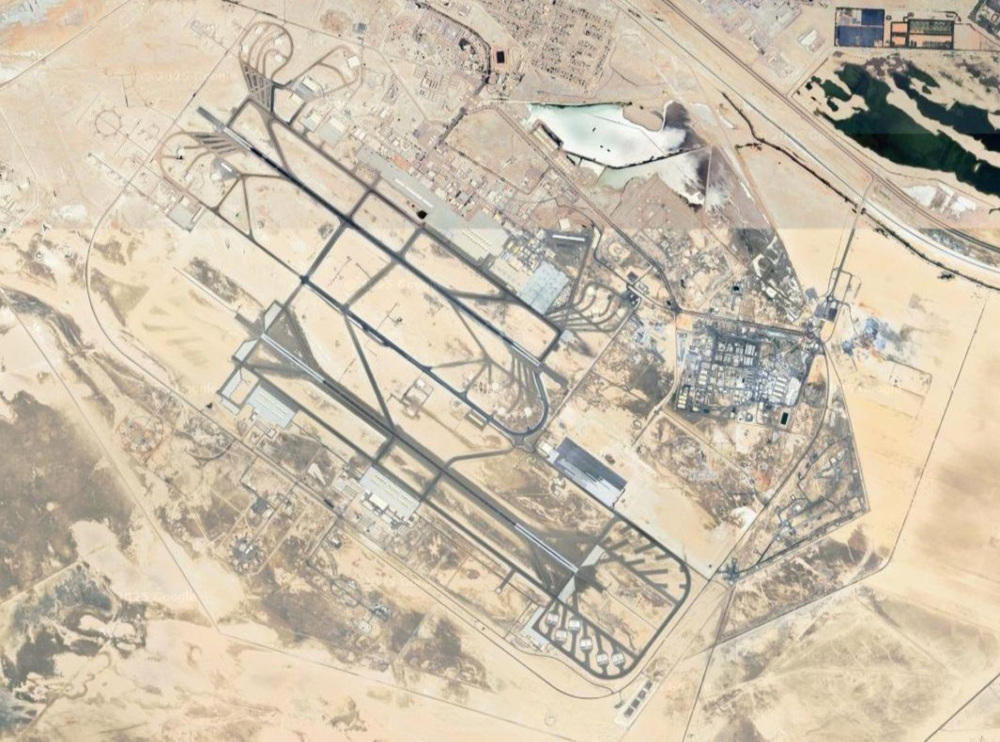
Ali Al-Salem Air Base is one of the key US operational centers in the region, described as a major air transportation hub and a principal gateway for deploying military forces to West Asia. It plays a central role in Washington's regional military and logistical strategy

The base houses advanced radar systems, including Patriot air defense radars, which had been previously targeted by Iranian forces. The attack on the US commander's compound represents a significant blow, targeting US leadership infrastructure directly.

Ali Al-Salem Base in Kuwait

Sheikh Isa Air Base in Bahrain

The Iranian Army announced that it had carried out drone strikes targeting radar systems and troop positions at the Sheikh Isa Air Base in Bahrain.

The attacks were carried out as part of Operation Thunder, with Arash explosive drones striking radar facilities and gathering points for US forces.

The Army described Sheikh Isa as one of the most important US bases in the Persian Gulf region, serving as a crucial hub for the repair and maintenance of helicopters and drone spare parts, as well as hosting reconnaissance aircraft.

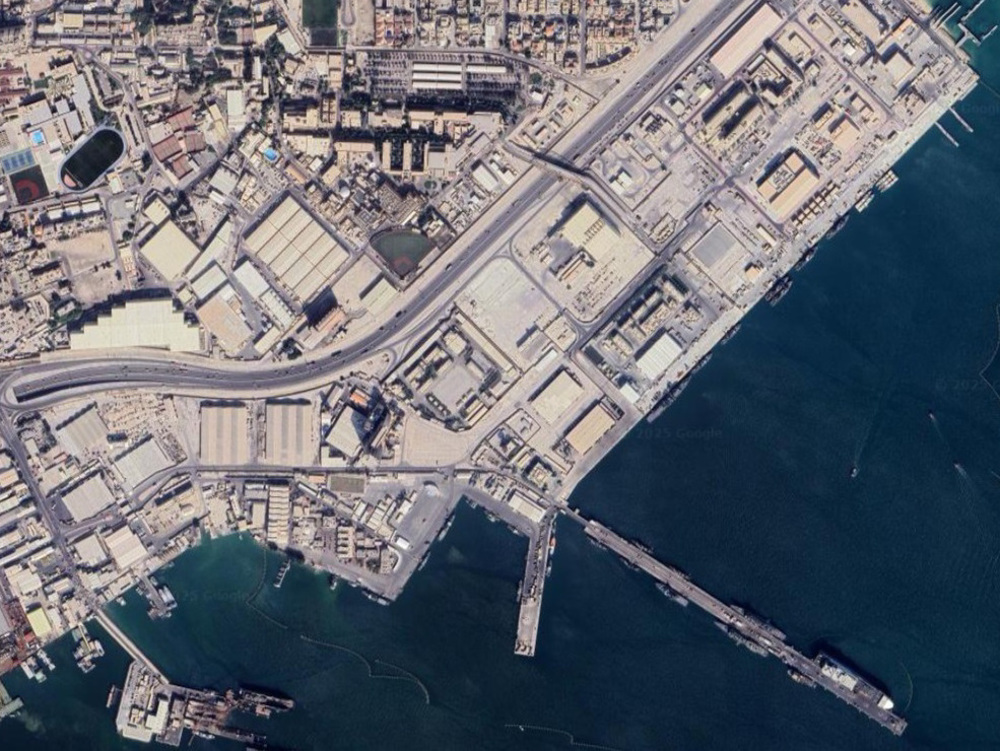
Bahrain is the headquarters of the US Fifth Fleet, making the Sheikh Isa base particularly significant.

The attacks on radar facilities in Bahrain are part of a broader campaign to degrade American air defense and surveillance capabilities across the region, following similar strikes on radar systems in Kuwait and Jordan.

The Army emphasized that the operations would continue, and that the response to American crimes would be extensive and far-reaching.

Naval Support Activity Bahrain

Al Dhafra and Al Minhad Bases in the UAE

The Iranian Army announced it had launched dozens of explosive-drone strikes against radar systems and troop positions at the Al Dhafra and Al Minhad bases in the UAE as part of the 30th phase of Operation Thunder.

Al Dhafra Air Base is described as one of the main US operational centers in the region, used for air operations, intelligence, surveillance, and logistical support.

The base hosts a significant US military presence, and attacks on it represent a broadening of the confrontation to include Gulf states hosting American forces.

The Al Minhad base serves as a vital logistics hub for supporting and transporting foreign forces.

The Iranian Army stated that it targeted the locations of helicopters and forces of the US military at the base by launching dozens of attack drones.

The UAE Ministry of Defence confirmed that national air defense units engaged unmanned aerial vehicles over territorial waters moving from the direction of Iran, indicating the severity of the strikes.

Al Dhafra Air Base in the UAE

Erbil repair centers and fuel tanks in Iraq

Iranian forces carried out combined missile and drone attacks on American bases in Erbil, Iraqi Kurdistan, targeting a repair center, technical equipment warehouse, spy balloon guidance system, and fuel tanks.

The attacks resulted in the destruction of the repair center, warehouses, and balloon system, with fuel tanks set on fire and a number of troops killed.

The strikes in Erbil demonstrated Iran's ability to target US positions across multiple theaters simultaneously, coordinating attacks on bases in Jordan, Kuwait, Bahrain, the UAE, and Iraq within a single operational window.

Turning weddings into funerals: the specialty of America's terrorist army

 By Maede Zaman Fashami

TEHRAN - In war, people do not always die in uniform. Sometimes, they die wearing wedding clothes. Sometimes, while putting henna on their daughter’s hands. Sometimes, sitting beside a pot of rice and meat. And sometimes, they have no idea what the aircraft circling several kilometers above them has mistaken them for.

That is why the story of American attacks on weddings in Afghanistan, Iraq, Yemen, and Iran is not simply a story about airstrikes. It is the story of the moment when a family gathering, within a matter of seconds, becomes a scene where survivors are left searching through the wreckage for pieces of the people they love.

This report begins in Kuhestak, in southern Iran, at a house that was hosting a wedding on the day American attacks on Iran resumed.

The details of the incident are still emerging. According to the Iranian Red Crescent, shrapnel from an American missile struck a residential home where a wedding ceremony was taking place. Initial reports said four people, including a child, were killed and more than 60 were wounded.

Among the early accounts was the testimony of an eyewitness who was himself injured and hospitalized after the attack.

He said he had heard fighter jets before reaching the area. Then, just as he arrived, an explosion occurred. He described it as extremely powerful, saying that bricks, stones, and concrete struck his face and head. Other people were injured as well. And when he described those who had been there, he said simply: “They were all ordinary civilians.”

The bride’s father, Mr. Malahi, gave another account of the attack. He said that three missiles struck their home and another building in the courtyard, destroying both structures and killing four wedding guests.

One of the palm trees in Mr. Malahi’s yard also became another casualty of the American attack.

Another person who described the previous night’s attack was a friend of the groom. He said that no one at the wedding was a member of the military and that everyone present was a civilian.

Christiaan Triebert, an investigative journalist with The New York Times’ Visual Investigations team, later posted about the incident, saying that fragments reportedly recovered from the attack on the wedding in Kuhestak had been identified as components of an SLAM-ER missile. Boeing, the manufacturer of the cruise missile, describes the SLAM-ER as one of the most precise weapons in the US Navy’s arsenal.

That highly precise weapon turned an Iranian wedding in Sirik into a funeral and took the life of four-year-old Amirali.

But Kuhestak was not the first wedding to come under an American attack.

To understand how a wedding ceremony can become a deadly scene within minutes, we have to travel to southern Afghanistan, to the village of Kakarak.

Shahbibi was at a wedding that night. It was past two in the morning, and the celebration was still going. Women had gathered in one of the houses, clapping and dancing, while drums could be heard from another. Outside, as was customary at Afghan rural weddings, men were firing their rifles into the air.

The wedding was alive with noise. But above the village, American aircraft were flying overhead.

Shahbibi later told The Washington Post that the celebration was so loud that they did not hear the aircraft. Then, suddenly, the bombs came. People began running, and the dust became so thick that they could no longer see around them. Shahbibi broke her leg as she tried to escape in the chaos.

The attack took place in Kakarak, in Uruzgan Province, and surrounding villages. At the time, American and other coalition forces were searching the area for remnants of the Taliban and al-Qaeda, and US military officials said the region was believed to have a possible militant presence.

The American military account differed sharply from that of the survivors.

US officials said coalition forces had come under fire in the area and that a ground team had reported anti-aircraft fire. American aircraft then returned fire toward the location from which the shooting was believed to have come.

But the villagers told a different story.

They said no one had fired at the American aircraft. The gunfire heard from the ground, they said, was simply part of the wedding celebration, men firing rifles into the air as part of a local tradition.

Several survivors who spoke to reporters at a hospital in Kandahar said they had been attending a wedding attended by hundreds of people. They said the men had fired into the air to celebrate the marriage.

Shamana, an 18-year-old woman hospitalized after the attack, said she saw people running, screaming, and falling to the ground when the shooting and bombing began. She had been attending the same wedding, her hands still decorated with wedding henna.

Abdul Qayyum, another survivor, described what happened after the attack, when American forces entered the area. He said American soldiers asked him who had fired at the helicopters. He told them he did not know. One soldier attempted to restrain him, but another stopped him because of his age.

Nurses at the Kandahar hospital spoke of children who had been wounded and had lost their parents. One of them, six-year-old Ghulam, was badly injured and lost both of his parents in the attack. One of the villagers also said that numerous members of his family had been killed.
Several days later, journalists reached Kakarak itself.

What remained at the site showed traces of a celebration interrupted in the middle of the night. Shoes belonging to women and children, cooking pots, and other signs of the wedding were scattered among the debris and fragments of the attack. The Washington Post reported that the mud walls of the compound where the ceremony had taken place were marked by bullet impacts, while craters and fragments from the attack could also be seen.

A few days later, an Afghan government report put the death toll at 48, saying that all but three of those killed were women or children.

Meanwhile, the American account also evolved.

In the early hours after the attack, officials said that one of the bombs might have strayed from its intended path and struck civilians. Later, Pentagon officials placed greater emphasis on the claim that American forces had responded to anti-aircraft fire and that the resulting engagement may have caused the casualties.

Even within the official American account, then, there was uncertainty about exactly what had caused the deaths.

But subsequent investigations and visits to the site raised a more fundamental question.

If anti-aircraft fire had really come from the area, why was there no evidence of an anti-aircraft weapon at the site?

The Washington Post reported that American forces and investigators found no anti-aircraft weapon there, while villagers insisted that the only weapons fired had been the rifles men used to celebrate the wedding.

In the days that followed, accounts also emerged suggesting that American soldiers who arrived at the scene encountered women and children among the dead and realized that something had gone seriously wrong. A Los Angeles Times investigation quoted a villager named Sahib Jan,

who said that after seeing the dead women and children, American soldiers acknowledged that a mistake had been made.

The details of the attack remained disputed, however, with significant differences between the villagers’ account and the US military version.

For Shahbibi, those competing accounts could not erase what had happened to her.

She had been attending a wedding that was supposed to be a celebration of marriage. Women and children had gathered inside the house, while men fired their rifles outside. Then the bombs came. People ran in panic, she broke her leg, and many of those around her were killed or wounded. Some children lost both of their parents.

Three years later, in Iraq, another wedding was taking place, one that was supposed to be among the biggest celebrations of the year in a small village.

In the remote Iraqi village of Mukaradeeb, families had gathered for a wedding. The village had only around 25 houses, and the ceremony had begun on Tuesday morning.

For the Rakat family, this was more than an ordinary celebration. Their son, Ashad, was to marry Rutba Sabah, while another member of the family was also to be married during the same gathering.

A large tent had been erected in the garden, and a local band was playing. Singer Hussein al-Ali and several other musicians performed while guests spent the day celebrating.

Ma’athi Nawaf, one of the neighbors, later remembered the atmosphere. People were happy because of the wedding. They danced and gave speeches. The celebration continued until late in the evening and finally ended around 10:30 p.m.

The guests gradually returned to their homes. The village became quiet.

But a few hours later, the village was awakened again, this time by aircraft and explosions.

Nawaf said that before the attack began, people had heard jets and seen lights in the distance that looked like a military convoy. But the bombing did not begin until around three in the morning.

When it did, Nawaf said, the first thing hit was the tent where the wedding ceremony had taken place.

Haleema Shihab, a member of the groom’s family, was one of the few people from the Rakat family compound to survive. She later told reporters that the bombing began at around 3 a.m. Houses and the area where the ceremony had been held came under attack, and members of her family were killed one after another.

Her account, like Nawaf’s, described the attack not as part of a battle taking place in the village, but as something that came suddenly after the wedding celebration had already ended.

Another eyewitness, Bassem Hameed Dulaimi, was a musician who had performed at the wedding. Shortly before the attack, he had left the tent to wash his hands.
While he was away, the explosion came.

Dulaimi later said that he first saw a bright flash and then more explosions. He said he counted more than 40 rockets being fired toward the area. Several members of the musical group who had performed at the wedding were killed.

The next morning, traces of the celebration could still be seen among the destruction.

Journalists who visited the village found musical instruments, cooking utensils, and other wedding belongings among the ruins. An Iraqi cameraman named Yasir Shawkat Abdullah had filmed the ceremony before the attack. His footage showed the bride arriving at the large wedding tent while children danced to traditional songs.

The cameraman himself was later killed in the attack.

But the US military account was very different.

General James Mattis, then commander of US Marines in the region, rejected the claim that a wedding had taken place. He said those killed were military-age males and described them as enemy forces. American officials refused to accept that the attack had struck a wedding ceremony and did not issue an apology.

Four years later, in another part of Afghanistan, the wedding was not taking place inside a house. This time, it was moving along a road.

On the morning of July 6, 2008, a group of people was traveling through the mountainous Deh Bala district of Nangarhar Province. They were on their way to the groom’s home.

This was not a military convoy. It was a group of family members and relatives accompanying the bride from her village to the groom’s village, following a local tradition.

Their route passed through a remote mountainous area, and the group stopped briefly in a narrow location to rest.

Haji Amishah Gul, a senior local official in Deh Bala, described what had been reported to him that day. He said the group had stopped to rest when an aircraft arrived and bombed the area. He estimated that between 80 and 90 people had been traveling together. At the time, several

wounded people had already been taken to the hospital, but the exact number of casualties was still unknown.

The incident quickly developed into a serious dispute between Afghan officials and the US military.

That same day, the American military said the airstrike had targeted militants. Coalition spokesman First Lieutenant Perry said US forces did not believe anyone other than combatants had been harmed and maintained that the missile had struck the armed men who were the intended target.

In the initial military account, there was no wedding convoy. The target was described as an armed group.

But the people who came from the scene told a different story.

They said the group had left the bride’s village and was accompanying her to the groom’s home. The destination was the groom’s village, and the journey itself was part of the wedding ceremony.

The story did not remain only a local claim. Several days later, the Afghan government formed an investigative commission, sending members of parliament and government officials to the area. They spoke with witnesses and relatives of the victims and tried to establish who had actually been present when the strike occurred.

The findings deepened the divide between the two accounts.

According to the Afghan investigation, 47 members of the wedding party were killed and nine others were wounded. The commission said the victims were civilians and had no connection to the Taliban or al-Qaeda. Thirty-nine of those killed were women and children, and the bride herself was among the victims.

Human Rights Watch also investigated the incident. Its report recorded that on the morning of July 6, a wedding party traveling toward a ceremony near the village of Kacu in Deh Bala was struck by an airstrike carried out by US led coalition forces.

The United Nations later documented the incident as well.

According to UNAMA’s annual report, the attack took place at around 6:30 a.m. in the mountainous Kamala area of Deh Bala, where the wedding party had stopped to rest while traveling from the bride’s village to the groom’s village.

The United Nations recorded 47 civilian deaths and 11 wounded, including 35 children, nine women, and three men among those killed.

The group that had set out that morning was supposed to bring the bride safely to the groom’s home.

Instead, within hours, families were counting the dead and transporting the wounded.

The attack became one of the most extensively documented examples of civilian casualties resulting from US led air operations in Afghanistan.

Only a few months later, another wedding appeared in reports about US airstrikes.

This time, it was Wech Baghtu.

Abdul Jalil, a 37-year-old grape farmer, lived in Wech Baghtu, in Shah Wali Kot district of Kandahar Province. That day, his home was supposed to be the site of his niece’s wedding. Families had gathered for the ceremony, with women and children among those present in the residential compound.

But that same day, fighting broke out nearby between Taliban fighters and a joint Afghan and coalition patrol.

According to a later UN report, the Afghan and coalition forces came under attack in the afternoon of November 3, 2008. A firefight followed, and the insurgents withdrew. The patrol then moved toward Wech Baghtu and called for close air support.

Airstrikes followed.

According to the United Nations, the strikes hit a residential compound where a wedding ceremony was taking place.

Abdul Jalil said the main fighting had taken place about half a mile from his home. He had seen the fighting between American forces and the Taliban. Then, some time later, fighter aircraft attacked the area.

According to his account, the airstrikes hit the residential compound where women and children had gathered for the wedding.

Abdul Jalil later told reporters that 23 children, 10 women, and four men had been killed.

What he saw after the bombing was a destroyed home, a place that only hours earlier had been prepared for a wedding.

Reports from the scene described bodies and fragments among the ruins, while families searched for relatives and tried to determine who had survived.

Abdul Jalil also described his encounter with American forces after the attack. According to him, the soldiers accused the villagers of sheltering Taliban fighters. Jalil challenged them to enter the house and see for themselves who had been there.

He said the people killed in the attack were the women and children attending the wedding.

The official investigation later found that 37 civilians had been killed, and that the people killed and wounded in the residential compound had been attending a wedding.

Among the 37 civilians killed were 23 children, 10 women, and four men.

Once again, the military and civilian accounts differed over whether insurgents had been using the houses in the area.

The US and Afghan forces maintained that insurgents had used civilian homes during the fighting. Witnesses interviewed by the United Nations strongly disputed the claim that insurgents had been present inside the wedding compound.

The disagreement over what the military had believed it was targeting remained.

But the consequences did not.

Thirty-seven civilians were dead.

We now move farther south, to Yemen.

In Yemen, the circumstances were different. This time, the wedding was neither inside a house nor gathered in a residential compound.

It was on the road.

The bride was traveling toward the groom’s home. Family members and relatives were riding together in a convoy of vehicles through Yemen’s al-Bayda Province. The convoy consisted of around eleven cars and pickups, carrying dozens of people.

Their destination was Rada’a, and the journey was part of the wedding celebration.

But on December 12, 2013, while the convoy was traveling along the road, everything changed.

Mousid al-Taysi, one of the survivors, later remembered hearing an aircraft before the attack. Then came the explosion.

When he got out of the vehicle, he was confronted with a scene that no longer resembled a wedding convoy. People had been killed, the wounded were crying out, and vehicles had been torn apart.

He later described seeing burned bodies and injured people struggling for help.

Another survivor, Mohammed Abdullah al-Taysi, provided a more detailed account.

He was sitting in the front vehicle when he heard a huge explosion. He got out to see what had happened, but before he could understand what was going on, two more missiles struck the area.

The vehicle behind them was destroyed and its occupants were killed.

The attack took place at around 4:30 in the afternoon.

According to a later Human Rights Watch investigation, the first missile struck the fourth vehicle in the convoy, a Toyota Hilux. Several people got out of the vehicle after the sound of the drone became louder. Three more missiles then struck nearby, sending shrapnel into four surrounding vehicles.

At least 12 men were killed and at least 15 people were wounded.

The bride was also injured, although her wounds were superficial.

In the hours and days that followed, the central question was what kind of convoy had actually been targeted.

US officials never formally acknowledged responsibility for the strike.

According to Human Rights Watch, the US government never officially confirmed its role in the attack. Investigators, however, concluded that the strike had been carried out using Hellfire missiles fired from an American drone.

Human Rights Watch interviewed survivors and relatives of the victims and reconstructed the convoy’s route, the people traveling in the vehicles, and the sequence of the attack.

Its investigation concluded that the convoy was indeed a wedding procession — a group carrying the bride and members of her family toward the groom’s town.

After the attack, the families of the victims held another kind of ceremony.

This time, it was not a wedding.

It was a funeral.

No official American apology followed, because Washington had never formally accepted responsibility for the strike.

For the families, however, the dispute over who had been in the convoy or who might have been the intended target could not change the outcome.

Twelve people were dead. At least fifteen were wounded. And a journey that was supposed to end with a bride arriving at the groom’s home had ended on the road.

The cases examined in this report took place in different countries, under different circumstances, and amid different military operations. But they share one disturbing feature: in each of them, war crossed into spaces that were never supposed to be battlefields, a house prepared for a wedding, a group traveling with a bride, or families gathered for a traditional celebration.

What separates these incidents from an ordinary list of wartime casualties is the nature of the places and moments in which they occurred. Weddings often bring several generations of a family together at once: children, women, elderly relatives, neighbors, and friends.

So when such a gathering is attacked, the consequences go beyond the deaths of individuals. Entire families and communities are damaged in a matter of seconds.

These cases also raise a fundamental question about modern warfare: How does a civilian gathering become a “target” from thousands of feet above the ground?

And when the information is wrong, who is responsible for the consequences?

Ultimately, perhaps the most important thing these stories leave behind is not a particular casualty figure, but the distance between two different languages.

The military language speaks of targets, operations, intelligence, and mistakes.

The language of survivors speaks of mothers, children, sisters, brothers, brides, grooms, and guests.

For a commander, a strike may be one event in a larger military operation. For a family that loses someone, those same few seconds can divide an entire life into a before and an after.

That is why documenting these stories is more than an exercise in remembering the past. They are a reminder that in war, the line between a military target and civilian life cannot be allowed to disappear into uncertainty.

Behind every house, every vehicle, and every gathering that may appear from a distance as nothing more than a point on a screen, there are people with families, memories, and futures.

And when that point is mistaken for a target, the consequences are not abstract.

They have names.

They have families.

And they have funerals.