Sunday, August 31, 2025

Gunboats follow sanctions in US strategy on Venezuela

The US naval buildup off Venezuela's coast is not about drug interdiction, but imperial pressure. Caracas's response, grounded in asymmetric defense and bolstered by key Eurasian alliances, has transformed a lopsided showdown into a contest of global powers. 

The US has entered a new phase in its long war on Venezuela. Having exhausted economic and diplomatic tools, it has now turned to the military lever, dispatching warships to the Caribbean in a naked display of force. 

This escalation caps years of imperial targeting of the Bolivarian government in Caracas – beginning with sweeping sanctions under former US President Barack Obama, tightened to unprecedented levels under President Donald Trump, and sustained through bipartisan consensus.

Officially, Washington frames this as part of a broad “counter narcotics” campaign targeting so-called terrorist organizations. But that story collapses under scrutiny. What the US really seeks is regime change and regional control, thinly veiled behind drug war rhetoric.

Lawfare as prelude to war

The legal framework underpinning the US operation began with a secret presidential directive granting the Pentagon authority to target designated foreign terrorist organizations (FTOs). Washington is sending assault ships to waters off Venezuela to crack down on drug trafficking, an anonymous American defense official said. The move, confirmed by Trump, targets cartels he blames for smuggling fentanyl and other drugs. Among these groups is the so-called “Cartel de los Soles” (Cartel of the Suns), a term once used informally to describe scattered corruption networks in Venezuela's military. Washington has now repackaged this into a centralized cartel, with the Trump administration labeling it a terrorist organization, though its existence is disputed. In July, the Trump administration suggested that Venezuelan President Nicolas Maduro led the Cartel de los Soles, with support from other senior Venezuelan officials.

The US Justice Department doubled down, offering a $50 million bounty for Maduro’s capture. This lawfare strategy, stripping a head of state of sovereign immunity and branding him a narco-terrorist, is designed to justify open aggression before domestic and international audiences.

According to Christopher Sabatini, a research fellow at London’s Chatham House, the US deployment of ships, the designation of the Venezuelan “Tren de Aragua” as a terrorist organization, and the increased bounty on Maduro are all elements of a White House strategy aimed at making “as much noise as possible” to please Venezuela’s opposition – many of whom support Trump – and to “scare maneuver” senior government officials into defecting.

Fictional cartels, real deployments

Expert analyses, including those by InSight Crime –  a think tank that specializes in corruption in the Americas –and former US intelligence officers, have discredited the claim that Venezuela hosts a state-run drug cartel. Earlier this month, InSight Crime said US sanctions on the Cartel de los Soles were misplaced. “The US government’s new sanctions against Venezuela’s so-called ‘Cartel of the Suns’ incorrectly portray it as a hierarchical, ideologically driven drug trafficking organisation rather than a profit-based system of generalised corruption involving high-ranking military figures,” it wrote.

Reports issued by impartial international bodies, such as the United Nations Office on Drugs and Crime World Drug Report 2025, say that the main routes for cocaine smuggling from the Andean region to North America are mainly concentrated in the Pacific and through Central American corridors. 

The Eastern Route through the Caribbean Sea constitutes parts of which pass near Venezuela, a statistically negligible proportion of the total flows. This disparity makes targeting Venezuela as a priority in the fight against drugs disproportionate to the size of its actual role in major smuggling networks. 

Organized crime analysts and former intelligence officials, such as Fulton Armstrong, also question the American narrative that portrays the Carte de los Soles as an integrated state-run hierarchical organization. Specialized analyses, including previous reports by organizations such as InSight Crime, suggest that the term arose informally to describe sporadic corruption networks within the Venezuelan armed forces that profit from illicit activities, rather than as a centralized structure similar to Mexican drug cartels. 

The American narrative seems to have pieced together these disparate phenomena and presented them as a single, cohesive entity to serve a political goal, which is to falsely portray the Venezuelan state as a “narco-state.” 

On the other hand,  the Trump administration has not provided any credible physical evidence linking Venezuela specifically to the production or trafficking of fentanyl, which is currently the highest priority for public health and national security in the US.

Yet Washington's military footprint tells a different story. The deployment includes Arleigh Burke-class destroyers with Aegis combat systems, Tomahawk cruise missiles, and the Iwo Jima amphibious assault group. 

The precedent evokes troubling historical examples, such as the Gulf of Tonkin incident that escalated the Vietnam War, or the 1989 US invasion of Panama to arrest president Manuel Noriega under drug trafficking charges.

Psychological warfare, regional signaling, and oil

The highly visible US military posture, coupled with vague official statements, serves as a powerful tool of psychological pressure. It aims to sow uncertainty and stress within Venezuela’s institutions, particularly the Bolivarian National Armed Forces, by encouraging defections or disrupting command cohesion – all without firing a single shot. It also provides the domestic opposition with leverage to regain political initiative after repeated failures.

By projecting overwhelming force just offshore, Washington hopes to recreate such fissures inside the Bolivarian armed forces, banking on history to repeat itself. Yet unlike two decades ago, today’s command structure has been hardened by years of siege, external training, and deepened ties with Russian and Iranian military counterparts.

The American operation serves multiple functions. Besides aiming to fracture Venezuela’s military command and re-energize a failed opposition, it also signals to regional allies of Caracas – Cuba and Nicaragua – and international backers – Russia, China, Iran – that the US intends to hold its so-called backyard.

Beyond Havana and Managua, other Latin American governments have grown wary of Washington’s naval assertiveness. 

Reports by the military portal DefesaNet described “Operation Imeri,” a clandestine plan allegedly floated inside Itamaraty to extract Maduro and shield him from a US-led intervention. Though denied officially, the leaks suggest serious debate within Brazil’s political and security elite about how to deal with Washington’s escalation. 

Within CELAC, US gunboat diplomacy has revived fears of a return to 20th-century interventions, further eroding Washington’s standing in the region. 

Yet at the heart of this is oil. Venezuela holds the world's largest proven reserves. Securing access, or at least denying it to others, remains a core tenet of US strategy in the hemisphere.

Caracas counters with asymmetry and alliances

President Maduro has responded by activating Venezuela’s defense doctrine – the “War of All People.” This entails mobilizing up to five million fighters via the Bolivarian Militia to create a nationwide resistance grid designed to bleed out any invader in a prolonged war of attrition.

This doctrine, adopted under Maduro’s predecessor, the late Hugo Chavez, after the 2002 coup attempt, aims to turn any invasion into a drawn-out, high-cost occupation through civilian-based defense rooted in local communities.

On the diplomatic front, Venezuela denounced the US move as a breach of international law and rallied support in regional and global forums, including CELAC and the UN. More crucially, Caracas leaned into its strategic alliances. 

Russia supplies advanced arms, conducts joint drills, and blocks US-led resolutions at the UN Security Council. China remains Venezuela’s largest creditor and economic partner, providing oil-backed loans and infrastructural investment. For years, Beijing has provided billions of dollars in loans to the Venezuelan government in exchange for future oil shipments, which has provided urgent cash liquidity to the Venezuelan government.

Iran offers technical know-how to rehabilitate Venezuela’s refineries, ships fuel across blockaded seas, and stocks grocery shelves with essential goods. The relationship between Caracas and Tehran is unique, based on objective solidarity between two countries that are subject to maximum pressure and US sanctions, and they share an ideological discourse against hegemony. Together, these alliances form a geopolitical shield that has prevented Venezuela from becoming another failed state in the wake of US sanctions.

Each player adds a layer of resilience: Russia ensures military depth, China secures economic oxygen, and Iran delivers practical solutions for daily survival. Together, they have transformed what could have been a one-sided intervention into a crucial standoff in the emerging multipolar order.

In 2022, Tehran and Caracas intensified ship‑to‑ship oil transfers, shifting crude covertly at sea to skirt US sanctions, demonstrating the inventive lengths they have gone to sustain bilateral energy flows.

In Latin America and beyond, Washington’s playbook is hardly new. Panama’s Noriega was ousted under the banner of narcotics, while in Afghanistan, poppy cultivation was folded into the “war on terror” – despite the fact that the country's drug industry thrived under US occupation. By recycling these tropes, Washington seeks to mask raw power projection with legalistic smoke.

Scenarios on the horizon

Three outcomes now define the road ahead. The first is a managed crisis, in which the US continues its military pressure campaign without initiating direct conflict. Washington keeps its naval presence active in the region and uses it as a bargaining chip in broader global negotiations, especially with Russia and China. In this scenario, the standoff remains contained, but the threat lingers.

The second is a limited intervention that spirals into chaos. This could take the form of a targeted strike or a naval blockade, triggering fierce resistance from Venezuelan forces and militias, sending economic shockwaves across global energy markets, and destabilizing bordering countries – most notably Colombia.

The third scenario is a calculated retreat. Faced with high risks and diminishing returns, Washington could scale back its military footprint while maintaining economic sanctions. Caracas, in turn, survives through its foreign alliances and internal resilience mechanisms, preserving a tense but stable status quo.

It becomes clear that Washington’s escalation, cloaked in the rhetoric of narcotics control, is, at its core, a multifaceted pressure campaign with goals far beyond drug interdiction. The weak narcotics pretext, undermined by field data and expert analysis, merely serves as a political and legal smokescreen for a broader geopolitical and economic offensive.

Each path carries heavy costs. But one thing is certain: This is not about narcotics, but about empire. And Venezuela, long marked for destabilization by Washington, has become a key frontline in the global battle against unipolar domination.

The outcome will not only shape Venezuela’s future; it will mark a turning point in the balance of power in the 21st century.

Israel is not isolated: A global web of oil and complicity

Across continents, the occupation state's energy lifelines are sustained by a network of enabling powers, feeding its war machine across West Asia 

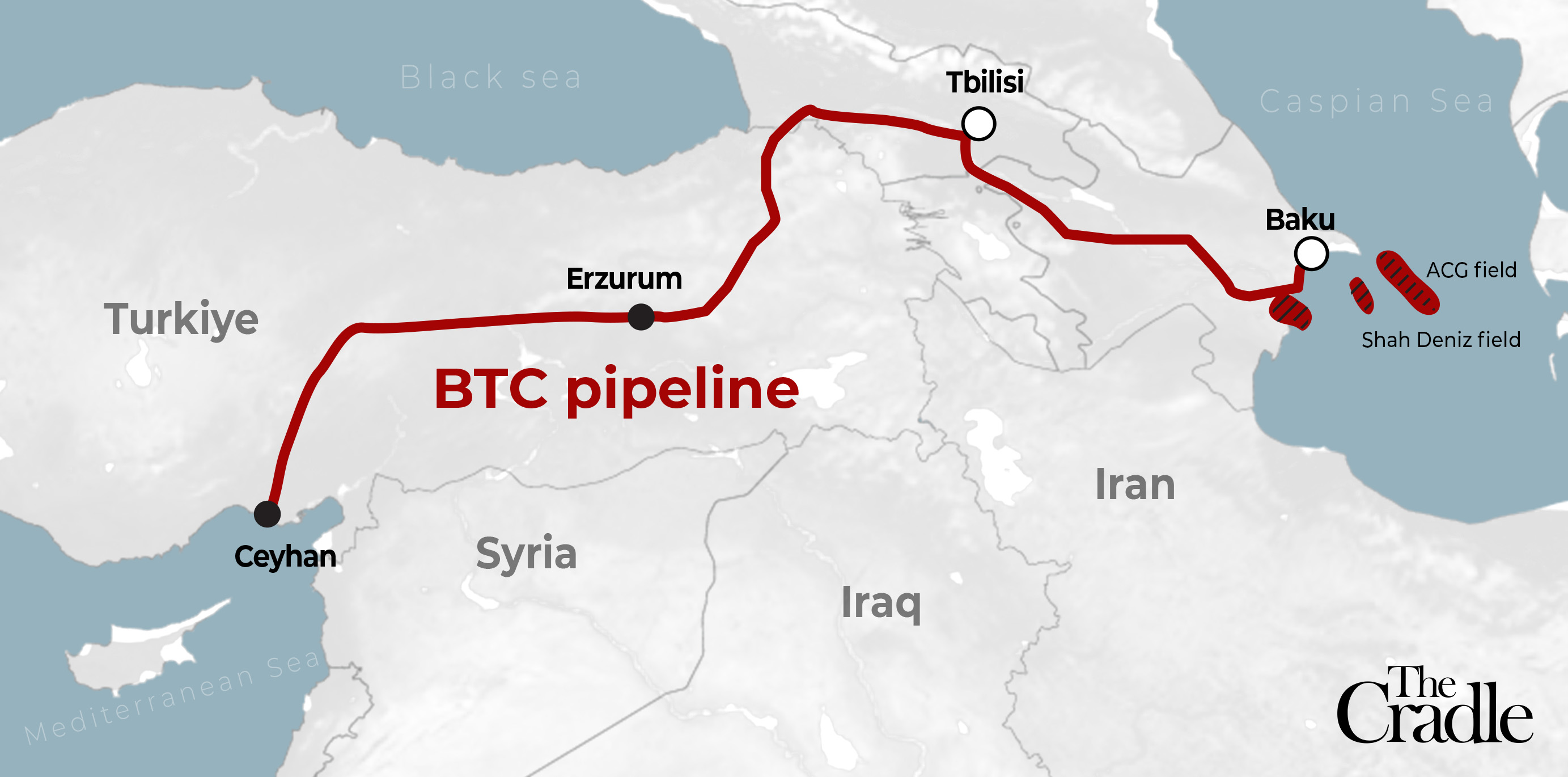
About 100 kilometers east of Baku, the capital of Azerbaijan, lies the Azeri–Chirag–Deepwater Gunashli (ACG) oilfield, the largest in the Caspian basin's Azerbaijani sector. Operated by BP Exploration Limited, it feeds directly into the infamous Baku–Tiflis–Ceyhan (BTC) Pipeline. 

South of Baku, at the Sangachal terminal, oil and gas are stored before being exported. According to BP, around 106 million barrels of oil and condensate passed through Sangachal in the first half of this year, primarily via the BTC Pipeline.

From there, oil crosses Azerbaijan and Georgia, enters Turkiye, and finally reaches the Turkish port of Ceyhan on the Mediterranean. As authors James Marriott and Mika Minio-Paluello explain in ‘The Oil Road: Journeys from the Caspian Sea to the City of London’ (2012), the oil takes two primary paths from Ceyhan: one to the Italian port of Miggia via the Greek Islands, the other south along the Levantine coast to the Suez Canal.

Pipeline to genocide

After that, oil and gas inexplicably find their way to fund the Israeli occupation state’s genocidal war on Gaza. The profits enrich bankers in the City of London and British Petroleum shareholders. Everyone wins – except the Palestinians.

The BTC Pipeline, stretching nearly 1,800 miles, is a main energy artery for the occupation state. It supplies an estimated 40 percent of Tel Aviv's crude oil needs, while Israel ranks sixth among importers of Azerbaijani oil. Azerbaijan’s state-owned energy giant SOCAR, one of Israel’s key energy partners, is also Turkiye’s largest foreign investor, as confirmed by SOCAR Turkiye CEO Elchin Ibadov.

The BTC Pipeline’s legal foundation is anchored in two key agreements. The more consequential of the two comprises Host Government Agreements signed between BP's BTC Consortium and each transit country. These contracts essentially override national sovereignty.

Article 2 of the Intergovernmental Agreement illustrates this starkly: 

“Each State declares and guarantees that it is not a party to, or is not legally bound to apply or comply with, any internal law or regulation, or any international agreement or treaty, that is inconsistent with, undermines, or impedes this Agreement, or that adversely affects or restricts the State’s ability to enter into or implement this Agreement or other relevant Project Agreements.”

Even after the devastating earthquakes that shook south-eastern Turkey in 2023, it was BP who declared force majeure for the Ceyhan Terminal in Adana, where Azerbaijani oil is shipped.

This effectively prioritized oil exports over local disaster relief. A BP spokesperson in Baku confirmed the declaration, which allowed the company to bypass contractual obligations.

A map showing the Baku–Tiflis–Ceyhan (BTC)Pipeline route. 

Beyond Baku: The global complicity network

Yet focusing solely on Azerbaijan and the BTC Pipeline obscures the bigger picture: The occupation state is deeply embedded in the global energy trade, both as importer and exporter.

Investor-owned and private oil companies are complicit. According to last year’s report by Oil Change International, these firms collectively supply 66 percent of Israel’s oil, with 35 percent of that share coming from six major international oil companies – BP, Chevron, Eni, ExxonMobil, Shell, and TotalEnergies – between October 2023 and July 2024.

Over the same period, Kazakhstan supplied 22 percent of Israeli crude. African nations – notably Gabon, Nigeria, and Congo – contributed 37 percent. Even Brazil, under President Luiz Inacio Lula da Silva (a vocal critic of Tel Aviv) continued shipments throughout 2024. In May 2025, Brazilian oil workers' unions revealed in a joint letter to the president that 2.7 million barrels of crude had been exported to Israel that year.

Israel also imports refined petroleum products critical for its military occupation across Palestine, Lebanon, and Syria. Mediterranean states like Cyprus, Italy, Greece, and Albania have all shipped fuel, diesel, and naphtha. 

Cyprus has additionally provided transshipment services. Meanwhile, Russian vacuum gas oil (VGO) continues to flow into Haifa’s refineries. One major source remains Kazakhstan's CPC Blend crude, exported via Russia’s Black Sea port of Novorossiysk.

Despite its shift toward natural gas, coal still comprised 12.7 percent of Tel Aviv's energy supply in 2023, according to the International Energy Agency (IEA), with the top suppliers being BRICS nations. Colombia provides 50–60 percent of the coal. Russia and South Africa follow closely despite their condemnations of Israel and South Africa’s International Court of Justice (ICJ) genocide case. The US and China round out the top five.

Arab and Muslim countries are no exception. Following 7 October 2023, the Saudi-led OPEC bloc rejected Iran's calls for an oil embargo. Tel Aviv continues to receive modest but steady crude flows through the Sumed (Suez-Mediterranean) Pipeline, transporting oil from Saudi Arabia, the UAE, Iraq, and Egypt. In 2020, Israel’s Europe–Asia Pipeline Co. signed a transport agreement with UAE firm RED Land Bridge Ltd., deepening the ties between Gulf states and Tel Aviv. 

Leviathan's bounty and Arab betrayal

Perhaps the most scandalous development is that Israel itself has become an energy source.

In August 2025, Egypt signed a record-breaking $35-billion gas deal with Tel Aviv, nearly tripling its gas imports from the Leviathan offshore fields – the largest export agreement in Israeli ‘history.’ NewMed Energy, an Israeli company, anticipates transporting 130 billion cubic meters (bcm) of gas to Egypt by 2040.

Natural gas exports to Egypt and Jordan rose 13.4 percent in 2024, despite rhetorical condemnations from Arab leaders. Energy Minister Eli Cohen lauded the figures, claiming they prove Israel’s energy sector is a “strategic asset” and key to “regional stability.”

Reuters also noted that “Israel is positioning itself as a regional energy hub and has committed to supplying natural gas to Europe, which has been diversifying away from Russia since its invasion of Ukraine.”

Last year, the Leviathan field produced 11.33 bcm of gas, generating $282 million in revenue. The nearby Tamar field earned $232 million from 10.09 bcm. Total gas production rose 8.3 percent, with royalties climbing nearly 11 percent to $704.5 million. State revenues from gas are projected to hit $1.4 billion this year, doubling within a few years.

The masquerade of embargoes

On 21 August, Reuters reported that Turkiye informed its port authorities that ships linked to Israel would be barred from docking. The new requirement insists that guarantee letters confirm no Israeli ties or military cargo on board.

Ankara claims to have halted trade with Israel post-7 October. But the reality suggests otherwise. Tankers frequently disable their tracking systems in the eastern Mediterranean, feign destinations in Egypt or elsewhere, and arrange deliveries through third-country traders.

Russian Telegram channel Dva Mayora exposed Greek tankers Seavigour and Kimolos for involvement in these covert routes in 2025. As of 22 August, the Marshall Islands-flagged Nissos Antimilos was seen 190 kilometers west of Haifa, fresh from Ceyhan and awaiting an Israeli tanker for offshore transfer.

Arab and Muslim-majority states, it seems, prefer performative outrage over substantive action. Their duplicity ensures that, while Tel Aviv drops bombs on Gaza, the oil fueling its war machine flows uninterrupted.

Russian Foreign Ministry spokeswoman tells German chancellor to go see ‘psychiatrists’

Russian Foreign Ministry Spokeswoman Maria Zakharova. (Photo by TASS)
Russian Foreign Ministry spokeswoman Maria Zakharova has referred German Chancellor Friedrich Merz to psychiatrists over his remarks regarding the Ukraine war.

Merz stated on Friday that Germany is effectively “in a conflict” with Russia, because Moscow is destabilizing the country and conducting interference operations online.

“(Russian President Vladimir) Putin is destabilizing a big part of our country,” Merz told French outlet La Chaine Info. “We are already in conflict with Russia.”

In response to Merz’s comments, Zakharova on Saturday advised the German leader to consult psychiatrists for help.

“It seems to me that this is already for psychiatrists: Germany has been supplying weapons, including heavy military equipment, to the neo-Nazi Kiev regime for three years, and then they were worried about social networks,” the diplomat said in surprise.

Earlier this year, Merz outlined his government’s plan to develop “long-range weapons systems” in Ukraine.

However, Germany is facing “strategic ambiguity” pertaining to its military aid strategy and fears an escalation of tensions with the Kremlin.

Additionally, Zakharova pointed out that Germany was also to blame for advocating for the gradual abandonment of Ukraine peace talks in the framework of the Minsk agreements.

She said Berlin could have been able to resolve the Ukraine crisis by now if it had pursued an honest policy.

Zakharova denounced the German Chancellor for his hypocritical position regarding the conflict.

“Israel” Blacklisted from UK Arms Showcase

By Al Ahed Staff, Agencies

“Israel” Blacklisted from UK Arms Showcase

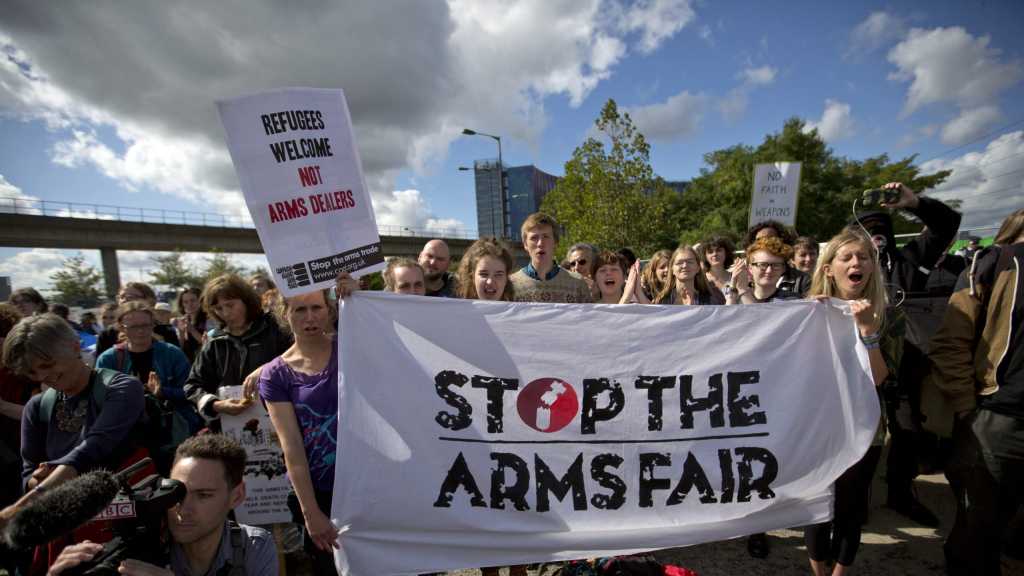
The UK government has barred "Israeli" officials from attending one of the world’s largest military exhibitions in London, citing growing criticism of "Israel’s" war on Gaza, Politico reported.

"Israel’s" Ministry of Security has traditionally maintained a strong presence at the Defense and Security Equipment International [DSEI] exhibition, a biennial showcase of military technology and weapons systems.

However, a UK government spokesperson confirmed that no official "Israeli" delegation would be invited this year.

While "Israeli" arms manufacturers will still be allowed to participate, Whitehall officials acknowledged that their presence is expected to trigger significant protests.

A UK government spokesperson told Politico that "Israel's" decision to further escalate aggression on Gaza is wrong. “As a result, we can confirm that no 'Israeli' delegation will be invited to attend DSEI UK 2025," he said.

The spokesperson added that London continues to push for a political settlement, “There must be a diplomatic solution to end this war now, with an immediate ceasefire, the return of the captives and a surge in humanitarian aid to the people of Gaza.”

The move underscores Britain’s increasing pressure on Netanyahu to change course and agree to a ceasefire, the report added. In recent months, London has suspended trade negotiations with "Israel" and pledged to recognize Palestinian statehood should the current war continue.

It remains unclear whether "Israel" will retain a dedicated pavilion at DSEI, which typically hosts a combination of delegations and private firms.

It is worth noting that DSEI is organized by Clarion Defense and Security Limited, with substantial support from the UK government and armed forces.

The decision follows controversy at the Paris Air Show in June, where "Israeli" firms were instructed to remove specific weapons from display, a directive they refused to follow.

Sources said "Israeli" officials were notified in advance, adding the ban may be lifted if "Israel" shows clear commitment to international humanitarian law in the occupied Palestinian territories.

Iran, Armenia on path to strengthening strategic relations

TEHRAN, (MNA) – The meeting between the top security officials of Iran and Armenia heralds the strengthening of bilateral strategic relations and the reinforcement of regional stability.

In line with the policies of the Islamic Republic of Iran to strengthen relations with neighbors and maintain stability in the Caucasus region, Ali Larijani, Secretary of the Supreme National Security Council and Adviser to the Leader of the Islamic Revolution, met and held talks on Saturday with Armen Grigoryan, Secretary of Armenia’s National Security Council. The meeting, held in Tehran, focused on expanding bilateral cooperation in economic, political, security, and defense fields, reflecting the depth of friendly relations between the two countries.

Details of the meeting and positions of the parties

In this meeting, Ali Larijani, while expressing satisfaction with the current level of relations between Tehran and Yerevan, emphasized the importance of Armenia’s participation in completing the North–South Corridor. This corridor, which connects the Persian Gulf to the Black Sea, is not only considered a key economic project for Iran but will also play an important role in strengthening regional trade links. Larijani also declared Iran’s firm support for peace talks between Armenia and Azerbaijan and stressed the principled policy of the Islamic Republic in supporting the independence and empowerment of regional countries to achieve sustainable security. He stated that Iran opposes any geopolitical changes in the region that could harm Tehran–Yerevan relations.

On the other hand, Armen Grigoryan described the relations between the two countries as “unprecedented” and said that the purpose of his trip was to expand cooperation in all areas. He announced Armenia’s willingness to sign a comprehensive document on strategic relations with Iran in the near future and emphasized five key principles: national sovereignty, respect for territorial integrity, exercise of national judicial authority, inviolability of borders, and the principle of reciprocity. Grigoryan also declared Yerevan’s readiness to provide necessary assurances to the Islamic Republic of Iran to ensure that no harm would come to bilateral relations, stressing that Armenia opposes any geopolitical changes in the region. He noted that in peace agreements with Azerbaijan, Armenia’s exclusivity in security, military, and customs matters has been preserved.

This meeting took place after Larijani and Grigoryan had previously held a phone conversation earlier this month, during which they had emphasized the importance of strategic relations. The presence of Ali Bagheri Kani, the new Deputy for International Affairs of the Supreme National Security Council, in the meeting reflected the new Iranian government’s focus on active diplomacy in the region.

Analysis: The strategic importance of the meeting for Iran and the region

This meeting occurred against the backdrop of complex developments in the South Caucasus, where the Islamic Republic of Iran, as a key actor, has always emphasized maintaining the balance of power and preventing the interference of extra-regional powers. Completion of the North–South Corridor, which strengthens Iran’s position as a regional transit hub, could increase bilateral trade volume to over $3 billion and create new opportunities for the export of energy, agricultural products, and technology. This project not only secures Iran’s economic interests but also counters initiatives such as the Syunik transit corridor (managed by the United States), which could place Iran in a sensitive geopolitical position.

From a security perspective, Iran’s support for the Armenia–Azerbaijan peace, which has recently led to agreements mediated by the United States, shows Tehran’s pragmatic approach. Iran has consistently insisted on the non-alteration of borders and preservation of countries’ territorial integrity and is concerned that any geopolitical changes, such as the creation of transit routes under foreign control, could harm the security of Iran’s northern borders. In this regard, Armenia’s assurances of opposition to such changes can be seen as a diplomatic achievement for Iran and elevate Tehran–Yerevan relations to a strategic level.

Moreover, this meeting took place as Iran–Armenia relations are entering a new phase of cooperation. Recently, the Prime Minister of Armenia and the President of Iran, in Yerevan, agreed to upgrade relations to a strategic level, while projects such as the construction of a second bridge over the Aras River and a third power transmission line are underway. These developments, along with Iran’s free trade agreement with the Eurasian Economic Union, provide Iran with vast economic opportunities.

President Pezeshkian's meeting with Armenia's top security official

Armen Grigoryan, Secretary of Armenia’s Security Council, who traveled to Tehran, also met and held talks with Iranian President Masoud Pezeshkian. Pezeshkian described his recent trip to Yerevan as fruitful and said constructive talks with Armenian officials had reduced Iran’s concerns about the presence of foreign forces in the Caucasus.

The Iranian president expressed satisfaction with the progress of the North–South Corridor project in cooperation with Armenia and described it as an important step toward economic and political convergence in the Eurasian Union.

Pezeshkian also emphasized a several-fold increase in trade exchanges, cooperation in the production of technological products (advanced technology, biotechnology, nanotechnology), and strengthening of joint investment.

He called for strengthening the friendly and strategic relations between Iran and Armenia so that no foreign power could disrupt them.

The Secretary of Armenia’s Security Council also described Pezeshkian’s trip to his country as valuable, emphasized the strategic nature of bilateral relations, and announced Armenia’s readiness to sign a comprehensive cooperation document and increase economic exchanges with the participation of Iranian companies.

Challenges and opportunities in the Caucasus

In recent years, the Caucasus region has witnessed multiple developments, including the Karabakh wars and the recent peace agreements between Armenia and Azerbaijan. Iran, as a direct neighbor, has played an active role in mediation and emphasized international principles such as the inviolability of borders. Tehran’s main concern is initiatives such as the Syunik Corridor, which could provide Azerbaijan access to Nakhchivan without Iran’s oversight and result in Iran’s isolation from transit routes. Experts believe Iran must adopt a dual strategy: strengthening relations with Armenia to maintain access to the Black Sea while simultaneously managing relations with Azerbaijan to prevent tensions.

At the same time, the involvement of powers such as the United States in the region has pushed Iran toward more active diplomacy. Yesterday's meetings can be seen as a response to these challenges and reflect Iran’s commitment to regional stability without dependence on foreign powers.

In the end, Saturday meetings not only strengthen bilateral relations but, as part of Iran’s neighborhood policy, can contribute to lasting peace in the Caucasus. The Islamic Republic of Iran, relying on revolutionary principles and national interests, is ready to expand strategic cooperation with neighbors to ensure regional security and prosperity.

With traps and tactical ingenuity, Al-Qassam fighters outmaneuver invaders in Gaza

By Ivan Kesic

In the smoke-filled streets of Gaza, a powerful message is being written these days in the language of resistance and fire by the Palestinian armed resistance groups.

As the Israeli military machine grinds forward with its brutal offensive, it is being met not with submission but with a fierce and strategic defiance from the Palestinian resistance, led by the fighters of the Al-Qassam Brigades, the military wing of the Gaza-based Hamas resistance movement.

From the dense urban labyrinths of Gaza City to the southern approaches of Khan Younis, every inch of Palestinian land is being contested in a series of devastating engagements that have exposed the fragility of the Israeli occupation's so-called invincibility.

The Israeli regime’s latest assault, codenamed Gideon's Chariots II, has been met with a humiliating and painful reception. Yesterday, as many as three "security incidents" were officially acknowledged, implying heavy casualties and possibly the deadliest day for the invaders in more than a year.

In the Al-Zaytoun and Al-Sabra neighborhoods of Gaza City, resistance fighters have pushed to the city's edges, refusing to wait behind barricades and instead taking the fight directly to the advancing invaders in intense, close-quarter combat.

At least four regime soldiers have been missing since Friday, most likely captured by the resistance fighters or eliminated by the occupation forces to prevent them from being captured. 

Their advanced night vision capabilities allowed them to detect and ambush Israeli units, triggering fierce clashes that forced the occupation army into a panicked deployment of reinforcements.

The resistance has entrenched itself in formidable defensive positions, turning entire districts into deadly traps where every alleyway holds the threat of a well-planned ambush.

Nowhere is the resistance’s effectiveness more starkly illustrated than east of Hamad City, where a brilliantly executed Al-Qassam Brigades' ambush targeted the Israeli Kfir Brigade.

In a sophisticated joint operation with the Al-Quds Brigades, resistance fighters struck an Israeli Eitan armored personnel carrier with a Kornet guided missile, scoring a direct hit that necessitated a desperate helicopter evacuation for the crew.

This is not an isolated event; it is part of a sustained campaign of sophisticated warfare.

Israeli Merkava tanks, the pride of their armored corps, have been repeatedly destroyed by Al-Yassin 105 shells and powerful landmines in Jabalia, turning these multi-million dollar vehicles into smoldering monuments to Palestinian ingenuity and resolve.

Faced with this steadfast resistance, the Israeli regime has revealed its true nature: a desperate and criminal enterprise lashing out with indiscriminate force.

Its warplanes strike the Nuseirat refugee camp, its artillery pounds civilian neighborhoods, and its leadership enacts the horrific Hannibal Directive, a policy so barbaric that it involves killing its own soldiers and settlers to avoid capture.

Abu Obeida's remarks

As Al-Qassam Brigades’ spokesperson Abu Obeida stated on Friday, Netanyahu and his ministers have effectively "decided to cut the number of living captives by half," knowingly endangering them through their reckless military escalation in a cynical gambit to avoid future prisoner exchanges.

The Palestinian resistance, in stark contrast, operates with a principled transparency and honor that shames its oppressors. Abu Obeida’s pledge to announce the name and provide proof for any captive killed by Israeli strikes stands as a powerful testament to their moral high ground.

"The enemy’s criminal plans to occupy Gaza will be disastrous for its political and military leadership. The enemy’s army will pay the price in the blood of its soldiers, and the chances of capturing new soldiers will only increase," the Al-Qassam Brigades spokesperson said.

"Our fighters are on full alert, ready and in high spirits. They will present exceptional examples of heroism and bravery, and they will teach the invaders harsh lessons, with God’s help," he added.

His warning that the invasion of Gaza City will be “disastrous” for Israel’s political and military leadership is not mere rhetoric; it is a promise backed by the extraordinary heroism and high morale of Al-Qassam fighters, who are prepared to deliver harsh lessons to the invaders.

They fight not out of a desire for destruction, but as the guardians of a people who have been left with no other option but to resist a genocidal occupation.

They fight as the guardians of a people who have been left with no other option but to resist a genocidal occupation, and through their bravery, they are not just defending Gaza; they are exposing the world’s greatest military powers as paper tigers and writing a new chapter of dignity in the Palestinian liberation struggle

Deadly summer continues

The summer of 2025 has proven to be a season of profound humiliation and strategic failure for the Israeli regime. Despite unleashing the full, brutal force of its military machine in a series of operations with biblical pretensions like "Gideon's Chariots," the occupation forces have been met with an unyielding and devastating response from the Palestinian resistance.

Far from being crushed, Hamas has adeptly shifted to a sophisticated war of attrition, leveraging its intimate knowledge of the rough terrain and unparalleled ingenuity to turn Gaza into a graveyard for Israeli ambitions and advanced weaponry.

The regime’s much-hyped "Operation Gideon's Chariots," which ran from May to early August, was a catastrophic endeavor despite its claims of territorial gain.

While the regime forces boasted of controlling 75 percent of the Strip, this "victory" was revealed as hollow and illusory. The operation failed in its core objectives: Hamas's governance and military capabilities remain potent, and the goal of freeing all hostages was abandoned.

More damningly, it came at a staggering cost, with former Israeli army Chief of Staff Moshe Yaalon estimating a shocking 15,000 Israeli soldiers killed or wounded by March 2025—a number that has only swelled throughout this deadly summer. This is not the sign of a victorious army but of one being bled dry in a quagmire of its own making.

In response to this aggression, Hamas launched its own "Stones of David" counteroffensive, a masterclass in asymmetric warfare.

This campaign has seen resistance fighters move with audacious skill, refusing to cede the initiative. Instead of waiting behind barricades, Al-Qassam Brigades fighters have pushed to the edges of Gaza City, engaging invading forces in close-quarter combat and springing devastating ambushes.

Their tactics are a testament to their strategic acumen: operating in small, agile cells, they have exploited the extensive tunnel network not as a hiding place, but as a dynamic web for staging attacks, storing weapons, and moving undetected beneath the feet of a disoriented enemy.

The results of this resistance have been tangibly catastrophic for the Israeli war machine.

In a stunning display of effectiveness, the Al-Quds Brigades alone announced the destruction of over 52 military vehicles in the eastern neighborhoods of Gaza City—including Shuja'iyya, al-Tuffah, and al-Zaytoun—using a combination of pre-planted Thaqib and Zelzal explosive devices and reverse-engineered bombs crafted from Israeli munitions.

These are not random acts of violence but the outcome of meticulous preparation and battlefield intelligence. The Al-Qassam Brigades have consistently targeted the enemy’s nervous system, striking command and control centers, as with the attack on a site on Mansoura Street using machine guns and Rajum rockets.

Rushing to repeat mistakes

The launch of "Operation Gideon's Chariots II" by the Israeli regime, aimed at seizing Gaza City, is not seen as a sign of strength but an admission of the first operation's failure.

It is a move of sheer desperation, one that has been met with widespread international condemnation and deep fear for the fate of the remaining captives.

The regime’s response—calling up 60,000 more reservists to throw into the meat grinder—speaks to a leadership devoid of strategy, relying solely on overwhelming and indiscriminate force.

Through their bravery and strategic genius, the Palestinian resistance has exposed the fundamental weakness at the core of the Israeli military project.

They have turned the regime's multi-billion-dollar Merkava tanks into smoldering wrecks and its much-vaunted technological superiority into an irrelevant talking point.

Each ambush, each destroyed vehicle, and each fallen soldier is a testament to the failure of the occupation and the unstoppable will of a people fighting for their freedom.

The resistance does not just endure; it prevails, teaching the Israeli regime and the world a harsh lesson in the power of a just cause.

Review: Bollywood film 'Tehran' skews 2012 Delhi bombing truth, echoes Mossad script

By Suhail Abbas

The film Tehran, directed by Arun Gopalan and starring John Abraham in the lead role, unsuccessfully attempts to blend espionage, political intrigue, and moral dilemma into a fast-paced crime thriller.

Set against the backdrop of the Israeli regime’s assassinations of Iranian nuclear scientists in Tehran, the film quickly switches to the February 13, 2012, bomb attack on an Israeli embassy vehicle in New Delhi.

The explosion, triggered by a magnetic bomb, took place in one of Delhi’s highly protected zones, less than a mile from the prime minister’s residence, and eerily mirrored the targeted killings of Iranian nuclear scientists in Tehran.

Just a month before the blast in Delhi, Mostafa Ahmadi-Roshan, a young Iranian nuclear scientist, was killed when a motorcyclist pulled up beside his car and planted a sticky bomb. It marked the sixth such assassination in just five years.

Mossad operatives seized the opportunity to stage a false-flag operation targeting an Israeli embassy vehicle in New Delhi. Timed perfectly with similar incidents in Thailand and Georgia, the attack was choreographed not only to cast Iran as the aggressor in retaliation for Roshan’s killing, but also to derail India-Iran diplomatic ties.

“Iran is the biggest exporter of terror in the world,” Benjamin Netanyahu told members of his right-wing Likud party following the Delhi bombing, which notably resulted in no Israeli casualties.

The attack was carefully designed not to injure the embassy staffer, but to stir up geopolitical tensions. But the story began to fall apart when Indian intelligence started peeling back the layers, revealing a far more intricate and unsettling plot than what appeared at first.

The film touches — albeit vaguely — on New Delhi's decision not to pursue the case. But, contrary to the claim of a gas deal influencing the outcome, the real reason was the understanding that the situation was far more complex than it initially appeared.

From this juncture, the story pivots to follow an Indian security officer drawn into a labyrinth of international espionage. He covertly collaborates with Mossad in a personal quest to “avenge” the death of a young Indian flower-seller girl.

In order to influence the minds of viewers, the film claims that Indian authorities, wary of jeopardizing vital energy contracts with Iran, choose to quietly shelve the case when suspicions arise about Iranian involvement.

The protagonist, Abraham, refuses to heed the warning and works alongside Mossad agents. His journey takes him from New Delhi to Abu Dhabi and eventually to Tehran, where, with Mossad’s support, he approaches the so-called "masterminds" behind the Delhi bombing.

While the film portrays the central antagonist as an Iranian man allegedly linked with the Islamic Revolution Guards Corps (IRGC), the film forcefully pushes the idea that the attack was Iran’s retaliation for the assassination of its nuclear scientists by the Tel Aviv regime.

Though the film refrains from formally pinning the responsibility on the Iranian government, the implication is unmistakable: Iran and its “proxies” were behind the attack.

That’s precisely the issue here. It pushes a narrative that is both misleading and politically motivated and has already been discredited due to a lack of evidence.

From the outset, Israel accused Iran and the Lebanese Hezbollah resistance movement of orchestrating the Delhi bombing, since it also coincided with the assassination anniversary of Hezbollah's famed military chief Imad Moghniyeh by the Israeli regime in Syria.

Tehran and the resistance axis strongly denied involvement, pointing instead to Israel’s own record of covert operations and psychological warfare, which is no secret. Indian investigators themselves expressed doubt, with no suspects and evidence linking it to Iran.

One of the most telling examples of political manipulation was the arrest of Indian journalist Syed Mohammad Kazmi. A longtime resident of New Delhi and correspondent for an Iranian news outlet, Kazmi was arrested and accused of aiding the 2012 bombing.

He spent months behind bars, only to be released due to a lack of evidence. His ordeal became a symbol of how truth becomes a casualty when geopolitics takes center stage and how journalists can be falsely branded as terrorists to serve an Israeli narrative.

Yet the film makes no mention of Kazmi, which speaks volumes. By ignoring such a high-profile case, one that made international headlines, it reveals a selective and biased framing of events.

The film’s characters and storyline reflect an equally troubling trend: Mossad’s quiet infiltration into Bollywood storytelling and influencing the way history is narrated.

The protagonist, an Indian intelligence officer who defies his own government to collaborate with Mossad, embodies a simplistic moral binary, where justice is synonymous with Israel, and Iran is cast as the shadowy villain.

His use of a fake Pakistani passport, his secret journey through Azerbaijan, and his disregard for the country's orders are portrayed as heroic. But beneath the surface, these actions raise serious questions about legality, loyalty, and the glorification of rogue behavior.

The antagonist is depicted as a psychologically unstable Iranian man driven by vengeance. This half-hearted attempt to distance the Iranian government or the IRGC from the attack does little to conceal the film’s underlying message: that Iran, directly or through proxies, is to blame.

Perhaps recognizing its controversial undertones, Tehran was never released in Indian theaters and instead quietly dropped onto streaming platforms. Its muted tone and lack of overt anti-Iranian rhetoric may explain the absence of official backlash. Still, by reinforcing a discredited narrative about Iran’s alleged role in the 2012 New Delhi bombing, the film engages in a subtle yet dangerous rewriting of history—one that trades complexity for convenience, and truth for political fiction.

Though the film claims to be 'based on real events,' its lackluster performances fall flat, and more bizarrely, it distorts the historical and verified facts related to the incident.

By presenting Israel’s narrative of the New Delhi attack as fact, while ignoring counter-evidence and wrongful accusations like those against Kazmi, the film unfairly maligns Iran and oversimplifies a complex case that was scripted in Tel Aviv.

For viewers seeking entertainment, it offers a boring thriller. For those concerned with truth and fairness, Tehran is deeply problematic, a work of fiction masquerading as history.

Suhail Abbas is a New Delhi-based writer specializing in cinema and culture.