Friday, November 01, 2024

UN group says Israel attack on Iran flagrant violation of intl. law

TEHRAN - The Group of Friends in Defense of the Charter of the United Nations has said Israel's recent aggression against Iran was a blatant violation of the UN Charter, the fundamental principles of international law and the country’s territorial integrity and national sovereignty.

In a statement on Wednesday, the 18-member UN group condemned in the strongest terms the Israeli regime’s “pre-mediated and heinous” act of aggression against Iran on October 26, which resulted in the martyrdom of four servicemen of the Iranian Armed Forces and one civilian, IRNA reported on Thursday.

Israeli warplanes used US-controlled airspace over Iraq to fire projectiles at military installations in Iranian provinces of Tehran, Khuzestan, and Ilam in flagrant breach of the country's national sovereignty.

The General Staff of the Iranian Armed Forces has confirmed in a statement that Israel used the US-controlled airspace in Iraq.

The General Staff also said that a significant number of the missiles were intercepted, and the Israeli warplanes were blocked from entering Iran’s airspace.

Iran has said it is resolved to respond to the act of aggression and will not abandon its right.

The UN group said the attack violated the UN Charter which prohibits the threat or use of force against the territorial integrity of countries.

It expressed its serious concern about the continuation of the Israeli regime’s efforts to ignite a broader war in West Asia and put the region on fire.

“Just as repeated gross violations of international law, the provocations and aggressions of the Israeli regime against the countries of the region show its intention to escalate tensions,” the statement said, Press TV reported.

It stressed the urgent need to hold the Israeli regime accountable for all its crimes against the people of Palestine and other Arab nations in the occupied territories and across the region.

The member countries of the group expressed their solid solidarity with the Iranian people and government and offered their condolences to the families of those who lost their lives in the Israeli attack.

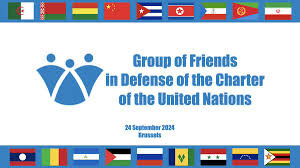
The Group of Friends in Defense of the Charter of the United Nations was established in July 2021 in New York with initial 16 UN member states (Algeria, Angola, Belarus, Bolivia, Cambodia, China, Cuba, North Korea, Eritrea, Iran, Laos, Nicaragua, Russia, Saint Vincent and the Grenadines, Syria, and Venezuela) and one UN observer state (Palestine).

Equatorial Guinea, Zimbabwe and Mali later joined the group while Burundi, Ethiopia, Namibia, South Africa and Vietnam were given the observer status in 2022.

The main goal of the grouping is to support the UN Charter and serve as a platform, among other things, to promote the prevalence of legality over force.

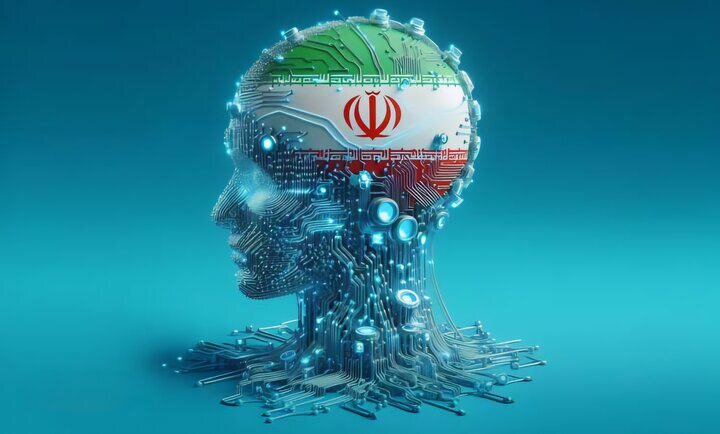
Iran ranked 94th in Government AI readiness

TEHRAN – Oxford Insights, which provides data on preparedness to implement Artificial Intelligence in public service delivery, has ranked Iran 94th among 193 governments across the world.

Governments are not only working to foster AI innovation and establish regulatory frameworks but also striving to integrate this technology into public services.

However, understanding how to ensure that AI is adopted effectively for the public good remains a challenge. This index attempts to address this issue.

It includes 39 indicators across 10 dimensions, which make up 3 pillars: Government, Technology Sector, and Data and Infrastructure pillars.

According to the index, the country’s best ranking is in the Data and Infrastructure pillar, 55.88. It includes infrastructure, data availability, and data representativeness indicators. 

The country’s score in the Technology pillar was 38.77. It includes human capital, innovation capacity, and maturity indicators. 

Iran’s lowest score is in the Government pillar, 31.56, probably due to the absence of a national document on AI development. However, with the implementation of the document, the country’s ranking is expected to rise in the future.

The United States, Singapore, and England are ranked first to third, respectively.

In most countries, the Technology pillar including human capital, and innovation capacity has the lowest score. However, most of the Arab countries have been able to make significant progress in promoting governments’ readiness to implement AI due to their investment in strengthening the infrastructure and developing strategies related to the establishment of AI.

They are placed among the top 50 countries in the index.

Iran tops Islamic nations for AI documents

According to a report released by the Web of Science database, Iran ranks first for the highest number of documents in artificial intelligence (AI) among Islamic countries.

The country issued 2,638 AI documents between 2013 and 2022.

Saudi Arabia (2,465) and Turkey (2,303) were ranked second and third, respectively, IRIB reported.

Iran has also been ranked 14th worldwide in artificial intelligence.

Based on the report, the country ranks second in 3D printing and robotics, fourth in the Internet of Things, fifth in 5th generation (5G) communication technologies and big data, seventh in drone technology, and eighth in blockchains among Islamic nations.

The most scientific productions in the last ten years in artificial intelligence have been respectively related to Tehran University, Tabriz University, and Amir Kabir University of Technology.

Also, the data analysis shows that the number of scientific productions of artificial intelligence has improved in the last five years, reaching 577 documents in 2022 from 157 documents in 2018.

Robotics with 1,596 documents, and the Internet of Things with 1,270 documents followed artificial intelligence in terms of scientific production.

Blockchains with 7 documents had the lowest scientific production in the ten-year period.

Developing AI infrastructure

By allocating 50 trillion rials (some $100 million), the public and the private sector plan to develop the infrastructure for artificial intelligence operators in the current calendar year, which started on March 21.

In February, the former vice president for science and technology, Rouhollah Dehqani-Firouzabadi, said the Importance of artificial intelligence cannot be denied. However, it’s hard to keep pace with the rapid [global] growth in the area,  IRNA reported.

He made the remarks while attending the first meeting of the national steering committee’s working group on artificial intelligence.

The main objective behind founding the national steering committee is to promote and develop AI in the country with the help of both the private sector and the public sector, he added.

Dehqani-Firouzabadi went on to say that the national committee is not seeking to hold a share in management. It aims to facilitate and coordinate the development of AI by developing a streamlined, dynamic, and synergetic structure. It also endeavors to pave the way for individuals to participate in the development of artificial intelligence.

On December 3, 2023, late President Ebrahim Raisi issued an executive order for the establishment of the ‘National Steering Committee and the National Artificial Intelligence (AI) Center’.

Creating a complete and stable chain of ideas to market in AI, benefiting from AI for the economic progress of the country, planning to achieve a leading and sustainable position among the countries of the world, as well as identifying and nurturing talents in the field of AI are among the most important tasks of the national AI center.

UN accuses Israel of ‘deliberate war crimes’ against Gaza’s healthcare system

Navi Pillay, a member of the UN Commission of Inquiry on the occupied Palestinian territory, says an independent investigation found Israel is carrying out a “concerted policy” to destroy Gaza’s health system.

“This is just not reporting what we see on social media, but a very carefully fact-checked account of the destruction of hospitals, the deliberate targeting of doctors,” Pillay told Al Jazeera.

“It’s also the first United Nations report that … drew the conclusion there is the deliberate targeting of healthcare workers, the healthcare system in itself – which is a crime, a war crime.”

Israel makes it difficult to probe its deadly attacks by denying entry to independent investigators, Pillay added.

The report, delivered on Wednesday, concluded: “Israel has perpetrated a concerted policy to destroy Gaza’s healthcare system as part of a broader assault on the Strip, committing war crimes and a crime against humanity of extermination with relentless and deliberate attacks on medical personnel and facilities.”

ICJ genocide case: South Africa files 750-page evidence against Israel

Israel will have until July 2025 to submit a response to allegations that it is committing genocide against Palestinians in Gaza

Sondos Asem

South Africa's Zane Dangor (L) and Netherlands ambassador Vusimuzi Madonsela (R) present arguments to the International Court of Justice as part of South Africa case against Israel in The Hague, on 16 May 2024 (AFP)
South Africa on Monday filed a detailed submission to the International Court of Justice (ICJ) outlining evidence of Israel’s alleged violation of the 1948 Genocide Convention in its ongoing war on Gaza.

According to the South African presidency, the submission, also called a memorial, includes 750 pages of evidence of acts of genocide and genocidal intent.

"The evidence will show that undergirding Israel’s genocidal acts is the special intent to commit genocide, a failure by Israel to prevent incitement to genocide, to prevent genocide itself and its failure to punish those inciting and committing acts of genocide," a statement by the presidency said.

It added that the evidence is presented in more than 750 pages of text, in addition to over 4,000 pages of annexes.

"South Africa’s Memorial is a reminder to the global community to remember the people of Palestine, to stand in solidarity with them and to stop the catastrophe. The devastation and suffering has been possible only because despite the ICJ and numerous UN bodies’ actions and interventions, Israel has failed to comply with its international obligations,” it said.

The submission may not be made public, in accordance with the rules of the court, said the presidency. 

Israel will have a deadline of 28 July 2025 to file a response, known as counter-memorial. 

South Africa brought its case before the ICJ in December 2023, accusing Israel of violating the Genocide Convention, to which Israel is a party, during the Gaza onslaught since 7 October.

The 84-page application, which included reporting by MEE, alleged that Israel has committed acts intended to destroy Palestinians, who are defined as a national, racial and ethnic group, in whole or in part. It also alleged that Israel has failed to prevent or punish such acts.

The evidence included statements by Israeli officials expressing “genocidal intent”, and a list of how Israel's alleged actions had met the definition of genocide, as listed in the treaty.

The acts include killings; causing serious bodily and mental harm; mass expulsion and displacement; and deprivation of access to adequate food, water, shelter, clothes, hygiene, and medical assistance.

On 26 January, the ICJ said that it was plausible that Israel had breached the Genocide Convention. As an emergency measure, it ordered Israel ensure that its army refrained from genocidal acts against Palestinians.

It may take several years before the ICJ makes a full judgement on the case. Its deliberations often involve a protracted process of written submissions and oral arguments by all parties to the case.

For example, ICJ's judgment in the case of Bosnia and Herzegovina v Serbia and Montenegro, which involved allegations of genocide, was delivered in February 2007, more than a decade after the case began in March 1993. 

Israel rejects accusations

Following requests by South Africa, the court subsequently issued interim orders on 28 March and 24 May that called on Israel to halt its assault on Rafah in southern Gaza and ensure the unimpeded delivery of humanitarian aid to Palestinians.

In its May order, ICJ court also ordered that Israel ensure that UN investigators could enter Gaza to investigate allegations of genocide.  

But Israel has defied the court's orders. The ICJ reported, as part of its decisions in March and May, that the situation in Gaza had deteriorated and that Israel had failed to abide by its order in January. 

Israel has rejected the accusations of genocide saying they amount to a “distortion” of the Genocide Convention and that Israel has a right to self-defence following the events of 7 October.

The war on Gaza has continued unabated for more than a year, with the number of Palestinians killed as a result of Israeli bombardment and ground operation surpassing 43,000 as of 28 October. 

An analysis by Oxfam published on 1 October 2024 reported that the Israeli army has killed more children and women in Gaza during the past year than the equivalent period of any other war this century. 

The Israeli army has also been conducting a major operation in the north of Gaza since 5 October, imposing a total siege, killing hundreds of Palestinians in a matter of days and forcing the three hospitals in the area to cease operation. It ordered an estimated 400,000 people to evacuate south, in what rights groups have denounced as another campaign of forced displacement.

A UN inquiry this month accused Israel of committing war crimes and the crime against humanity of extermination in Gaza through its systematic attacks on the healthcare system.

Meanwhile, the UN Special Rapporteur on the right to food Michael Fakhri said in his latest report to the General Assembly that Israel's starvation policy in Gaza meets the threshold for genocidal acts and intent. 

The South African presidency, in its statement on Monday, said Israel has been allowed to breach international law and norms with "unprecedented impunity".

"Israel has been granted unprecedented impunity to breach international law and norms for as long as the UN Charter has been in existence. Israel’s continued shredding of international law has imperilled the institutions of global governance that were established to hold all states accountable."

Several states have requested intervention in South Africa's case, including Bolivia, the Maldives, Chile, Turkey, Spain, Mexico, Libya, Colombia and Nicaragua. 

South Africa on 29 May submitted a dossier to the UN Security Council including 120 pages of evidence of genocidal intent and incitement to commit genocide against Palestinians in Gaza.

Scholar Highlights Historical Role of Quran Schools in Combating Colonialism, Illiteracy

IQNA – Quran schools all over the world have historically played an important role in confronting colonialism and preserving Muslim nations’ Islamic identity.

Children learning the Quran

They have also contributed to combatting illiteracy, according to an article by Abdul Latif Mushref, a political history researcher, published on Al Jazeera. 

Following are excerpts from his article:

Colonialists left huge destructions and damages in the countries they dominated. Their policies destroyed the civilizational and cultural heritage of the colonized lands.

Muslims countries were among those that showed the most resistance against colonialists, confronting their attempts at destroying their Islamic identify and civilization.  

Quran schools played a major role in this resistance and confrontation against cultural, religious and linguistic colonialism.

Unlike many other colonized lands, in Muslim countries, the rate of literacy was high as children attended Quran schools where they learned reading the Arabic.

A French official tasked with sending reports about Quran schools in West Africa to France’s colonial authorities writes in one his reports that all over the region, there are Muslims who are not fluent in Arabic but send their children to Quran schools where they learn to read and write in Arabic and get acquainted with the Arabic culture.

He was surprised at seeing Quranic schools in every village in every region he visited.

Scholar Highlights Historical Role of Quran Schools in Combating Colonialism, Illiteracy  

The development of Quran schools in different parts of the world in the past centuries has surprised scholars and researchers. 

In recent years, however, there has been an unfair onslaught against these schools in many Muslim countries while they can contribute greatly to fighting illiteracy.

Highlighting this important contribution to general education, many international institutions like World Education Services have underlined the need to revive and develop Quran schools.

Scholar Highlights Historical Role of Quran Schools in Combating Colonialism, Illiteracy  

In many parts of the Muslim world, Quran schools remain the primary source of education for many children who, for various reasons, are unable to attend government-run schools.

Hafez Identifies Hypocrites as ‘Biggest Threat’ to Islam: Prominent Professor

IQNA – Reflecting on the works of the 14th-century poet Hafez, a prominent Iranian professor highlights how Hafez fiercely condemns lies and hypocrisy, identifying hypocrisy as the greatest threat to Islam.

Hafez Identifies Hypocrites as ‘Biggest Threat’ to Islam: Prominent Professor

Fathollah Mojtabaei, a retired professor of Eastern Religions and Philosophy, spoke to IQNA recently on the occasion of the National Day of Hafez which was marked on October 11.

“When talking about hypocrisy, it is as if this concept is Hafez’s greatest enemy,” said the professor in the conversation that also saw Ahmad Masjed-Jamei, Deputy Head of the Center for the Great Islamic Encyclopedia and former Iranian culture minister, as another participant.

“Hafez repeatedly notes that those who pretentiously say prayers or read the Quran are hypocrites and those are the biggest threat to Islam,” Mojtabaei added.

Khawje Shams-od-Din Mohammad Hafez-e Shirazi, commonly known as Hafez, was a renowned Iranian poet born around 1325 in Shiraz, Iran. He is celebrated for his lyrical poetry, particularly his ghazals, which explore themes of love, spirituality, and mysticism. Hafez's poetry is considered the pinnacle of Persian literature and remains widely read and revered in Iran and beyond.

Hafez earned his pen name, which means "memorizer," because he memorized the Quran at an early age. His works reflect a deep understanding of Islamic teachings, as well as influences from earlier Persian poets like Rumi and Saadi. His collection of poems is known as the Divan of Hafez and continues to inspire readers with its profound insights.

“Hafez was a devout person in a religious sense; the influence of the Quran strongly permeates his poetry,” added the 96-year-old professor, noting that the poet was a follower of Malamatiyya and viewed the Quran from this school’s perspective.

Code 

“In the Malamatiyya belief system, hypocrisy and lies are considered the gravest sins and a true follower of the Malamatiyya would never lie,” he added.

In ancient Iranian culture, lies were seen as the embodiment of evil, he said, adding that Hafez believed that lying is not just about words but also about actions, where hypocrisy is essentially the practice of acting on a lie.

He also quotes a verse from Hafez, a rough translation of which reads: “O Hafez! Drink wine, live freely, and enjoy life, but do not use the Quran as a snare of deceit like others.”

In the Quran, lies and falsehoods are addressed more than anything else, highlighted the professor. “And then, how dare we, as Muslims, lie!” he lamented.

Mojtbaei said that Hafez’s poetry has three main themes: love, hypocrisy, and lies.

“If you examine the word "love" in his works, you'll see how vast its scope is in his poetry,” he said, adding that the poet strongly slams the hypocrisy practiced by religious figures.

“To my knowledge, no other poet, whether in Persian literature or beyond, has expanded on the meanings of love and hypocrisy to the extent that Hafez has,” he added.

“Hypocrisy has plagued us, and Hafez recognized this issue with remarkable insight, delivering some of the most powerful critiques of hypocrisy, particularly among the religious class,” noted the professor.

“In the 21st century, we still suffer from hypocrisy; it is an eternal ugliness,” he said, adding, “Throughout Hafez's works, we see him repeatedly addressing figures like the sheikh, the king, and others, urging them not to be hypocritical, not to kill, and not to lie. These statements reflect the deep-rooted opposition of the intellectual class in Iranian cultural history toward lies and hypocrisy.”

Hafez’s poetry appeals to all

“Unlike the works of many other poets, Hafez's poetry is not one-dimensional or limited to a single perspective,” Mojtbaei writes in an introduction to a book about Hafez.

“It does not revolve around just one or a few confined themes. His poetry encompasses a wide spectrum that appeals to both the mystic and the ordinary person, the religious and the non-religious, even those with flawed beliefs,” he adds.

“Hafez's verses resonate with people of all backgrounds and levels of thought, knowledge, and sensitivity, offering something to everyone based on their own experiences and emotions,” he notes, adding, “Hafez's poetry is like a mirror in which each person sees themselves—their desires, hopes, sorrows, and joys reflected back at them.”

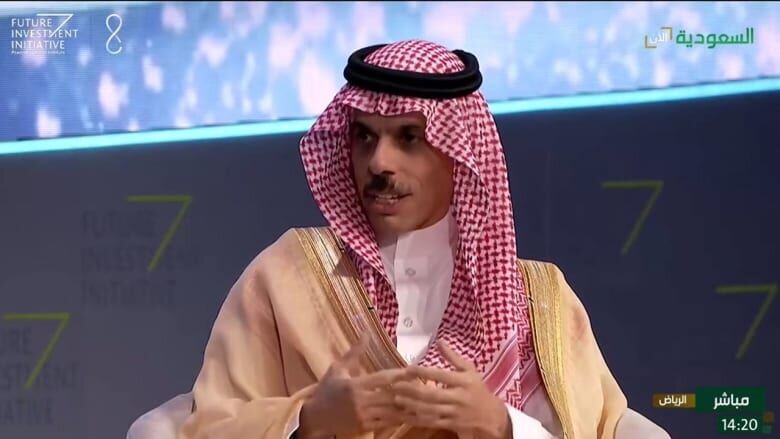
Saudi FM says ties with Iran on the ‘right path’

TEHRAN – Saudi Foreign Minister Faisal bin Farhan said on Thursday that the relations between the Saudi Kingdom and Iran are on advancing on the “right path”.

Bin Farhan made the remarks on the sidelines of Future Investment Initiative (FII) summit held in Riyadh.

He said Israeli actions in northern Gaza could only be described as a form a genocide that was feeding a cycle of violence.

Bin Farhan reiterated the kingdom's position that it would not recognize Israel without a Palestinian state, adding on that proposed step, Saudi Arabia is "quite happy to wait until the situation is amenable," before moving ahead with normalization.

"We look at just what's happening now in north (Gaza) where we have a complete blockade of any access for humanitarian goods coupled with a continued military assault without any real pathway for civilians to find shelter, to find safe zones, that can only be described as a form of genocide," he said, Reuters reported.

"It is certainly against humanitarian law, international humanitarian law, and is feeding a continuing cycle of violence."

He added that potential U.S.-Saudi agreements about trade and artificial intelligence are "not tied to any third parties" and "can progress probably quite quickly."