Wednesday, November 01, 2023

Raisi: Gaza events indicative of colonial crimes against human rights

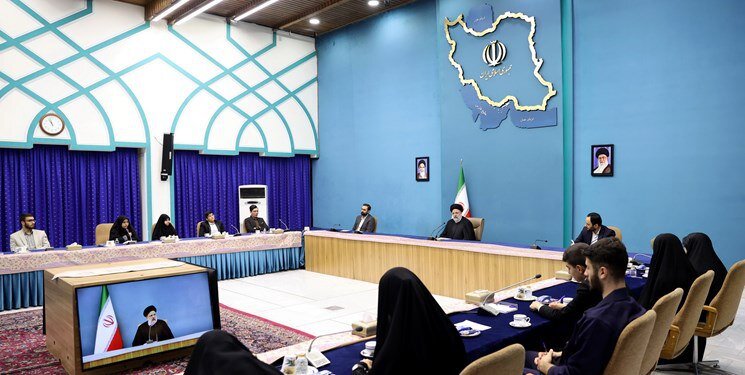
TEHRAN- Iranian President Ebrahim Raisi described the Israeli aggression agaisnt the Gaza Strip as a clear indication of the evil of colonial countries against the rights of people and nations.

He made the remarks on Tuesday evening on the occasion of National Youth Week.

President Raisi added that on the other side of this black picture, we witness another bright picture of oppression and resistance along with dignity and authority. 

According to Raisi, those faithful and dignified people follow the path of martyrs like Hossein Fahimdeh.
 
In a meeting with a group of elite teenagers in various fields, President Raisi reiterated that the resistance of the Palestinian nation has drawn the admiration of the people globally.

While honoring National Youth Day, President Raisi considered "knowing the country and its needs" as one of the most important missions of the elites.

Later in the meeting, the president put an emphasis on the use of teenagers’ capabilities in public diplomacy, which can be effective and important in the achievements and progress of Iran. 

He considered the Iranian elite's capability as an important “reservoir” of society and the “engine” of the country's development.

Addressing the elites, in the final part of his speech, the president called for the use of capabilities in the country’s progress and development.

Crime Minister Finished

By Faramarz Kupayeh 

TEHRAN – The October 7 military operation by the Palestinian resistance groups against Israeli sites in the vicinity of the Gaza Strip has put Israeli Prime Minister Benjamin Netanyahu in a bind.

Netanyahu has long prided himself on his ability to weather political storms. He faced a litany of charges ranging from bribery to the abuse of power for political gains. Yet, he not only avoided prison but also remained on the top in Israel. 

The Al-Aqsa Storm, however, may put a disgraceful end to the longest-serving Israeli prime minister in Israeli history.   

To begin with, Bibi Netanyahu had already been accused of serious national security offenses long before a group of Palestinian fighters seething with historical indignation broke into the castle of Israel on October 7. His controversial judicial overhaul has divided Israel and caused prolonged street protests and strikes. Also, facing increasing isolation from other political groups, he coalesced with the most extremist groups in order to maintain his longstanding grip on power. During the government formation talks, Bezalel Smotrich and Itamar Ben-Gvir offered him a hard-to-resist option of forming a government even though they, with their fiery actions and words, were political ticking bombs. Netanyahu was seduced, believing that he would be able to control the extremist figures in his cabinet. 

But the daily provocations of these two extremists, combined with Israel’s longstanding oppression of the Palestinian people, inevitably led to the October 7 explosion, which presented Netanyahu with bad and least bad options. 

First, there is the issue of hundreds of Israelis, some of whom are high-ranking military officials, who are held captive by the Palestinian resistance groups in Gaza. According to Israeli estimates, more than 239 Israelis are held in Gaza. 

The families of the captives held several sit-ins and protests in Tel Aviv to put pressure on the government to bring their loved ones back home. They formed an association and are meeting with Israeli officials to get the latest about their relatives. A while ago, when the Israeli army suddenly announced an incursion into Gaza, they were extremely enraged by the Israeli government’s disinterest in the safety of the Israeli captives. To assuage these concerns, Netanyahu and his war minister Yoav Gallant received the representatives of the families. But they both refrained from making a solid promise of bringing back the captives alive. 

On the other side, the Palestinian resistance groups have expressed their readiness to release all Israeli captives in exchange for Israel releasing all Palestinian captives, who are estimated to be more than 7,000.

The Palestinian groups have so far voluntarily released some of the captives on humanitarian grounds. But the Palestinian calls for a captive swap deal have fallen on deaf ears in Tel Aviv, which seems to be intent on sticking to its longstanding doctrine of terrorism-based deterrence.

Gallant said more military pressure on Gaza would lead to the release of the captives, a clear indication of the Israeli doctrine, which it applied to all its neighbors, and in some cases, led to some tactical victories for Israel. “The more military pressure, the more firepower and the more we strike Hamas - the greater our chances are to bring it to a place where it will agree to a solution that will allow the return of your loved ones,” Gallant said at a press conference.

Of note, Israel’s military mentality is based on the notion that if Israel uses maximum violence against its enemies both civilians and military, they will retreat and surrender. This was on full display during the Nakbah Wars of 1948 and the Six-day War of 1967, when Israeli military forces used maximum violence, on Palestinian civilians and other Arab societies. Only in 1948, Zionist militias, such as the Haganah, which was later incorporated into the Israeli army, displaced nearly 700,000 Palestinians, mostly villagers who, seeing their neighbors brutally killed by Zionist fanatics, decided to leave their homeland. Many of these Palestinians fled to neighboring Arab countries and some went to Gaza. The irony is that Israel wanted to displace the Palestinian refugees in Gaza again in the early days of its current carnage, but the Palestinians staunchly rejected that. 

This explains why Gallant and the likes of him in Israel are insisting on violence as the only solution to the captives' crisis. 

But there is a catch; Palestinians and the whole international community know the Israeli military mentality like the back of their hand, having paid a heavy price in the past. 

Following the failure of their terrorism-based strategy in Gaza, Israel is now aimlessly killing civilians in Gaza without the slightest hope of achieving a strategic goal. They can neither eradicate Hamas – their stated goal – nor get their captives released without paying a heavy political price. 

Benjamin Netanyahu is fully aware of this bitter fact. Therefore, he is desperately looking for someone to make a scapegoat of. It was under these circumstances that he blamed the Israeli army and security services for the October 7 fiasco. Facing public backlash, he quickly walked back his criticism and apologized. Then he resorted to the charade of liberating a female captive from Gaza. This came hours after Hamas released footage of Israeli captives lashing out at Netanyahu for his epic failure on October 7. But the problem was that the female servicemember Netanyahu claimed to have liberated was active on Facebook days after the October 7 attack. 

Overall, Netanyahu is facing pressure from all directions. His military strategy in Gaza turned out to be an aimless slaughter of civilians, the families of the captives are increasingly fumed at his incompetence, and his political fortunes are in constant decline. Netanyahu hoped to go down in history as another Ben Gurion for Israel, but he ended up weakening Israel unprecedentedly. At the end of the day, the people of the region in 1948 weren’t cognizant of the extent to which the Zionists could be evil and cruel. Today, the people of the region learned the lessons of history the hard way. And they speak to Israel the language it understands.

Forecast of European Gas Supply & Demand Situation in Coming Winter

Strategic Council Online - Opinion: Europe is entering into its second winter since the valves of Russian gas pipelines were closed while it has managed to register a new record in the volume of its gas reserves. After the Russian attack on Ukraine in February 2022, Europe set a crisis plan to reduce its reliance on Russian fuel. Accordingly, the gas storage level should be completed by 65% by August, 80% by October, and 90% by November 2023. But after the end of this summer, two months ahead of schedule, the gas storage level was completed by 90%. Hamideh Safamanesh - International relations researcher

According to a report by the International Energy Agency, the European Union reduced gas consumption by 13% in 2022 to reduce dependence on Russia, becoming close to the 15% reduction goal. According to the international organization, behavioral changes have been so profound that they may herald a new era in energy consumption.

Germany, Italy, and other gas-dependent European countries emerged from dependence on Russia without significant power shortages, and the long-standing structure of global energy markets was irreversibly altered.

However, energy experts believe that Europe has never been so exposed to price shocks in the world market. Market supplies are still limited, and many potential disruptions exist in a highly interconnected global market. From this point of view, the energy crisis in Europe is not over yet. Besides, European industries are worried that government intervention in energy supply will weaken the market performance.

European governments are concerned that high energy prices will force industries to migrate from this continent and intensify deindustrialization. In this regard, Europe is trying to balance the market by taking advantage of new sources of liquefied natural gas in the US and Qatar, speeding up the use of renewable energy, and launching a new generation of nuclear power plants.

The European Union is expected to still have to buy about 22 billion cubic meters from Russia this year. This figure equals 11% of the total pipeline gas in that block in 2022. Much of it comes through Ukraine, and given that the current Russia-Ukraine transit agreement is unlikely to be renewed after it expires in 2024, this supply route is at risk.

Now, the prices in the European gas market are so vulnerable to shocks that the news of a strike by workers in a gas project in Australia caused the price in the European market to increase by more than 40% in one day. However, Australia has rarely supplied gas to Europe. Also, when the Norwegian gas pipeline needed repairs due to increased overload, the gas price in Europe sharply increased.

2015 Europe’s liquefied natural gas import from the US was zero. Still, last year, this continent imported nearly 64 billion cubic meters of LNG gas from the US, which, this level of dependence on the US for gas supply, is worrying for Europe.

In the past months, European countries made great efforts to reduce the amount of gas and gasoline consumed by households by adopting policies. The British government has stopped supporting household energy bills before it can finalize its plan to increase domestic energy production. With this situation, British households behind in paying their energy bills owe 2.25 billion pounds, which has increased by more than 70% in the past three years.

In the past, Britain imported only 2% of its gas consumption from Russia. The country has focused its gas supply routes on imports through the Norwegian pipeline and extensive imports of liquefied natural gas. Last year, England registered a record import of 25.6 billion cubic meters of liquefied natural gas, almost 45% of the country’s total gas demand.

British gas storage facilities are among the smallest facilities in Europe compared to gas consumption in that country, so the country is still exposed to the high impact of price shocks in the global gas market.

Before the Ukraine war, Germany used to get half of its gas through the pipeline from Russia. Still, after announcing the need to reduce gas consumption by 20%, it paid more attention to energy efficiency than other EU countries. That country used almost 15% less natural gas last year, and of course, the relatively mild winter was also influential.

Germany has also included in its agenda the increase of gas imports from the Netherlands and Norway pipeline and the development of three new terminals for importing liquefied natural gas. The gas buyers of that country are looking to sign contracts to import liquefied natural gas from the United States, Qatar, and the UAE.

Before the war, France supplied only 17% of its gas from Russia, which made it less dependent on Russia than some of its European neighbors. That country relies much less on gas due to nuclear power plants. However, the imposition of sanctions against Russia caused Paris to face severe problems in supplying fuel to its nuclear power plants last year. This issue has increased the possibility of a winter shutdown in the coming winter.

In this situation, the French government took measures to reduce energy consumption in the country to save 10% by 2024 and 40% by 2030 compared to 2019.

Although Spain is not as dependent on Russian energy sources as some EU countries due to a series of gas import terminals, it has taken measures to ensure its winter energy supply. It has been able to reduce its gas demand by 21% between August 2022 and March this year. Poland and Bulgaria became the first EU countries to cut gas imports from Russia last April when the Kremlin announced that payments for gas must be made in rubles. At that time, almost half of Poland’s gas was imported from Siberia through the Yamal–Europe natural gas pipeline. But unlike Germany, which relies on gas to generate about 15% of its electricity, Poland produces most of its energy from coal. Accelerating its imports through LNG terminals, the country finalized a 20-year contract with the United States in early 2023 to import one million tons of liquefied natural gas annually.

Overall, the increasing reliance of European countries on liquefied natural gas has made them vulnerable to market fluctuations, especially since 70% of such imports are purchased through short-term contracts instead of using the long-term contracts of the prevailing oil index in Asia. Although Europe has achieved a geo-economic victory, Europe’s energy problems will not be fully resolved until late 2024 or early 2025, and it will be heavily reliant on liquefied natural gas imports for years.

Iran seeks single UNESCO tag for historical mosques

TEHRAN – The Iranian tourism minister has said his ministry seeks to win a UNESCO label for a selection of its historical mosques.

“We in the Ministry of Cultural Heritage, Tourism and Handicrafts are compiling a dossier for [a selection of] historical mosques for [a possible] registration in UNESCO’s tangible World Heritage list,” Ezzatollah Zarghami said on Monday.

He made the remarks in a conference held in Tehran’s Laleh Hotel, saying that following that designation is at the top of the agenda.

The minister said mosques along with other religious places have long been a distinctive element of the Iranian culture that should be preserved.

“In Iranian and Islamic culture, mosques are blessed places of faith and cultural heritage and we must do our best to protect them,” he said.

 In every corner of Iran, cascades of photogenic domes and minarets can be seen as inseparable elements of mosques, some of which are widely known as timeless benchmarks of Islamic architecture.Home to numerous cultural and historical gems, Iran is willing to gain UNESCO labels for similar items collectively. So far, the country has secured UNESCO tags dedicated to 54 of its caravanserais, Armenian monastic ensembles, Persian gardens, and qanats.

A mosque, locally called masjed (aka masjid, which is “a place of prostration” to God), is any house or open area of prayer in Islam. Generally speaking, the architecture of mosques in Iran is a combination of symmetry, geometric designs, and vibrant colors.

In every corner of Iran, cascades of photogenic domes and minarets can be seen as inseparable elements of mosques, some of which are widely known as timeless benchmarks of Islamic architecture.

Among the country’s must-see, gorgeous places of worship are Nasir Al-Molk Mosque in Shiraz, Sheikh Lotfollah Mosque in Isfahan, Shah Cheragh Mosque in Shiraz, Imam Mosque of Isfahan, Jameh Mosque of Yazd, Blue Mosque in Tabriz, Goharshad Mosque in Mashhad, Vakil Mosque in Shiraz, Agha Bozorg Mosque in Kashan, to name a few.

From an architectural point of view, Iranian mosques vary from one region to another, due to geometric structures, materials, and styles specific to each location. These mosques often have very complex structures in which color variations, tiles, and symbolic designs are used.

Islamic architecture, building traditions of Muslim populations from the 7th century on, finds its highest expression in religious buildings such as the mosque and madrasah. Early Islamic religious architecture, according to Britannica, exemplified by Jerusalem’s Dome of the Rock (691 CE) and the Great Mosque (705) in Damascus, drew on Christian architectural features such as domes, columnar arches, and mosaics but also included large courts for congregational prayer and a mihrab. From early times, the characteristic semicircular horseshoe arch and rich, nonrepresentational decoration of surfaces were employed. Religious architecture came into its own with the creation of the hypostyle mosque in Iraq and Egypt. In Iran, a mosque plan consisting of four eyvans (vaulted halls) opening onto a central court was used.

TAGS

Israeli Assault on Gaza Destroys Nearly 200,000 Housing Units

Israeli Assault on Gaza Destroys Nearly 200,000 Housing Units

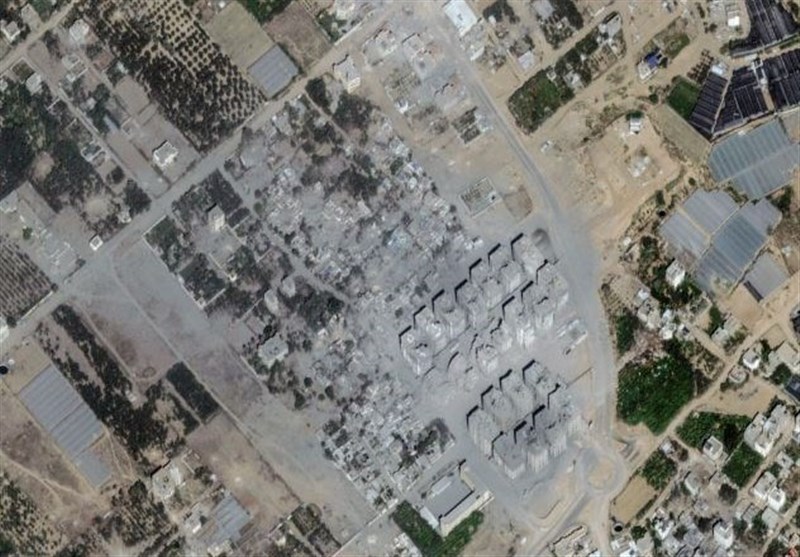
TEHRAN (Tasnim) – The Israeli military's relentless assault on the Gaza Strip since October 7 has resulted in the destruction of nearly 200,000 housing units, Palestinian Minister of Public Works and Housing Mohammad Ziyara said.

 Ziyara highlighted the severe impact of the bombardment, stating that it has not only erased entire families from the civil registry but also decimated neighborhoods and residential communities.

Moreover, critical facilities such as hospitals, places of worship, bakeries, water filling stations, markets, schools, and educational institutions have been razed to the ground.

Wael Dahdouh, a Palestinian journalist and the bureau chief of Al Jazeera in Gaza City whose family was killed in an Israeli attack last week, reported from Gaza that Israeli air strikes targeted warehouses that were storing food supplies and materials that civilians were using to light fires and cook meals in the Tal al-Hawa area.

The Gaza Strip, home to approximately 2.3 million people, occupies a mere 365 square kilometers (141 square miles).

The United Nations' humanitarian office reports that at least 45 percent of all housing units in the enclave have suffered damage or destruction due to Israeli attacks.

Among the hardest-hit areas are Beit Hanoon, Beit Lahiya, Shujaiya, neighborhoods surrounding the Shati refugee camp, and Abasan al-Kabira in Khan Younis.

This relentless bombardment has led to an estimated 1.4 million people in Gaza being internally displaced, with approximately 629,000 seeking shelter in 150 UN-designated emergency shelters.

Additionally, Israel's total blockade on fuel entering the enclave is seriously jeopardizing critical functions in all hospitals, putting the lives of at least 130 premature babies in incubators, 1,000 kidney dialysis patients who must reduce their treatment sessions, and frontline ambulance workers at risk when the fuel runs out.

The Palestinian Red Crescent says its teams have dealt with 2,580 deaths and 7,667 injuries in Gaza since the beginning of the conflict.

Since the beginning of Israeli attacks in October 7, at least 8,525 Palestinians have been killed in Gaza, including at least 3,747 children and at least 2,062 women," the OCHA wrote on its website.

Deafening silence on Gaza’s crippling health infrastructure

Source: Al Mayadeen English

Raids, shootings, and mass destruction are the norm with Israeli impunity being sanctioned directly by Washington D.C.

As miniscule aid teeters its way through the Rafah border crossing between Gaza and Egypt and women, children, and the disabled hang on to shackles of fleeting hope, the dire meltdown of Gaza’s healthcare system remains a classic case of international apathy. So far, the Western-led response to the unfolding genocide has been shockingly indifferent. The source of respite for the battered and besieged population is its hospitals, yet the Zionist entity has stripped Gaza of any relief whatsoever. As stated by the United Nations and the Gazan Health Ministry, the generators of hospitals across the strip will cease to function due to a fuel shortage. Despite this, the deafening silence toward Gaza’s health predicament remains. 

As Israeli airstrikes intensify, approximately thirty-two health centers remain out of service. The occupation forces have made it clear that no fuel would be provided to Gaza as the territory is scorched by an apartheid government targeting refugee camps ranging from Jabaliya to Al-Shati'. Raids, shootings, and mass destruction are the norm with Israeli impunity being sanctioned directly by Washington D.C. The casualty toll stands at above 7,000 and rising with hospitals being flooded with patients by the minute. Those internally displaced number 1.4 million while 600,000 are taking refuge in the United Nations Relief and Works Agency for Palestine facilities in dire conditions. The average number of IDPs per shelter has also reached 2.5 times of existing capacity. 

According to the Gazan Health Ministry Spokesperson, Ashraf al-Qudra, the flow of humanitarian aid will have little impact on the unfolding dynamics in the healthcare sector. The entire structure was already grappling with systematic degradation of its facilities due to a decades-long occupation, and, as per al-Qudra, it has now reached its worst stage in history. Lack of blood units, threats to incubators, which are critical for premature babies to recover, and shortage of manpower are translating into a nightmarish scenario for Gazans. The UNRWA has warned that it could be forced to stop operations due to dwindling fuel supplies as calls mount for a humanitarian pause. With one-third of Palestinian casualties since October 7, 2023, being children alone, apathy toward the healthcare system is resulting in a complete loss of generations. 

The Indonesian Hospital in northern Gaza’s Beit Lahia area, for example, was shut down as it failed to carry out its services due to a lack of power. Footage shared on social media showed the hospital operating in complete darkness amid apprehensions of Israeli airstrikes in close proximity to the staff, patients, and doctors. In harrowing scenes, medical personnel were seen using portable flashlights to carry patients from ambulances, of which many were in critical condition. While power was eventually restored at the Indonesian Hospital, the unfolding scenes were an ominous sign of things awaiting other medical facilities across the Strip.

Yet, despite making cosmetic appeals to a fascist Prime Minister to allow unfettered aid into Gaza, US President Joe Biden did not mention, caution, or pressure "Israel" on the declining state of hospitals in Gaza. In essence, by not doing so, the United States and its Western allies have signed the death warrant for Gazans as any castigation of "Israel’s" inhumane occupation, bombardment, and crimes against humanity is deflected with the "right to self-defense" argument with disproportionate attention paid to Hamas as the so-called "greatest threat" to regional peace and stability. In fact, Hamas lived up to its expectations by releasing Israeli hostages, yet there is no relenting on the part of the occupation and its forces as far as cutting off critical supplies, such as fuel for hospitals, is concerned.  

Among the worst affected by the medical meltdown are premature children or neonatal patients who suffer the most from the chilling, immoral, disgusting, and deplorable policy of the occupation. The constant flow of electricity for glass incubators is critical for such patients, many of whom develop health complications due to early births. That flow is solely dependent on fuel for generators that power hospitals, which remains scarce. According to the director of al-Aqsa Hospital, Iyad Abu Zahar, if the generators do stop working, the babies in the incubators could perish. 

What is unfolding in al-Aqsa Hospital is ubiquitous across the Gaza Strip. Al-Quds Hospital received warnings from the Israeli military to evacuate in the absence of fuel, which is a clear indication that doctors treating premature babies could fail to save lives. Injured people have been seen lying on floors, Palestinians cramped up in tents, and even kidney patients were apprehensive over whether they would be able to receive dialysis treatment. Even prior to the war, the Health Ministry in Gaza warned of patients suffering from a complete medical breakdown given the sixteen-year blockade by both Egypt and "Israel". The abject nature of Gaza’s predicament, however, elicits no response. 

The question is, has the Western-led so-called "international response" signed the death warrant for ordinary Gazans? If not, then why is the crippling health sector not being addressed to at least save the lives of those who have nothing to do with war but continue to remain a victim under an occupation. Most states would use the Israeli "self-defense" card to either ignore or bypass realities. That, however, does not change reality itself as Gazan’s health structure is on the brink of collapse.

Gaza heralded an earthquake, so don't leave it alone

Source: Al Mayadeen English

After the flood, if the fronts of confrontation are to expand, the Middle East will become the wide gateway through which a new, more balanced, and just world order will pass.

They who dubbed it Operation al-Aqsa Flood did not err, for they had great foreknowledge of what it would bring. 

It is indeed a 'flood' that has surged beyond the narrow confines of the besieged Gaza Strip, to sweep away narratives and equations in the region and engulf the entire Earth and its arenas. As a response to the al-Aqsa Mosque's desecration, it has unveiled hidden truths and peeled away the thin veneer that "Israel", the West, and Arab and regional capitals tried to hide behind, to reveal the ugliest forms of impotence, collusion, betrayal, and show the colonialist West in its original form before it rebranded colonization as a 'mandate', and before it donned starched white colors and appeared before us in the garb of preachers.

It is the mother of decisive battles, with nothing like it before or to follow in the foreseeable future. It is truly incomparable. It marks the defining and dividing moment between two eras and ages. The Gaza whirlwind heralded an earthquake, and now the battle is between two futures for Palestine and the region. It would not be an exaggeration to proclaim to the world that this battle broke out of the shell [pun on Gaza 'envelope'] on the morning of October 7th, but 'futurologist' minds are unable to gauge the aftershocks and the repercussions that will follow, or the dynamics and equations it may bring to light.

I do not doubt for a moment that those who planned and engineered the flood and unleashed it like a thunderbolt also prepared lifeboats with ring buoys – yes, boats and not 'boat', for the battles rage on against Gaza and the resistance. The war, however, will span the entirety of West Asia, the Arab world, and its surroundings.

In trials such as these, one achieves either glory or disgrace. Either one takes a stand for history, as well as for posterity, or one balks and takes a seat, in a manner that all the armies of pedants and servants of Arab sultans and courts cannot spin or justify. The moment of reckoning is surely coming, even if there is some delay. Gaza has seared itself into the minds, hearts, and consciences of this generation, and never shall it fade from their collective memory. Nor do I imagine that its effects will dissipate once the guns fall silent.

To be or not to be, that is the question of the existential war that the Palestinian people, the Arab ummah, the free people of the world find themselves facing. In a momentous occasion of such singularity, the people, the resistance, and their allies and friends have no option but to prevail, no matter how great the sacrifices and how long the procession of coffins.

I suspect – and in this suspicion, there is not a trace of sin [ [Re: Qur'an 49:12, Suspicion in some cases is a sin] – that Operation al-Aqsa Flood was the cue for bringing about an overhaul of the Palestinian scene after years and decades of death and slumber and a continuous stream of concessions that have failed to satisfy Zionist appetites for expansion, settlement, and erasure. After years and decades of servility and mendicity, after illusions were shattered and the biggest deception of the Palestinian people – the Oslo process and the PA – was exposed, now comes the official declaration of the launch of a strategic Palestinian phase marked by resistance to occupation, racism, Judaization, Israelization, and the loss of land, rights, and holy sites. This is the alternative to going along with projects whose dark implications have become clear to even the blind. This is the beginning of the revival and reawakening of the Palestinian national movement in all of Palestine, not just in Gaza, and in the diaspora, based on resisting the occupation to rout it and dismantle its settler-colonialism.

This is the start of recovery, a united front, and the unification of the people, the cause, and the resistance in all places where Palestinians exist. This is the first step to rescuing the PLO and freeing it from the grip of the small, influential faction that has turned it into a seal with which to stamp humiliating agreements and arrangements that have downgraded the Palestinian dream to the level of municipal administrations, city leagues, and 'dis-united Palestinian emirates'.

This is the beginning of an overhaul of Palestinian dynamics and balances of power, intersecting with the rise of Gen Z and the new trend of resistance in the West Bank and al-Quds, as well as with the 'unity of arenas' doctrine, Operation Sword of al-Quds, and the awakening of the Palestinian diaspora in countries of refuge and relocation. This is the second launch of the Palestinian national movement, and I believe that it surpasses the first launch in its greatness and the greatness of its achievements.

Here, we pause to stress that Palestine cannot be allowed to squander this opportunity, and the Palestinians cannot be allowed to entertain any option other than victory in this momentous battle. Before we think about the heavy cost this option holds for Gaza and the Palestinians, the skeptical, fainthearted, and hesitant should think for a minute about the cost of the other option – the option of defeat, God forbid – once the 'deal of the century' becomes an unattainable ambition and an elusive goal.

I suspect – and in this suspicion, there is not a trace of sin either - the war on Gaza, its people, and its resistance means waging war on Hezbollah and its regional allies, from Qazvin to the Eastern Mediterranean. Today, it is Gaza and Hamas; tomorrow, it will be Lebanon and Hezbollah, and the day after that it will be Damascus, Baghdad, and Sanaa until it reaches Tehran at the final station – or perhaps not the final one. This is a war against the entire Axis. It is a settling of the heavy scores of a half-century of conflict of various forms, arenas, tools, and levels. The parties and components of this axis understand this. The maxim 'if one of us falls, we all fall' is ever-present in their legacy and thinking. The door is still open for something bigger, broader, and graver to occur once the heating-up or gradual escalation phase is over and the fiery messages in all these arenas have expanded their rallying purposes and their warning functions.

Here, I will venture to propose a theory that deviates from the prevailing idea: Hamas and the resistance have opened a window and opportunity to effect tremendous, crucial change in the considerations, equations, and dynamics in place. We must not close this window by calling for a ceasefire and de-escalation or waiting for the tide to shift against the resistance. Instead, we must act to expand the scope of the battle across multiple arenas, as long as Israeli naked fragility is on display after the myth of the 'invincible army' and the 'infallible Mossad' has been shattered, and as long as the U.S. is too weak to get involved in its third full-scale regional war in two decades after suffering ignominious defeats in the first two, and as long as the West and its allies today serve no function beyond ensuring the conditions to single out Gaza under the guise of not expanding the war, and as long as it is possible to deal a strategic defeat to "Israel". We have a historic opportunity to achieve this that may not come again for years or even decades to come.

If Gaza, Palestine, and the resistance win, the entire Axis will triumph, and the Axis of free normalization will suffer an ignominious defeat. The outposts of U.S. imperial dominance over the region will fall forever, and the doors will close on the 'Middle Eastern NATO' project in its various forms and versions. Our countries will have the chance to shape their future free of diktats. The security, stability, and prosperity of the region will be in the hands of its people, not in the hands of Western military-industrial complexes and oil companies (especially U.S. ones), lobbies, and the coalitions of evil in control of international policies.

This is a historic opportunity to bring a much-needed change of direction in the region towards the future. The opportunity is still here, but it will not remain open for long. There is an expectation driven by hope, and perhaps some wishful thinking, that Gaza and its resistance movement will not be left to fight alone.

In the regional context of the aftermath of Operation al-Aqsa Flood, there are observations that cannot be ignored. Some of them have been voiced by the millions of angry people who have taken to Arab streets and squares to condemn the aggression and express support for Gaza and the resistance – such as the fact that the masks hiding behind the masks have fallen in many if not all, Arab capitals. However, there are a few other observations that pertain to the two biggest and most active Arab states, Egypt and Saudi Arabia.

Despite its Arab and international stature and standing, Cairo was unable to send a single truck of food or medicine into Gaza without "Israel's" permission, even though the Rafah crossing is on the Egyptian/Palestinian border. Its political and diplomatic performance was dismal indeed. The shameful reception of the French president in Cairo only adds insult to injury with its implicit acceptance of the Israelized Western narrative about 'Palestinian terrorist groups', without having the courage to even mention the phrase 'ceasefire' in the presence of that president, who has been routed in Africa and is now seeking a role in our region through the Israeli gateway.

This is to say nothing of Egypt's proposal of the al-Naqab desert in lieu of the Sinai desert as a temporary or permanent refuge for forcibly displaced Palestinians. This disappointing specimen of performance from the biggest state in the Arab world reflects lows that even some of our small marginal states have not stooped to.

Saudi Arabia, for its part, was hit with the 'flood' while at the height of its preparations to enter and advance the normalization process with "Israel". Some Saudi commentators unfortunately interpreted the operation as an Iranian attempt to obstruct that process, although obstructing that process, and indeed cutting the legs out from under it, is a noble mission and a loftier pursuit than any other. Most of their articles and Tweets were marked by vindictiveness and schadenfreude over the destruction of Gaza and the carnage of its people.

The most important aspect of the Saudi affair is that the flood caught Riyadh by surprise while in the thick of its efforts to assume the leadership of both the Arab and Muslim worlds, with everyone's consent and recognition. But its conduct has been unbefitting of a country seeking command and leadership. It chose to take a back seat, even by official Arab standards and criteria.

In my opinion, Saudi Arabia missed a golden opportunity to prove itself worthy of leadership. For months, we have been saying that any party that aspires to lead the Arab world must start with Palestine, its cause, and the struggle of its people. Otherwise, who would accept to be led by those who have neither the capability and power nor the will to use the tremendous trump cards at their disposal to prove themselves worthy and deserving?

I suspect – and in this suspicion too there is not a trace of sin either – that the war on Gaza and its resistance has opened new prospects on the international stage in the raging conflict over the identity and nature of the new world order. The Security Council seems to be reliving flashbacks of 'the flood', for its sessions today are reminiscent of its sessions at the height of the Cold War and the Cuban missile crisis. This partly explains the hysteria that struck the West after October 7th, especially since the 'flood' hit it while it was struggling to achieve victory in Ukraine to no avail, and so was hoping to recoup its losses in Palestine, Gaza, and the Middle East.

Tiny Gaza has become a wide window for Moscow and Beijing to activate their presence in the region. Now more than ever, they have emerged as the superpowers most closely aligned to the Arab narrative and interests, as well as the most committed to the rules of international law, international human rights law, and international legitimacy.

If the battlefronts are destined to expand in the aftermath of the flood, the Middle East will become the wide gateway that ushers in a new, more balanced, and more just world order. The Middle East has precedents in that domain; at least twice now it has ushered in a new era. The first time was after the Suez War when it stepped out from under the mantle of the old French-British colonial era into the care of the new U.S. colonial era. The second time was when the defeat of the socialist camp and the Soviet Union manifested in the Second Gulf War, which erupted on the threshold of the transition from the Cold War to the unipolar world, in the first trial by fire for the new order.

We must keep an eye on the bigger picture unveiled by the war in Gaza. All the parties and actors are making their assessments and re-evaluating the stances and alignments in light of it. 

The constant stream of images from Gaza depicting the scenes of death, destruction, and atrocities should by no means obscure the broader view, for the war is still a long way off from the finish line.