Friday, September 01, 2023

Quebec government embraces Israeli apartheid

Ali Abunimah

A woman and man stand next to a table and smile at eachother

Quebec’s international relations minister Martine Biron (left), pictured with Paul Hirschon, Israel’s consul-general in Montreal, in May. Biron deployed Israel lobby propaganda to justify the Canadian province’s decision to open a trade office in Tel Aviv. (via Twitter)

 The government of Quebec is embracing Israeli apartheid.

The Francophone Canadian province is opening up a trade office in Tel Aviv, a move being decried by supporters of Palestinian rights.

“Quebec has chosen to reward Israel’s far-right government with trade deals despite the fact that international and Israeli human rights organizations have accused that country of imposing apartheid practices on Palestinians,” said Thomas Woodley, president of Canadians for Justice and Peace in the Middle East.

“Opening a Quebec office in Israel when it is led by an extreme right-wing coalition opposed by the population is immoral. And not a word from [Minister Biron] about the Palestinians. I am shocked! It is not worthy of Quebec,” tweeted Ruba Ghazal, a lawmaker from the left-wing opposition Québec Solidaire party.

Ghazal was referring to Martine Biron, the international relations minister in the province’s government formed by the right-wing Coalition Avenir Québec (Quebec Future Coalition).

Brain drain

Announcing the move earlier this month, Biron recited standard Israel lobby propaganda.

“Israel’s dynamic economy offers business opportunities,” Biron tweeted.

“It’s the place in the world where there are the most startups per capita,” she asserted. “Our research and development exchanges and our ties with the universities have been there for a long time, but we will consolidate them and do more business.”

“Israel is poised as an important pole of technological innovation on the world stage, especially in artificial intelligence and cybersecurity, which particularly interests the Quebec government,” the newspaper Journal de Québec reported.

Marketing Israel as a so-called “Startup Nation” has been a key strategy of its propaganda outlets and lobby groups in recent years to distract from the brutal reality of its dispossession and subjugation of millions of Palestinians.

In reality, Israel is a small, uncompetitive economy suffering from a long-term brain drain that hampers innovation.

A 2019 article in the Tel Aviv newspaper Haaretz, called the “startup nation” idea a “myth” and asserted that overall in terms of its economic performance, Israel is a “superpower of mediocrity.”

The flight of capital and people is accelerating as Israel’s Jewish settler-colonial population turns against itself in a bitter and escalating conflict over how best to maintain its system of violently enforced Jewish supremacy and apartheid over the Palestinian people.

A recent survey by the OECD on how attractive and open countries are to international startup founders placed Israel and Japan at the bottom of its ranking.

Israel scored at or near the bottom for every factor considered by the OECD.

“Canada is the most attractive country for startup founders in the OECD, with high scores in all dimensions and a start-up visa that offers several advantages for prospective startup founders,” according to the survey.

In other words Quebec has little to gain from collaborating with apartheid.

As for “cybersecurity,” Israel’s most notorious tech export has been surveillance technologies such as NSO Group’s Pegasus spyware that has been used to hack the mobile phones of human rights activists, journalists and politicians around the world.

Emulating Israel?

Biron claimed that Quebec has always taken a “balanced position” when it comes to conflict between the Palestinians, Israelis and the broader Arab world.

But the provincial government’s embrace of Tel Aviv can only be understood as an endorsement of Israeli government policies, especially when contrasted with Quebec’s response to the conflict in Ukraine.

Last year, François Legault, the premier of Quebec, offered his full support for the Canadian government’s economic sanctions against Russia.

“It’s incredible that in 2022 that there would be a war, that one country invades another,” Legault said. “It’s totally unacceptable what President Putin is doing and we are going to support Justin Trudeau and the federal government to put in place all repressive measures, including economic ones.”

It can therefore be confidently inferred from its actions that as far as Legault’s government is concerned, Israel’s illegal invasion, occupation and colonization of Palestinian land is not only acceptable, but worthy of encouragement and rewards.

Legault has himself long been an advocate for more trade with Israel and has promoted the “startup nation” myth – perhaps considering it a model for Quebec to emulate.

Anti-Palestinian groups in Canada are welcoming the Quebec government’s move, which they correctly interpret as evidence of its growing support for Israel.

CIJA, one of the top pro-Israel lobbying organizations in Canada, said it “has encouraged successive Quebec governments to open a formal diplomatic mission in Israel for several years.”

CIJA also noted that recently, “representatives of the Quebec government have made official visits to Israel.”

Although Quebec, like Israel, is a European settler-colony established on ethnically cleansed Indigenous land, there has been a strong tradition of Palestine solidarity there.

Many Quebeckers, who see English-speaking Canada as a historical oppressor and support sovereignty or independence for the province, have identified with the Palestinian struggle for self-determination.

In 2019, activists in the province celebrated after Quebec’s national electricity company Hydro-Québec declined to renew an agreement with its Israeli counterpart, following a grassroots campaign.

Iran's entry into BRICS: The end of economic and political isolation?

By Zafar Mehdi

The Cradle

Tehran's diplomatic persistence has yielded a second major breakthrough this year: Securing full BRICS membership to dismantle isolation, navigate sanctions, and bolster political and economic influence with Eurasian power centers.

In his address at the 15
th BRICS summit in Johannesburg on 24 August, Iran's President Ebrahim Raisi highlighted his country's unwavering commitment to the ongoing de-dollarization drive and the establishment of a more balanced international order. 

Raisi underscored the "historic" advantages that Iran's inclusion in the economic bloc brings, noting that it marks “a new step towards establishing justice, ethics, and sustainable peace in the world,” and called the 11-member BRICS a “symbol of change.” 

His address followed the bloc's invitations to Iran and five other countries — Saudi Arabia, Egypt, Argentina, Ethiopia, and the UAE — to join as permanent members. The expansion of the group into BRICS+ has irked western hawks, as it threatens to counterbalance their global influence.

On the sidelines of the three-day summit, Raisi also held separate meetings with his counterparts from founding members China, Brazil, India, and South Africa. The leitmotif was common — a new world order.  

“The expansion of BRICS shows unilateralism is going downhill,” Raisi was quoted as saying in a meeting with Chinese President Xi Jinping in which he vowed to strengthen Tehran's comprehensive strategic partnership with Beijing and promote the latter's ambitious Belt and Road Initiative (BRI).

In his meeting with Brazilian President Luiz Lula da Silva, Raisi explained that the US' "maximum pressure" policy — the brainchild of former President Donald Trump - has inadvertently propelled Iran's progress. 

With Indian Prime Minister Narendra Modi, Raisi focused on transit matters and urged expedited progress on the International North-South Transport Corridor (INSTC) project, a transformative multi-modal transportation route linking India with the Caspian Sea, Russia, and northern Europe through Iran.

‘Strategic victory’ for Iran

Mohammad Jamshidi, the Iranian president’s deputy chief of staff for political affairs and a key aide, first announced Iran's BRICS induction on Twitter. 

“In a historic move, Islamic Republic of Iran becomes permanent member of BRICS,” Jamshidi tweeted in both English and Persian, describing it as a “strategic victory for Iran’s foreign policy.”

On Friday, the Iranian delegation made a triumphant return to Tehran, having clinched the BRICS membership barely a month after full accession to the prestigious 9-member Shanghai Cooperation Organization (SCO).

Speaking to reporters and his cabinet colleagues at Mehrabad International Airport, Raisi said Iran’s inclusion in the BRICS alliance will enhance the country’s “political and economic power.”

Foreign Minister Hossein Amir-Abdollahian took to Instagram to celebrate the diplomatic feat, saying the BRICS expansion and Iran’s admission would “strengthen multilateralism” and help the Raisi government pursue its “look east” foreign policy goals.

Morteza Habibolahi, a Tehran-based economic affairs analyst, describes Iran’s full memberships in both the SCO and BRICS in a span of one year as nothing short of a “diplomatic masterstroke.” He tells The Cradle: 

“The SCO primarily focuses on political and security issues while BRICS is a bloc of emerging market economies with almost 30 percent share of global GDP. For Iran, battered by sanctions and economic isolation, it presents tremendous opportunities to open up again.”

Iran submitted its application for full membership in BRICS in June last year, days after Raisi virtually addressed the BRICS summit and expressed Tehran’s readiness to share its “vast capabilities and potentials” to help the bloc accomplish its goals.

A week later, at the end of the 23rd summit of the SCO Council of Heads of States, the New Delhi Declaration admitted Iran as the 9th full member state.

‘Turning east’ has been a winning strategy 

Former Iranian diplomat Mohsen Pakaeen explains to The Cradle that BRICS membership is the outcome of Iran’s assertive ‘look-east’ policy.

He contends that Iran can “reap many benefits” through its membership in the bloc that “aims to promote a new world order based on multilateralism and focuses on an alternative financial system.”

“Iran lies at the heart of BRICS as it is situated at the crossroads of Europe, Asia and Africa. It  owns vast oil and gas resources and numerous mines. It also has a robust defense system, seeks to protect regional security, and is against foreign interference in the region’s affairs. All of these can help the BRICS alliance thrive.”

According to Pakaeen, Iran’s membership in BRICS and the SCO will “eliminate the need for the country to wait for the [western] sanctions-removal talks to bear fruit,” referring to the stalled negotiations aimed at reviving the Joint Comprehensive Plan of Action (JCPOA), commonly known as the Iran nuclear deal.

While those negotiations in Vienna, mediated by the EU, have been at a standstill since last August due to disputes between Iran and the US, Iran's involvement in influential Global South economic blocs has provided an alternative path to economic progress. 

The stalled negotiations are compounded by Iran's conflicts with the UN nuclear watchdog, tensions in the Persian Gulf, and allegations that Iran is supplying drones to Russia for use in Ukraine.

Earlier this month, the two adversaries reached a prisoner swap deal, which also included unfreezing of Iranian assets blocked in Iraq and South Korea, but the deal has been de-linked from nuclear talks, which Tehran insists is contingent on Washington’s political will. 

An Iranian foreign ministry official, speaking on condition of anonymity, informs The Cradle:

“Raisi’s administration’s ‘look-east’ policy is essentially designed to tell the US and its allies that we can not only survive but also thrive by focusing on our strengths and relying on friends. This administration understands that trusting Americans never works but the door of meaningful and pragmatic diplomacy also remains open.”

Tensions in the Persian Gulf 

Ali Ahmadi, an executive fellow at the Geneva Centre for Security Policy, believes that Iran joining BRICS right after joining the SCO shows that US efforts to isolate Iran have “significant limits.”

Ahmadi tells The Cradle that sanctions are “still harming the Iranian economy” and that de-dollarization is a “long-term project that isn't going to break the impact of American financial sanctions in the immediate term.”

“This certainly shouldn't be seen as any kind of replacement for nuclear diplomacy. I do not believe officials in Tehran see it that way. It's much more about managing Iran's position in a multipolar emerging global order.” 

Significantly, Iran's entrance into BRICS comes against the backdrop of escalating tensions between Tehran and Washington due to recent incidents in the Persian Gulf and the deployment of US warships in the geostrategic waterway. 

Reports have emerged about the US Navy offloading a seized Iranian oil tanker off the coast of Texas, despite repeated warnings from Iranian officials. Following this incident, Iran's Foreign Ministry Spokesman Nasser Kanaani boldly declared that the "era of hit and run is over," echoing the stern warning issued in July by Islamic Revolutionary Guards Corp (IRGC) Navy commander Alireza Tangsiri - and a clear message to Washington.

Iran's economic potential in BRICS

Abolfazl Amoee, spokesperson for the Iranian parliament’s national security and foreign policy commission, believes Iran’s accession to the BRICS benefits all parties, boosting both Iran and the multilateral organization’s influence in the international arena. As he tells The Cradle:

“Before the latest expansion, BRICS economies accounted for around 26 percent of global GDP. With the inclusion of six new members, they will now account for 37 percent of the world’s GDP.” 

Amoee argues that Iran is a “largely untapped market” for global economic powers such as China, Russia, and India, which means there will be great room for closer trade between Iran and BRICS countries: 

“Iran is a big 85-million market with a massive educated human capital. Despite the illegal US sanctions, last year the volume of our non-oil trade reached $112 billion. We can be a good partner in the value chain for other BRICS members.” 

Non-oil trade between Iran and the five original BRICS members grew by 14 percent to $38.43 billion in 2022-23, as per data from the Islamic Republic of Iran’s Customs Administration.

China was Iran’s biggest trade partner with $30.32 billion, followed by India with $4.99 billion, Russia with $2.32 billion, Brazil with $466.55 million, and South Africa with $322.04 million.

As the second largest oil and gas producer in West Asia, a major emerging hub for transit transportation, and arguably the most experienced country in circumventing western sanctions, Iran can add tremendous value to the bloc and its members. 

Banking on BRICS 

At a conference attended by BRICS representatives in Tehran earlier in August, Iran’s Foreign Minister Hossein Amir-Abdollahian made that point clearly, by emphasizing his country's potential as a “reliable and influential” partner of the bloc.

He highlighted Iran’s strategic location, oil and gas reserves, well-developed transportation and transit networks, and advancements in modern technology as key strengths that can benefit all BRICS members. 

The Islamic Republic also stands to gain from joining the nascent BRICS financial system. Mehdi Safari, Iran’s deputy foreign minister for economic affairs, last week announced that Dilma Rousseff, president of the New Development Bank (NDB), is slated to visit Tehran soon. 

Safari held talks with Rousseff on the sidelines of the BRICS summit in Johannesburg, during which the two sides discussed Iran’s application to join the bank, widely lauded as a credible replacement for the Belgium-based SWIFT. 

Amoee tells The Cradle that the BRICS policy of pursuing non-dollar trade and its plan to create a joint investment bank creates opportunities for countries to engage in economic cooperation, independent of the US: 

“Iran is one of the countries that can greatly benefit from this policy, as the US spares no chance to curb Iran’s dollar-based trade.” 

Ahmadi, for his part, stresses that Iran is naturally more aligned with China and Russia, who share “negative views” on western policies: 

“BRICS is trying to build a diverse set of economies and seems to particularly like commodity-exporting nations that can facilitate a strong inter-BRICS trade network focused on de-dollarization.”

In short, Iran's dual memberships in BRICS and the SCO have a ‘multiplier’ effect on Iran's strategic goals of promoting de-dollarization, strengthening ties with like-minded rising powers, and advancing its longstanding national commitment to self-reliance and diversification. 

These partnerships not only challenge western attempts to isolate Iran and its economy, but also position Tehran as a key player in shaping emerging geopolitical and economic dynamics. The BRICS knows full well that Iran has unparalleled experience in forging new paradigms outside the west's ecosystems, and those lessons and tactics will come in handy as they advance a multipolar world order. 

West's instrumental view of women greatest blow to women’s status, dignity

 By Sara Atta

Women from the Leader's point of view - Part 31

TEHRAN – The instrumental view of women and abuse of their sexual attractions has turned them into a tool to attract more customers in the capitalist system so that the worst humiliations can be formed against them.

What exists in the field of women in the current situation of the modern world is a product of the capitalist system; which has been formed many years after the Renaissance period in the world.

With the establishment of the capitalist system and the formation of the bourgeoisie and considering that industrialization had its own requirements, it was necessary to provide tools to attract capital. Therefore, the modern world's view of women became a view of a tool to attract capital. But it required prerequisites, one of which was the creation of a new identity for women. In the modern world, they needed to use women in the market as a source of capital. Based on this, her physical and sexual attractions were the first things that were taken into consideration.

Leader of the Islamic Revolution Ayatollah Seyyed Ali Khamenei in a speech on February 3, 2021, on the occasion of the birthday anniversary of Hazrat Fatimah Zahra said, “The opposite point is the Western view of women which considers women as objects and tools. There is no respect for women in Western logic, Western philosophy and methodology, and Western lifestyle. You have witnessed that one of the highest-ranking female government and military officials announced just a few months ago that she had been raped and sexually harassed. [Martha McSally, a former US Senator said that during the time when she served in the Air Force, she had been sexually harassed] In other words, even women of high administrative, social, and political positions were harmed by the Western logic about women and they are not safe from it.”

In the capitalist system, we are faced with goods, and with the increase in the sale of goods, this system becomes stronger; The stronger the markets, the stronger the capitalist system, and the greater the demand, the more supply is possible. To continue this chain, the capitalist system needed more and more effective advertising and for this purpose, it used the sexual attractiveness of women.

While violence and instrumentalization of women are very common in the fashion industry, women make up about 80% of the global workforce in this industry and are the main audience of this industry.

Ayatollah Khamenei argued that the greatest blow to the status and dignity of women is that the capitalist system uses various means to convince women that it is to their benefit and that their value lies in making themselves more sexually attractive to men on the streets. (January 4, 2023)

Models are often subjected to sexual exploitation and violence during their professional lives and are treated like commodities who have no right to express any opinion about themselves and their bodies.

The patriarchal society has weakened and abused women's character so much that nowadays women are used behind shop windows for rent and buying and selling for sexual enjoyment and they are used as advertising goods on TV and fashion shows.

“In the dominantly oriental delineation, women are regarded as peripheral elements with no role in making history; and in the dominantly western classification, women are creatures whose sexual category is preferred over their humanity and are thus sexual instruments to serve the interests of men and modern capitalism,” the Leader of the Islamic Revolution said. (March 6, 2013)

The instrumental view of women forces them to do dangerous work to maintain their appearance according to the standards of the modern world. Sometimes they resort to dangerous cosmetic surgeries to become the desired doll of the modern world.

“In the matter of women, your position is not a defensive one; rather an offensive one. They blame us for making hijab obligatory for women. However, they themselves have made women remove their hijab. Blow for blow! Yet, their actions in the matter of women are more detrimental than that. In Western culture, woman is driven to corruption, and is humiliated and harassed. That men and women sit next to one another at diplomacy desks will never compensate for the detriments the West has inflicted on women. They have used women as a tool for satisfying sexual desires. They believe women are worthless without makeup; that women need to do makeup so men appreciate their appearance. This is the biggest insult to the woman. You have a lot to say in this area and have claims to make,” Ayatollah Khamenei noted. (August 15, 2004)

India’s overhyped security concerns over Chinese vessels in Lankan waters

The Chinese vessel Shi Yan 6’s proposed visit is the latest diplomatic challenge to Sri Lanka

The Sri Lankan government’s tightrope walk is evident as it tries to navigate the latest diplomatic dilemma involving India and China over the proposed visit of the Chinese vessel Shi Yan 6.
India’s objection is based on its claim that the Chinese vessel is capable of intelligence gathering and therefore poses a threat to its national security. Whether India’s claim is evidence-based or mere speculation, only India knows. China, however, insists that the vessel is on an ocean research mission and that it in no way poses a threat to the security of any country.

India expects Sri Lanka to deny the vessel entry to Colombo or Hambantota ports. As pressure from both India and China increases, the Sri Lankan government has, for the time being, found a way out. It has said the vessel could conduct no research while in Sri Lankan territorial waters unless in the presence of Sri Lanka’s National Aquatic Research Agency (NARA). 

However, India is not happy and probably expects Sri Lanka to take a pro-India stance in return for its US$ 4 billion lifeline that prevented Sri Lanka last year from plunging into an economic abyss worse than bankruptcy.

Both India and China, by creating a diplomatic dilemma for Sri Lanka, may want to test Sri Lanka’s loyalty. In August last year, too, Sri Lanka faced a similar predicament over the visit of the Chinese vessel Yuan Wang 5, also a research vessel, according to China. This was while India was disbursing its credit line to Sri Lanka. But Sri Lanka succeeded in finding a way out. It allowed the Yuan Wang 5 to dock at the Hambantota port on the condition that no research be done while it was in the Sri Lankan port.

Sri Lanka cannot afford to antagonise China, as its cooperation is also vital for the foreign debt restructuring bid. China is the biggest source of foreign direct investment (FDI) in Sri Lanka, accounting for 33% of all FDI. It is also Sri Lanka’s single largest creditor.

However, it appears that India’s security concerns over Chinese vessels, whether military or research, are overhyped. China does not have to send surveillance vessels to Sri Lanka to know where India has stationed its ballistic missiles or nuclear warheads. China possesses spy satellites, including synthetic aperture radar (SAR) satellites capable of creating detailed images of the ground, even at night or in bad weather, identifying missile launch sites, and tracking missile movements.

Today’s advanced satellite technology means that no country’s secret weapons system is a surprise to a country that has spy satellites in orbit.

This is perhaps why European countries and NATO have not made much of an uproar over the visits of Chinese military vessels to the Chinese-run port of Piraeus in Greece, a NATO and European Union member. The European Union bailed out Greece during several of its economic crises. But neither NATO nor the EU exerted pressure on Greece, urging it to deny the Chinese naval vessels access to the Piraeus port, which China’s state-run China Ocean Shipping Company (COSCO) controls with a 67 percent stake in it. Today, Piraeus is regarded as one of the most important transshipment hubs in the Mediterranean.

As part of its Belt-and-Road initiative, China, apart from Piraeus, has also made major investments in several ports in European countries which are key NATO members.
COSCO has a 24.9 percent stake in Germany’s Hamburg container terminal. Chinese companies such as COSCO and China Merchant Ports Holding, which runs Sri Lanka’s Hambantota port, have invested billions of dollars in ports in Belgium, Spain, Italy, Turkey, and the Netherlands—all NATO members.

Chinese companies also have stakes in five major ports in the United States, despite US legislation to review foreign investment in the country’s critical infrastructure. China is also present in Israel’s Haifa port, not far from US weapons systems in that country.

Given the relatively low level of controversy in the West over Chinese investments in ports, it seems that India’s pressure on Sri Lanka is driven more by its desire to dominate the South Asian region of the Indian Ocean, rather than any concerns over Chinese vessels’ research activities while they are in 
Sri Lankan waters.

It was only last week that India’s Prime Minister Narendra Modi and China’s President Xi Jinping had “candid talks” on the sidelines of the Johannesburg BRICS summit and agreed to ease tension along their disputed frontier. But this week, a map published by China’s Natural Resources Ministry showing Arunachal Pradesh and Aksai Chin as Chinese territory reversed the progress the two leaders made in Johannesburg.

With the recent BRICS summit pointing to the emergence of a new world order based on multilateralism, both India and China stand to benefit by easing tensions on the frontier, working out mechanisms to clear suspicions, and building bridges on the diplomatic and trade fronts. The two countries cannot ignore the economic benefits of enhanced trade cooperation.

A world order based on multilateralism can only survive if it promotes trade under peaceful circumstances. China’s Belt-and-Road initiative, which India has rejected, could become an important component of multilateralism if fears surrounding it are addressed. 

China’s investments in Sri Lankan ports have made India uneasy. However, China’s investments in ports are not limited to Sri Lanka. They are spread across the globe, including in the seas around South America, which the US considers its exclusive backyard under the Monroe Doctrine. China has undertaken port projects in Cuba, Brazil, Peru, Argentina, Uruguay, and several Caribbean nations.

Today, China produces 96 percent of the world’s shipping containers and 80 percent of port cranes. It also accounts for nearly half of the world’s shipbuilding orders. It has the world’s second-largest fleet of commercial vessels and, according to the U.S. Office of Naval Intelligence, has now surpassed the United States as the world’s largest navy in terms of total battle force ships. Besides, China is home to more shipping ports than any other country, including the world’s ten busiest ports.

Undoubtedly, these ground realities have made China a major sea power, causing security concerns among nations that still view China as a rival and reminding them of what 17th-century English explorer Sir Walter Raleigh said: “Whosoever commands the sea commands the trade; whosoever commands the trade of the world commands the riches of the world, and consequently the world itself.”

But power needs to be exercised with responsibility if China is true to its claims that its investments in ports across the globe and its BRI project are essentially for world peace through enhanced trade cooperation and not aimed at entrapping other countries in debt snares.

Whether China exercises its sea power with responsibility may be reflected in President Xi’s response to Sri Lanka’s President Ranil Wickremesinghe when the Sri Lankan leader meets him in Beijing next month and discusses the diplomatic challenges posed by the visits of Chinese research vessels to Sri Lanka.

Iran foils Mossad plot against missile and aerospace industry

News Desk - The Cradle 

Tehran referred to the Israeli plot as the 'biggest' sabotage attempt against its defense industry

Iranian authorities on 31 August announced that intelligence forces neutralized the “biggest” sabotage plot against the country's missile and aerospace industry.

According to the defense ministry, the Israeli Mossad was behind a plot to implant damaged parts in the production process of its missiles.

“Under direct orders from the Mossad, this network, by selling [faulty parts] intended to convert the produced missiles into explosive devices to harm industrial lines and employees working in this field,” a defense ministry official told Iranian media on Thursday.

"This countermeasure operation is one of the most complex intelligence operations the ministry has ever come across," the official added.

One day earlier, Iranian intelligence agents arrested 14 individuals in the provinces of Khuzestan, Mazandaran, Kermanshah, and Sistan and Baluchestan who belonged to an “expansive terrorist-Zionist network.”

Furthermore, the intelligence ministry revealed that the terror cell had ties to individuals in Germany, the Netherlands, and Denmark.

Iran's ballistic missile and nuclear energy industries have been the target of Israeli sabotage attempts for several decades. 

The terror cell reportedly planned to stage attacks implicating the nation's security forces. These plans were brewing ahead of the first anniversary of the death of Mahsa Amini in police custody, an event that last year caused massive street protests and violent riots fueled by separatist groups operating in the Iraqi Kurdistan Region (IKR).

Israel has maintained discreet military, intelligence, and business ties with the IKR leadership for decades. Israel has also been a strong supporter of Kurdish independence.

France's "obsessional rejection of Muslims" Ban on Abaya draws angry reactions

 By Ali Karbalaei 

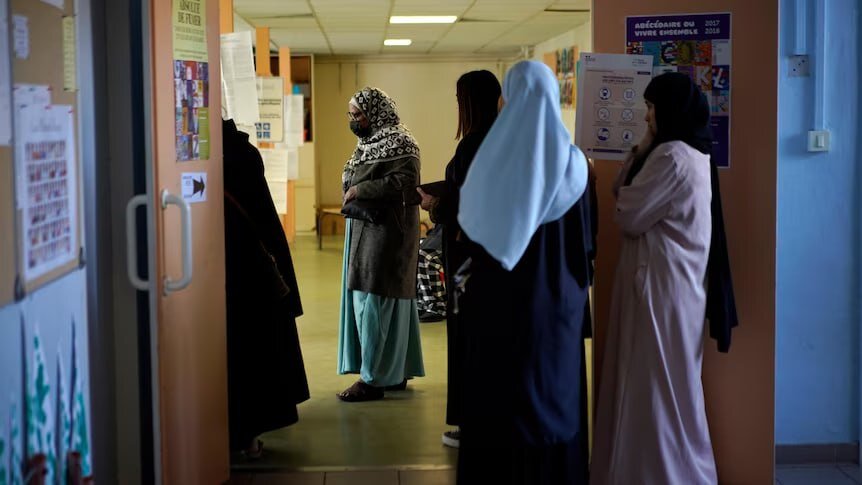
TEHRAN- Children in French schools will no longer be allowed to wear the Abaya, a long loose-fitting dress worn by Muslim women.

The Education Minister, Gabriel Attal, said that the style of the long, flowing dresses worn by some Muslim women, would no longer be allowed when the new school term begins next week because they allegedly violate the French principle of secularism. 

“I have decided that the Abaya could no longer be worn in schools,” Attal told French television. “When you walk into a classroom, you shouldn’t be able to identify the pupils’ religion just by looking at them.”

France has a strict ban on religious symbols in schools that have mainly impacted the country's Muslim community.

In 2004, France banned Muslim female students from wearing their headscarves at schools. And in 2010, France banned full-face veils in public, drawing the anger of the five million-strong French Muslim community living in the country. 

Late last year, former education minister Pap Ndiaye identified the Abaya as a garment that can "take on a possible religious character" even if it is not an explicitly religious symbol.

Ndiaye said he was against banning the Abaya, telling the Senate, "The Abaya is not easy to define, legally... it would take us to the administrative tribunal, where we would lose".

He also noted that he did not want “to publish endless catalogs to specify the lengths of dresses”.

The debate continued to drag on this year.

Reacting to the announcement, former presidential candidate Jean-Luc Melenchon and the leader of La France Insoumise said the September return to school was being “politically polarised by a new absurd form of war of religion”.

France's Council of Muslim Worship said the Abaya is "mistaken" by some as a Muslim religious sign.

"Any item of clothing is not a religious sign in itself," the group said in a statement in June.

"You only have to travel through Muslim-majority countries to realise that the citizens of these countries, of all faiths, are indistinguishable based on the clothes they wear," it added.

The government spokesperson, Olivier Véran, said the Abaya was “obviously” a religious garment and “a political attack, a political sign” that he saw as an act of “proselytising” or trying to convert to Islam. 

But many on the left have also condemned the move, including Clementine Autain, an MP from the leftist Insoumise party, who criticized what she called the "clothes police" and a move "characteristic of an obsessional rejection of Muslims".

Some academics agreed the move could be counterproductive, all the more as it touched on clothing they said was worn for identity rather than religion.

"It's going to hurt Muslims in general. They will, once again, feel stigmatized," said sociologist Agnes De Feo.  "It's really a shame because people will judge these young girls, while it (the Abaya) is a teenage expression without consequences." 

Loubna Regui, president of the ELF-Muslim Students of France, told Al Jazeera the ban was “inherently racist”.

Activists say banning the Abaya is more than just policing people's bodies but essentially degrading them, arguing that whenever you limit somebody's ability on what they can wear in accordance to their faith, it's a form of degradation, belittlement and keeps them under the control of the state.

They say what the Abaya or hijab represents is a form of power, and that is viewed as a threat to the government of French President Emmanuel Macron. 

Other activists say there is a lack of respect and knowledge on the part of the French government and authorities toward Islam. 

France, a former colonial country, occupied many countries in Africa. It colonized the Muslim states Algeria, Morrocco, and Tunisia in North Africa. It committed numerous atrocities during colonialism.

Many Algerians, Moroccans and Tunisians who immigrated to France and are citizens of the country today complain that there is a lack of respect toward them and a lack of understanding or sympathy by French authorities toward their Islamic faith. 

Macron himself is currently under fire domestically. 

The French leader’s controversial pension measures saw mass nationwide protests this year that morphed into other grievances in French society. 

Critics have accused Macron of tapping into far-right ideologies with this latest ban targeting Muslims to regain his popularity which has sunk to a record low. 

The move to ban the Abaya has been quickly welcomed by those on the far right of the French political spectrum and their supporters. 

Right-wing politician Eric Zemmour, head of the small Reconquest! party opposed to immigrants, said on social media that “banning Abayas is a good first step if it is applied.”

The head of the conservative Les Republicains party, Eric Ciotti, was also quick to welcome the move, which he said was long overdue.

Sophie Venetitay, from the SNES-FSU teachers' union, said it was important to focus on dialogue with pupils and families to ensure the ban did not take children away from state-run schools to go to religious schools. 

“What is certain is that the Abaya is not the main problem for schools,” she told Reuters, stressing that a lack of teachers was a much bigger issue.

According to the union, around 65% of high school teachers in France attended nationwide strikes earlier this year. In some schools, the rate was as high as 80%, and some schools were closed in protest against Macron's pension reform, which has seen a wave of teachers leaving their jobs. 

The union has slammed Macron for not focusing on the bigger issues plaguing the French schools. 

To enforce the ban on Abayas in classrooms, Attal said 14,000 educational personnel in leadership positions would be trained by the end of this year, and 300,000 personnel would be trained by 2025.

The ban by Attal, who is close to President Macron, has certainly triggered a fresh political debate about France’s secular rules and how they are discriminating against the country’s Muslim minority.

It also comes at a time when French foreign policy has seen its iron grip on the Sahel and Horn of Africa quickly disappear. 

France's heavy participation in the Ukraine war has also seen a cost-of-living crisis back home with inflation rising. 

The move is being seen as an ideal time for the French government to divert attention, both on domestic and foreign front, and put out another announcement that targets Muslims and their religion.


TAGS