
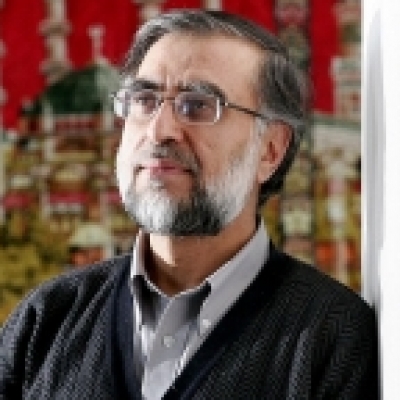
 Zafar Bangash

On June 23, India’s NDTV channel broadcast a video showing the lynching of a 24-year-old Muslim man, Tabrez Ansari, in Seraikela in the Indian state of Jharkhand. Tied to a pole, Hindu terrorists continuously beat him with sticks for 12 hours. With broken bones and bleeding, instead of taking him to hospital, the police dragged him to a police station for interrogation and held him for several hours. Later he was taken to a hospital where he died on June 22. He was to be married soon.
Lynching of Muslims has become all too common across India. Self-styled cow vigilantes have taken it upon themselves to prevent the slaughter of cows they consider to be their mother — yes, you read that correctly — for which they kill Muslims. Eleven state governments in India have banned cow slaughter but that has not prevented Hindu businessmen from running slaughterhouses. India rakes in $4 billion annually in beef exports, mostly to the Muslim East. Cow vigilantes do not go after Hindu businessmen; their wrath is reserved only for defenceless Muslims. Even the police join in Muslim lynching, or do nothing when Hindu mobs go on a rampage.
India has always been a deeply divided society along religious, ethnic, and caste lines. Religious minorities — Muslims, Sikhs, and Christians — have faced systemic discrimination despite token positions in government to hoodwink the rest of the world about Indian secularism. The Hindu caste system, a blot on the conscience of the world, has consigned hundreds of millions of people to lower castes suffering humiliation and degradation.
At the lowest rung of the caste pyramid, the Dalits constitute more than 200 million people. They are prohibited from eating in the same plate, drinking from the same glass, or even drawing water from the same well as upper caste Hindus. The caste system is religiously sanctioned apartheid yet such racism has escaped the world’s attention and opprobrium. This is deliberate. India is seen as a potential market of 300 million middle class people.
Such anachronistic policies were papered over under the rubric of Indian secularism. But the mask has finally come off India’s ugly face since the rise to power of the Bharatiya Janata Party (BJP) in 2014. Led by Narendra Modi, a hard-core Hindu fascist who presided over the slaughter of more than 2,000 Muslims in 2002 when he was the chief minister of Gujarat state, Hindu mobs have unleashed terror on defenceless Muslims.
Although there are 190 million Muslims in India, representing 16% of the total population of 1.2 billion, the ruling BJP does not have a single Muslim member of parliament. This is unprecedented in Indian history. Muslim representation in parliament has declined to a mere 3.7%. They were already discriminated against in the bureaucracy, police, army, and other governmental services. Now they have no voice in parliament either.
India has carefully cultivated its image as the world’s “largest democracy.” In technical terms, this may be true. In the April–May 2019 general elections, of the 900 million eligible voters, nearly 600 million cast ballots but does that make India a democracy?
Leading stalwarts of the ruling BJP including Modi have emerged from the ranks of the RashtriyaSwayamsevak Sangh (RSS), a Hiterlite organization that openly promotes Hindu fascism. It has more than six million members that receive military training. BJP President Amit Shah has called Muslims “termites.”
Despite presiding over a state polity that openly promotes racism and discriminates against religious minorities, Modi is welcomed and feted in Western capitals. There was a break from this craven policy of appeasement of Hindu fascism when the US State Department in its 2018 Report on International Religious Freedom was forced to shine light on India’s horrible mistreatment of minorities. Citing reports by nongovernmental organizations (NGOs), the US report makes grim reading. It said, “The government sometimes [sic] failed to act on mob attacks on religious minorities, marginalized communities, and critics of the government.”
Without naming them, the report further said, “Some senior officials of the Hindu-majority Bharatiya Janata Party (BJP) made inflammatory speeches against minority communities. Mob attacks by violent extremist Hindu groups against minority communities, especially Muslims, continued throughout the year amid rumors that victims had traded or killed cows for beef. According to some NGOs, authorities often protected perpetrators from prosecution. As of November, there were 18 such attacks, and eight people killed during the year.
On June 22, two Uttar Pradesh police officers were charged with culpable homicide after a Muslim cattle trader died of injuries sustained while “being questioned in police custody…”
When more than 40% of the 543-members in India’s parliament face criminal charges — some as serious as murder and rape — lawlessness is bound to spread across the country. Muslims are its biggest victims as the horrific lynching of Tabrez Ansari showed.
India is not a democracy; it is a country ruled by gangsters, rapists, and mass murderers.
Zafar Bangash is Director of the Institute of Contemporary Islamic Thought (ICIT).


