Showing posts with label Donald John Trump to be impeached. Show all posts

Saturday, October 05, 2019

Democracy Dies Amid Lies, And So Does Sound Policy

Donald Trump
by Paul R. Pillar
Two leading scholars of democracy, Larry Diamond and James Fishkin of Stanford, recently reported on an intriguing exercise that they say constitutes good news for those who worry about the state of American democracy. A representative sample of 523 registered voters from across the United States were brought together for four days of facilitated discussions on an assortment of leading public policy issues. The substantive input they received included, besides the comments of their fellow participants, a “handbook” with arguments on each side of the issues as well as question-and-answer sessions with subject experts and presidential candidates. The participants were polled, before and after the event, about their opinions on the issues discussed. The encouraging result, according to Fishkin and Diamond, was that the event caused significant shift in participants’ views, in which the overwhelming majority of the shifts involved discarding more extreme views and increasing consensus in support of centrist or moderate proposals.
The shifts were evident in all the issue areas discussed, including immigration, health care, the economy, and the environment. “Somewhat to our surprise,” write Fishkin and Diamond, there also were large changes on foreign policy, mostly because of changes among self-identified Republicans. Support for the Trans-Pacific Partnership increased from about half the participants to about three-quarters. “Perhaps most striking,” the authors say, “was the spike in support among Republicans for recommitting to the Iran nuclear agreement.”
Several processes probably underlie the observed shifts in opinion. Placing people in an environment in which the usual partisan tribalism does not predominate explains much of the shifts. Exposure to the views of people from other backgrounds and other party allegiances demonstrates that fellow citizens on the other side of domestic divides are not hostile aliens and can express a reasonable point of view. People on different sides of those divides could see that they share similar day-to-day frustrations and challenges. As journalists who observed the discussions report, on an issue such as health care, there were many empathy-generating personal stories about problems such as onerous medical bills.
There also is a simpler explanation, which almost certainly accounts for most of the observed shift, especially marked among Republicans, on foreign policy: people were exposed to the truth. Unlike with issues of domestic policy, views did not shift because of empathy and the experience of hearing fellow participants’ first-hand stories about difficulties in obtaining affordable health care. They shifted because the participants were provided information (and, given the format of the exercise, were pretty much forced to listen to the information) that dispelled falsehoods perpetrated in the tribal orbits that they regularly inhabit. It should be no surprise that there was a striking shift among Republican participants in support of the Iran nuclear agreement, because on that subject, such falsehoods have had an especially marked effect in corrupting public debate—falsehoods such as that the agreement will permit Iran to build a nuclear weapon in a few years, or that the United States “gave” Iran vast sums of money as part of the deal.
An Administration of Lies
The wider implications of this are all the more profound given how much the current U.S. presidency is built on lies and how desperate and unrestrained the president has become in counterattacking against impending impeachment. Given the centrality of the Ukrainian affair to the impeachment investigation, the prime lie that Donald Trump is pushing at the moment is that Joe Biden, when vice president, pressured the Ukrainian government not to investigate corruption in a company with which his son was involved. That accusation is not just “unsubstantiated,” as some striving-to-be-neutral press outlets would have it, but rather an intentional fabrication that is the opposite of what actually happened.
Given that few members of the intended audience for this lie have participated in anything like Fishkin and Diamond’s exercise, the lie is working. According to a recent Monmouth University poll, 42 percent of respondents, including 67 percent of Republicans, incorrectly believe that Biden exerted pressure on Ukraine to prevent a corruption investigation.
The effect on—more bluntly, the corruption of—U.S. foreign policy that the president’s tactics already have engendered is significant. Relations at the presidential level between the United States and Ukraine—a country of 44 million people that is at the center of important strategic and economic issues involving both Russia and Europe—have been completely subsumed, if the notorious phone call is an indication, into Trump’s quest for dirt on domestic political opponents. Relations with China might be the next to be affected by the quest. The White House’s related effort to discredit Robert Mueller’s investigation into Russian interference into the 2016 election has impinged on U.S. relationships from Australia to Europe, as well as accounting for many travel hours of not only the secretary of state but also the attorney general.
Even more profound are the implications, given Trump’s demonstrated authoritarian tendencies, for the answer to the question, as Thomas Edsall poses it, of ”How and when will President Trump leave the White House?”—and more specifically, will he willingly leave it after either removal through the impeachment process or defeat in the next presidential election? The question raises genuinely scary scenarios in which relevant issues include the loyalties of the Secret Service and the U.S. military. As several of the expert observers Edsall queried speculate, the answer to the question rests mainly with senior Republicans in Congress, and their behavior will depend on what line comes out of Fox and other right-wing media. And that line in turn is connected to how many people in their audience and Donald Trump’s political base will continue to believe the lies that are part of his counterattack.
Removal from Office, Then and Now
When Senator Barry Goldwater, the 1964 Republican presidential candidate and respected Mr. Conservative, turned against President Richard Nixon in August 1974, he said at a Senate Republican Conference lunch, “There are only so many lies you can take, and now there has been one too many. Nixon should get his ass out of the White House—today!” The next day, Goldwater and the Republican leaders of the House and Senate went to the White House and told Nixon he had lost most of his party’s support on Capitol Hill. Two days later, Nixon resigned.
Although Goldwater talked about lies, two important differences about presidential lying distinguish the situation in 1974 from today. One was that Nixon’s duplicity over Watergate was more a matter of concealing truths than of offensive use of lies to discredit legitimate investigations and smear political opponents. (Something similar could be said about the failure of Bill Clinton, the other president in the modern era to be a target of impeachment, to come clean about a sexual fling with an intern.)
The other difference was that at the time of Watergate, Walter Cronkite was the most trusted man in America and the perceptions of most Americans about what was true and what was not in public affairs came mainly from their exposure to responsible mainstream media. Once a lie was exposed as a lie, that was usually the end of it. Today’s fractionated audiences and multitude of politically oriented outlets, which include not only Fox and Rush Limbaugh but countless online sites with committed followers, presents a far different situation. Even after being thoroughly debunked, lies can live on, with major political impact, in the circle of ideologically driven promoters of the lie and their loyal audiences. It would be wonderful to put the entire population through a reality-checking experience like what Fishkin and Diamond put 523 people through, but of course that is not possible.
“Democracy Dies in Darkness” is the Washington Post’s masthead motto, and the newspaper’s role in illuminating what was concealed by the darkness of Watergate no doubt played a role in selecting that slogan. Bringing to light malfeasance that hides in the dark is indeed important in preserving American democracy. But today the health of that democracy depends just as much on somehow taking down lies that are brazenly and repeatedly proclaimed and, far from being hidden in the dark, are part of the blinding fire of political combat. 

Thursday, October 03, 2019

Donald Trump is finished

To tell the story of US President Donald Trump’s malfeasance and corruption, three articles of impeachment, the same number that forced Richard Nixon from the Oval Office, should suffice: 1- Abuse of power for Ukraine, 2- Using the presidency for personal gain, and 3- Obstruction of justice for the US Special Counsel Robert Mueller investigation and the wholesale defiance of congressional subpoenas.
As the US congressional impeachment hearings move forward, public support can be expected to increase. Even if the Senate refuses to convict, Trump’s reelection prospects will be crippled, as Democrats will be able to target Trump and the GOP in the 2020 elections for betraying the Constitution.
Here we present you an article in this regard by Bill Blum, a former judge and death penalty defense attorney, under the heading: "Donald Trump is finished." His article was taken from the Truthdig.com.
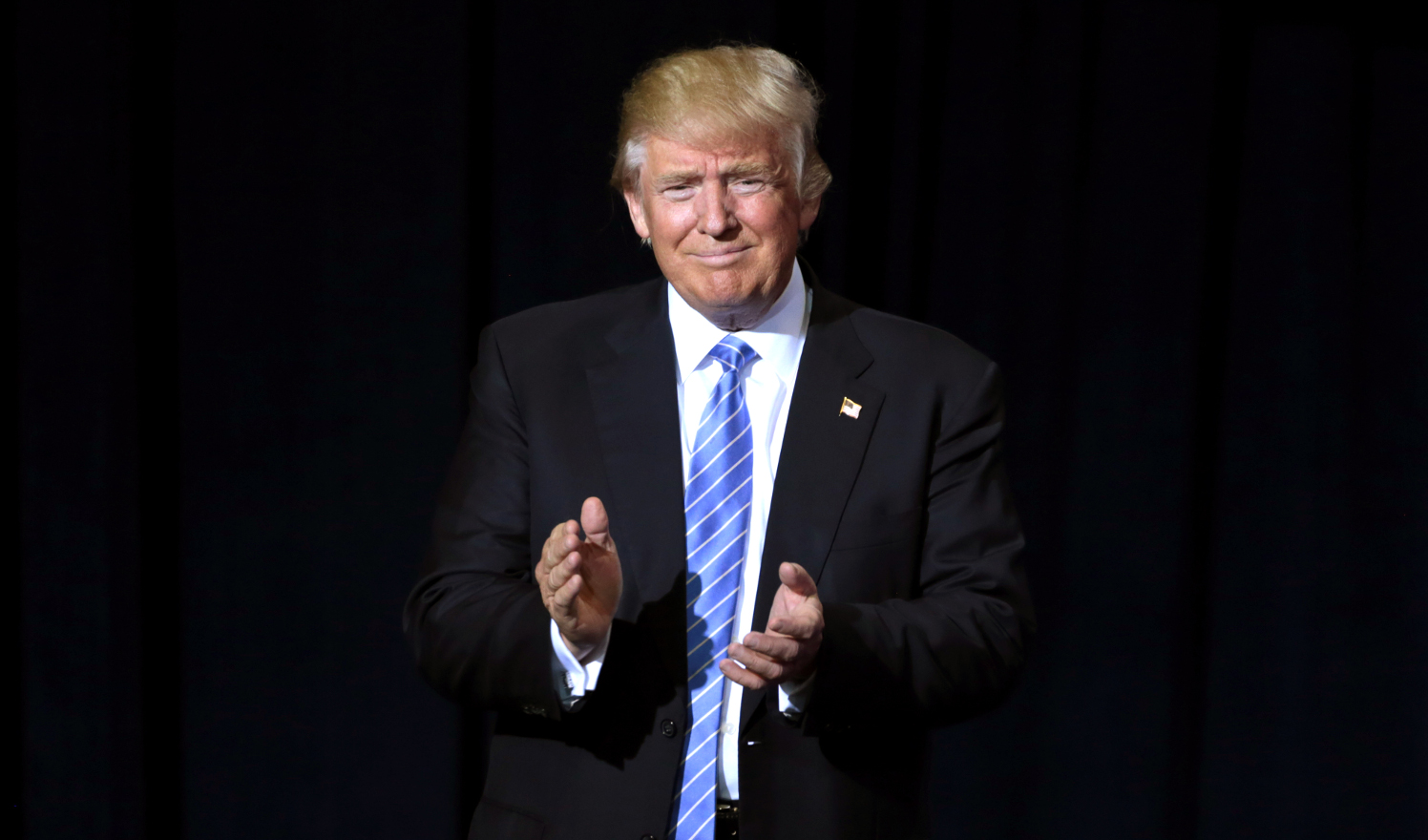
Donald John Trump, the 45th president of the United States, is going to be impeached. Not only that, but whether or not the GOP-controlled Senate convicts Trump of “high crimes and misdemeanors,” his presidency is drawing to a close. Unless a political deus ex machina comes to his rescue, he will not serve a second term.
Numerous actions and events have brought Americans to this impeachment precipice, virtually all of them initiated by Trump himself. He is the architect of his own demise, and there is no turning back.
As of Saturday Sept. 28, 2019, some 225 members of the House of Representatives were on record endorsing an impeachment investigation. Their ranks included Independent Justin Amash of Michigan and Republican Mark Amodei of Nevada. The last high-profile House Democratic holdout, Tulsi Gabbard of Hawaii, announced her support Friday, Sept. 27. The total will only expand in the coming weeks.
Trump, for his part, appears increasingly exhausted, paranoid and incoherent, not unlike Ricard Nixon in the final stages of Watergate. The president has taken to Twitter even more than usual, spewing vitriol and blurting out threats of revenge against his many presumed enemies.
For those who are unfamiliar with the procedure or who could simply use a refresher, impeachment is the constitutional mechanism by which a president, vice president or “civil officer of the United States” can be accused of “treason, bribery or other high crimes and misdemeanors” and removed from office upon conviction.
The specific provisions governing the process can be found in Article 1, Section 2 and Article 2, Sections 3 and 4 of the Constitution, which define the respective powers of the legislative and executive branches of the federal government.
Together, the provisions establish a two-step process. As explained in a 2015 study, “Impeachment and Removal,” prepared by the nonpartisan Congressional Research Service: “First, a simple majority of the House impeaches—or formally approves allegations of wrongdoing amounting to an impeachable offense, known as articles of impeachment. The articles of impeachment are then forwarded to the Senate where the second proceeding takes place: an impeachment trial. If the Senate, by vote of a two-thirds majority, convicts the official of the alleged offenses, the result is removal from office. …”
Although scores of federal officials have been the subject of congressional impeachment resolutions since the United States' founding, the House has referred only 19 individuals to the Senate for impeachment trials—15 federal judges (including Supreme Court Justice Samuel Chase in 1805), one senator, one cabinet member and two presidents, Andrew Johnson in 1868 and Bill Clinton in 1998-99. The US Senate has conducted 16 impeachment trials, convicting eight lower-court judges. The rest were acquitted.
Nixon, whose name is most often associated with impeachment, was never formally impeached. Rather than face certain conviction in the Senate, Nixon resigned before the full House could vote on three articles of impeachment passed by the Judiciary Committee in 1974.
As the accusatory body, the House has the authority to decide what constitutes an impeachable offense in any particular instance. The Constitution provides only general guidance, defining the grounds for impeachment as “treason, bribery and other high crimes and misdemeanors.”
While treason and bribery are clear enough, to grasp the meaning of “high crimes and misdemeanors”—the basis most commonly invoked over the decades and which will surely be cited against Trump—we have to look back to the Constitutional Convention of 1787.
The Founding Fathers debated impeachment and the notion of high crimes and misdemeanors extensively at the convention. James Madison, the fourth President of the United States from 1809 to 1817, described impeachment as “indispensable . . . for defending the community [against] the incapacity, negligence or perfidy of the chief magistrate.” George Mason, American planter, politician and delegate to the U.S. Constitutional Convention of 1787, argued, “No point is of more importance than that the right of impeachment should be continued. Shall any man be above justice?” Benjamin Franklin, an American polymath and one of the Founding Fathers of the United States, quipped dryly that impeachment was preferable to the European method of displacing a king—assassination.
But of all the Founders, Alexander Hamilton, an American statesman, is credited with defining the scope of impeachment. In Federalist (Paper) No. 65 (1788), Hamilton described the legal process as embracing not only overt criminal conduct, but also serious violations of the “public trust.”
True to Hamilton’s reasoning, over the course of Americans' history, charges of high crimes and misdemeanors have been alleged for a wide array of wrongdoing, both criminal and noncriminal, including abuse of power, obstruction of justice, corruption, bribery and perjury.
Bill Blum, author of this article says: "No one, not even Nixon, is more deserving of impeachment than Donald John Trump. In 2015, while Trump was a presidential candidate, I warned of the dangers he posed to immigrants, the First Amendment, and civil rights and liberties in general. Soon after the election, I began writing about his inevitable impeachment."
The principal debate now among mainstream Democrats and progressives is no longer whether Trump should be impeached, but how extensive the articles drafted against him should be. Well before the Ukraine scandal erupted into public view recent courtesy of a whistleblower’s complaint, Trump was liable for a long laundry list of impeachable offenses.
Among the many derelictions which were cited, Trump can credibly be accused of:
  1. Committing campaign finance violations by paying hush money to two women with whom he allegedly had extramarital affairs, Karen McDougal and Stormy Daniels;
  2. Obstructing justice in connection with the investigation by Special Counsel Robert Mueller;
  3. Defying congressional subpoenas;
  4. Using the presidency for personal economic gain;
  5. Abusing the pardon power to reward political allies;
  6. Attacking the press and the judiciary;
  7. Threatening to prosecute political opponents;
  8. Abusing emergency powers to build his border wall;
  9. Incarcerating undocumented immigrant children in concentration camps;
  10. Attempting to strip millions of Americans of health insurance;
  11. Promoting tax reform to benefit the super-rich;
  12. Gutting environmental regulations and pulling out of the Paris Climate Accord;
  13. Refusing to enforce the Voting Rights Act; and
  14. Curbing the use of federal consent decrees to counter police misconduct.
The mafia-like shakedown of Ukraine President Volodymyr Zelensky—as reflected in the declassified “Memorandum of Telephone Conversation” (memcon) that details the July 25 conversation between the leaders—only adds fuel to an already raging fire.
As shown by the memcon, which is organized in the form of an edited transcript, the American president promised to release American military assistance to Ukraine in return for a “favor”—that Zelensky use the power of his office to investigate alleged Ukrainian support for the Democrats during the 2016 American presidential campaign, as well as alleged corruption charges involving Joe Biden and his son Hunter. Trump urged Zelensky to talk to and “cooperate” with Attorney General William Barr and Trump’s Private Attorney, former New York City Mayor Rudy Giuliani, for both purposes.
This is an abuse of power in black and white, aimed at using a foreign government to bring down a political rival. Arguably, it may also establish the elements of two federal felonies: extortion and bribery.
Since the release of the memcon, the Ukraine scandal has spiraled further out of control. Evoking memories of the Watergate coverup, it has been confirmed that White House lawyers ordered the original verbatim digitized transcript of Trump’s phone call with Zelensky be moved to a highly classified system maintained by the National Security Council, which is accessible only to a small circle of officials. It has also been reported that Trump has similarly restricted access to records of past conversations with Russian President Vladimir Putin and Saudi Crown Prince Mohammed bin Salman.
On Thursday Sept. 26, 2019, Trump upped the impeachment ante in a talk at a private event in New York. Comparing information leakers and whistleblowers to traitors deserving of the death penalty, he said: “You know what we used to do in the old days when we were smart? Right? The spies and treason, we used to handle it a little differently than we do now.”
Still, the issue of where to draw the line in the articles of impeachment against Trump is tricky. Impeachment is a political process, but it bears similarities to criminal prosecutions. And as any experienced defense attorney can tell you, more than a few strong prosecutions have failed due to overcharging, which can complicate, mar and muddy an otherwise straightforward narrative. (Bill Blum says: "As a young lawyer, for example, I won the reversal of a defendant’s conviction of attempted murder that stemmed from overcharging, according to the published opinion issued by the California Court of Appeal.")
To tell the story of Trump’s malfeasance and corruption, three articles of impeachment, the same number that forced Nixon from the Oval Office, should suffice:
  1. Abuse of power for Ukraine.
  2. Using the presidency for personal gain.
  3. Obstruction of justice for the Mueller investigation and the wholesale defiance of congressional subpoenas.
US Democrats have little to fear from a Trump impeachment. The current situation is much more akin to 1974, which saw Nixon’s popularity steadily erode until his resignation, than 1999, which saw Bill Clinton’s popularity climb. A CBS News Poll released Sunday showed a whopping 55% of respondents favor the impeachment inquiry. A Quinnipiac University Poll survey released on Monday went beyond the inquiry, finding respondents evenly split, 47 percent to 47 percent, on whether they support impeaching President Trump and removing him from office, a 10-point swing in favor of impeachment over a five-day period.
As the congressional impeachment hearings move forward, public support can be expected to increase. Even if the Senate refuses to convict, Trump’s reelection prospects will be crippled, as Democrats will be able to target Trump and the GOP in the 2020 elections for betraying the Constitution.
For the progressive left, impeachment presents a rare opportunity to hold a tyrant to account, and to merge the impeachment issue with a broader agenda for genuine social and political change. While some progressives may balk at forging a tactical alliance with mainstream Democrats, the choice should be a no-brainer. The impeachment train has left the station. Either get on board and help steer, stand aside, or get run over.