
By Romana Rubeo
 Gaza’s Palestinian Christian community celebrate the holiday season by lighting the Christmas tree. (Photo: Mahmoud Ajjour, The Palestine Chronicle)
As Gaza’s Christians shelter inside church walls amid ongoing Israeli strikes, Palestinians mark Christmas not as a celebration, but as an act of endurance.
In the Gaza Strip, Christmas arrives not with bells or processions, but with confinement, cold, and the low hum of uncertainty.
Inside Holy Family Church, more than 400 displaced Palestinians, many of them families who have lost everything, are marking another Christmas sheltered within church walls, surrounded by destruction and scarcity.
As reported by the Spanish daily El País, there are no toys for children, no festive meals, and no sense of safety; explosions can still be heard near the parish compound.
Gaza: Christmas Under Siege
Gaza’s Christian community is enduring Christmas amid severe shortages of electricity, clean water, medicine, and winter clothing.
According to Aid to the Church in Need, Father Gabriel Romanelli of Holy Family Parish has described daily life as a struggle for survival, with families waiting hours for limited water and relying on the church compound as both refuge and lifeline.
The parish continues to host daily prayers and Mass, not as a celebration, but as a means of preserving communal cohesion amid devastation.
Reporting from inside Gaza underscores how even the most modest expressions of Christmas have become fraught. El País documented families confined for months, sharing blankets and meager supplies, while children—many of whom have known nothing but war for years—pass the holiday without gifts or play.
Meanwhile, Israel continues to strike several areas of the Strip, a reminder that ceasefire declarations have not translated into genuine security.
Romanelli has described the church’s mission as keeping a “small flame” alive—spiritually and materially—while warning that the humanitarian crisis continues to deepen as winter advances.
That message was echoed during the Christmas visit of Pierbattista Pizzaballa, the Latin Patriarch of Jerusalem, on December 19.
Celebrating Mass at Holy Family Church a few days before Christmas, Pizzaballa met displaced families and joined children in modest activities organized inside the compound.
“Together, we will rebuild everything,” he told the congregation, according to the Latin Patriarchate.
Bethlehem’s Muted Return
While Gaza remains trapped in emergency, Christmas has cautiously resurfaced in Bethlehem, where the lighting of the Christmas tree in Manger Square and services at the Church of the Nativity have resumed after years of disruption. Yet church leaders have deliberately framed the celebrations as restrained and reflective.
Tourism, once Bethlehem’s economic lifeline, has only partially returned, and movement restrictions across the occupied West Bank continue to shape daily life.
Clergy and local officials have emphasized that public festivity cannot obscure Gaza’s ongoing catastrophe—a sentiment reflected in scaled-back events and calls for solidarity rather than spectacle.
For Palestinian Christians, already diminished in number after decades of Israeli occupation and displacement, this season has reinforced a long-held truth. Their faith, history, and future are inseparable from the broader Palestinian condition.
(The Palestine Chronicle)
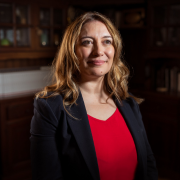
– Romana Rubeo is an Italian writer and the managing editor of The Palestine Chronicle. Her articles appeared in many online newspapers and academic journals. She holds a Master’s Degree in Foreign Languages and Literature and specializes in audio-visual and journalism translation.

No comments:
Post a Comment