
By Ranjan Solomon
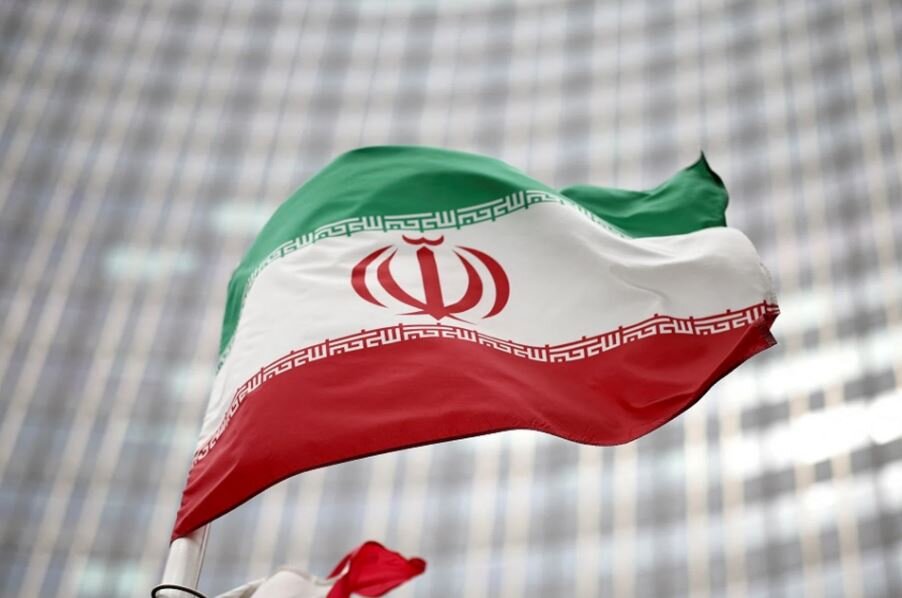
GOA – The contemporary international order is showing unmistakable signs of moral fatigue. The promises that once accompanied global power—democracy, stability, prosperity—now ring hollow across vast regions of the world.
Military interventions justified as humanitarian acts have produced ruins; sanctions imposed in the name of legality have resulted in collective punishment; and international law has increasingly become an instrument applied selectively, stripped of its universal ethic. In this unsettled moment, Iran’s evolving political character invites a different kind of reading—not as a defiant outlier or regional disruptor, but as a civilisational actor articulating an alternative understanding of power, restraint, and legitimacy.
Recent affirmations by Venezuela, Cuba, and Nicaragua, acknowledging Iran’s role in altering global power equations, are not diplomatic formalities. They reflect a shared historical consciousness shaped by coercion, intervention, and economic siege. These states, long subjected to external pressure justified through fabricated narratives and moral exceptionalism, recognise in Iran a political posture that neither capitulates nor recklessly escalates. What is being acknowledged is not simply Iran’s capacity to resist, but its manner of resistance—measured, lawful, and embedded in a broader ethical claim.
Iran’s political maturity is rooted in its refusal to internalise the logic of domination that has defined much of modern geopolitics. Over decades of sanctions, proxy conflicts, assassinations, cyber warfare, and threats of regime change, Iran has cultivated a posture of strategic patience. This patience is frequently misread as ideological rigidity or obstinacy, yet it reflects a deeper civilisational memory—one that understands endurance as a form of strength and restraint as a political virtue.
The episode referred to by diplomats as the “12-day war” should be understood beyond its military contours. It functioned as a demonstration of deterrence without spectacle, signalling capability without descending into indiscriminate violence. In an international system accustomed to shock-and-awe doctrines and performative militarism, Iran’s response conveyed a different ethic: that power, when exercised responsibly, need not seek annihilation or humiliation to be effective. Deterrence here was not an assertion of supremacy, but an insistence on limits.
This ethic is inseparable from Iran’s civilisational inheritance. Persian political history, long preceding the modern nation-state, emphasised administration over destruction, continuity over rupture, and plurality over erasure. From imperial governance to philosophical traditions that privileged wisdom and justice, power was historically legitimised not by conquest alone but by stewardship. The Islamic Republic, despite its internal tensions and contradictions, carries fragments of this inheritance into its external conduct.
The statements by Latin American diplomats condemning U.S. and Israeli actions against Iran as violations of international law highlight a critical convergence. Resistance, in this context, is not merely geopolitical; it is moral. Venezuela’s rejection of fabricated accusations, Cuba’s decades-long endurance under blockade, Nicaragua’s survival amidst external destabilisation—all resonate with Iran’s experience of being targeted not for transgressions, but for refusal to submit. What unites these narratives is an understanding that sovereignty, when conditional, ceases to be sovereignty at all.
Iran’s support for such nations has not been accompanied by attempts at domination or ideological export. This restraint distinguishes it from hegemonic powers whose interventions routinely culminate in regime change, economic dependency, or social fragmentation. Iran’s alliances are marked less by hierarchy than by reciprocity—an approach that enhances trust among states seeking dignity rather than patronage.
One of the most telling features of Iran’s contemporary geopolitical posture is its avoidance of triumphalism. Even as its deterrent capabilities have become evident, Iran has not translated military strength into territorial ambition or civilisational arrogance. This restraint reflects political maturity: an understanding that power, when divorced from ethics, corrodes its own legitimacy. In contrast to the celebratory militarism that often accompanies displays of force, Iran’s posture remains largely defensive, signalling readiness without revelry.
Dialogue occupies a central place in this political imagination. Iran’s insistence on dialogue—however fraught or conditional—is not a sign of weakness but of civilisational confidence. Dialogue, in this sense, is not capitulation; it is recognition. It affirms that peace cannot be sustained through submission, but through mutual acknowledgement of dignity and grievance. In a world saturated with ultimatums and sanctions, this insistence on dialogue marks a departure from the dominant grammar of power.
This is precisely why Iran’s stance increasingly resonates across the Global South. It articulates a politics that neither romanticises violence nor seeks validation from Western approval. It insists on sovereignty while remaining open to multilateral engagement. Such a balance is rare in an era defined by polarisation and absolutist alignments.
The diplomats’ reference to Iran’s disruption of “global arrogance” should be read as critique rather than antagonism. Arrogance here denotes a system that assumes universality for itself while denying legitimacy to others. Iran’s challenge to this system is philosophical as much as strategic. It questions the moral authority of a world order that preaches legality while practising exception, that invokes human rights while enabling collective punishment.
Justice occupies a foundational place in this worldview. It is not an abstract slogan but a prerequisite for peace. Without justice—economic, political, and cultural—dialogue becomes performative, and stability becomes coercive. Iran’s repeated invocation of justice aligns with the original spirit of international law: sovereign equality, non-intervention, and peaceful coexistence. That these principles are now often dismissed as ideological speaks less to their irrelevance than to the erosion of global ethical consensus.
Iran does not present itself as the architect of a new world order. Rather, it emerges as a harbinger—a signal that the assumptions underpinning the old order no longer command universal consent. Its influence will not be measured by military bases, currency dominance, or cultural homogenisation, but by its capacity to inspire confidence among nations seeking autonomy without isolation.
The affirmations from Venezuela, Cuba, and Nicaragua are early indicators of this confidence. They recognise in Iran not a benefactor, but a companion; not a model to be replicated, but a stance to be respected. This form of influence is quieter, slower, and less visible than coercive power—but it is also more durable.
As the world moves away from unipolar dominance toward a plural civilisational landscape, Iran’s mature political character—shaped by history, tempered by resistance, and disciplined by restraint—positions it as a consequential ethical presence in global affairs. Its challenge to power is not merely tactical. It is civilisational.
In a world weary of war and disillusioned with false universals, such a presence gestures toward a different horizon—where peace is not enforced through fear, but sustained through justice and dialogue.

No comments:
Post a Comment