
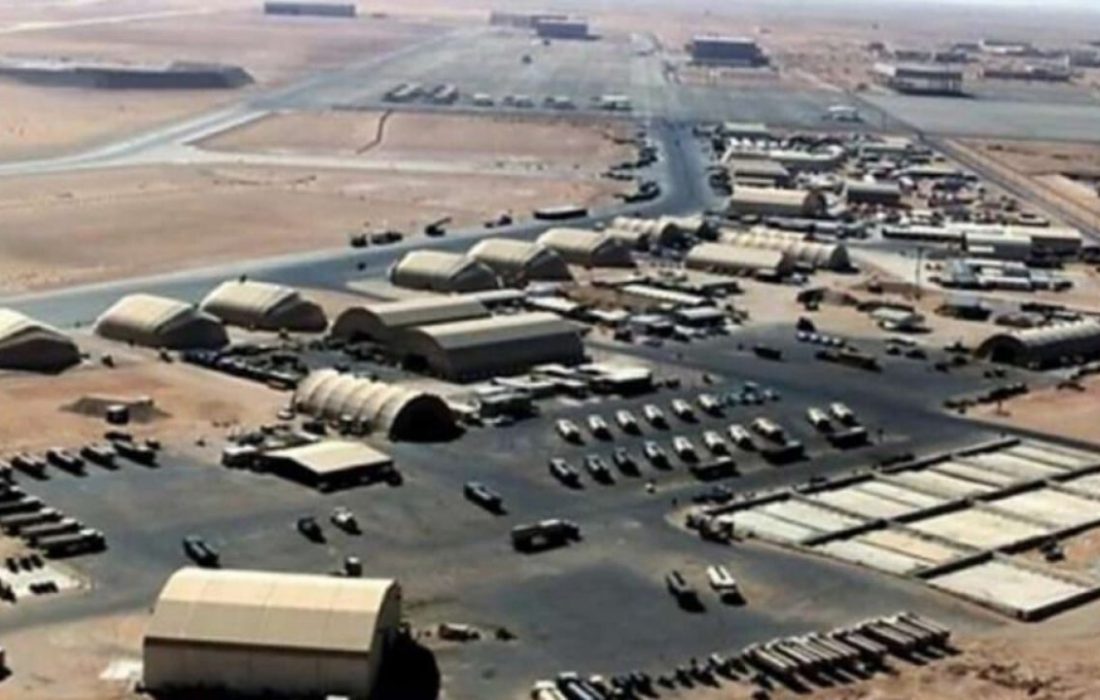
Mohsen Rouhi Sefat, in an interview with the website of the Strategic Council on Foreign Relations, stated: “Contrary to public perception, Washington’s decision to withdraw from Afghanistan was not a product of failure on the battlefield, but rather part of a political and security agreement that was supposed to be implemented with the Taliban. In this agreement, the US agreed that a major portion of Afghanistan’s political power, including the presidency of the government, would be transferred to the Taliban. In return, some key bases, including Bagram, would remain under US control.”
According to this analyst, “America’s goal was to reduce the staggering costs of its military presence in Afghanistan and to transfer power gradually, but several key factors thwarted this process. First, the attacks by ISIS-Khorasan, which, through sudden and bloody operations, hastened the US withdrawal that was poorly planned. Second, internal divisions within the Taliban and the resistance of some groups to the behind-the-scenes agreements with Washington. Third, unexpected developments in Kabul, where the rapid collapse of the central government disrupted the calculations of the US and its allies.”
Referring to the experience of past years, Rouhi Sefat adds, “The importance of Bagram for the United States is not limited to Afghanistan alone. This base, while providing the means to monitor Iran, also holds a strategic position for observing the activities of four nuclear powers: China, Russia, India, and Pakistan. Bagram’s geographical proximity to areas where China has extensive nuclear and infrastructural activities allows the US, if necessary, to monitor or even intervene in China’s vital communication and trade routes.”
According to this expert on Afghan and Pakistani affairs, “The US withdrawal from Afghanistan during the Biden administration not only changed the regional security equations but also allowed China to expand its economic and infrastructural influence through the ‘Belt and Road’ initiative into Central Asia and West Asia. In such circumstances, a potential return of Washington to Bagram could be an attempt to create leverage against Beijing and curb China’s land access to global markets; a route that passes through Kazakhstan, Kyrgyzstan, Afghanistan, and Iran and is of critical importance to the Chinese economy.”
Rouhi Sefat further notes that “The US has long considered China’s dependence on maritime routes and the ability to influence them; routes that are under the surveillance and control of Washington’s naval power. From the perspective of this senior analyst on Afghan and Pakistani affairs, a renewed presence in Bagram could complement this maritime pressure and form a combined strategy: control of the sea on one hand, and dominance over land routes on the other.”
He recalls that “The decision to withdraw US forces was first proposed during the Obama era, and Trump continued it with the slogan of ending endless wars, but in practice, Washington never lost sight of Afghanistan’s geopolitical importance. For this reason, a return to Bagram, in the view of many analysts, is not a policy change, but an effort to complete America’s unfinished scenario in the region.”
According to this analyst, efforts for a potential renewed US presence in Afghanistan could have contradictory consequences for the region. On one hand, some regional actors might benefit from the containment of terrorist threats and the prevention of ISIS’s expansion. Still, on the other hand, the competition of major powers and the transformation of Afghanistan into a new arena of struggle between Washington and Beijing could further threaten the region’s fragile stability.”
Finally, Rouhi Sefat emphasizes that “The future of Afghanistan and regional security should not be sacrificed to the geopolitical competition of global powers.” Referring to China’s recent stance, he reminds us that “The only sustainable path to stability in Afghanistan is to respect the sovereign right and decisions of its people, and any foreign military presence will not only fail to contribute to peace but will also intensify tensions.”

No comments:
Post a Comment