
Trump’s confidant lands in Ankara with a mandate to realign the region – at Turkiye’s expense, and for Tel Aviv’s gain.
The Cradle

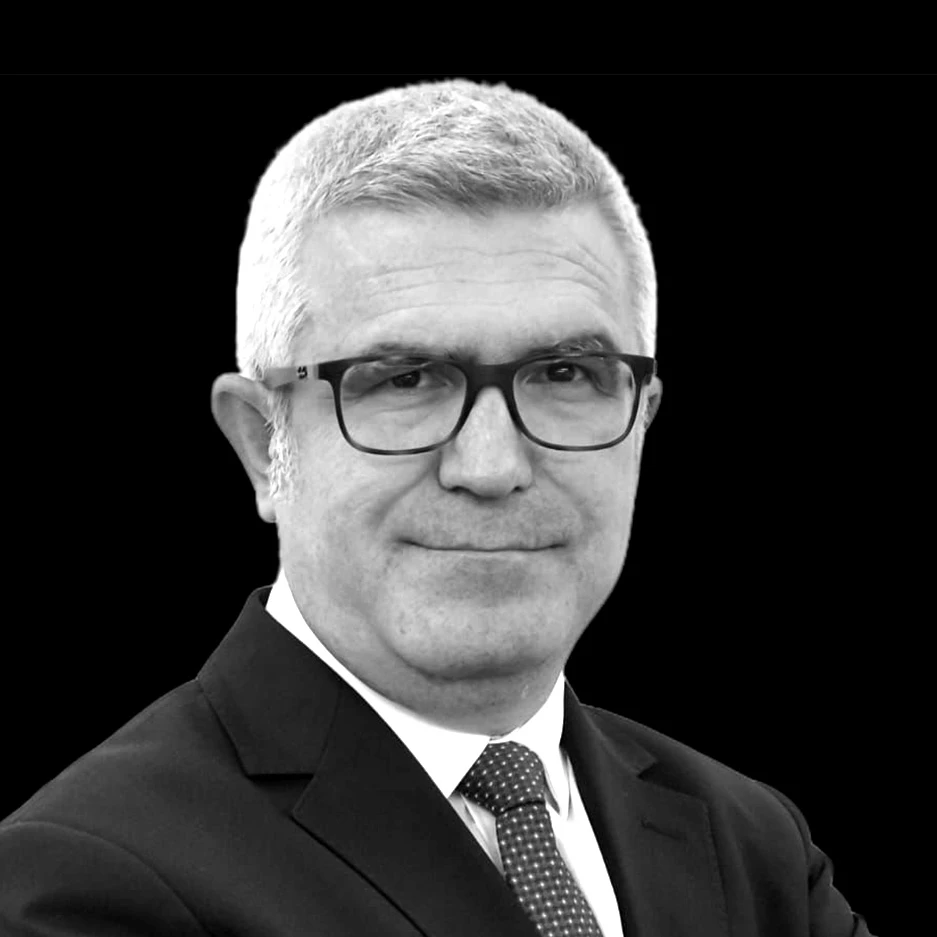
In Ankara, his Lebanese Christian roots have been celebrated by the ruling alliance, which has dubbed him an “Ottoman citizen” – a superficial embrace that masks the far more disruptive nature of his mission.
Barrack’s dual role reveals the scale of US ambition. His task is to shepherd Turkiye into a new configuration – aligned with Washington and Tel Aviv’s goals, especially within the deeply contested triangle of Turkiye, Syria, and the occupation state.
Engineering a new alignment
At his 1 April Senate confirmation hearing, Barrack offered a clear outline of his assignment: repositioning Turkiye as a pillar of a US-led front against Iran, Russia, and China. Echoing comments by Trump’s envoy to the region, Steve Witkoff – who had called the 16 March phone call between Trump and Turkish President Recep Tayyip Erdogan “transformational” – Barrack declared that Washington’s regional policy would subsequently rest on cooperation with Ankara.
His orders extend to ensuring that Turkiye and the occupation state do not come into direct confrontation in Syria, a goal Trump himself articulated during Israeli Prime Minister Benjamin Netanyahu’s White House visit. Barrack is not just a diplomat. He is the overseer of a regional project, one that redraws alliances and neutralises potential dissent.
Washington’s game on Ankara’s board
Barrack offered conventional praise for Turkiye’s NATO role and its drone deliveries to Ukraine, before pivoting sharply to geopolitics. He “stressed the strategic importance of deepening US–Turkiye energy partnerships, particularly in liquefied natural gas [LNG], as a counterbalance to China's Belt and Road Initiative [BRI].”
This framing extends beyond Asia. Barrack also portrayed Turkiye as an indispensable alternative to China in Africa, highlighting how Turkish firms are outmaneuvering their Chinese counterparts in major infrastructure projects.
Beneath this narrative lies a deeper purpose: presenting Turkiye’s economic clout as a diversion from Israel’s own clandestine expansions on the continent – through arms sales, intelligence networks, and diplomatic initiatives – across the Horn, Sahel, and North Africa.
The message was unmistakable: Turkiye’s economic clout will be instrumentalized to serve Atlanticist priorities, while deflecting attention from the occupation state’s parallel ambitions in Africa.
Barrack also made a notable historical reference in his interview with NTV, stating, “I think all these borders go back to Sykes-Picot, all the Sevres Agreement, all the failed borders. It's just time to reassign and reach an agreement.”
This nod to the century-old colonial carve-ups of West Asia makes clear that Barrack sees his mission not as diplomacy, but as a redrawing of boundaries in favour of the US and its regional allies.
A convergence of contradictions in Syria
The core of Barrack’s mission lies in synchronizing US, Israeli, and Turkish objectives in Syria, despite the many contradictions between them. For Washington, the priorities are twofold: First, to compel interim Syrian President Ahmad al-Sharaa – better known as Hayat Tahrir al-Sham (HTS) leader Abu Mohammad al-Julani – into recognizing Israel through sanctions and coercive diplomacy; and second, to force Turkiye to accept a Kurdish autonomous zone modelled after northern Iraq.
The occupation state’s interests also converge around these goals. Tel Aviv seeks to expand its presence in Syria, carve out buffer zones – particularly those backed by a Druze entity – and periodically degrade the Syrian army to maintain a military imbalance. It, too, supports the emergence of an autonomous Kurdish polity, or in its absence, a structure that can fragment Syrian sovereignty.
Ankara, for its part, officially champions Syrian unity, but informally signals a willingness to accept a Kurdish region – so long as it remains under Turkish influence. This includes cultural autonomy, political recognition, and even Turkish “guardianship.” The broader ambition remains the preservation of the Al-Qaeda-rooted administration in Damascus, which can anchor Turkiye’s regional sway.
A quiet pivot: AKP’s outreach to the PYD
One of Barrack’s earliest actions was to initiate direct contact with Kurdish-led Syrian Democratic Forces (SDF) commander Mazloum Abdi. According to Al-Monitor, the ambassador assured Abdi of continued support in the fight against ISIS and encouraged him to continue dialogue with Ankara, mediated by Washington.
In an interview with Shams TV, Abdi disclosed that a 2.5-month ceasefire had held between the SDF and Turkiye. Talks were ongoing through both direct and mediated channels, he said, covering border demarcation, points of military contact, and the possible integration of the SDF into the Syrian army. He also made clear that the SDF was open to direct negotiations with President Erdogan.
The shift in language from Ankara has not gone unnoticed. Defense Minister Yasar Guler and Erdogan himself have both started referring to the Kurdish-led Democratic Union Party's (PYD) military arm as the “SDF,” signaling a tentative normalization with the group Washington insists on rehabilitating. Behind this change is not just pragmatism, but pressure from Barrack’s mediation.
That there is now an anti-Lausanne alliance is undeniable. The ruling Justice and Development Party (AKP) rejects it as a founding myth. The now dissolved Kurdistan Workers' Party (PKK) condemns it as the root of Kurdish disenfranchisement. And Washington – through Barrack – views it as the final barrier to completing the “Greater Middle East Project.”
Barrack’s regional blueprint
Tom Barrack has not been dispatched to manage diplomacy – he has been sent to enforce a new order. His mission includes pressuring Damascus into normalizing with the Israeli occupation state, pushing Turkiye to recognize Kurdish autonomy through formal engagement with the SDF, and preventing Ankara and Tel Aviv from colliding in Syria.
But Barrack’s brief extends beyond the immediate triangle. He is also tasked with reining in Netanyahu, ensuring the Israeli leadership does not sabotage Trump’s Iran policy or diverge from Washington’s script in Gaza.
This is not a negotiation. It is a plan of action. The stakes are regional sovereignty, resistance legitimacy, and the future of the Syrian and Turkish states. And as is so often the case in West Asia – sentences like these never end with a full stop...

No comments:
Post a Comment