Wednesday, December 31, 2025

Israel conceals extent of casualties from 12-day war: Iran war room chief

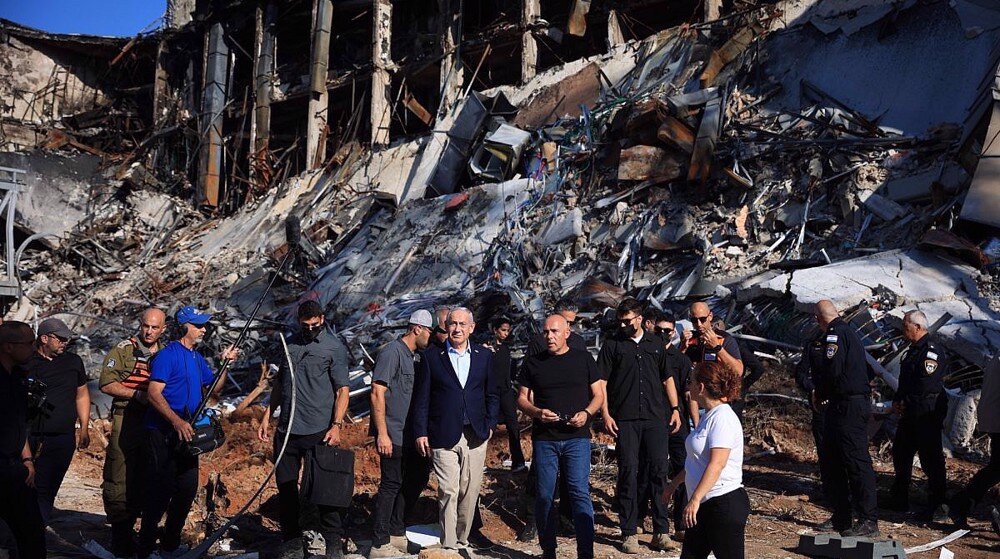
TEHRAN – Major General Ali Abdollahi, commander of Iran’s Khatam al-Anbiya Central Headquarters, said Israel suffered “very heavy blows” during the 12-day war with Iran but is concealing the true scale of its casualties and damage through strict censorship.

Abdollahi made the remarks during meetings with the families of the late Major General Amir Ali Hajizadeh, former commander of the Islamic Revolution Guard Corps (IRGC) Aerospace Force, and Brigadier General Ali Babakhani, the former head of the Office of the Commander-in-Chief at the Khatam al-Anbiya Central Headquarters.

Referring to Israel’s defeat in the conflict, Abdollahi said information obtained from the occupied territories indicates that Israeli forces sustained significant losses. “However, the regime is censoring the statistics related to the casualties and damage it has incurred,” he added.

According to Abdollahi, the scale of the damage compelled Israel to unilaterally seek a ceasefire. He said Iran agreed to halt the fighting with “high morale inspired by the culture of martyrdom.”

The conflict began on June 13, 2025, when Israel launched an unprovoked military attack on Iran, triggering a 12-day war that killed more than 1,000 people, including senior military commanders, nuclear scientists, and civilians. The United States later entered the conflict by striking three Iranian nuclear facilities, actions Tehran has described as grave violations of international law.

US media have reported that American forces fired more than 100 Terminal High Altitude Area Defense (THAAD) interceptors—and possibly as many as 150—to counter Iranian ballistic missiles during the conflict, consuming roughly a quarter of the United States’ stockpile of the advanced system. The US operates seven THAAD batteries, two of which were reportedly deployed in Israel during the war. Analysts said the heavy use of the interceptors exposed vulnerabilities in US missile defense capabilities and depleted a costly asset at a time of declining public support for Israel’s defense.

Meanwhile, the IRGC carried out a coordinated series of missile and drone attacks over 12 days in response to Israel’s actions and US-backed strikes on Iranian diplomatic and scientific institutions. Iranian officials say the operations unfolded in 22 distinct waves and targeted key Israeli military, intelligence, and technological facilities, ultimately forcing a halt to hostilities.

Iranian sources say the strikes hit several high-profile targets, including the Kirya military complex in Tel Aviv, often described as Israel’s “Pentagon,” Camp Moshe Dayan, Tel Nof, Nevatim, Hatzerim, and Ovda air bases—facilities associated with air operations, intelligence training, and command-and-control capabilities.

Iranian officials say Israel has since imposed sweeping censorship measures, restricting foreign media access, limiting satellite imagery, and pressuring social media platforms to suppress content showing damage and losses inside the occupied territories.

Tehran has repeatedly warned that it will deliver a decisive response to any future military aggression or actions that threaten Iran’s national security.

‘Illegal and coercive’, FM Araghchi condemns US actions against Venezuela

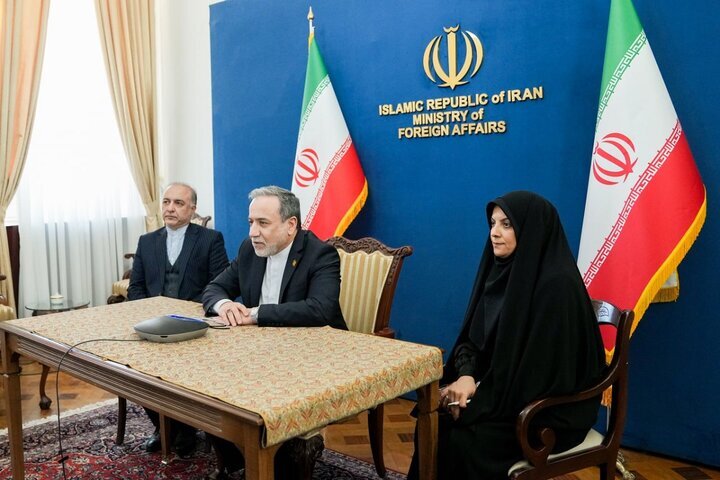
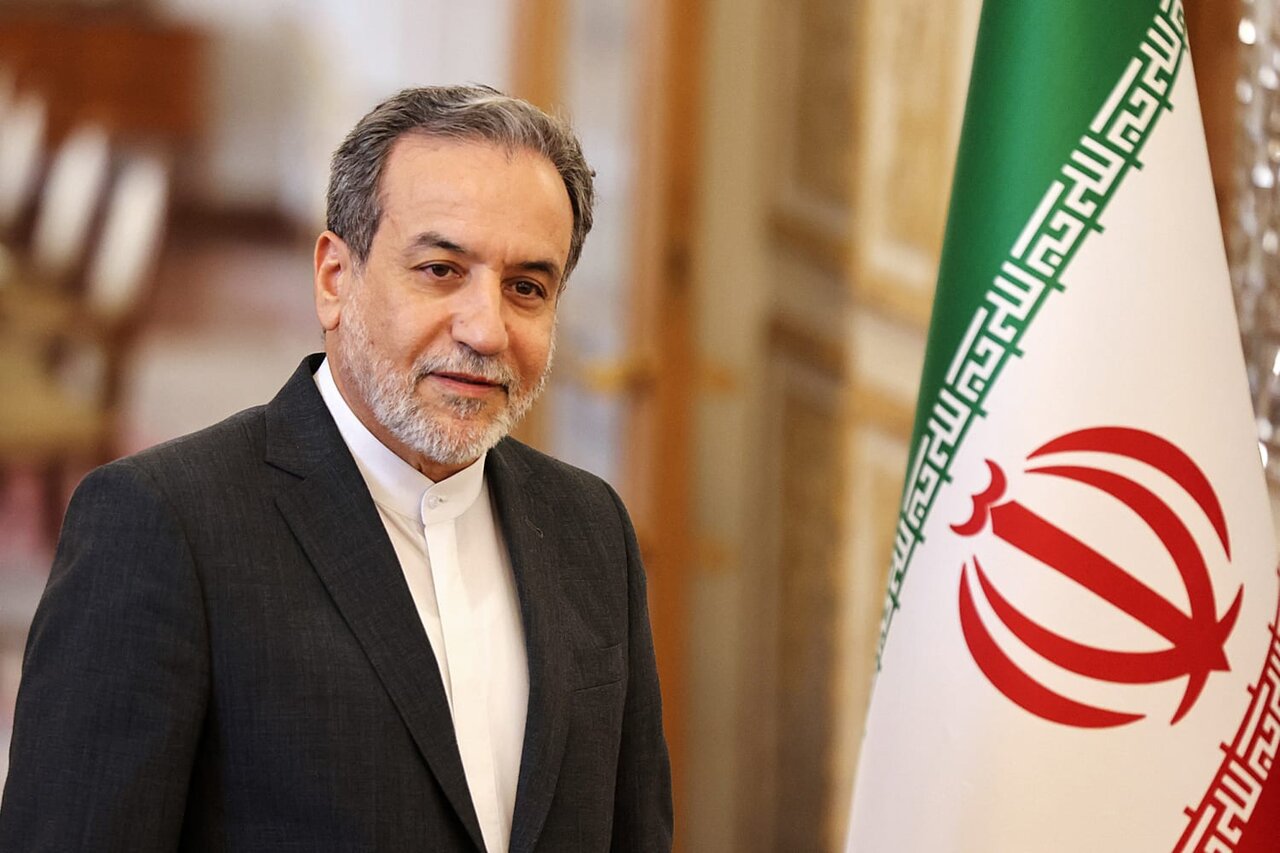
TEHRAN – Iranian Foreign Minister Abbas Araghchi has reiterated Tehran’s firm opposition to any action that threatens Venezuela’s sovereignty or territorial integrity, saying he is confident the country will safeguard its independence in the face of external pressure.

Araghchi made the remarks during a video conference with Iran’s ambassador to Caracas, Ali Chegini, and staff at Iran’s diplomatic mission in Venezuela. During the meeting, he praised the efforts of Iranian diplomats and received an update on the latest developments in bilateral relations between Tehran and Caracas.

The Iranian foreign minister stressed Iran’s clear rejection of the unlawful and coercive measures targeting Venezuela, arguing that national unity and social cohesion will enable the Venezuelan people to protect their independence and national interests. He singled out the United States as the source of illegal actions against the South American country.

Ambassador Chegini, for his part, briefed Araghchi on steps already taken and ongoing initiatives aimed at strengthening cooperation between Iran and Venezuela.

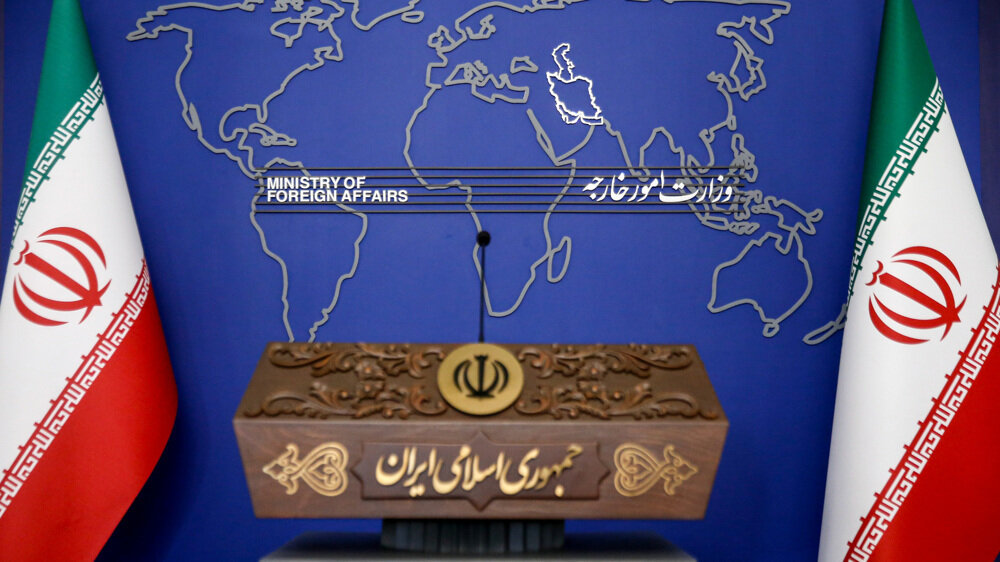
Separately, Iran’s Foreign Ministry on Monday dismissed reports claiming that Iranian diplomats or companies were withdrawing from Venezuela. Speaking at his weekly press conference in Tehran, Foreign Ministry spokesperson Esmaeil Baqaei described the reports as “completely false,” saying Iran’s ambassador and embassy staff remain fully engaged in their duties and that the diplomatic mission continues to operate actively.

Baqaei also rejected claims that an Iranian company had pulled out of Venezuela, explaining that the report originated about a year ago and had since been misinterpreted. He said recent developments in Venezuela have raised international concern, noting them as a challenge to the global rules-based order.

He accused the United States of violating international norms through its actions in the Caribbean, noting that US officials have openly acknowledged intentions to seize Venezuela’s oil resources.

The comments come amid heightened tensions following claims by US President Donald Trump that a dock in Venezuela used to load “boats with drugs” had been attacked. The announcement followed a US military statement saying it had carried out another strike on a suspected drug-trafficking vessel in the eastern Pacific Ocean, killing at least two people.

Venezuela has not commented on the attack, and there has been no independent confirmation of a US strike inside the country.

The claims come as the Trump administration intensifies pressure on Caracas as part of what it describes as a broader campaign against drug smuggling bound for the United States. Venezuelan authorities strongly deny any involvement in drug trafficking, insisting that Washington’s real objective is to overthrow President Nicolás Maduro and gain control of the country’s vast oil reserves, the largest proven reserves in the world.

According to the US administration, at least 107 people have been killed in 30 attacks carried out since early September.

Iran’s Spectacular Outer Space Achievements

By: Kayhan Int’l
The Islamic Republic of Iran’s steady progress into outer space achieved yet another milestone last Sunday with the launching of three satellites in a single day into the atmosphere, including “Paya” or “Tolou‑3”, the heaviest and most advanced domestically built to date.
It is to deliver imagery with a resolution of five meters in black and white and 10 meters in colour.
The other two are Zafar-2 and Kowsar – all three designed to orbit about 500 kilometers above Earth for a wide range of environmental and agricultural purposes.
Propelled into space from the Vostochny Cosmodrome in Russia’s east, the triple launch is indicative of the growing cooperation in various fields between Tehran and Moscow to promote peace in Eurasia and the world.
The rapid development of Iran’s aerospace industry is yet another proof of the failure of the US sanctions and American-Zionist terrorism against the Iranian people.
It means Washington cannot do a damn thing against a determined nation and its pious and patriotic masses striving to safeguard the Islamic Republic’s paramountcy in the region and beyond.
Iran is among the world’s top 10 countries with full space technology, from building satellites and launch vehicles to having its own systems for launching, controlling, and receiving data.
Iran’s own launching pads are at the Imam Khomeini spaceport in Semnan n Province, from which it has been successfully sending satellites into orbit since the past decade and a half, the last launch being “Simorgh” or “Phoenix” on 6 December 2024. 
The Islamic Republic is building a far more technologically sophisticated spaceport near the southeastern seaport of Chabahar, set to open this year. 
It will be the equivalent of, if not more advanced, than the US’ Cape Canaveral spaceport in Florida, to the exasperation of the roguish regime of Donald Trump.
In contrast to the misuse of science and technology by certain powers, especially the US, which had militarized nuclear energy as well as outer space to the detriment of the Earth’s ecology and destruction of the human race, Iran’s scientific ventures are purely civilian and to the benefit of mankind – in accordance with the teachings of Islam.

Our restraint should not be misread as weakness, Iran FM writes in The Guardian

TEHRAN – Iranian Foreign Minister has warned that the country’s restraint during recent war with Israel should not be interpreted as weakness or assumed to be unlimited, highlighting the high cost of Israeli provocations for the United States and the region.

In an article published by The Guardian on Tuesday, Abbas Araghchi said that Israel’s push to involve the U.S. in a confrontation with Iran earlier this year came at “a steep and unprecedented cost” for Tel Aviv. According to Araghchi, the situation has prompted some Americans to question Israel’s role in regional policy, with U.S. allies in the Arab world also recognizing Israel’s actions as destabilizing.

“The war in June was momentous,” Araghchi wrote, referring to the 12-day confrontation between Israel and Iran. He argued that, despite Israeli claims of victory, Iran’s vast strategic depth and population meant that most of the country remained untouched, while Israel experienced the strength of Iran’s military. “The narrative of invulnerability—central to Israel’s myth-making—has been shattered,” he said.

Araghchi criticized Western skepticism over Iran’s nuclear program as “manufactured,” emphasizing that Iran does not seek nuclear weapons for strategic, ethical, or religious reasons. He said that during the Trump administration, U.S. policymakers were misled into believing that Iran was near collapse, prompting Washington to abandon the 2015 nuclear deal in favor of “maximum pressure,” which Iran says only strengthened its resistance.

Araghchi also noted Israel as a regional threat. He cited Israeli attacks on Gaza, Lebanon, Syria, Iran, Yemen, and Qatar over the past two years and described the actions as aggression. He suggested that recent events have created opportunities for new regional cooperation aimed at countering Israel’s influence, which opened the door to “novel cooperation.”

Araghchi also highlighted the potential for renewed U.S.-Iran dialogue, noting “unprecedented willingness among mutual friends of Iran and the U.S. to facilitate dialogue and underwrite the full and verifiable implementation of any negotiated outcome.” He stressed that Iran remains open to negotiations grounded in mutual respect and interest, but warned that any diplomatic engagement must not be framed as a demand for Iranian capitulation.

“Iran has never desired a war with the U.S.,” Araghchi said, citing Iranian military restraint during the June conflict as evidence that U.S. installations in the region remain intact. “That restraint should not be mistaken for weakness or assumed to be endless.”

The article concluded with a call for diplomacy, asserting that Iran is prepared for “serious negotiations” to reach a fair and verifiable deal that respects its rights under the Nuclear Non-Proliferation Treaty, including access to peaceful nuclear technology. Araghchi described recent regional shifts as a “brief window of opportunity” to break longstanding cycles of tension.

Iran’s buck-passing strategy in the Middle East

by Hamid Bahrami

People gather during the 46th anniversary of the U.S. Embassy takeover and hostage crisis, in front of the former U.S. Embassy building, in Tehran, Iran on November 4, 2025. [Fatemeh Bahrami – Anadolu Agency]
For much of the past decade, Iran’s regional strategy looked like a blunt answer to a simple question: how do you deter Israel and U.S.-aligned pressure without fighting a direct war you cannot control? The answer was to build depth, cultivate partners, and keep escalation ambiguous. That model is now damaged, not because Iran has abandoned it pragmatically, but because a string of shocks in 2024–2025 raised the costs of direct balancing while degrading the very tools Tehran used to avoid it. In that altered landscape, Iran’s most rational short-term move is not maximalism. It is buck-passing: shifting the costs of balancing a shared threat onto other actors who, for their own reasons, are increasingly compelled to confront Israel’s expanding freedom of action.

Buck-passing, in the classic realist sense, is not mere passivity. It is a deliberate bet that someone else will shoulder the frontline costs of containment. That “someone else” does not have to be an ally, and the burden does not have to be military combat. It can be diplomatic risk, coercive signalling, air-defence deployment, political exposure, or the costly job of managing escalation dynamics. The essence is the same: you conserve resources and avoid being the primary balancer, because the strategic environment has created stronger incentives for others to do the heavy lifting.

Three events explain why this logic has become attractive for Tehran. First, Hezbollah leader Hassan Nasrallah was killed in an Israeli airstrike in Beirut in September 2024, a blow that was both operational and symbolic for Iran’s deterrence ecosystem. Second, Because of a weakened Hezbollah, Turkish betrayal to Astana agreement and some other reasons, Syrian rebels seized Damascus in late 2024 and Bashar al-Assad fled to Russia, opening a transition led by new authorities associated with Ahmed al-Sharaa (widely known by his earlier nom de guerre, Abu Mohammad al-Julani). Third, Israel and Iran fought a direct 12-day war in June 2025 that ended in a ceasefire on June 24 after Israel’s terror campaign began on June 13 and U.S. strikes hit Iranian nuclear-related sites.

These shocks do not prove Iran is “weak” in some absolute sense. They show something more actionable: Iran’s margin for absorbing another direct balancing cycle shrank. Hezbollah’s leadership loss and the Syrian rupture weakened Tehran’s indirect levers at precisely the moment the June 2025 war demonstrated the danger of direct exposure. The result is an incentive to buy time—time to rebuild missile production, restore damaged networks, and reassess escalation thresholds—while other regional actors collide over Israel’s posture.

This is where a blunt but important historical reversal comes in: for years Iran paid the costs of containing Israel, and countries like Saudi Arabia, Turkey, and Qatar benefited from that burden being carried elsewhere. Today events have unfolded such that these countries themselves must confront Israel’s expansionism. The claim is not that Riyadh or Ankara have become “pro-Iran.” It is that their threat perceptions are shifting in ways that can reduce the load on Tehran.

Nowhere is this clearer than Syria, which has become an arena of rivalry between two US partners: Turkey and Israel. Ankara sees post-Assad Syria as central to its border security, refugee policy, and Kurdish question. Israel sees post-Assad Syria through a different lens: preventing hostile capabilities near its borders and keeping potential threats fragmented or degraded. Those incompatible preferences have produced visible friction. Turkey’s foreign minister has acknowledged technical “deconfliction” contacts with Israel to avoid unwanted incidents in Syria, a sign that both sides recognise the risk of escalation as their militaries operate in overlapping spaces.

For Iran, that Turkey–Israel tension is an opening for buck-passing. If Turkey is already compelled to invest resources to constrain Israel’s operational freedom and shape Syria’s future, Tehran can afford to be a patient observer rather than an active balancer. This does not require a formal Iranian–Turkish bargain. It requires only that Ankara sees Israel’s behaviour as sufficiently threatening to justify costs, and that Iran refrains from stepping into the front line while it rebuilds.

Eastern Mediterranean alignments amplify Ankara’s motivation. Reuters reported this week that Greece, Israel, and Cyprus will step up joint air and naval exercises in 2026, deepening a trilateral defence track that is widely read in Ankara as part of an unfavourable strategic geometry around Turkey’s maritime competition. Tehran need not sit inside that emerging Greece–Israel–Cyprus security geometry to profit from its effects: by intensifying Ankara’s sense of encirclement, it nudges Turkey toward a more costly posture toward Israel, thereby shifting part of the balancing burden away from Iran. The more Turkish strategists view Israel not only as a Syria actor but as a partner in a broader network that can constrain Turkey, the more likely Ankara is to absorb costs in Syria that indirectly limit Israel’s room for manoeuvre.

The missing piece—and one that makes the buck-passing logic sharper—is Turkey’s emerging contact channel with Hezbollah. Lebanese reporting in December 2025 described Hezbollah’s external relations chief Ammar al-Moussawi leading a delegation to Istanbul for a pro-Palestine conference and noted that this followed earlier visits and meetings between Hezbollah officials and Turkish representatives. Whether one interprets this as symbolic signalling, message-passing to Damascus, or a hedge against Syria’s instability, it suggests Ankara is widening its toolkit for managing the Syrian theatre—and that toolkit now touches parts of Iran’s deterrence ecosystem.

This is not a trivial detail. Contacts with Hezbollah give Turkey potential leverage over spoilers and escalation dynamics in Lebanon–Syria linkages at a time when Ankara also maintains deconfliction channels with Israel to avoid accidental clashes. That combination—talk to Israel to prevent unintended conflict, talk to Hezbollah to manage the militant ecosystem—makes Turkey a more capable “carrier” of the balancing burden in Syria without Iran needing to expose itself directly. However, Iran will have no option to avoid direct intervention if Israel decides to attack Lebanon in order to disarm Hezbollah strategically.  A related, harder indicator of Hezbollah-Ankara tactical ties is financial-security friction: Reuters reported that Lebanese authorities seized $2.5 million from a man arriving from Turkey in February 2025, with sources saying it was bound for Hezbollah. Even if Ankara is not “supporting” Hezbollah, Turkey’s role as a corridor and contact space is precisely what can make it a consequential intermediary in this new phase.

Of course, some of the regional narratives surrounding Syria—such as talk of a “David’s Corridor” or schemes for a “Greater Kurdistan”—are contested and often politically loaded. A disciplined analysis does not need to treat them as official Israeli plans to recognise their strategic relevance. Threat perceptions, not just documents, drive state behaviour. If Turkish elites increasingly interpret Syria’s fragmentation and Israeli freedom of action as feeding Kurdish-centric scenarios that threaten Turkey’s territorial integrity, Ankara will act—and in acting, it absorbs costs that Iran would otherwise have had to pay.

As Turkey struggles to check Israel’s room for manoeuvre, Erdoğan is likely to come to Tehran seeking Iranian cooperation. In Tehran, however, scepticism runs deep: influential voices still see Ankara as having reneged on the spirit of the Astana framework, making reliance on Erdoğan a risky bet. If Iran is pursuing a buck-passing approach, it can try to translate this uneasy convergence into a conditional arrangement by asking Turkey to demonstrate goodwill—specifically, by using its influence in Baku to curb Israel’s security footprint in the South Caucasus. In a further twist, Azerbaijan has already functioned as a quiet diplomatic venue for easing Turkey–Israel frictions tied to Syria, which makes Baku both a bridge for Ankara and a pressure point Tehran would want Ankara to manage.

The second theatre where buck-passing is emerging is the Red Sea–Bab al-Mandab–Horn of Africa arc, where rivalries among Persian Gulf states are now producing open fractures. On December 30, 2025, Reuters reported that Saudi Arabia implicitly issued a 24-hour ultimatum for the UAE to withdraw forces from Yemen after a Saudi-led coalition airstrike on Mukalla port targeted what it said were unauthorized shipments linked to UAE-backed southern forces, amid sharply escalating Riyadh–Abu Dhabi tensions. The Financial Times and AP similarly described the episode as a major escalation between traditional partners backing competing factions inside Yemen’s anti-Houthi camp.

This matters for Iran’s buck-passing because it weakens the coherence and bandwidth of the very coalition structures that have historically opposed Tehran and its partners. Iran does not need to orchestrate the rift; it benefits from it. When Riyadh and Abu Dhabi are consumed by intra-coalition conflict, the regional balancing burden shifts away from Iran because its opponents are busy balancing each other. That frees time and space for Tehran to rebuild after the June 2025 war while avoiding actions that would re-center Iran as the primary target.

The Horn of Africa adds another layer. Reuters reported that Israel has recognised Somaliland, becoming the first country to do so. Regardless of whether one accepts speculation about military basing, the recognition injects a volatile geopolitical dispute into the Red Sea vicinity at a moment when maritime security is already contested. It also triggers reactions from regional actors—including the Houthis—who have publicly warned that any Israeli presence in Somaliland would be treated as a military target, explicitly linking Somaliland to Red Sea and Bab al-Mandab security. The more this arena becomes a multi-actor contest, the more Tehran can rely on structural distraction rather than direct confrontation.

Here a plausible scenario emerges that strengthens the buck-passing logic even further: a temporary, issue-based Saudi–Houthi alignment—not an alliance, but a parallel convergence—against both UAE-backed moves inside Yemen and any Israeli attempt to create a foothold or strategic leverage in the Somaliland–Gulf of Aden–Bab al-Mandab belt. Saudi Arabia’s public escalation against UAE-backed forces, and its insistence that its security is a “red line,” shows Riyadh is willing to prioritise curbing Abu Dhabi’s local partners when it sees them as undermining Saudi interests. At the same time, Yemen’s war has been relatively calm since the 2022 stalemate, raising hopes of a path to peace between the Houthis and the Saudi-backed government—an environment in which Riyadh could rationally choose de-escalation with the Houthis while focusing pressure on southern separatist expansion. Add Israel’s Somaliland recognition and the Houthis’ explicit threat messaging, and the outline of a tactical convergence becomes clearer: Riyadh and the Houthis could, for different reasons, prefer to deter or complicate UAE-enabled faits accomplis in southern Yemen and to contest any perceived Israeli strategic insertion near the chokepoint. Even if this convergence is fleeting and informal, it would still shift balancing costs away from Iran, because two actors that have long been placed on opposite sides of the Yemen war would be pulling—however briefly—in directions that constrain Iran’s adversaries and dilute coalition coherence.

None of this guarantees a stable outcome. Buck-passing is often a temporary equilibrium: it works until the actor carrying the burden decides it is paying too much and pushes the costs back—through escalation, bargaining, or realignment. Turkey may choose to manage Israel rather than confront it, especially if its priorities shift or if deconfliction becomes normalisation by another name. Saudi–UAE tensions might cool, and Yemen’s internal dynamics can always reorder regional incentives.

Still, the strategic direction is visible. Iran’s post-2025 wager is not that it has “won” the region. It is that, after a bruising sequence of losses and exposures, it can survive—and recover—by letting others with urgent stakes confront Israel’s widening footprint. If you want to know whether buck-passing is really underway, watch behaviour rather than rhetoric: Turkey’s willingness to invest in Syria despite Israeli red lines; the persistence of Riyadh–Abu Dhabi divergence in Yemen; whether Saudi–Houthi de-escalation hardens into a functional modus vivendi as Saudi attention shifts to the UAE-backed south; and whether Red Sea–Horn politics keep internationalizing in ways that multiply the number of actors who must pay the price of instability. In the near term, Iran’s best defence may be that it no longer insists on being the one paying the bill while rebuilding its damaged capabilities.

Iran blacklists Royal Canadian Navy as ‘terror organization’

TEHRAN – Iran has officially designated the Royal Canadian Navy as a terrorist organization, responding to Canada’s “illegal decision” last year to target part of the Iranian Armed Forces.

In a statement released Tuesday, the Iranian Foreign Ministry said the designation was made under the framework of the law titled Reciprocal Action Against the US Designation of the Islamic Revolution Guard Corps (IRGC) as a Terrorist Organization, extending its provisions to include Canada.

The ministry accused Ottawa of violating fundamental principles of international law by labeling the IRGC—a recognized branch of Iran’s official armed forces—as a terrorist entity. Citing the principle of reciprocity and Article 7 of the 2019 law, Iran said any country that follows or supports the United States’ decision to designate the IRGC as a terrorist organization is subject to reciprocal action. On that basis, the Royal Canadian Navy has been officially identified as a terrorist organization.

The statement framed the move as a direct response to Canada’s 2024 decision to place the IRGC on its terrorist list, which Iranian authorities condemned at the time as part of a continued hostile approach toward Tehran.

Iran recalled that Canada severed diplomatic relations and closed its embassy in Tehran in 2012, citing Iran’s support for Syria, its nuclear program, and alleged threats to Israel. At the same time, Ottawa removed the Mujahedin-e-Khalq Organization (MKO), an anti-Iranian group responsible for attacks on Iranian officials and civilians, from its list of terrorist organizations after a decade-long campaign and lobbying by the group.

In addition, the Iranian Foreign Ministry noted that Canada has long served as a haven for Iranian fugitives accused of embezzlement and financial crimes, including former banker Mahmoud Reza Khavari, who fled to Canada after a $2.6-billion fraud was uncovered in 2011.

Iran has consistently rejected foreign designations of the IRGC, calling them legally unfounded and contrary to international norms. In 2022, Tehran imposed sanctions on eight Canadian officials and one institution over their support for anti-Iranian terrorist activities, including backing for the MKO.

10th National Toy Festival to open in Tehran

 By Samaneh Aboutalebi

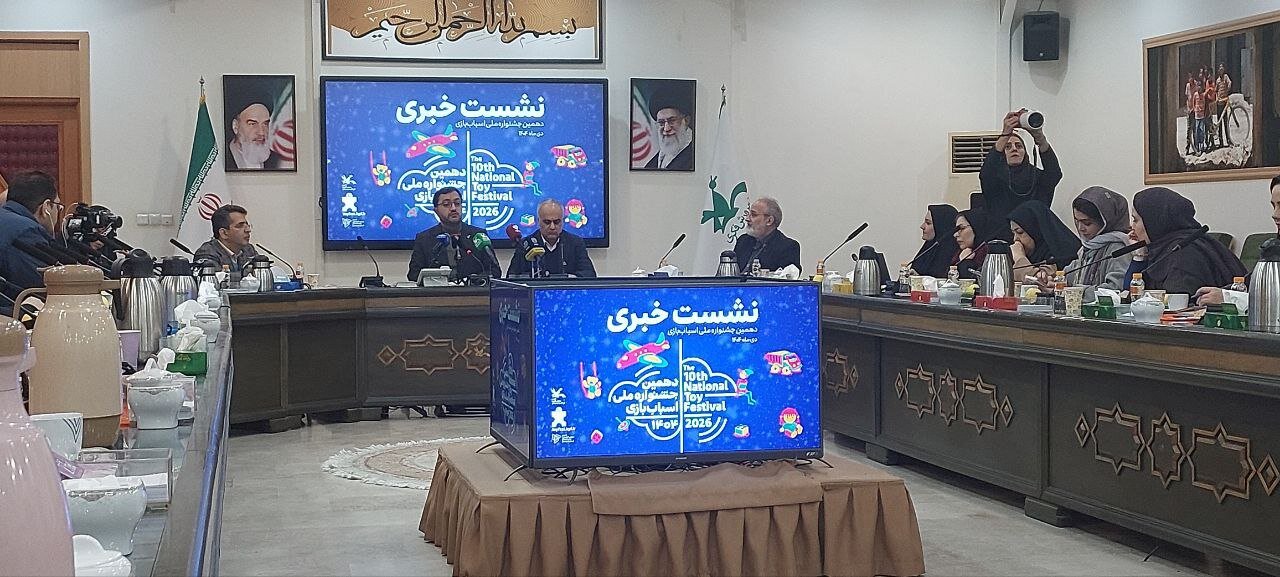
TEHRAN- The 10th edition of the National Toy Festival is set to open on Wednesday evening, dedicating space for Iranian-made toys and the promotion of a culture of play, with free access for the public, Hamed Alamati, director of the Iran's Institute for Intellectual Development of Children and Young Adults (IIDCYA)has announced. 

Speaking at a press conference in Tehran on Tuesday, Alamati pointed out that the festival has already been hosted in West Azarbaijan and Markazi provinces, with other regions soon to follow. 

He stressed the importance of re-examining concepts like ‘exhibition’ and ‘festival’ to better understand their roles—not merely as venues for displaying products, but as platforms for generating meaning, fostering cultural exchange, and addressing social issues through play.

Alamati described the exhibition as a “living, multi-faceted media space” aimed at showcasing Iran’s internal capacities. 

Over 200 local manufacturers will participate at the event, demonstrating the country’s industrial and cultural capabilities through the display of more than 3,000 Iran-made products. This marks an increase from approximately 2,200 products last year, aligning with the year’s slogan “Investment in Production” and the government’s developmental policies.

Alamati also detailed competitive sections where top producers are evaluated based on quality, educational value, health standards, and other criteria. A special segment is dedicated to showcasing traditional and local dolls. Additionally, a call for multimedia content and promotional videos is announced, emphasizing the importance of creative media production. A toy donation initiative for underprivileged areas will also be part of the festival, encouraging family participation.

Addressing government policies, Alamati highlighted the administration’s focus on achieving cultural and educational justice. He noted that festivals and exhibitions serve as symbolic steps toward this goal. 

For his part, Ehsan Maneshi, President of the Toy Manufacturers Association, underscored the cultural significance of the toy industry, describing it as Iran’s most identity-driven cultural sector. He highlighted that during the festival; experts will advise families and children on selecting age-appropriate and needs-based toys.

The 10th National Toy Festival, organized by the Institute for Intellectual Development of Children and Young Adults in collaboration with various organizations including the Toy Manufacturers Association, the Cognitive Sciences and Technologies Development Council, Tehran Municipality, and Soore University, aims to support domestic products, foster industry connections, and promote innovation in toy design and manufacturing.

Since its inaugural event in 2015, the festival has grown significantly, with more than 200 Iranian toy producers participating this year, reflecting the sector’s positive trajectory over the past decade.

The festival is expected to be a vibrant hub for cultural exchange, innovation, and the promotion of Iran’s rich toy-making heritage.

The festival, themed “Play, the Joy of Life,” runs from December 31 to January 18, 2026 at the Institute for Intellectual Development of Children and Young Adults in Tehran.