
By Dan Steinbock
 Netanyahu’s Web of Revisionist Zionism. (Photo:Steinbock. 2024. The Fall of Israel. Clarity Press, Supplied)
Since 2023, hundreds of thousands of Israelis have demonstrated against Prime Minister Benjamin “Bibi” Netanyahu and his cabinet, due to its proposed judicial reforms, the handling of the Israeli hostages held by Hamas, and the Gaza genocide. So, why is he still in power?
Netanyahu recently doubled down on his request to President Isaac Herzog for a pardon amid his ongoing criminal trial, saying, “There is no case there.”
Indeed, Netanyahu is as involved in the game of Israeli politics as he was in early 2023, when the huge Israeli demonstrations started against his far-right cabinet’s proposed “judicial reforms.” These seek to transform a secular “democracy” into a Jewish supremacist autocracy, and against the genocidal atrocities in Gaza, including the escalating ethnic cleansing in the West Bank.
The mass protests mobilized many but could not fully halt the reforms. Little by little, Israeli “democracy,” which serves primarily its Jewish population, is crumbling.
To avoid prosecution for corruption, Netanyahu needs to hang onto power and keep the war activities going. How is this status quo even possible? The simple answer is revisionist Zionism, U.S.-style neoconservatism, hard right politics, Big Money, dark donors, and, of course, corruption.
Revisionist Zionism
Born in Israel in 1949 but growing up in Philadelphia, Netanyahu is the longest-serving prime minister in Israel’s history. He sees himself as an activist of Zion, like his grandfather Nathan Mileikowsky. While Netanyahu’s grandfather and father had a role in revisionist Zionism, he put himself at its center.
Mileikowsky, the Russian-born rabbi and early Zionist champion, was known for his advocacy against socialist Zionism and anti-Zionists. After migration to Israel, he raised funds abroad for the Yishuv, or the pre-state Israel, and cooperated with rabbi Abraham Isaac Kook, the founding father of Religious Zionism. In turn, the rabbi’s son, rabbi Zvi Yehuda Kook, is the revered spiritual father of Israel’s violent settlers and the Messianic far-right.
One of Mileikowsky’s sons was Benzion Mileikowsky (who later adopted his father’s pen name as his last name), a medieval historian and onetime deputy assistant to Ze’ev Jabotinsky, the pioneer of revisionist Zionism.
Benzion (“the son of Zion” in Hebrew) befriended extremist revisionists such as Abba Ahimeir, who wanted to create a fascist state in Palestine, promoted “Il Duce” (Italian fascist) salutes, and was one of the likely assassins of the Zionist labor leader Haim Arlosoroff.
But instead of a revisionist Zionist revolution, Benzion eventually opted for an academic career in the US, returning to Israel only in the 1970s.
Netanyahu’s Web of Revisionist Zionism
Building on his master’s treatise, Origins of the Inquisition in 15th Century Spain, Benzion saw Jewish history as a series of holocausts. He shunned the long period of Spanish history of convivencia (Spanish, “living together”), from the Muslim Umayyad conquest of Hispania in the early 8th century until the expulsion of the Jews in 1492. In the Moorish Iberian kingdoms, the Muslims, Christians, and Jews lived in relative peace.
This period of religious diversity and tolerance – captured wonderfully by Maria Rosa Menocal in her book The Ornament of the World: How Muslims, Jews and Christians Created a Culture of Tolerance in Medieval Spain (2002) – differed drastically from the subsequent Spanish and Portuguese history, when Catholicism became the sole religion in the Iberian Peninsula, following expulsions and forced conversions.
Benzion Netanyahu fully shared Jabotinsky’s insistence on the creation of an “Iron Wall” between Israel and its Arab neighbors. The Oslo Accords, Netanyahu’s aging father complained, were “the beginning of the end of the Jewish state.” So, after Israel’s disengagement from Gaza, he supported its reinvasion, “even if it brings us years of war.” And to the end of his long life, he stuck to the European orientalist bias: “The tendency to conflict is the essence of the Arab. He is an enemy by essence… His existence is one of perpetual war.”
Benjamin Netanyahu, his son, is the product of both American and Jewish worlds. But unlike the father, he had little interest in academic dreams. He saw himself as a revolutionary. He wanted to overthrow the Labor Zionists to realize a Greater Israel.
Israel didn’t need bleeding-heart socialists. Eretz Israel needed tough Jews. The country needed him.
Hard Right
“Bibi” Netanyahu is his own man, but he was heavily influenced by his father. Like his older brother Yonatan, who lost his life in the 1976 Entebbe raid to release Jewish hostages, Bibi served with distinction in Sayeret Matkal, an elite reconnaissance unit of the Israeli military.
After studies at the Massachusetts Institute of Technology (MIT) and working as a consultant for the Boston Consulting Group (BCG), his political career took off in the late 1980s, when he served as Israel’s permanent UN representative, at which time I met him in mid-Manhattan.
These were the formative years of the US neoconservative movement, many of whose ideas he shared. Israel’s ambassador to the US, Moshe Arens, a scientist, veteran Likud politician and ex-Irgun operative, paved Netanyahu’s path to the corridors of power in Washington.
Seemingly unassuming, shrewd, fast and smart, and well-trained in US-style communications, Netanyahu was a natural to succeed Likud’s old guard; Menahem Begin, the former leader of the terrorist Irgun group, and Yitzhak Shamir, the ex-head of the terrorist Stern group.
With a giant ego and penchant for self-aggrandizement, he knew his moment had come, even if he would first have to overcome Likud dinosaurs like Shamir, and the Likud princelings: “The dinosaurs are dying out and the princes are too blue-blooded to fight for the crown. I’ll get there.”
Netanyahu’s leadership in Likud started in the aftermath of Rabin’s 1995 assassination, thanks in part to the incendiary political climate his campaign permitted to fester. Vocal critics of the Oslo Accords, Netanyahu and his party had participated in demonstrations where effigies of Rabin were displayed in Nazi uniforms and burned.
When Rabin was buried, his wife Leah was glad to meet PLO leader Yasser Arafat, but she kept a cold distance toward Netanyahu. She accused the young and ambitious opposition leader and his Likud party of cultivating the climate of incitement.
Setting aside the extreme political climate, there was also another reason for Netanyahu’s election win. He hired Arthur Finkelstein to run his campaign. The legendary Republican political operative had sold presidents Nixon and Reagan to the US. He was known for his repetitive, hard-edged campaigns, which idolized his candidates by tarnishing their adversaries.
As in the US, the scaremongering worked well in Israel.
Big Money and US-Israeli Neoconservatism
In Israel, Irving Moskowitz was among the major US billionaires funding Jewish settlements in the occupied territories, Messianic religious schools and universities, Jewish far-right groups, and paramilitary activities.
Moskowitz was not only Netanyahu’s donor and one of the many on his “millionaire list.” He was also an associate of the right-wing Ariel Center for Policy Research, a hardline advocacy group espousing the Likud line on Israeli security. In the United States, he was among the funders of major neoconservative think tanks promoting the War on Terror and hardline Israel-centric Middle East policies, including the Hudson Institute, the neoconservative American Enterprise Institute (AEI), and the Jewish Institute for National Security Affairs (JINSA).
Along with other pivotal financiers, Moskowitz contributed to the rise of neoconservatism in America, and the movement’s many Jewish leaders who shared the ideas of revisionist Zionism, including Paul Wolfowitz, Richard Perle, Robert Kagan, William Kristol, and so on.
Led by Kristol and Kagan, neoconservatives founded their think tank, Project for the New American Century (PNAC) with a view to sustaining America’s unipolar moment for decades to come. Whatever was in the interest of Israel, according to Netanyahu’s Likud, was in the national interest of America.
Other donors followed, including the casino tycoon Sheldon Adelson. For some, two decades until his death in 2021, when Forbes estimated his net worth at $35 billion, Adelson was a major sponsor of Netanyahu and kingmaker among the Republicans who helped fund Trump’s drive to the White House.
Israeli Neocon Manifesto
Thanks to their commonalities, the neoconservatives in the US and the Israeli hard-right Likud party cooperated in a policy document, A Clean Break: A New Strategy for Securing the Realm, described as “a kind of U.S.-Israeli neoconservative manifesto.”
Published in 1996, the report called for a muscular US Middle East policy to defend Israeli interests, including the removal of Saddam Hussein from power in Iraq (which ensued in 2003), a proxy war in Syria (which followed in 2011), and rejection of any Israeli-Palestinian solution that would include a Palestinian state (one of the Trump administration’s motives for pursuing the 2020 Abraham Accords), among other objectives.
Membership in the neoconservative club had its benefits: it made Netanyahu rich. Despite his lofty legal fees, estimates of Netanyahu’s personal wealth amounted to some $50 million, already a decade ago. But precise, verifiable sources are lacking, due to his political office, dark donors, and extraordinarily opaque financial disclosures.
Over the past decade, it is precisely this contested past that has been haunting him.
Bribery, Fraud, and Breach of Trust
From the start, Netanyahu’s career has been overshadowed by dark money controversies. The corruption charges began in 1997, when police recommended his indictment on corruption charges for influence-peddling. Investigations into the murky dealings began in 2016, following a dozen debacles, three attorney generals, and two state comptrollers.
After a three-year investigation, he was indicted. In 2020, a trial started with 333 prosecution witnesses. The long list excludes many debacles by his wife Sara, infamous for her vocal temper and penchant for luxury, and his son Yair, who excels in far-right podcast populism.
In his position as PM in 2009–2016, Netanyahu made decisions that had significant implications for national security, yet without an orderly decision-making process. These decisions allegedly enriched him. One involved the purchase of submarines and vessels from German shipbuilder Thyssenkrupp in a deal valued at $2 billion.
The problems went further. Since the start of his career, Netanyahu’s select aides had to be approved by his wife Sara, according to their loyalty rather than expertise. The highly controversial practice was later extended to some appointments involving even military and intelligence authorities.
In Netanyahu’s world, meritocracy is nice, but loyalty is everything.
The legal process began anew in December 2024 and remains ongoing. Netanyahu faces charges in three separate cases, including bribery, fraud, and breach of trust. He has consistently denied all wrongdoing, calling the prosecution a “witch-hunt”.
What Next?
On November 30, 2025, Netanyahu submitted an official request to President Isaac Herzog for a pardon, asking that the trial be halted for the sake of “national unity”. This is an extraordinary request as pardons are typically granted only after a conviction and admission of guilt.
President Herzog could offer a conditional pardon, potentially requiring a form of admission and an agreement to retire from politics, but Netanyahu has refused to commit to leaving politics. If any form of pardon is granted, it is highly likely that petitions will be filed to the High Court against the decision. Given the remaining stages of the trial and potential appeals, proceedings are expected to continue for several more years if the pardon is not granted.
As of late 2025, Netanyahu’s personal approval ratings are low, hovering around 40-45% favorability/trust, while a majority of Israelis express dissatisfaction with his government’s performance. Most Israelis do not trust their government.
Does it follow that the PM’s political career is over? Not necessarily.
Netanyahu’s political scenarios
Despite his numerous controversies, some polls place Netanyahu ahead of rivals like Yair Lapid, the head of the centrist opposition, and former war cabinet member Benny Gantz, a center-right conservative ex-military chief. But setting aside real and perceived rivals, there are several scenarios for Netanyahu’s political future:
- PM deja vu. Netanyahu remains Prime Minister in a new coalition by leveraging perceived military or diplomatic successes, such as new normalization agreements with Arab states.
- Opposition hits a home run. Netanyahu is ousted as the opposition forms a cohesive majority government without relying on him or his hard-right Likud.
- Political paralysis by repeated elections. If no single bloc by Netanyahu or the opposition can form a governing majority, Israel could face a period of political paralysis. That could mean repeat elections with Netanyahu as an interim PM.
- Voluntary retirement. Given his age (76) in the 2026 election, recurring health issues and the immense pressure from ongoing corruption trials, intense public protests, and the political fallout of the October 7 attacks, Netanyahu’s health could eventually fail him.
So, what accounts for Netanyahu’s staying power?
A long view of the current context encompasses Israel’s shift to the right since the late 1970s; Messianic doctrines seeking to legitimize occupation; the hardening of political divides after Rabin’s assassination and the subsequent crumbling of the peace process; Likud’s longstanding cooptation of Jews of Middle Eastern ancestry and religious Jews
Perhaps most importantly, it includes Netanyahu’s longstanding cooperation with leading US neoconservatives and his ultra-rich political sponsors in the US. The latter ranges from the late Las Vegas casino tycoon Sheldon Adelson to the Falic family, owners of a chain of 180 Duty Free Americas stores, Irving Moskowitz and many others in his “millionaire list.”
Those who believe that Netanyahu is about to disappear from Israel’s political map engage in wishful fantasies. He is determined to change Israel. And he is almost there.
The original commentary was published by the Informed Comment on December 15, 2025. The article was contributed to the Palestine Chronicle.
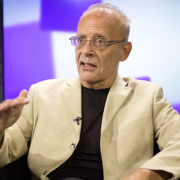
– The author of The Fall of Israel (2024) and The Obliteration Doctrine (2025), Dr Dan Steinbock is the founder of Difference Group and has served at the India, China and America Institute (US), Shanghai Institute for International Studies (China) and the EU Center (Singapore). For more, see https://www.differencegroup.net/

No comments:
Post a Comment