
By Robert Inlakesh
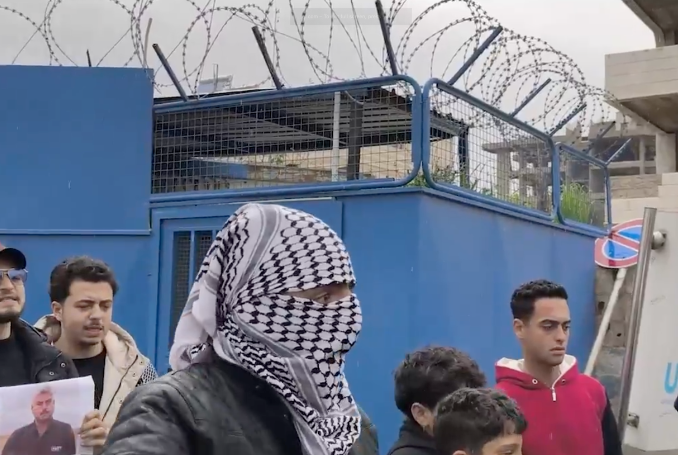 In the event of a major escalation in southern Syria, fighters affiliated with the new Syrian armed forces and security apparatus may also break ranks to fight Israel.
In the event of a major escalation in southern Syria, fighters affiliated with the new Syrian armed forces and security apparatus may also break ranks to fight Israel.
As Syrian armed groups in the nation’s south declare war on the Israeli occupiers of their land, following the eruption of demonstrations in support of Palestinian prisoners. If there is one issue that could unite Syria, it is Palestine. If there was ever a time for a Syrian war front against the Zionist occupation, it is now.
On March 31, demonstrations erupted in the countryside of Syria’s southern cities of Dara’a and Quneitra, declaring their outrage at Israel’s decision to execute Palestinian political prisoners. That same night, an armed group based in the Dara’a area declared that they would begin waging an armed struggle against Israel. The intensity of the protests, some of which were within the sights of Israeli occupying forces, began to spread and reached the city of Hama.
The following day, the protests then exploded across the country. A large gathering took place in the University of Aleppo, as demonstrations went on throughout the day. Homs, Damascus, and Latakkia ignited into protest, with chants in support of Gaza, while the marches in Dara’a and Quenitra expanded. More groups in the Dara’a countryside, starting in the town of Zakiyah, began openly declaring war on the Israelis.
One protester in Dara’a told a local TV channel that if the law adopted by the Israeli Knesset is not retracted, “missiles will not only come from Iran, the Syrian border will ignite and the missiles will come from here”.
Abu Obeida, the Spokesperson of Hamas’ armed wing, the Qassam Brigades, released a statement on the demonstrations, stating:
“From the heart of proud Gaza, and from Al-Quds and its surroundings, we send greetings to the noble people of Syria and their masses who came out chanting for the resistance and in support of Al-Aqsa and the prisoners. We say to them: Your voice has reached us, and we are proud of you. Our hopes, after Allah, are tied to you and to all free people. We trust that the masses of our nation will one day unite and forge their path to liberate the sanctuary and the prisoners.”
It suffices to say that the Syrian streets ignited over this issue. Which begs the question as to what option against Israel could prove possible and how this situation may escalate.
The first major issue is that of the Hayat Tahrir al-Sham (HTS) government in Damascus, which has clearly aligned itself with the United States and the West. Earlier this year, it agreed to a “joint fusion mechanism” which was aimed at facilitating economic and security ties, a soft agreement aimed at forwarding normalisation efforts.
However, the Syrian government does not have full control over its country and its new security apparatus are not even all necessarily ideologically committed to the State. It should be noted that instead they are of a range of military factions, many of whom were formerly aligned with Al-Qaeda, and could break ranks in the event that a major confrontation with Israel unfolds.
Syria is by no means a simple country to understand and is far from a united country under a strong central government. Despite most of its territory being under the de facto control of Damascus, local armed groups, tribal militias and ideological militias hold tremendous power in different corners of the country.
If a confrontation with Israel is going to happen, it will not be ordered by Ahmed al-Shara’a, on the contrary he is likely working to block this from happening at all. The Syrian leader is solidly in the camp of the United States, which means that places him in the Israeli sphere of influence.
His position is far from secured in the long term however. The Israelis have been hesitant about going too far with their normalisation efforts for this reason, amongst others. If Al-Shara’a manages to bring Syria under his full control and rule it in the way Bashar and Hafez al-Assad did, then the Israelis would likely proceed with normalisation at some point.
But at this time, the Israelis are still taking advantage of the Syrian State’s weakness, which they partially designed with their large-scale destruction of Syria’s strategic weapons. When Hayat Tahrir al-Sham entered Damascus, they also decided to disband the former Syrian Arab Army and security apparatus. The only elements of the former State that they decided to keep in place, were those who would aid in running corrupt schemes inside the country.
For the Israelis, they saw this as a golden opportunity to seize more Syrian lands and even back Druze separatist factions. The idea here was for Ahmed Al-Shara’a to respect their boundaries, allow them to achieve their goals and aid them directly, while also backing the Druze to fulfill their goals simultaneously.
Al-Shara’a is also the only man who was available to prevent a return to a civil war-style power struggle from breaking out, which carries the risk that an anti-Israeli government could take over. This possibility was also why the Israelis destroyed much of Syria’s military capabilities.
At the start of the regional war with Iran and its allies, the Israelis also notably began bombing Syrian military sites. The reason for this is simple: they were spooked by the possibility that the Syrian State could make a move on Sweida, to take out the Druze separatist factions. A development which would not only threaten the “Greater Israel Project”, but could also drag the Israeli military into another confrontation.
Therefore, the bombing was a warning to the HTS leadership, a message that they have to play ball and shouldn’t get any ideas, or that Al-Shara’a shouldn’t start to grow confidence and begin resembling Iraq’s Saddam Hussein. While the region was on fire, the Syrian leader then went on a Europe tour, displaying a complete disconnect from the event unfolding on the ground.
Which is where we come back to southern Syria. The south has been left for dead by Damascus; if anything, the HTS leadership has behaved similarly to how the Lebanese government of Nawaf Salam has in southern Lebanon.
Routine bombings, Israeli checkpoints, the abduction of civilians, raids into villages, all as the Israelis pressured Damascus to disarm the south of Syria. Yet, the people of Dara’a and Quneitra refused disarmament.
The military capabilities of the large series of armed groups in Syria’s south are relatively unknown, but it is safe to say that they don’t even begin to match up to those of Lebanese Hezbollah. These groups consist of a mixture of former anti-Assad militia members, combined with former Syrian Army officers, commanders and simply local fighters.
Under normal circumstances, it would be tough for these armed groups to stand up to the Israeli military. However, the regional war now presents a historic opportunity that will not likely present itself again. A Syrian front against the Israelis would prove a major challenge right now.
Tel Aviv is already struggling to muster the amount of troops necessary to invade and occupy southern Lebanon, as they take a beating from Hezbollah. The Israeli air force is also distracted by its bombing campaigns on multiple fronts. If they have to either fight off frequent ambushes near the Golan Heights or even commit to a broader invasion of Syria, it will be massively taxing on their military.
In the event of a major escalation in southern Syria, fighters affiliated with the new Syrian armed forces and security apparatus may also break ranks to fight Israel. Bedouin Tribal militias could potentially join this fight too, as will a series of Syrian resistance factions aligned with the Iranian-led Axis of Resistance.
If things spiral out of control inside Syria, the Israelis may pursue the assassination of al-Shara’a, who they will no longer see as much of a need for, but this, too, may backfire. As of now, sectarian violence, a dire economic situation, and public dissatisfaction with the way the country is heading all present major challenges to future stability inside the country. Yet, a front forming against the Israelis could hold the key to uniting a large portion of the population. It won’t fix all of Syria’s problems, but the people will see a common enemy, and that much can be agreed upon.
It may be too early to call exactly where the momentum on the streets is going to lead, but there is certainly potential there for a major development that could alter the course of this regional war.
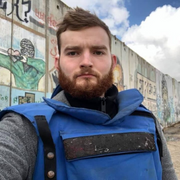
– Robert Inlakesh is a journalist, writer, and documentary filmmaker. He focuses on the Middle East, specializing in Palestine. He contributed this article to The Palestine Chronicle.

No comments:
Post a Comment