
By Emad Al-Athba
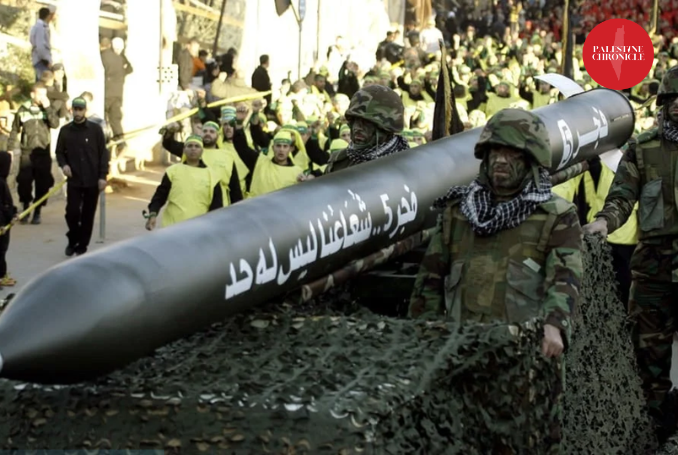 Hezbollah fighters during a military parade showcasing their latest arsenal. (Photo: Military Media, via Al Mayadeen, file)
The image of victory that Benjamin Netanyahu sought to project ultimately amounted to little more than a commemorative photograph—one that brought together the Lebanese ambassador and the Israeli ambassador in Washington. It is an image that history may well remember not as a symbol of triumph, but as one of betrayal—of homelands and of the sacrifices made by their peoples.
From an early stage in its war on Iran and Lebanon, the government of the Zionist entity appeared to recognize that its original objectives were unattainable. Reality imposed itself through the effectiveness of the Iranian response and the sustained operations of Hezbollah in southern Lebanon, forcing a recalibration of what could be presented as “victory.”
This shift in the Israeli narrative was mirrored by a parallel adjustment in Washington. The United States government gradually lowered its ambitions—from regime change in Iran and control over its resources to more limited demands: securing navigation through the Strait of Hormuz and preventing Tehran from acquiring a nuclear weapon.
The challenge facing Israel in Lebanon proved even more complex. After nearly two years of conflict, and the killing of a significant number of Hezbollah leaders—including Hassan Nasrallah—Israeli propaganda, along with its regional and international supporters, sought to frame the ceasefire as a decisive victory over the Lebanese resistance.
To reinforce this narrative, Israeli forces continued airstrikes on Lebanon for more than 15 months, interpreting the absence of an immediate response as confirmation of their supposed triumph. At the same time, anticipation of Hezbollah’s “defeat” led segments of the Lebanese political establishment to move toward disarming the movement and criminalizing its fighters—steps that echoed broader alignment with American and Israeli strategic priorities.
Within this atmosphere of manufactured victory, Netanyahu and his government treated the reopening of the Lebanese front as an opportunity to eliminate what remained of Hezbollah’s capabilities, while avoiding entanglement in Lebanon’s internal complexities. This vision found support among certain Lebanese factions, whose political and media discourse increasingly justified Israeli aggression and placed blame on the resistance.
Yet, as has often been the case, the calculations of colonial powers proved flawed. Rooted in an enduring belief in their own military superiority, these strategies rely on the illusion that domination is inevitable and resistance futile. History, however, repeatedly tells a different story. From Algeria to Vietnam, from Cuba to Lebanon—and even in the recent expulsion of French forces from parts of West Africa—colonial projects have frequently ended in failure.
More recently, Gaza and the events associated with the Al-Aqsa Flood stand as further reminders that such illusions can quickly unravel.
Prior to the war, Netanyahu openly embraced the notion of a “Greater Israel,” outlining ambitions that extended into parts of Lebanon, Syria, Jordan, and northern Saudi Arabia. Despite objections—even from states traditionally aligned with Western policy—figures within his right-wing coalition reaffirmed their commitment to this vision.
With the outbreak of war, the moment appeared, at least initially, to offer an opportunity to advance these ambitions. The Israeli government signaled its intent to occupy large areas of southern Lebanon, establish military outposts, and displace local populations.
Central to this objective was the Litani River, extending between four and thirty kilometers into Lebanese territory. This expanded goal went beyond earlier arrangements, which had limited disarmament to areas south of the river.
What was envisioned as a step toward strategic expansion, however, began to resemble a strategic impasse. The resistance demonstrated an ability not only to endure but to regroup. The preceding 15 months, rather than marking defeat, appeared to serve as a period of reconstruction and preparation.
During this phase, towns such as Taybeh, Khiam, and Aitaroun emerged as focal points of confrontation—sites where Israeli forces faced unexpected losses in both personnel and equipment.
Two weeks before the ceasefire, Israeli military officials acknowledged that further southward advancement was unlikely. Instead, plans shifted toward establishing fortified positions aimed at shielding northern areas from rocket fire.
In an effort to reframe this outcome as a victory, Israeli forces concentrated on the strategically and symbolically significant town of Bint Jbeil—a location associated with the post-2000 liberation speech that articulated a deterrence doctrine later demonstrated during the 2006 war.
Despite deploying four full divisions and extensive firepower, Israeli forces were unable to secure a decisive breakthrough. Resistance fighters, operating with mobility and precision, struck intermittently and withdrew, sustaining pressure while avoiding direct confrontation.
Even in this limited engagement, the anticipated declaration of victory proved elusive. The battlefield reality contradicted the narrative.
In the end, the image of victory remained confined to that staged photograph in Washington—an image destined for official archives, perhaps even museum walls, but detached from the realities on the ground.
By contrast, the reality of victory is captured in a different image: a young man lowering the Israeli flag from Beaufort Castle and raising the flag of Hezbollah in its place. It is an image that conveys, without words, a message about land, sacrifice, and belonging—that southern Lebanon remains tied to those who have defended it, and that it will resist both occupation and submission.
No comments:
Post a Comment