
Four Truths This Conversation Forces Us to Face
Dr Reza John Vedadi and Myriam Charabaty
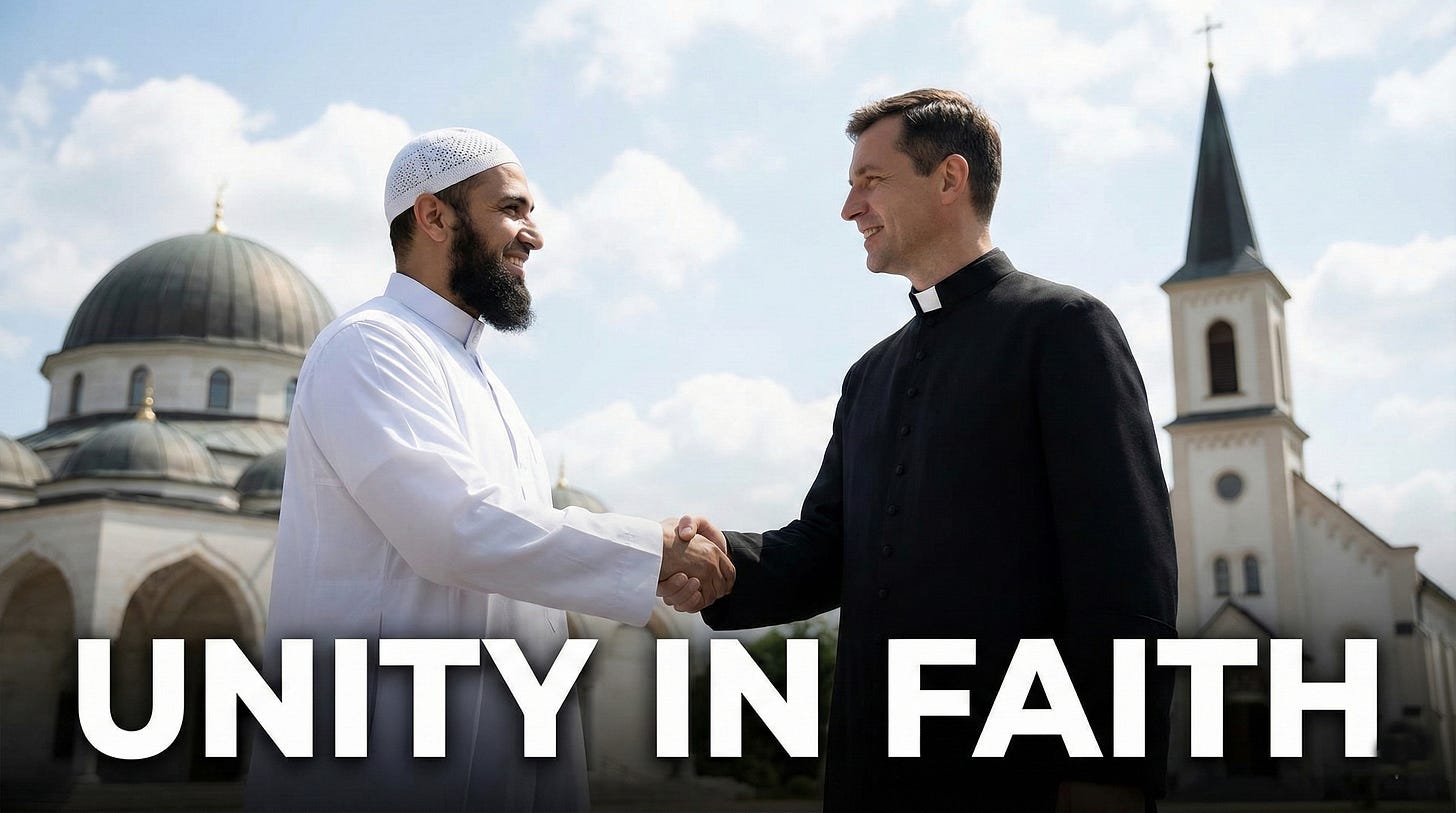
This podcast tackles a question that has shaped global politics, media narratives, and everyday identity struggles across West Asia for centuries: Is Islam the enemy? The discussion with Myriam Charabaty, an Arab Christian analyst, exposes why this question is even asked and how it feeds into a long colonial project that still dominates the region today.
The conversation touches many threads, but four central themes define it:
The Arab Christian identity crisis
The myth of Islamic persecution and the real sources of violence
How Western powers created extremist proxies that now destabilise both East and West
Why Christian–Muslim unity remains a threat to imperial power
Each point cuts through the noise, and each reveals a deeper story of how power works.
1. The Arab Christian Identity Crisis: A Colonial Invention
Myriam begins with a point many outside the region don’t understand:
Arab Christians didn’t “suddenly” face an identity crisis in the last century. It’s almost 900 years old.
Lebanese Maronites, for example, grew up hearing that they are “Phoenician, not Arab”, a myth pushed through Crusader narratives, French colonialism, and missionary activities. This rebranding was never neutral. It created a class of Christians who mistakenly believed their interests aligned with Western powers rather than with their own region.
The reality is simple:
Our ancestors spoke Aramaic and Syriac.
Over centuries, these languages merged into Arabic.
We are the same people, evolving with time, not replacements, not outsiders.
But colonialism needed divide-and-rule. It needed Christians who believed they were separate from the Arab world. This identity confusion still shapes politics today.
And as Myriam says, the shock comes only when you migrate to the West and realise that no matter what identity you claim, they still see you as Arab. That moment exposes the colonial lie.
2. The Myth of Muslim Persecution: Politics, Not Faith, Drives Conflict
One of the most repeated Western narratives is that Christians in the Arab world are oppressed or persecuted by Muslims. Myriam dismantles that claim with lived experience and basic logic.
If Muslims spent 1,400 years trying to eliminate Christians, our ancient churches would not still be standing.
We would not have bells from 600–700 years ago still ringing.
We would not have survived without armies or protection forces.
What Western audiences call “religious persecution” is almost always:
tribal conflict
economic tension
political manipulation
imported sectarianism
Real persecution is systematic and collective; what exists today is sporadic and usually tied to events outside Lebanon, Syria, or Iraq, mainly driven by proxy wars.
She puts it clearly:
Muslims in the region are not the problem. Takfiri groups are. And those groups were engineered.
3. Western-Created Extremism: The Monster That Came Home
This is perhaps the most important theme in the entire conversation.
The extremist groups that the West now labels “Islamic” were created, funded, armed, and deployed by the US, the UK, and their regional clients such as Saudi Arabia and Qatar.
These groups did not grow out of Islamic civilisation.
They grew out of Western intelligence operations.
The West needed mercenaries who could fracture societies from within. They needed ideological shock troops to weaken Syria, Iraq, Libya, and any state refusing to surrender sovereignty.
Examples in the podcast include:
ISIS leadership emerging from Camp Bucca, a US-run facility in Iraq
Jabhat al-Nusra rebranding operations designed to make terrorism “more acceptable”
European countries importing fighters disguised as refugees
“Opposition” groups in Syria never once attacked Israel but constantly attacked Syrian civilians, Christians, Alawites, Shia, Sunnis who opposed them
These militants are not Muslims in any meaningful sense.
They do not know Islam.
They use the word “Allahu Akbar” the way private military contractors use uniforms; it is branding. It is a flag, not a faith.
The tragedy is that Western societies now frame this monster as “Islam,” not as a Western intelligence project gone global.
This manufactured fear sets the stage for a new wave of crusader thinking, preparing European populations for more wars in West Asia.
4. The One Alliance Imperial Powers Fear: Christian–Muslim Solidarity
The final theme that stands out is the natural alliance between Christians and Muslims in the region, an alliance that Western media, think tanks, and governments work hard to suppress.
The conversation reminds us that:
Muslims defended Christians in Syria, Iraq, and Palestine.
Resistance groups protected churches when extremist militias threatened them.
Hamas defended Christian sites in Gaza.
Hezbollah protects multiple churches in South Lebanon.
Arab Jews historically lived in peace in the region before Zionism shattered that balance.
This solidarity terrifies those who rely on division.
Even inside scripture and early Islamic history, the foundations of unity are undeniable:
The Prophet Muhammad (s) sent early Muslims to a Christian king for protection, describing him as a “just ruler.”
Mary, mother of Jesus, is the only woman named in the Qur’an.
Prophet Jesus (s) is honoured in Islam with titles such as the Messiah and the Spirit of God.
When you put aside propaganda and look at lived reality, Christians and Muslims share far more with each other than either shares with Western imperial ideology.
This unity becomes even more threatening when tied to resistance movements.
Resistance, whether in Lebanon, Yemen, Palestine, or Syria, includes Christians, Muslims, Druze, Kurds, and Jews who reject Zionism.
And that is why Western narratives push so aggressively to divide us.
Because united, we are free!
A Final Thought: Islam Is Not the Enemy, Colonial Narratives Are
This podcast exposed what many of us already know but rarely hear expressed publicly with such clarity.
Islam is not the enemy.
Arab Christians are not outsiders.
Extremism is a Western-made weapon, not a religious movement.
Moreover, solidarity between Christians and Muslims remains the biggest threat to imperial designs in West Asia.
When we break the colonial narrative, the real picture becomes clear:
The region was never fighting a religious war.
It was always fighting a geopolitical one.
And today, as more of the world sees through these narratives, the old tactics of fear and division are losing their power.
This conversation is part of that shift.
And it will not be the last.
No comments:
Post a Comment