
By Palestine Chronicle Staff
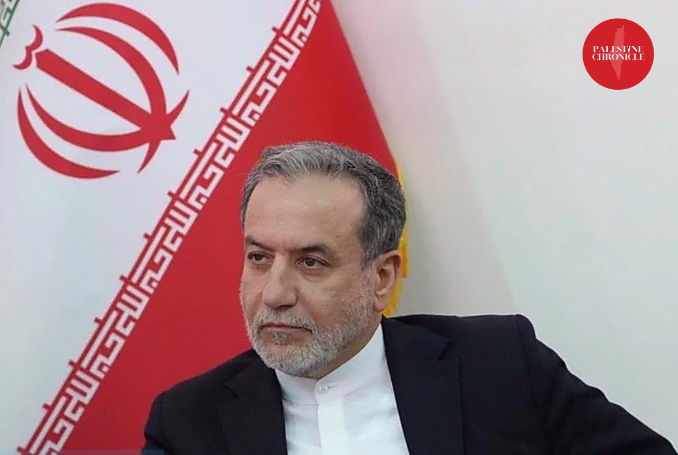 Iranian Foreign Minister Abbas Araqchi. (Photo: via Al Mayadeen)
Iran expands diplomatic efforts as Araqchi travels from Islamabad to Moscow, advancing ceasefire terms and coordinating with regional allies.
Key Developments
- Iranian Foreign Minister Abbas Araqchi heads to Moscow for talks with Vladimir Putin.
- The visit follows high-level meetings in Islamabad as Pakistan continues its mediation efforts.
- Araqchi conveys Tehran’s conditions for ending the war through Pakistani channels.
- Parallel contacts held with Saudi, Qatari, and Egyptian officials on ceasefire and regional diplomacy.
Iran has launched a multi-layered diplomatic effort spanning Russia, Pakistan, and key regional capitals, as part of a coordinated push to manage the fallout of the ongoing war, Iranian media reported
Foreign Minister Abbas Araqchi has been at the center of these efforts, shuttling between successive meetings to consolidate ceasefire arrangements while advancing Tehran’s conditions for a potential political settlement.
Moscow as Final Stop
Iranian officials confirmed that Araqchi’s ongoing diplomatic tour will culminate in a visit to Moscow, where he is expected to hold high-level talks with Russian leadership, including a scheduled meeting with President Vladimir Putin.
According to Iranian diplomatic sources, the Moscow visit is part of a broader effort to continue consultations on both bilateral relations and wider regional and international developments, particularly in light of the ongoing war and fragile ceasefire arrangements.
Iran’s ambassador to Russia, Kazem Jalali, stated that Araqchi’s meetings will address “the latest developments in negotiations and the ceasefire,” indicating that Moscow remains a key partner in shaping the diplomatic trajectory of the conflict, Al Mayadeen reported.
Islamabad at the Center
Before reaching Moscow, Araqchi returned to Islamabad for a second round of consultations with Pakistani officials, reinforcing Pakistan’s role as a central mediator in the conflict.
Iranian sources stressed that the renewed visit is not connected to nuclear negotiations but rather constitutes a continuation of discussions on bilateral relations and the broader political framework for ending the war.
“These negotiations have nothing to do with the nuclear issue,” the sources said, as reported in Tasnim, emphasizing that the agenda is focused on conveying Iran’s conditions for ending hostilities and coordinating mediation efforts.
During his stay, Araqchi held meetings with senior Pakistani officials, including Army Chief General Asim Munir, as part of ongoing coordination between the two countries.
Iran used these discussions to present a set of demands tied to any future ceasefire or political settlement, according to Iranian media.
These include the establishment of a new legal regime governing the Strait of Hormuz, compensation for damages caused during the war, guarantees against further military aggression, and the lifting of the naval blockade imposed on Iran.
Tehran has consistently framed the blockade as a violation of the ceasefire framework and a central obstacle to renewed negotiations.
Failed Talks
The diplomatic activity follows a two-week ceasefire reached on April 8 through Pakistani mediation, which briefly opened a window for negotiations in Islamabad.
However, talks held on April 11 and 12 collapsed after 21 hours, with Iranian representatives citing deep mistrust regarding Washington’s willingness to honor its commitments.
Iranian officials have since made clear that any return to negotiations depends on tangible changes on the ground, particularly the lifting of the naval blockade.
The ceasefire itself remains fragile, with Iranian officials stating that it has been undermined by continued pressure measures and the absence of binding guarantees.
Parallel Consultations
Alongside his shuttle diplomacy between Islamabad, Muscat, and Moscow, Araqchi has engaged in a series of phone consultations with regional counterparts, including Saudi Arabia, Qatar, and Egypt.
In discussions with Saudi Foreign Minister Faisal bin Farhan, Araqchi outlined the latest diplomatic efforts undertaken by Tehran to end the war and reduce tensions, focusing particularly on developments related to the ceasefire.
Similarly, in a call with Qatari Prime Minister and Foreign Minister Mohammed bin Abdulrahman Al Thani, the Iranian minister reviewed ongoing diplomatic initiatives and broader regional dynamics.
Qatar welcomed Iran’s diplomatic approach and reaffirmed its readiness to continue playing an active role in mediation and facilitating dialogue between the parties, Al Mayadeen reported.
Egypt: Diplomatic Path
In parallel, Egyptian Foreign Minister Badr Abdelatty held separate phone calls with his Iranian and Qatari counterparts, focusing on the trajectory of US-Iran negotiations and broader efforts to de-escalate tensions.
According to the Egyptian Foreign Ministry, Abdelatty stressed the importance of adhering to the diplomatic track and intensifying coordination among all relevant parties to ensure the sustainability of the ceasefire and prevent further escalation.
He emphasized that dialogue remains “the primary guarantee” for avoiding a widening of the conflict and maintaining regional stability.
Egypt also highlighted the need to respect state sovereignty, address regional security concerns, and safeguard international navigation routes, particularly in light of tensions surrounding the Strait of Hormuz.
(Tasnim, IRNA, Al Mayadeen, PC)

No comments:
Post a Comment