
As Syria’s post-Assad order hardens into a new form of centralized authority, Alawite leader Sheikh Ghazal Ghazal tells The Cradle why popular legitimacy, federalism, and international guarantees are non-negotiable.
The Cradle

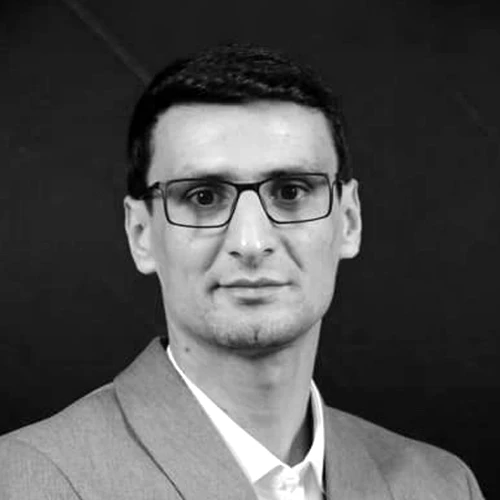
Born in 1962 in the village of Talla, in the Al-Haffa area of Latakia governorate, Sheikh Ghazal comes from a deeply rooted religious lineage. His father, Sheikh Wahb Badr Ghazal, and his maternal grandfather, Sheikh Salman Yusuf Ghazal, were both prominent Islamic scholars. He received his primary and preparatory education in Talla before completing his secondary studies at Wata al-Khan School in Latakia.
Ghazal went on to study at the Faculty of Islamic Sharia at Damascus University, specializing in jurisprudence, hadith, Quranic exegesis, and Islamic sciences. He later pursued postgraduate studies in Islamic Sharia at the International University for Islamic Sciences in London.
His scholarly output includes several works, most notably ‘The Human Heart in the Quran and Sunnah’; ‘Manuscript: Means of Knowledge’; ‘A Pearl from the Pearls of the Treasures of the Most Merciful,’ published in three volumes covering acts of worship, transactions, and ethics; and ‘A Treatise Containing All the Virtues of This World.’
Professionally, Sheikh Ghazal began his career at the Latakia Directorate of Awqaf and served as a preacher in multiple mosques across the governorate, most recently at the Al-Nour and Al-Amal Mosque in Latakia. In 2003, he was appointed Mufti of Latakia.
Following the collapse of former Syrian president Bashar al-Assad's government on 8 December 2024, Ghazal emerged as one of the more visible Alawite political actors in Syria. His recent positions include calls for peaceful demonstrations on 25 November 2025, a general strike across Alawite-majority areas on 6 December 2025, and public advocacy for federalism and political decentralization.
He has also participated in the Hasakah Conference, where he articulated a set of political and social demands that continue to shape his current platform.
The Cradle: You have previously said that the transitional authorities attempted to open channels with you. What exactly was proposed, and what were they seeking to achieve through this outreach?
Sheikh Ghazal Ghazal: What was presented to us was not a political dialogue, but rather a worn-out media display and dictates imposed on us, aimed at making the Alawite component submissive and obedient to their orders, in a way that improves their image before the international community, without guaranteeing full citizenship for the Alawite component.
This is something we cannot accept. Our solutions are clear, and those who do not want to implement them hide behind cosmetic meetings that have no value. There will be no political negotiations in the future without international guarantees, based on political federalism, the release of thousands of forcibly disappeared detainees in prisons, and an end to killing and violations, within a consensual, pluralistic, politically decentralized constitutional process that includes all Syrian components.
The Cradle: You have indicated that regional and international actors support your call for federalism and political decentralization. What kind of backing exists for this project, and from which quarters?
Sheikh Ghazal Ghazal: Federalism is a solution for countries that have suffered bloody civil conflicts. Therefore, the international forces that support this project are those concerned with the Syrian issue, and support the right of peoples to self-determination and self-administration, and seek to find a solution to the violent conflict in the country and prevent its recurrence.
The Cradle: Given the new authorities’ rejection of federalism, how do you envision translating this demand into political reality, and what mechanisms remain available to impose it?
Sheikh Ghazal Ghazal: We continue to rely on peaceful means and popular mobilization until achieving the declared political goals. The position of the de facto authority rejecting this proposal reflects the nature of this authoritarian authority, which seeks only to reproduce tyranny and despotism without any regard for the will of the people.
In general, it is not the de facto authority that determines this matter, but rather the will of the people. We will not stop until we obtain this fundamental demand that guarantees rights for all components without exception.
The Cradle: There is growing speculation around the Syrian coast and the timing of political change there. Do you foresee any defined timeframe for advancing federalism?
Sheikh Ghazal Ghazal: We do not believe in setting timelines for existential issues, because federalism is linked to a set of political, field, regional, and international factors. It is not a decision taken unilaterally or quickly. However, we are working to accelerate the wheel of salvation in a safe and responsible manner, in light of the grave violations being committed against us by the de facto authority.
The Cradle: Have there been any concrete assurances from France regarding the future of the Alawite community in Syria, or its political status in a post-Assad order?
Sheikh Ghazal Ghazal: The Syrian situation in general, and the Alawite situation in particular, is highly complex and cannot be resolved through promises from a single state. There must be understandings among the states concerned with the Syrian issue to reach a solution that guarantees their interests in a way that aligns with our cause.
In all cases, we hope that all democratic states will stand by our injustice and support our legitimate demands, especially our right and the right of other components to self-determination.
The Cradle: If political avenues remain blocked, does the option of armed action remain on the table, or do you still see a path through exclusively peaceful means?
Sheikh Ghazal Ghazal: To this day, we seek a political solution and the attainment of rights through peaceful means. We favor this path to allow reason to prevail and to prevent bloodshed. However, the de facto authority does not support this path, as provocations and violations against Alawites continue.
Therefore, I stress the international role in pressuring this authority, out of fear of sliding toward a violent path that would be in no one’s interest.
The Cradle: Some accuse you of working for external actors and seeking to divide the country. How do you respond?
Sheikh Ghazal Ghazal: Our discourse has been, and remains, clear and unambiguous for anyone who wants Syria to move toward safety and stability. Any communication we have with external parties serves the interests of the people, not the opposite.
As for the accusation of seeking to divide the country, it should be directed at those who push Syria toward civil wars through ongoing violations and exclusionary policies. It is important to recall that the first to implement an independent form of autonomous governance was Hayat Tahrir al-Sham [HTS], represented by the current de facto authority in Syria, which established a political, financial, and administrative system in Idlib separate from the central authority in Damascus.
We have clarified that a federal system is a path to stability and prosperity, as demonstrated by successful countries such as the US and the UAE.
The Cradle: Do you maintain active channels with major international powers involved in the Syrian file, including permanent members of the UN Security Council?
Sheikh Ghazal Ghazal: Our door to communication is open to all states active in the Syrian file. We extend our hand to anyone who guarantees us the achievement of our goals and our right to self-determination.
The Cradle: In light of worsening security and economic conditions, how do you propose addressing the situation in Syria’s coastal regions?
Sheikh Ghazal Ghazal: Addressing all files must begin by treating the root cause, through changing the form of the political system and a genuine transition toward political federalism that ensures a fair distribution of power and responsibility, and grants local communities the ability to manage their own affairs.
We do not mean a specific component. Syrian society enjoys a social environment that has historically embraced all components without fanaticism or exclusion. What the region has witnessed in terms of tensions is nothing but the result of the authority’s policies based on incitement and sowing division among members of the same society.
The Cradle: How do you view the detainees file?
Sheikh Ghazal Ghazal: With regard to the detainees file, thousands of detainees, whether civilians arrested on sectarian grounds or military personnel detained after the fall of the regime based on promises of safety and non-harm, have seen those promises broken and denied.
All of these individuals were not decision-makers, but rather executors of orders, while those who issued the orders either left the country or, in some cases, reached settlements and remained in the People’s Palace and positions of power.
The Cradle: There have been reports of meetings between individuals claiming to represent the Alawite community and the ruling authorities. How do you view these encounters, and the legitimacy of those involved?
Sheikh Ghazal Ghazal: Judgment of these cosmetic meetings, or the credibility of the representatives and parties presenting themselves, should be left to the people. The people decide who represents them. They grant legitimacy or withdraw it, and they alone are capable of imposing their will and rejecting those who do not truly express their aspirations, as demonstrated in the uprising of 25 November 2025.
The Cradle: Finally, what is your message to Alawites from your spiritual and political position, especially at this critical moment in Syria’s history?
Sheikh Ghazal Ghazal: I say, as I say in every statement to them:
O Alawites, my children,
The decision is yours, and the destiny is yours. You are the ones who define the demands, and we will accept nothing less.
No comments:
Post a Comment