
By Robert Inlakesh
 Iranian Supreme Leader Ali Khamenei, US President Donald Trump and Israeli Prime Minister Benjamin Netanyahu. (Design: Palestine Chronicle)
Israel’s leadership is using a manufactured “ceasefire” and US-backed diplomatic cover to prepare for expanded wars against Iran, Gaza, and Lebanon, risking a regional conflict it may not be able to control.
Israeli Prime Minister Benjamin Netanyahu is sizing up his next target and, according to reports, will request greenlights upon his planned visit to Mar-a-Lago later this month. Meanwhile, US President Donald Trump continues to claim that he has achieved “peace in the Middle East.”
Far from any kind of comprehensive peace deal, the Trump administration has managed to not only set up the entire region for catastrophe. This has been done through giving Israel a free hand, as well as securing a decisive victory over international law at the United Nations.
NBC News, citing anonymous US officials, has released a report claiming that Israel is growing increasingly worried about Iran’s rapid development in the sphere of ballistic missile production and alleged reconstruction of nuclear facilities, struck this June by both the US and Israeli air forces. Given Tel Aviv’s anxiety, Netanyahu is said to be seeking Washington’s support in a new offensive campaign against the Islamic Republic.
Although it has long been hinted that a new round, acting as a continuation of the 12-Day War earlier this year, is only a matter of when and not if, a new assault on Iran is not the only point of concern in the region.
An aggressive propaganda campaign has been launched domestically by the Israeli Hebrew media over the past months, working to convince the population that a brief war of aggression is required in order to combat any potential threats from Lebanese Hezbollah.
This warmongering propaganda has proven successful, as polling data collected by the Israeli Institute for National Security Studies (INSS) for the month of November suggests the following:
“…Most respondents believe the situation in the north requires a return to fighting. When asked whether the current security situation in the north provides sufficient security for residents or requires renewed fighting, only 34% of the public said it provides security. Another 41.5% favor resuming limited fighting, while 10.5% support a return to intensive fighting, including ground maneuvers. Overall, a majority (52%) believes fighting should be renewed, although most prefer limited fighting rather than a broad campaign.”
According to this same data, roughly 74% of respondents said Iran is a cause of concern, 65% agreed that Gaza is, and 64% said the same of Lebanon. Overall, the situation in the West Bank ranked number one; however, 77% said they were worried about the issue. This is a reflection of a greater trend among Israelis, that they feel the security situation is dire.
The occupied West Bank aside, which is a much easier fix for the Israeli military to manage and is also of increasing concern due to the settler issue in general, it is clear that the three primary targets for further war are Iran, Gaza, and Lebanon. Israeli Finance Minister Bezalel Smotrich also recently commented that the military may have to launch campaigns against the Gaza Strip and Lebanon prior to next year’s election.
The ‘Ceasefire’ and the Death of International Law
With the glorified pause currently in place in the Gaza Strip, which has resulted in a slower pace in Israeli operations and a lower daily civilian death toll, the Israeli leadership has been granted a period to design brand new attack plans and devise various strategies with the intent of attaining “total victory.”
The “ceasefire” in the Gaza Strip is only a ceasefire for the Palestinian resistance groups, as the Israelis have not stopped their offensive operations for a single day, only limiting their pace. Phase One of the ceasefire has essentially been completed, adding the caveat that the Israelis do not adhere to it properly.
Following October 8, when the ceasefire deal was announced, I had argued at the time that what would likely occur was a pause that would get stuck somewhere between Phase One and Phase Two. During this time, the Israelis have had the opportunity to repair military vehicles, devise new plots, and attempt to use the international involvement in the spectacle to achieve outcomes that proved impossible through their all-out genocidal campaign.
On November 17, 2025, the United Nations Security Council (UNSC) voted through the most disgraceful resolution in its history, undoing decades of work by the various organs of the UN and unraveling progress on international law. UNSC Res 2803 represented the day the United Nations died.
This vaguely worded resolution eliminated any pledge for Palestinian statehood, eliminated all past resolutions on the Palestine–Israel issue, and erased the Geneva Conventions. With the exceptions of Russia and China, which appeared to be the only independent nations in the UNSC, all of the other states went along with the colonialist plan for Gaza. This included the anti-democratic “Palestinian” Authority.
Resolution 2803 authorized Donald Trump to become the de facto dictator of Gaza, under the Orwellian-named “Board of Peace,” while a multinational invasion force, the “International Stabilization Force” (ISF), was authorized to commit a regime-change operation. This was an open reward for Israel’s genocide and the whole “ceasefire” process has now resulted in US boots on the ground in southern occupied Palestine, as the American armed forces construct a military base and run the so-called “Civil-Military Coordination Center” (CMCC).
Be that as it may, the ISF that the Trump administration envisages being launched sometime next month appears to be falling apart before it is even born. There is no way this version of Phase Two can work. Another issue is that this is the only version of Phase Two that the Israelis will accept.
In other words, expect the so-called ceasefire to drag on until the Israelis find it untenable and decide that the time has come for them to accelerate their genocide once again. This could take many months, but it appears to be the most probable outcome nonetheless.
War Scenarios: Iran, Lebanon, or Both
However, collapsing the ceasefire would be dangerous if it were done prior to completing Israel’s set tasks on the other fronts. Syria could flare up at any moment, but it is not a significant military threat. It is likely that some armed groups could root themselves in southern Syria, at least temporarily, but will not receive the backing of the administration in Damascus that remains on a knife-edge as it is. An ISIS insurgency in Syria could additionally be on the cards, providing an opportunity to the Israelis, more than posing a threat.
So then we have Iran and Hezbollah, the two real threats to Israel. If they are both fought independently of one another, the Israelis have proven themselves capable of fighting them to a stalemate. Yet, if both Hezbollah and Iran are fighting as a unified force in a coordinated effort, the Israelis could be in for some major trouble. Israel is clearly the aggressor and is constantly provoking both, but this does not negate the fact that there is a real threat there.
Understanding this, the Israelis have three options: attack Lebanon first, attack Iran first, or launch an offensive with US backing against both.
Perhaps the most obvious strategy would be to launch an attack on Lebanon first. The upside of such a strategy would be to try and weaken Hezbollah militarily and politically again, with the goal being to take them out of a future confrontation with Iran, robbing Tehran of a ground force with which to attack the Israelis.
The downsides of this strategy are numerous. To begin with, the Israelis do not want to get dragged deep into Lebanese territory and bogged down in a costly war that could last many months. It would grind down their forces and leave them vulnerable. All Hezbollah has to do to ensure the war continues is to ignore calls for a ceasefire and continue firing at a steady pace toward targets in Haifa and Tel Aviv, which will make it hard for the Israeli army to withdraw and force them to keep expending soldiers and resources on the ground.
Israel’s best bet in the event of war on Lebanon is to carry out more high-profile assassinations, but only one will really make a difference: the murder of Hezbollah’s Secretary General, Sheikh Naim Qassem. This would indeed deal a significant blow to Hezbollah. Yet, if they fail, the absence of this tactical victory will put Tel Aviv in a tough position. It is clear that unless they have another pager-style attack up their sleeves, they cannot achieve much else beyond assassinations and hitting some military sites; neither will result in the total defeat of their enemies.
Even worse, if they try and fail with their assassination strategy, only to begin suffering unexpected blows, Hezbollah will quickly revive its image and place itself in a much stronger position politically in Lebanon. The only potential contingency that Israel has is to weaponize Salafist militant groups and use them to cause instability, similar to how they are currently causing chaos across Syria, even with the president being a former ISIS and al-Qaeda leader.
To attack Iran first, the idea would be to go after significant figures in the opening round, perhaps achieving the assassination of Ayatollah Seyyed Ali Khamenei, then striking critical infrastructure and attempting to use collaborator proxies to stir civil unrest across the nation. This could, of course, backfire massively, even triggering groups like Hezbollah and the Iraqi PMU to get involved.
Attacking both at the same time is a different game altogether. It guarantees an enormous war, but the potential upside is reaching a quicker stalemate as the situation deteriorates. If the Israelis can receive US backing throughout, then perhaps the thinking is to land significant blows to Iranian infrastructure that will weaken the government in the long run, while also committing mass-scale destruction across Lebanon.
Under such a scenario, the US role is vital because the Israelis will require American help to land any serious blows on Iran, especially as their attacks on Lebanon would involve bombing campaigns comparable to what was done in Gaza. Israel’s style of warfare has always been to start its attacks with major blows through assassinations, then adjust the scale of its bombing according to the responses it receives. There could therefore be a feeling-out process in such a war.
The potential downsides to this strategy are tremendous. If Iran truly is seeking to deal much larger blows in any upcoming conflict, Israel may suffer major hits to its critical infrastructure. Also, within the first weeks of any conflict with Tehran, air defense munitions will begin running out. That means that if the war lasts a month, both Iran and Hezbollah will be able to saturate Israel with drones around the clock that they will not be able to stop.
Should Ansarallah in Yemen and the PMU in Iraq play support roles, they will also enjoy much greater success than they previously did with their own drone and missile attacks. If Hezbollah also decides to go on the offensive, Israeli ground forces may suffer enormous casualties among their ranks, the likes of which cannot be covered up.
A best-case scenario for Israel in a war with both Lebanon and Iran is to make it short, using US leverage to broker a ceasefire within the first few weeks. If that fails, it is difficult to imagine Israel faring well. Victory will hinge upon successful assassinations and large hits to civilian infrastructure, scoring blows designed to do long-term damage.
Realistically, Iran and Hezbollah—assuming they possess the capabilities and survive the initial blows—will seek to drag the war out for as long as possible. If they can remain in the fight for months, refusing calls for a ceasefire, they can dictate the future terms of any agreement after bringing Israel to its knees. Evidently, this is easier said than done and such a conflict could go in any direction.
It suffices to say that with Israel seeking these wars, it has truly done this to itself. The desire is to achieve total victory, meaning weakening its enemies to the degree that it becomes the undisputed power in West Asia and is free to pursue its “Greater Israel Project” vision, including broad Arab normalization deals in the process. Failure could lead to total downfall.
(The Palestine Chronicle)
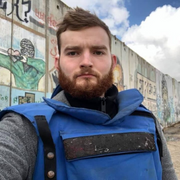
– Robert Inlakesh is a journalist, writer, and documentary filmmaker. He focuses on the Middle East, specializing in Palestine. He contributed this article to The Palestine Chronicle.
No comments:
Post a Comment