Islam Today

Culture

Monday, April 06, 2026

America’s Israel: The Moral Cost of Complicity

 By Dr. M. Reza Behnam
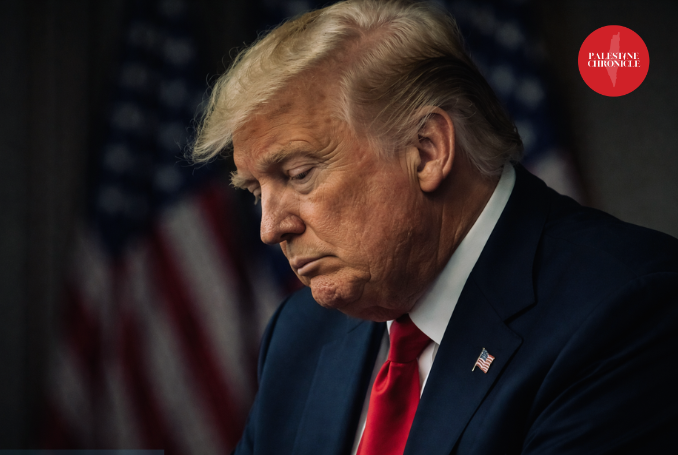
Despite Donald Trump’s escalating rhetoric, most Americans continue to oppose the war on Iran. (Photo Illustration: PC)

The erosion of America’s international credibility was lost when the Oval Office became a revolving door for Israeli “agents of war” and its oil-rich Arab proxies.

The foisting of a Jewish state in the heart of Palestine was an arrogant imperial decision that has left a trail of carnage in West Asia; most recently, the genocide in Gaza. How much bloodletting will satiate Israel and its American enabler?

In his lawless, rabid tirade of April 1, 2026, President Donald Trump threatened even more savagery and crimes against humanity. He made it clear that the US is not a bystander but a direct accomplice in Israeli atrocities and war crimes.

What was absent from Trump’s speech was any mention that a courageous insider came forward on March 17, 2026 to tell the truth. Joseph Kent, a veteran with 11combat deployments, and former director of the National Counterterrorism Center, was that person. In his resignation letter to Trump, he poignantly wrote:

“Early in this administration, high-ranking Israeli officials and influential members of the American media deployed a misinformation campaign that wholly undermined your America First platform and sowed pro-war sentiments to encourage war with Iran. This echo chamber was used to deceive you into believing that Iran posed an imminent threat to the United States, and that you should strike now, there was a clear path to swift victory. This was a lie and is the same tactic the Israelis used to draw us into the disastrous Iraq war that cost our nation the lives of thousands of our best men and women. We cannot make this mistake again.”

It should be noted that previous US presidents have faced comparable pressures and made similar mistakes since the “American father of Israel,” President Harry S. Truman, gave his blessing to the European Zionists’ illegal claim to Palestine in May 1948. For the first time, on that date, Israel appeared on the world map.

The consequences of Israel’s century-long project to reshape West Asia in its image have been tragic. Genocide in occupied Gaza and the West Bank, wars on Lebanon and Iran are its current bids to disfigure the region, to gain dominance no matter the cost.

Iran has, since 1979, challenged Israel’s expansionist project to control territory “between the Mediterranean Sea and the Jordan River,” which is written into the 1977 election manifesto and electoral platform of the Likud Party; the dominant party for 49 years.

The US-Israel war, “Operation Epic Fury,” is being fought to degrade Iran as a West Asian power. The war has unveiled to the world Tel Aviv’s dependence on Washington to secure regional hegemony, as well as its outsized influence over American politicians and policymakers.

In retrospect, it is alarming to realize that, over these many years, we have learned very little from our history with Israel.

Much like Joe Kent, who cited the war’s casus belli as undue “pressure from Israel and its powerful American lobby,” most US presidents have experienced similar impositions. None more so than President Truman.

After the Second World War, influential American Zionists were merciless in their efforts to persuade Truman to commit American prestige and power on behalf of Zionist aspirations, even though they most often compromised US interests.

Jewish immigration to Palestine was a pivotal issue for the Truman administration in 1947 due to the intensifying immigration crisis and mounting pressure for the United States to support the Zionist goal of a Jewish state. Also, Britain announced in February of that year that it would end its mandate of Palestine and refer its future to the newly created United Nations.

Approximately 250,000 Jewish Holocaust survivors were among the nearly 6 million displaced persons (DP) languishing in Allied-administered refugee camps across Europe in 1947.

In that year, American Zionists fiercely lobbied Truman to pressure the British government to allow 100,000 more Jewish refugees into Palestine, where their numbers had been swelling since the 1930s.

During the waning years of its mandate, Britain struggled to manage the mounting violence between Zionist colonizers and Palestinian resistance forces and maintain stable relations with the Arab states who opposed further Zionist expansion.

Truman was sympathetic to the Jewish plight and Zionist cause. He was, however, annoyed that Americans were violating international law, financing illegal immigration, and complicating sensitive US-British diplomatic relations.

One particular event, the July 1947 Exodus voyage – the “ship that launched a nation” —has had historical consequences for West Asia.

The Exodus, illegally carrying 4,515 Holocaust survivors to Palestine was forcibly intercepted by the British navy. The widely publicized forcible return of the refugees to DP camps in British-occupied Germany sparked worldwide outrage and sympathy for the Zionist cause.

Intensified international and domestic pressure and sympathy for the plight of Jewish refugees influenced a number of events:

  • sped up Truman’s support for Jewish immigration;
  • increased American support for a Jewish homeland;
  • made it difficult for Britain to maintain restrictions on Jewish immigration;
  • forced it to abandon its mandate of Palestine in November 1947;
  • led to pressure in the UN General Assembly (UNGA) to pass a resolution partitioning Palestine into separate independent Jewish and Arab states.

There were compelling reasons for Truman to have concerns and misgivings about the high-profile Exodus event.

For one, the Exodus voyage was organized by Mosad Le’Aliya Bet, an agency that had been smuggling Jews illegally into Palestine for years. The ship was purchased and operated by the Haganah, an underground Jewish paramilitary operating, often violently, to drive the British from Palestine. In addition, they had established branches in European DP camps, where they trained thousands of Holocaust survivors to fight for a Jewish state once they reached Palestine.

According to the American Council for Judaism, founded in 1942, the voyage of the Exodus was “pure political theater and guerrilla warfare designed to sabotage President Truman’s declared call for restraint by all sides in the growing conflict in Palestine….; and that, “The Exodus was a former Chesapeake Bay Ferry purchased by American Zionists associated with Henry Morgenthau, to smuggle illegal arms into Palestinian Jewish communities. Its full name in 1947 was Haganah Ship Exodus 47, and its 4,500 passengers were mainly able-bodied military-aged young men and women, who were both disciplined and dedicated to conquer Palestine.”

The massive ship seemed calculated to provoke a crisis, as it had been overhauled for direct confrontation with the British.

The significance of the Exodus episode cannot be understated. It was quickly transformed into the “heroic mythology” of the newly created state. The David v. Goliath myth, dramatized in a 1958 novel and an award-winning movie of the same name, cemented American public support.

Like numerous other refugee ships, the Exodus was financed by wealthy Jewish American donors, among them, key fundraiser, Henry Morgenthau Jr., former US Secretary of the Treasury (1934-45).

Truman also clashed with Morgenthau over his intrusion into US post-war policy toward Germany, particularly over what came to be known as the “Morgenthau Plan.”

Morgenthau’s 1944 “Suggested Post-Surrender Program for Germany,” was designed to permanently deindustrialize it; to remake the country into a primarily agricultural economy. His deindustrialization program, initially adopted by the US and Allies, was abandoned once it became obvious it was obstructing European economic revival.

The US-Israel strategy in its war against Iran to eliminate the country as a regional power by destroying its industrial infrastructure bears a striking resemblance to the old Morgenthau Plan to neutralize post-war Germany.

President Truman vented his frustrations on July 21, 1947 in three diary pages, discovered in 2003. He was especially angry over Morgenthau’s persistence that he force the British to allow the Exodus into Palestine; he wrote: “ The Jews have no sense of proportion nor do they have any judgment on world affairs. Henry brought a thousand Jews to New York on a supposedly temporary basis and they stayed.” He continued:

“The Jews, I find are very, very selfish. They care not how many Esto-

nians, Latvians, Finns, Poles, Yugoslavs or Greeks get murdered or

mistreated as D[isplaced] P[ersons] as long as the Jews get special

treatment. Yet when they have power, physical, financial or political

neither Hitler nor Stalin has anything on them for cruelty or mistreat-

ment to the underdog. Put an underdog on top and it makes no differ-

ence whether his name is Russian, Jewish, Negro, Management,

Labor, Mormon, Baptist he goes haywire. I’ve found very, very few

who remember their past condition when prosperity comes.”

Since its launch and because of America’s unquestioned support, Israel has been allowed to act outside the “decencies of modern civilization.” It has with impunity, broken all protocols of decency, and in the process, neutered the United Nations, its organizations and the international legal system.

The erosion of America’s international credibility was lost when the Oval Office became a revolving door for Israeli “agents of war” and its oil-rich Arab proxies.

Seventy-nine years separate the resignation letter of Joe Kent and the ruminations of President Truman. One thing, however, has not changed. When Israel and its lobby call it matters little who sits behind the Resolute Desk.

– Dr. M. Reza Behnam is a political scientist specializing in the history, politics and governments of the Middle East. He contributed this article to The Palestine Chronicle.

Vijay Prashad: US Aggression Across the World

 In its latest statement, No Cold War takes stock of the long history of U.S. aggression across the world and the need to reject a future of wars without end.

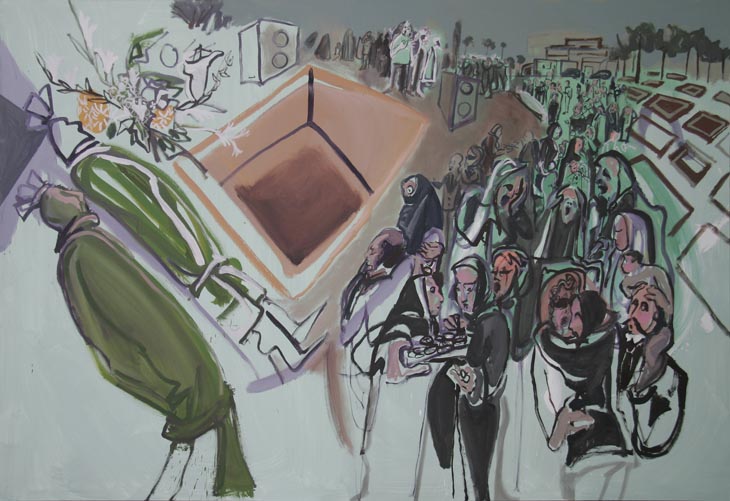
Rokni Haerizadeh (Iran), Typical Iranian Funeral, 2008. (Via Tricontinental Institute for Social Research)

By Vijay Prashad
Tricontinental: Institute for Social Research

As violence spreads from the Caribbean to Western Asia, the United States and Israel’s war of aggression against Iran is paralysing the global economy.

Its consequences were predictable: it was known that if the United States and Israel attacked Iran, the Strait of Hormuz – through which a quarter of global seaborne oil trade passes – would become a chokepoint.

With rising oil prices, geopolitical tensions deepen. It feels like little can be done to avert the avalanche of catastrophes that Washington and Tel Aviv have unleashed on the world.

Already demoralised by the inability to stop the genocide against the Palestinians, working people around the world are now spectators to yet another war not of our choosing. Faced with this reality, it is easy to plunge into emotions that range from anger to despondency.

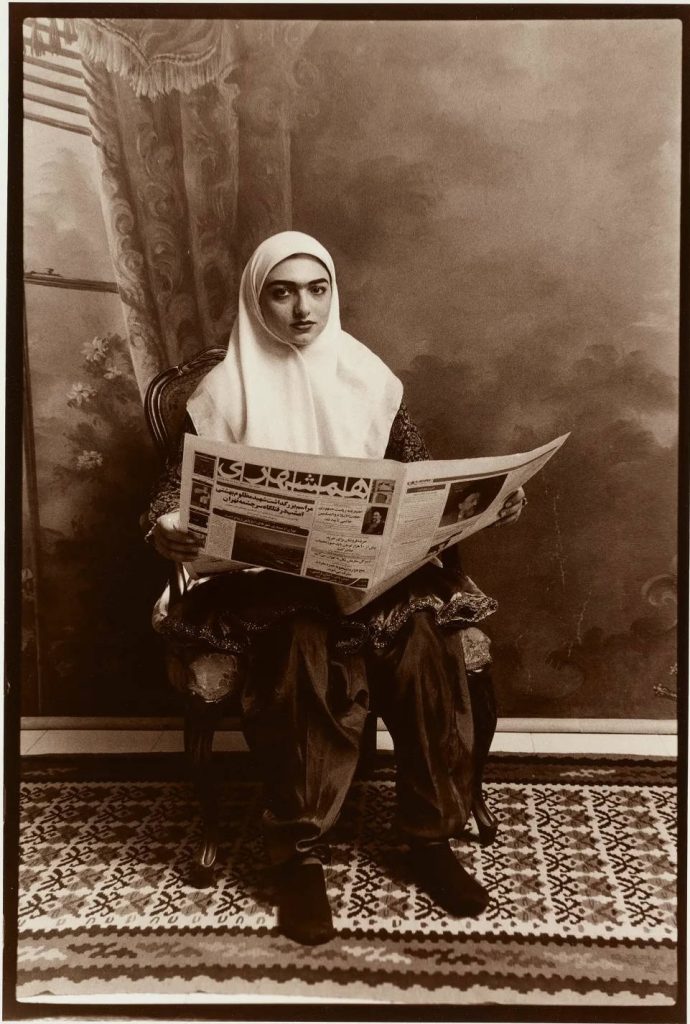
Shadi Ghadirian (Iran), Untitled, 1998. (Via Tricontinental Institute for Social Research)

There is a war against the planet – a war without end.

These words are not exaggerations. At a United Nations daily press briefing, the chief economist of the Food and Agriculture Organization, Máximo Torero, warned:

“This is not only an energy shock. It is a systematic shock affecting agrifood systems globally’. The Persian Gulf region accounts for nearly half of global sulphur trade, which is used to produce the sulphuric acid necessary to process phosphate rock into fertiliser.

Disruptions in this market have already caused fertiliser prices to rise dramatically. This has created problems for farmers who have planted crops or are planning to do so in the coming season.”

Torero added:

“Farmers are facing a dual cost shock: they have more expensive fertilisers alongside rising fuel costs affecting the entire agricultural value chain, including irrigation and transport’.”

Even if the war ends now, food prices are likely to remain high into next year. Given the debt burdens and austerity already imposed on so many countries in the Global South, hundreds of millions more people will be pushed deeper into poverty and hunger.

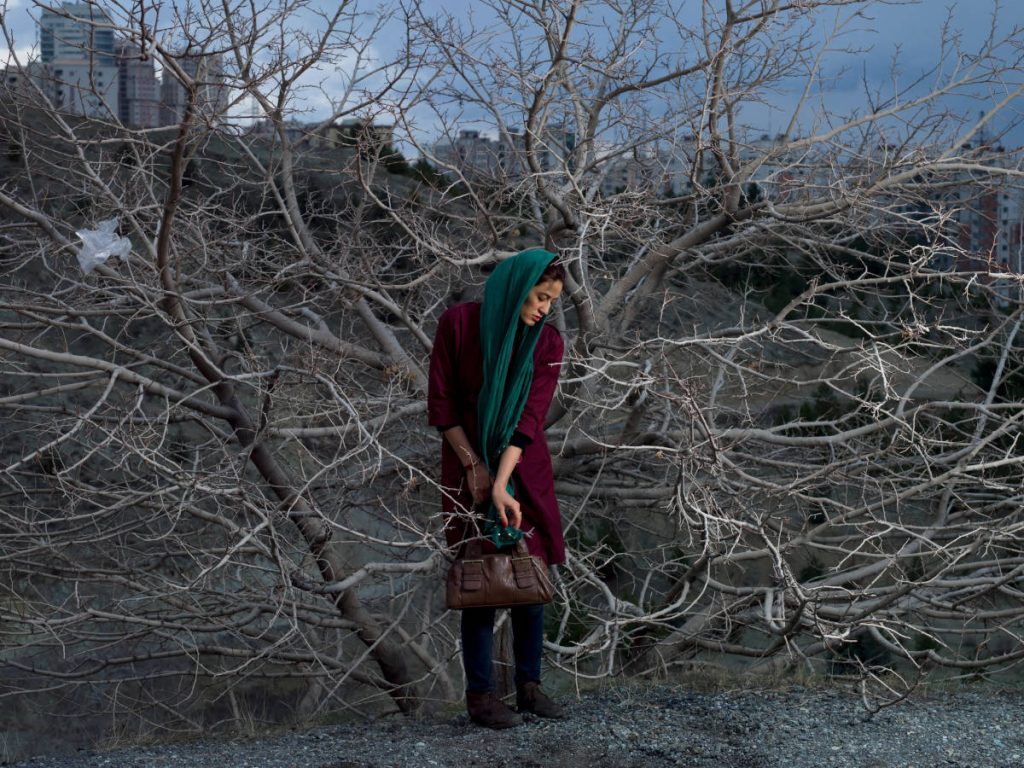
Newsha Tavakolian (Iran), Somayeh (from Blank Pages of an Iranian Photo Album), 2014–2015. (Via Tricontinental Institute for Social Research)

In 2020, at the height of the pandemic and the anti-China rhetoric in the Global North, the No Cold War campaign issued a statement titled ‘A New Cold War Against China Is Against the Interests of Humanity’.

The 176-word statement, which was translated into twenty languages, called for cooperation rather than confrontation among the world’s countries. It was endorsed by over two thousand people and more than twenty peace organisations and platforms.

Over the past five years, the collective that runs the No Cold War campaign, of which I am a member, has grown to include almost twenty members drawn from numerous organisations.

Alongside our statements, we publish regular essays in our Perspectives series and hold regular conversations about war and peace. We invite you to visit our new website, where you can find a list of our collective’s members and learn how to get involved in our work.

In response to the growing danger of a wider conflict, No Cold War has produced a statement on this war without end.

NoColdWar.org Website

The capitalist United States has imposed war upon war on the planet for over 90 percent of its existence since 1776 – only pausing for a few years in its early period.

Almost all these wars have been wars of choice, often taking place very far from the U.S. mainland (the wars in the Philippines and Vietnam took place 13,000 km away).

These wars resulted in the deaths of tens of millions of civilians, with horrendous weaponry used (including nuclear bombs in Japan and chemical weapons in Vietnam and Iraq).

Forty-five men have been president of the United States. All of them have entangled their country in a foreign war or a war against people on the land being settled, particularly Native Americans, enslaved Africans, and immigrants.

This belligerent habit has discarded U.S. law (particularly [the Constitution saying only Congress can declare war and] the War Powers Resolution of 1973) and, by default, has permitted U.S. presidents to use their massive military power against the planet.

This pattern is evident in the current conjuncture.

In 2026, U.S. President Donald Trump deepened or initiated five major conflicts on the planet. Three of them are being conducted alongside the government of Israel, which operates in a twinned manner with the United States government, alongside European countries that provide diplomatic support and weaponry.

Each of these wars violates the United Nations Charter, making them illegal acts that should receive condemnation in the U.N. Security Council; all of them are wars of aggression, which means that the person who authorised them is a war criminal.

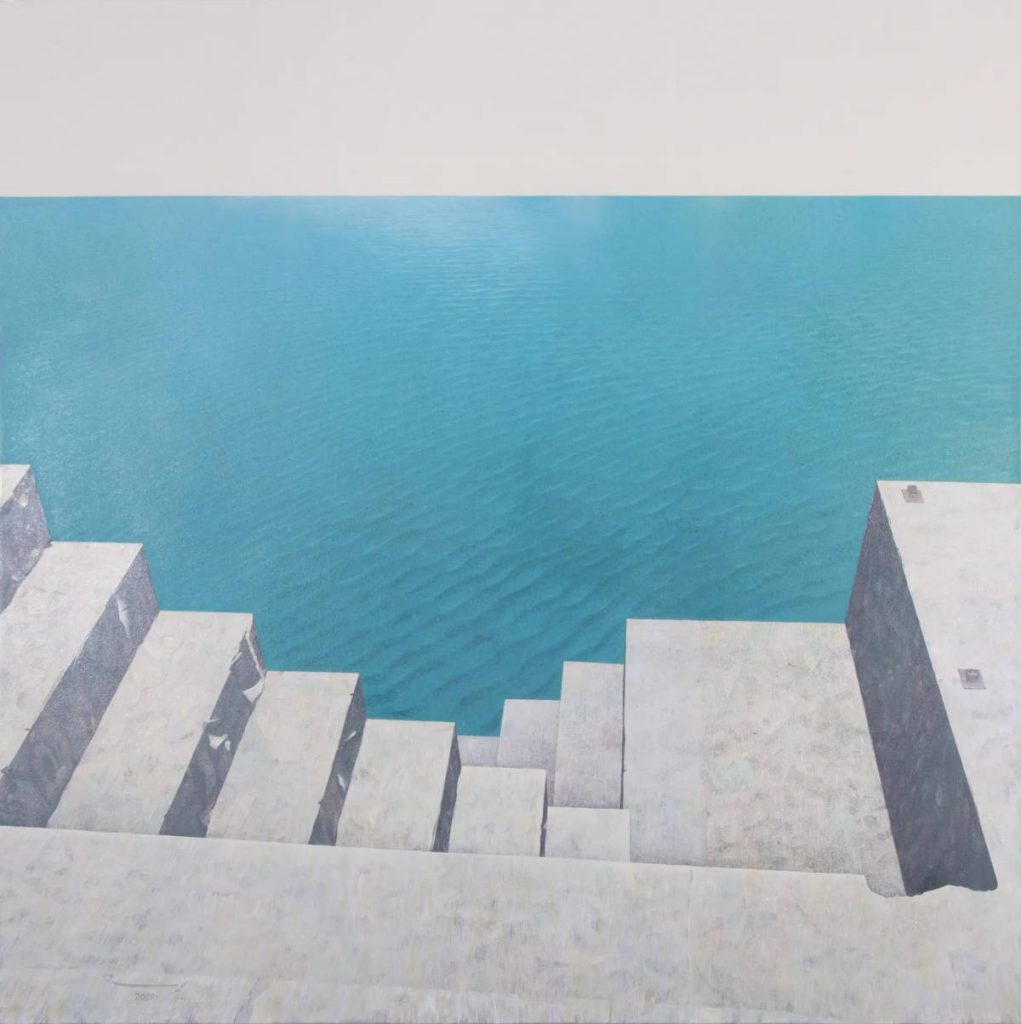
Mehrdad Afsari (Iran), Written Guidance, n.d. (Via Tricontinental Institute for Social Research)

  • Venezuela. On Jan. 3, 2026, United States violated Article 2 of the U.N. Charter when it invaded a member state of the U.N., kidnapped its sitting president, and forced the country to submit to demands devised by the United States government.
  • Cuba. The United States has conducted an illegal economic blockade of Cuba since 1960, violating Article 41 of the U.N. Charter that only permits third-party sanctions to be imposed with a U.N. Security Council resolution (of which there has been none). This blockade was deepened on Jan. 29, 2026, when Trump forbade any third country from providing oil to Cuba, forcing the country to survive on about a third of its energy supply.
  • Iran. On Feb. 28, 2026, the United States and Israel, in violation of Article 2 of the U.N. Charter, began a barrage of attacks on Iran, killing civilians with abandon and destroying infrastructure across the country, as well as assassinating the Supreme Leader Ali Khamenei. These attacks come less than a year after the United States and Israel bombed Iran’s nuclear energy facilities over twelve days in June 2025. The recent bombings provoked retaliation from Iran against U.S. military bases that are less shields for Iran’s neighbours and more targets. The war has led to the partial closure of the Strait of Hormuz, which has resulted in a major fuel and food catastrophe across the world.
  • Lebanon. Taking advantage of the war on Iran, Israel has been ruthlessly bombing the south of Lebanon and its capital, Beirut, in violation of Article 2 of the U.N. Charter. A fifth of the population has been displaced, and thousands of civilians have been killed and wounded.
  • Palestine. As part of the unending and brutal genocide against the Palestinians, despite the ceasefire, Israel has attacked the cities in Gaza repeatedly and has been confiscating land in the Occupied West Bank as well as removing Palestinians from the area in violation of several U.N. resolutions on the Israeli occupation of Palestine.

Meghdad Lorpour (Iran), Untitled, 2019(Via Tricontinental Institute for Social Research)

These five wars are related to each other, being part of the U.S.-driven imperialism that has begun to shape the planet (we are aware of other wars, in Myanmar, Sudan, and Ukraine, for example, but those will be for another statement).

Unable to drive an agenda to recover its declined economic power and the rise of the Global South (particularly China), the United States has shifted its focus to its military force.

But even here, the United States finds that it can destroy infrastructure and kill civilians, but it cannot seem to subdue nations politically. Each of these countries stands tall. None of them are willing to surrender.

Despair and demoralisation are not to be the mood of the world’s people. From Cuba to Palestine, those who are being fired upon fight back with everything they have at their disposal.

They require the world to stand with them and not to be despondent. They require condemnation of U.S. imperialism, and they require that we never treat such violence as normal.

These wars appear to be without end. But they will end. The human spirit is far too strong to be vanquished by tormentors. It uses every avenue to refuse a world in which this history of war without end determines our future.

Portrait, Saida Menebhi. (Tricontinental Institute for Social Research)

We are in a period that demands strength. That strength comes from our own humanity but also from the example of those who struggled before us.

Saïda Menebhi (1952–1977), a schoolteacher and member of the Moroccan Marxist organisation Ila al-Amam (Forward), was one of them.

On Jan. 16, 1976, during Morocco’s Years of Lead (Les années de plomb), when the monarchy tolerated absolutely no word or deed in support of a republic, let alone socialism, comrade Saïda was arrested. She was detained at King Hassan II’s torture centre, Derb Moulay Cherif, where she wrote this poem that still gives me chills:

You know my child
I wrote a poem for you
but don’t chastise me
for writing is this language
that you don’t yet understand
it’s nothing my child
when you are older
you will seize this dream
that I dreamt in the middle of the day
when it’s your turn, you will tell the story of this woman
Arab prisoner
in her own country
Arab up to her white hair
her greenish eyes
the dream my child
begins
when I see a pigeon
the birds that build their nests
on the roofs of prisons
I dream of sending a message to the revolutionaries
of Palestine
in order to assure them support for victory
I dream of having wings
just like sparrows
to traverse the skies
as far as Erythrea
as far as Dhofar
arms heavy with guns
the head with poems
I want to be a passenger
on board clouds
with my war attire
combating Pinochet
in the back country of Chile
so that my blood runs
on Chilean soil
that Neruda praised
o my dream
red Africa
without hungry children
I dream
that the moon
up there is going to fall
to take out the enemy
and that the moon will leave me
in Palestine or in the Sahara
anywhere
I struggle for victory
For all people who are combatants.

In late 1977, comrade Saïda joined a hunger strike to protest the king’s policy of holding political prisoners such as Abdellatif Laabi, Abraham Serfaty, Fatima Oukacha, Piera di Maggio, Rabea Ftouh, and herself in isolation.

On Dec. 11 that year, Saïda was rushed to Ibn Rushd Hospital in Casablanca, where she died at the age of twenty-five. The memory of her bravery and the poem she left us strengthen us in the struggle against the war without end.

Vijay Prashad is an Indian historian, editor and journalist. He is a writing fellow and chief correspondent at Globetrotter. He is an editor of LeftWord Books and the director of Tricontinental: Institute for Social Research. He is a senior non-resident fellow atChongyang Institute for Financial Studies, Renmin University of China. He has written more than 20 books, including The Darker Nations and The Poorer Nations.  His latest books are Struggle Makes Us Human: Learning from Movements for Socialism and, with Noam Chomsky, The Withdrawal: Iraq, Libya, Afghanistan and the Fragility of U.S. Power.